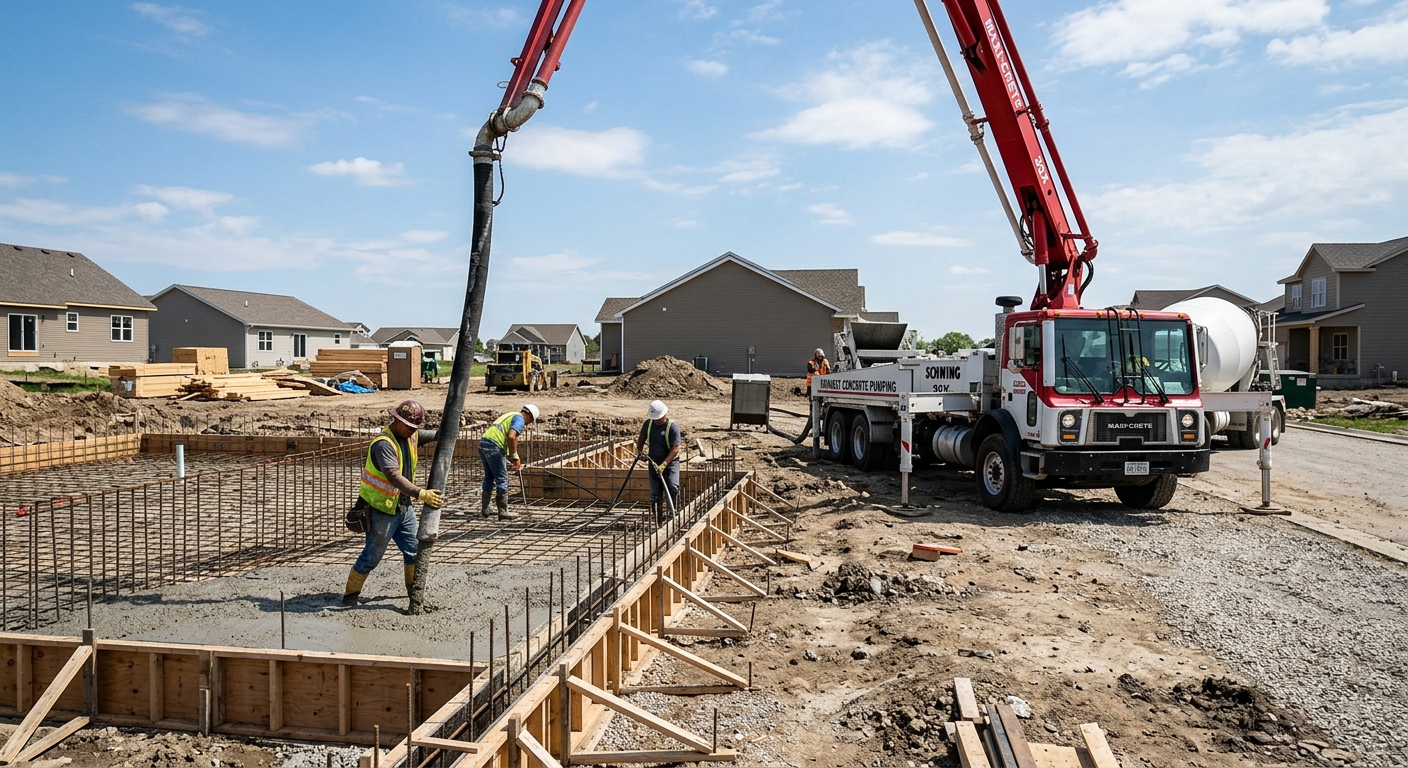
Concrete work options and costs in Cache Creek
Concrete work in Cache Creek is all about building durable flatwork for an interior BC climate that sees frequent freeze–thaw swings. With about 410 homeowner households and 86.3% of households owning their homes (Statistics Canada, 2021 Census), there’s steady demand for driveways, patios and walkways—especially since single-detached homes make up 53.2% of the housing stock. You’ll also see lots of older property upgrades: 65.3% of homes were built before 1981 (Statistics Canada, 2021 Census), and many have aging slabs that need replacement or repairs.
In the Thompson–Okanagan, pricing is shaped by frost depth and winter freeze–thaw cycles. Local crews typically design footings and exterior support below the frost line (often around 45–60 cm for frost-appropriate slab support, and deeper for structural foundations), and that means more excavation, forming and granular base work. Contractor availability can also tighten in the shoulder seasons when the ground is wet or the nights turn below freezing, which can raise labour and curing costs. In Cache Creek, areas around the main highway corridor and the older neighbourhood pockets near the creek/valley routes often have higher turnover for driveway resurfacing and patio additions.
Below is a practical comparison of common concrete options, with realistic price ranges you can use to sanity-check quotes before you meet contractors. Use this as a starting point, then confirm your site conditions and finish selections in an itemized estimate.
| Application |
Typical Size |
Key Spec |
Finish Option |
Price Range |
| Concrete driveway (standard broom finish) |
16 ft x 20 ft (320 sq ft) |
4" slab, compacted granular base, air-entrained mix |
Broom finish |
$5,800–$9,000 |
| Exposed aggregate driveway |
16 ft x 20 ft (320 sq ft) |
4" slab, proper curing to allow wash/texture |
Exposed aggregate |
$7,000–$12,000 |
| Stamped concrete driveway or patio |
12 ft x 20 ft (240 sq ft) |
Reinforcement where needed, sealer system for durability |
Stamp + colour integral or overlay |
$6,000–$11,500 |
| Plain concrete patio or walkway |
12 ft x 16 ft (192 sq ft) |
4" slab (or as designed), compacted base, joints |
Float + light broom |
$2,700–$4,600 |
| Garage floor (interior slab) |
20 ft x 22 ft (440 sq ft) |
4" slab, fibre or mesh depending on use |
Standard trowel finish |
$7,000–$13,500 |
| Foundation footings (structural, below frost) |
Typical small house perimeter + piers |
Excavation, formed footings, rebar, below-frost depth |
Structural concrete |
$220–$350 |
Prices are estimates only and vary by project scope, site access and material selection.
What affects the price of concrete work in Cache Creek
For the same driveway or slab size, quotes across the Thompson–Okanagan—and even within different BC communities—can swing by roughly 30–50% once you factor in frost design, base preparation quality and winter concreting precautions. The material itself is often a smaller portion of the total than homeowners expect; excavation, granular base, forming, reinforcement and finishing time carry a lot of weight. In Cache Creek, interior freeze–thaw cycles also push contractors toward air‑entrained concrete and more deliberate curing and jointing to control surface scaling and cracking.
Frost line depth and freeze–thaw cycles dictate every spec: exterior work needs air‑entrained mixes to survive repeated expansion and contraction. For slabs and driveways, contractors often price for proper slab support rather than the minimum “inch or two” rule of thumb, because heaving typically shows up where base prep and frost-appropriate support aren’t right. Colder pockets also mean a shorter practical pour season, which can increase excavation and forming costs when ground is wet, plus curing costs if heating or insulating blankets are required. Finally, de-icing salts accelerate surface spalling when concrete isn’t spec’d and sealed for durability—so sealing is a line item you’ll want to confirm.
Two quick examples from Cache Creek: (1) a broom-finish driveway might land in the $18–$28 per sq ft style band, while switching to stamped concrete usually moves you toward the $24–$38 per sq ft range because of labour-intensive stamping, colouring and sealing steps; (2) the same patio size can cost more if your access requires additional truck time or if the site needs thicker granular base and extra drainage to protect against frost-related movement. Also, with 65.3% of homes built before 1981 (Statistics Canada, 2021 Census), many upgrades involve tying into older surfaces, removing/disposing deteriorated concrete and addressing settlement at the edges—costs that don’t appear in “new slab” assumptions.
| Price Factor |
Why It Matters |
Cost Impact |
| Frost line depth |
Determines footing depth and form height |
Deeper excavation and more concrete can add significant labour and materials |
| Site preparation |
Excavation, grading, compacted granular base |
Better drainage and compaction increase base costs but reduce future failures |
| Reinforcement |
Rebar or wire mesh requirement |
Material and placement time; essential for thicker slabs and structural loads |
| Mix design |
Air-entrainment and compressive strength spec |
Air-entrained exterior mixes cost more but improve freeze–thaw durability |
| Finish type |
Broom vs. stamped vs. exposed aggregate |
Stamped/exposed finishes increase labour, curing/handling steps and sealing needs |
| Pour size and concrete truck access to site |
How quickly concrete can be placed and consolidated |
Long carry distances add labour, risk and sometimes equipment charges |
| Cold-weather curing precautions |
Heating and blankets |
Insulation and heat protection can raise costs during late fall or early spring |
| Control joint pattern and sealing cost |
Controls cracking and protects the surface from salts/abrasion |
Joint layout affects labour; sealers add material but can reduce spalling |
Permits & regulations in British Columbia
In British Columbia, structural concrete work—like building footings, foundation walls, grade beams and similar elements—usually requires a building permit and often engineered drawings reviewed as part of the municipal building process. For many concrete flatwork projects (patios, walkways and typical driveways), you often don’t need a permit by default; however, a permit may be required if your project changes lot grading, affects drainage, or increases impervious surface coverage in a way that conflicts with municipal requirements or affects the right-of-way/servicing. Because Cache Creek is a small community and projects can interact with drainage patterns and access, it’s smart to confirm with the local authority before breaking ground.
Also, contractor qualification matters. Verify the company carries liability insurance and the required workers’ coverage (WSIB/WCB). Don’t rely on a verbal “we’re covered”—ask for certificates and make sure the coverage aligns with the dates of work.
Step-by-step for a homeowner in Cache Creek:
- Ask the contractor for a certificate of insurance (liability) and proof of workers’ coverage; save copies for your records.
- Check the contractor’s business details and any relevant licensing/registration using provincial online resources (look for the exact business name on the quote).
- Request references on similar-scale projects, ideally exterior slabs done in interior BC freeze–thaw conditions.
- Confirm whether your scope triggers a municipal permit (structural elements vs flatwork, drainage changes, and any right-of-way involvement).
If you’re unsure whether your concrete work is “structural” or “flatwork,” describe the exact dimensions and whether it supports a foundation wall, and ask the contractor to clarify what the municipality will consider in the permit review.
Getting concrete right in Cache Creek's freeze-thaw climate
In Cache Creek and the Thompson–Okanagan, concrete problems usually aren’t from “bad luck”—they’re from predictable climate mechanics. Freeze–thaw cycles pull moisture in and out of concrete surfaces and near-edge soils. When the base isn’t compacted correctly for local soil and frost conditions, or when the concrete mix isn’t air‑entrained, the slab can crack randomly or spall at the surface. Your goal is to spec the job so water can’t undermine support and the concrete has the microscopic room it needs to expand safely.
Start with (1) base preparation: use compacted granular sub-base to the right depth and density so the slab sits on a stable foundation below frost-affected movement. (2) mix design: for exterior flatwork, specify air‑entrainment—commonly about 5% to 7% air content for exterior use—and a minimum 32 MPa compressive strength. (3) control joints: plan joint spacing to limit random cracking to predictable lines. (4) curing: plan for at least 7 days of proper curing; in cold snaps, curing protection (insulating blankets or approved curing practices) matters because early freezing can reduce strength. (5) sealing: apply a penetrating sealer after the concrete has cured—often at about 28 days—so de-icing salt exposure is less likely to accelerate surface scaling.
Here’s where price differences are justified. If you’re choosing between a plain broom-finished patio and a stamped finish, the higher option may cost more (often aligning with the $14–$24 style patio band moving toward the $24–$38 stamped/decorative band). That extra cost can be worth it only if the base, mix and joints are still built to handle Thompson–Okanagan freeze–thaw conditions—because decorative looks won’t last if the slab is set up to spall.
When you review quotes, ask directly: “What air content are you using for this exterior mix?”, “How deep is the granular base and what density are you compacting to?”, and “What’s your joint layout and sealing schedule?” Those answers are usually more important than colour or stamp pattern.
| Spec |
Why It Matters in Cache Creek |
What to Ask For |
Impact if Skipped |
| Compacted granular base (depth?) |
Stabilizes the slab against frost-affected soil movement |
State granular depth and compaction method/target |
Settlement and cracking; potential heaving near edges |
| Air-entrained concrete mix (target air %?) |
Helps concrete tolerate repeated freeze–thaw cycles |
Target exterior air content (typically 5–7%) |
Higher risk of spalling and surface scaling |
| Compressive strength (MPa rating) |
Ensures durable strength for exterior exposure and traffic loads |
Minimum 32 MPa (or higher if specified) |
Premature wear, chipping and reduced long-term performance |
| Control joints (spacing per ACI guidelines) |
Prevents random cracking from shrinkage and temperature movement |
Planned joint spacing and layout for your slab size |
Uncontrolled cracks that can become water pathways |
| Minimum 7-day curing period |
Builds early strength before the climate impacts the slab |
Minimum 7 days curing under proper conditions |
Weaker surface and increased chance of early cracking |
| Penetrating sealer (when applied after cure) |
Reduces water and salt penetration during winter maintenance |
Applied after cure (commonly around 28 days) |
Faster salt-related deterioration and more frequent patching |
How to choose a concrete work contractor in Cache Creek
Start by confirming the contractor’s British Columbia credentials and coverage, because freeze–thaw failures often show up after a season or two—and you want accountability. Ask for proof of liability insurance and workers’ coverage (WSIB/WCB). To check: (1) review the certificate of insurance for the correct business name and coverage dates; (2) confirm workers’ coverage is active for the project period; and (3) verify the contractor’s registration/licensing details online using the business name exactly as it appears on the quote and contract. If a contractor can’t provide documents quickly, treat that as a red flag.
Next, get 2–3 itemised written quotes with labour and materials broken out rather than a single “lump sum” number. The best quotes list excavation and disposal, granular base type and depth, reinforcement details, concrete mix spec (air-entrainment and strength), finish method, joint layout, and whether sealing is included. Watch for exclusions: permit pull included or not, site access charges, saw-cutting timing, and whether repairs to existing edges are part of the scope.
Warranty should be in writing. Clarify workmanship warranty length and what it covers, and whether product warranties (if any) are tied to the specific materials used. For payment scheduling, don’t pay more than 10–15% upfront—hold back a meaningful portion until the job is complete and cleaned up. Finally, require a written start date and completion estimate so winter weather delays don’t turn into open-ended timelines.
- Confirm they build for frost-appropriate support (not just minimum-looking depths).
- Ask for the exterior mix air-entrainment target and compressive strength.
- Require the granular base depth and compaction method to be listed.
- Check whether reinforcement is included where needed (wire mesh/rebar).
- Verify they’ll install and follow a control joint layout.
- Ask how they handle curing in cold or wet shoulder-season conditions.
- Confirm sealing is included, when it’s applied, and the type (penetrating).
- Get a disposal/removal line item for old concrete (if applicable).
- Ask about site access and whether forms are included for edges/turndowns.
- Make sure the quote includes protection (blankets/curing compound if needed).
- Require a written warranty and what constitutes “defect” vs normal wear.
- Use a payment schedule with holdback until final inspection and cleanup.
Concrete red flags in Cache Creek: vague “we use good concrete” wording with no mix spec; missing or expired insurance/WSIB coverage; quotes that omit granular base depth and compaction; no mention of air-entrainment, joints or sealing; and crews pushing to pour in cold conditions without curing protection.
Frequently asked questions — concrete work in Cache Creek
Do I need a permit for concrete work in British Columbia?
In British Columbia, structural concrete typically requires a building permit and often engineered drawings reviewed through the municipal process. That includes foundation footings, foundation walls, grade beams and similar load-bearing items. For common flatwork like patios, walkways and standard driveways, a permit is often not required unless your work changes lot grading/drainage, increases impervious surface coverage in a way that triggers local requirements, or affects the municipal right-of-way. For a Cache Creek project, it’s safest to confirm with the local authority before digging, especially if you’re adjusting slopes, adding drainage work, or replacing a large portion of an existing slab.
Concrete vs pavers for a patio in Cache Creek?
Both concrete and pavers can work in Cache Creek’s Thompson–Okanagan freeze–thaw climate, but concrete is usually simpler to maintain if the base is done right. Concrete slabs rely on proper compacted granular sub-base, air‑entrained mix and control joints; if those are correct, you get fewer joints to heave and typically a longer “set it and forget it” service life. Pavers can be easier to repair—single blocks can be swapped—but they can shift if the bedding and edge restraint aren’t built for frost movement. Price-wise, a plain concrete patio often aligns with the $14–$24 band, while decorative options like stamped concrete move higher (often toward $24–$38). Ask both contractors to show base and jointing specs, not just surface appearance.
How long does a concrete driveway last?
A concrete driveway can last decades in British Columbia when the support system is correct: frost-appropriate base preparation, air‑entrained concrete, joints placed to control cracking, and reasonable sealing/maintenance where de-icing salts are used. In the Thompson–Okanagan, the main early killers are inadequate air-entrainment leading to surface spalling, poor drainage under the slab, and joints that are not cut/sealed on schedule. That’s why you’ll see concrete quotes vary: the $18–$28 style band for standard broom-finished driveways usually reflects more complete prep and correct mix design than “fast pour” approaches. If you’re replacing an older driveway built before 1981, budget for edge repairs and removal logistics too—older sites often have subgrade issues that shorten lifespan if skipped.
What is air-entrained concrete and why does it matter here?
Air-entrained concrete is mixed to include tiny, evenly distributed air bubbles that give freezing water space to expand without destroying the cement paste. That matters in Cache Creek because Thompson–Okanagan freeze–thaw cycles can repeatedly push moisture through the slab surface and near edges. Without air-entrainment, you often see scaling and spalling—broken, flaking surfaces—sometimes within a few winters. The fix isn’t just “more curing” or “better finishing”; it’s the mix design. When you compare quotes, ask for the exterior air content target (commonly about 5%–7% for exterior flatwork) and confirm the mix is specified for freeze–thaw durability.
How do I prepare the base for a concrete slab?
Concrete performance in Cache Creek starts under the slab. The base should be excavated to a frost-appropriate depth, graded for drainage, and compacted with a granular material that won’t pump with water. Contractors typically build a compacted granular sub-base (often with layers compacted to achieve a stable density) and ensure proper elevations before forming. The “how deep?” answer depends on soil conditions and the design thickness, so you should ask for the granular depth and what compaction method/target they use. For exterior slabs, you also want drainage details that prevent water from pooling at slab edges. A good base supports the concrete and works together with air-entrained mix and control joints to reduce cracking and frost-related movement.
How do I compare concrete quotes?
To compare concrete quotes in Cache Creek, don’t rely on the bottom-line number alone. Require itemized quotes that separate excavation/disposal, granular base depth and compaction, reinforcement details (wire mesh or rebar where needed), concrete mix spec (air‑entrainment and strength), finish method, control joint layout, curing approach, and whether sealing is included. Ask what’s excluded: permit pull (if applicable), disposal of removed concrete, truck access charges, and patching/edge repairs to existing surfaces. A quote for a standard driveway should line up with the local $18–$28 range when it includes frost-appropriate prep and air‑entrained concrete; stamped concrete typically costs more and often aligns toward $24–$38 due to labour-intensive finishing and sealing. Lastly, confirm warranty length and how long coverage lasts for workmanship.