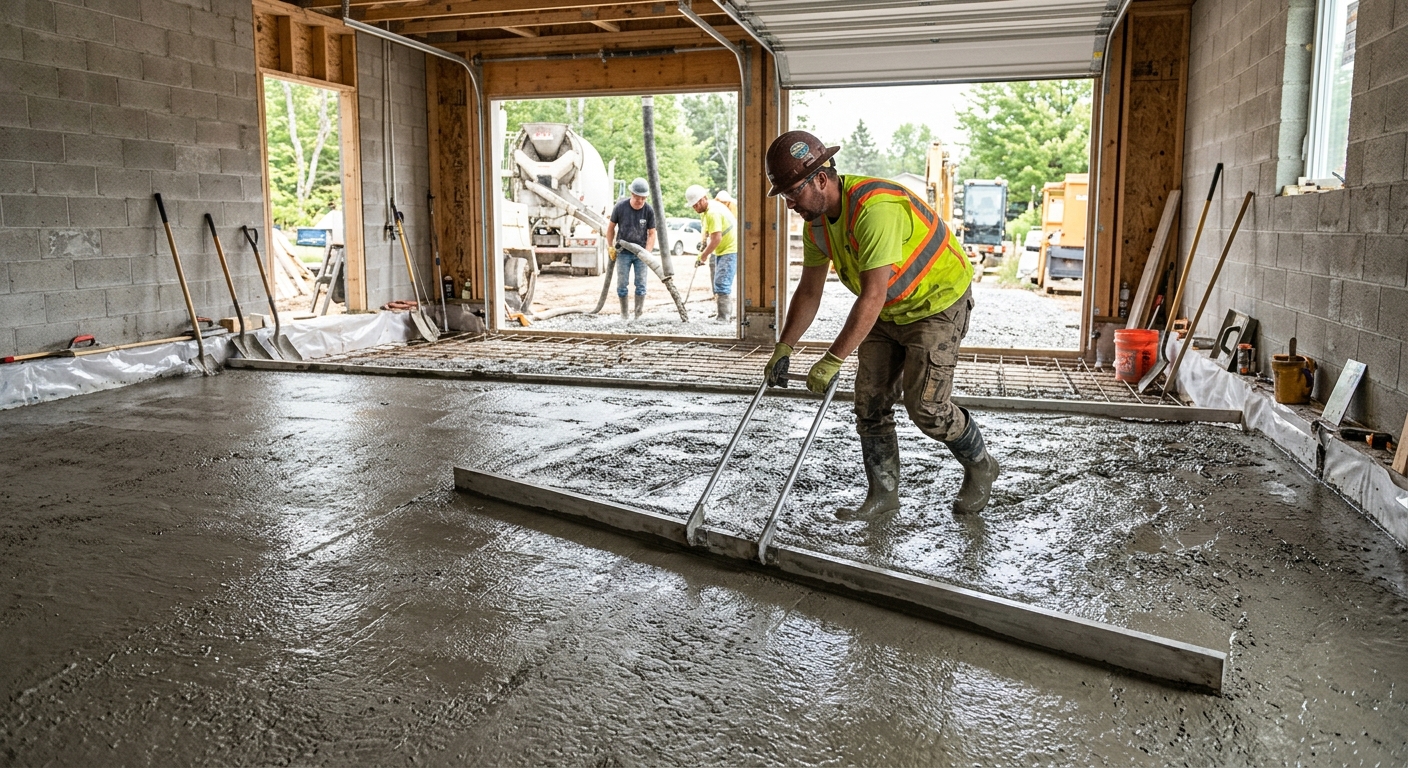
Concrete work options and costs in West Lynn Terrace
West Lynn Terrace is a small community on the North Coast, and concrete flatwork is a practical choice for homeowners who want low-maintenance surfaces through our wet springs and freeze-thaw winters. With a population of 1,125 people (Statistics Canada, 2021 Census), the local concrete workforce is stretched at peak season, so scheduling and access planning can influence your price as much as the square footage. Most residential building demand comes from single-detached homes, which typically means driveways, patios, walkways, and sometimes basement or crawlspace foundations where concrete is part of the build. (Statistics Canada, 2021 Census)
In the North Coast, costs tend to track weather windows. Exterior pours must handle freeze-thaw movement: footings need to be set below local frost conditions, and exterior slabs are usually air-entrained to resist spalling. Coastal wet conditions also make curing management important—rain or early cold snaps can compromise surface strength and finish quality if the contractor can’t protect the pour. On top of that, smaller sites or areas with limited truck access can add excavation and staging time, and dewatering can raise labour costs during shoulder-season storms.
You’ll notice the trade is especially active in the older residential pockets around the West Lynn Terrace neighbourhood core, where many homes are older and are being updated with new driveways and drainage repairs. The next table compares common concrete options so you can line up budget expectations before you request quotes.
| Application |
Typical Size |
Key Spec |
Finish Option |
Price Range |
| Concrete driveway (standard broom finish) |
16 m² (about 10 ft x 16 ft) |
Air-entrained exterior mix, compacted base, control joints |
Broomed, sealed |
$12,000–$22,000 |
| Exposed aggregate driveway |
16 m² (about 10 ft x 16 ft) |
Proper curing + mix with exposed stone; joints to control cracking |
Exposed aggregate with sealer |
$16,500–$28,000 |
| Stamped concrete driveway or patio |
20 m² (about 10 ft x 20 ft) |
Air-entrained exterior mix, integral colour, proper release system |
Stamp pattern + protective sealer |
$18,000–$35,000 |
| Plain concrete patio or walkway |
12 m² (about 10 ft x 12 ft) |
Compact granular base, exterior mix, contraction joints |
Broom/smooth finish as specified |
$9,000–$18,000 |
| Garage floor (interior slab) |
30 m² (about 12 ft x 25 ft) |
Vapour barrier (as required), reinforcement per design, proper slope |
Trowel finish or broom finish |
$15,000–$26,000 |
| Foundation footings (structural, below frost) |
40 m of footing (varies by plan) |
Below-frost depth, reinforced concrete, drainage considerations |
Standard structural finish |
$28,000–$48,000 |
Prices are estimates only and vary by project scope, site access and material selection.
What affects the price of concrete work in West Lynn Terrace
In West Lynn Terrace and across the North Coast, it’s common to see quotes for what looks like the “same” job differ by 30–50% when the site conditions and concrete specs change. That gap isn’t just profit margin—it’s the cost of doing the work correctly under our freeze-thaw cycle, wet ground conditions, and the limited pour-season flexibility for contractors working out of smaller communities. Even within British Columbia, labour rates, hauling, and mobilization for concrete trucks can vary sharply depending on weather and distance to suppliers.
The biggest driver is frost depth and movement risk. In coastal BC, local frost conditions often require footing work to extend well below shallow estimates so you prevent frost heave. Exterior slabs also need air-entrained concrete to survive repeated freezing and thawing, and that mix design affects materials cost. When it’s cold enough to slow hydration, cold-weather curing precautions—insulating blankets, temporary heating, and tighter scheduling—add labour and equipment. Salt air and de-icing salts can accelerate surface spalling, so proper sealing and joint detailing are essential for long-term performance.
In practical terms, excavation and dewatering on a wet lot can be more expensive than the concrete itself. If your driveway base needs extra granular depth and compacting to reach the right grade and bearing, the price can move toward the higher end of the $12,000–$22,000 driveway band. Conversely, a straightforward patio over stable, well-drained sub-base may land closer to the lower $9,000–$18,000 walkway range. Home age matters too: many older properties have older backfill, undersized drainage, or inconsistent subgrade, which can shift your concrete scope by several thousand dollars through added prep and waterproofing considerations.
| Price Factor |
Why It Matters |
Cost Impact |
| Frost line depth |
Determines footing depth and form height |
More depth can increase excavation, concrete volume, and labour; often a major cost driver |
| Site preparation |
Excavation, grading, compacted granular base |
Wet excavation and rework can add days and equipment time |
| Reinforcement |
Rebar or wire mesh requirement |
Material cost plus labour for placement and chairs |
| Mix design |
Air-entrainment and compressive strength spec |
Air-entrained exterior mixes cost more; also requires correct placement and finishing timing |
| Finish type |
Broom vs. stamped vs. exposed aggregate |
Decorative systems increase material handling and skilled finishing time |
| Pour size and concrete truck access to site |
Staging, pumping, and haul constraints |
Limited access can require smaller loads, pumps, or added excavation |
| Cold-weather curing precautions |
Heating and blankets |
Protection costs rise quickly when pours overlap colder nights |
| Control joint pattern and sealing cost |
Reduces random cracking and moisture damage |
Proper jointing and sealing add cost but improve longevity |
Permits & regulations in British Columbia
In British Columbia, the requirement for permits depends on what concrete work you’re doing. Structural concrete elements—like footings, foundation walls, grade beams, and other parts that support or retain the building structure—generally require a building permit and often engineered drawings that get reviewed by the municipality. Concrete flatwork (driveways, patios, and walkways) usually does not require a permit unless it affects lot grading, changes drainage significantly, or impacts impervious surface coverage or the municipal right-of-way. Because rules can differ by site and your lot’s existing drainage, confirm with the local authority before breaking ground.
For contractors, always verify they carry liability insurance and the required workers’ coverage (WSIB/WCB). Ask for current certificates before you sign. To protect yourself in West Lynn Terrace, get details on who will pull any permit (if required), who is responsible for inspections, and whether the contractor is coordinating with your municipality or engineer.
Step-by-step verification you can do right now: (1) Check the contractor’s licence/registration status through the appropriate online registry used in British Columbia; (2) request a certificate of insurance and verify coverage limits and that your address is covered for the work; (3) ask for proof of workers’ coverage (WSIB/WCB) and confirm the account is active; (4) request recent references on similar projects sized to your job; and (5) confirm the pour plan covers weather protection and curing, since coastal wet and cold snaps can affect inspection and final acceptance.
Getting concrete right in West Lynn Terrace's freeze-thaw climate
Concrete can fail faster in West Lynn Terrace when freeze-thaw movement, moisture, and poor base preparation combine. The most common failure you’ll see is spalling (surface flaking) and widespread cracking from water getting into the slab edges or expanding under insufficient frost protection. The fix isn’t a different “brand” of concrete—it’s the correct spec and execution for North Coast conditions: solid, well-compacted base; air-entrained exterior mix; and jointing and curing that account for rain and colder nights.
Start with base preparation: excavate to the proper depth for local soils and frost considerations, then place compacted granular sub-base to the correct elevation and bearing. Next, mix design: exterior flatwork typically uses air-entrained concrete with an air content around 5–7% for durability, and a minimum compressive strength spec of 32 MPa (or higher where required by design). Control joints matter too—spacing them to limit random cracking is how you get predictable cracks in the right locations. Curing is often overlooked in wet coastal weather; plan for at least 7 days of curing under proper protection conditions, especially if you’re pouring near cold periods. Finally, sealer: a penetrating sealer is usually applied about 28 days after the pour to help repel de-icing salts and reduce moisture absorption.
When deciding options, don’t pay for decoration if the durability base and air entrainment are missing. For example, moving from a plain patio toward stamped concrete can push you from the $9,000–$18,000 band toward the $18,000–$35,000 band, and that price difference is justified only if the contractor is also specifying the correct exterior mix, joints, and curing—not just adding pattern and colour.
| Spec |
Why It Matters in West Lynn Terrace |
What to Ask For |
Impact if Skipped |
| Compacted granular base (depth?) |
Freeze-thaw movement needs stable support to prevent settlement and cracking |
Ask for the excavate depth and granular thickness by design or site condition; confirm compaction testing/standard |
Uneven support leads to early cracking, pumping of fines, and edge failure |
| Air-entrained concrete mix (target air %?) |
Durability in exterior wet-freeze cycles reduces spalling |
Confirm exterior air content target around 5–7% and that mix is specified for freeze-thaw resistance |
Higher risk of surface flaking and scaling after winters |
| Compressive strength (MPa rating) |
Strength gain under coastal curing conditions supports longer service life |
Ask for minimum 32 MPa (or higher if required) and how cylinders/records are handled |
Weaker concrete can scar, dust, and fail under traffic or freeze stress |
| Control joints (spacing per ACI guidelines) |
Controls cracking so it doesn’t become random and water-filled |
Ask for joint layout/spacing for your slab dimensions and finish type |
Random cracks, water infiltration, and freeze expansion damage |
| Minimum 7-day curing period |
Cold and rain slow hydration and surface development |
Confirm curing method and protection plan for the first week |
Reduced strength and weaker surface finish that marks easily |
| Penetrating sealer (when applied after cure) |
Helps repel moisture and de-icing salt penetration in coastal conditions |
Ask for sealer type and application timing around 28 days after pour |
Faster staining, moisture absorption, and accelerated surface deterioration |
How to choose a concrete work contractor in West Lynn Terrace
Choosing the right contractor is especially important in West Lynn Terrace because weather protection and finishing quality affect how long your slab lasts through freeze-thaw winters. Start with credentials: in British Columbia, verify the contractor’s licence/registration status through the relevant online registry, request proof of liability insurance with current policy dates, and confirm workers’ coverage (WSIB/WCB) for anyone who will be on site. Don’t accept a photo of an old certificate—ask for the current document and verify the policy is active.
Next, get 2–3 itemised written quotes. You want a breakdown that separates labour, excavation/site prep, concrete supply, reinforcement, formwork, joints, finishing, and any sealing. Avoid lump-sum quotes that don’t specify what mix design is being used or whether the contractor includes proper weather protection and curing. Read the scope for exclusions: is permit pulling included if structural elements are involved? Is disposal of excavated material included? Is dewatering required and covered if the base is wet? These are the items that quietly create 30–50% differences later.
Ask about warranty and what it covers: workmanship warranty length, whether product/manufacturer warranties apply to admixtures or sealers, and whether the warranty is transferable if you sell. Payment scheduling should protect you: never pay more than 10–15% upfront; hold back until the work is complete and site protection/cleanup is done. Finally, require a written start date and completion estimate that accounts for curing time and possible rain or cold-weather delays.
- Ask for a site plan showing access route for the concrete truck and how concrete will be handled
- Confirm the exact concrete spec: air-entrainment target and minimum compressive strength
- Require joint layout details (control joint spacing and where joints are placed)
- Ask how the base will be built (granular thickness and compaction standard)
- Get details on reinforcement (wire mesh vs rebar, slab thickness, and bar placement)
- Confirm curing plan for at least the first 7 days, including blankets/heating if needed
- Request whether penetrating sealer is included and when it will be applied (after cure)
- Check insurance dates and policy limits; verify your address is covered for the project
- Confirm WSIB/WCB clearance for workers before work begins
- Ensure the quote includes disposal and any hauling for excavation over typical driveway/patio removals
- Ask who is responsible for permits and inspections if footings or foundation walls are involved
- Make sure the contract includes a clear warranty on workmanship and repair process
Concrete red flags in West Lynn Terrace: contractors who won’t specify air content or curing protection; quotes that omit reinforcement or joint detailing; finishing complaints ignored with “it’ll be fine after it dries”; and proposals that skip dewatering or compacted base requirements on wet lots.
Frequently asked questions — concrete work in West Lynn Terrace
Do I need a permit for concrete work in British Columbia?
If you’re doing structural concrete work in British Columbia—such as footings, foundation walls, or grade beams—there’s typically a building permit and usually engineered drawings that the municipality reviews. For concrete flatwork like driveways, patios, and walkways, a permit often isn’t required, but it can be triggered if your work changes lot grading, affects drainage, or impacts impervious surface/right-of-way requirements. Because the North Coast’s wet conditions can make drainage outcomes matter, always confirm what applies to your address in West Lynn Terrace before excavation. Also verify your contractor carries liability insurance and workers’ coverage (WSIB/WCB), since that’s a common requirement when inspections or municipal coordination are needed.
Concrete vs pavers for a patio in West Lynn Terrace?
Concrete and pavers can both work well on patios in West Lynn Terrace, but they address freeze-thaw differently. Concrete—especially with air-entrained exterior mix, proper base prep, and control joints—tends to handle freeze-thaw movement predictably, and it’s often priced around the $9,000–$18,000 band for a typical patio. Pavers can be a good option if you want easier localized repair, but they still require a well-compacted base and correct drainage, or you’ll see shifting and uneven settling. If you’re comparing quotes, look for the stated mix design and joint plan for concrete, and the bedding layer + edge restraint details for pavers.
How long does a concrete driveway last?
A driveway’s lifespan in British Columbia depends heavily on base prep, air-entrainment, sealing, and joint spacing—not just the concrete age when it’s poured. In the North Coast freeze-thaw climate, poorly detailed slabs can show spalling or random cracking within a few winters, while a properly spec’d exterior driveway with air-entrained concrete and a controlled joint plan can last decades. Many homeowners upgrade because their existing driveway no longer manages moisture at edges or because older drainage backfills were underprepared. If your quote is in the driveway range of $12,000–$22,000, ask whether the contractor includes the granular base build-up, joint layout, and curing/weather protection—those are the elements that influence long-term durability in West Lynn Terrace.
What is air-entrained concrete and why does it matter here?
Air-entrained concrete is exterior concrete designed with tiny, uniform air bubbles that give water room to expand when it freezes. In West Lynn Terrace and across the North Coast, repeated freeze-thaw cycles drive this performance requirement. Without correct air content, exterior slabs and steps are at much higher risk of spalling (surface scaling) and early deterioration. That’s why reputable contractors should state the air-entrainment spec in your quote, along with curing protection. Air-entrainment may slightly increase material cost, but it’s typically far cheaper than repairs after the first winter. It also affects finish quality, so ask how they will manage placement and timing, especially during wet or cold periods in British Columbia.
How do I prepare the base for a concrete slab?
For a slab, “base prep” is more than just digging and pouring—you need the right excavation depth for frost considerations, then a compacted granular sub-base that supports the slab uniformly. The contractor should remove unsuitable material, re-grade, and place granular layers to the specified thickness, then compact to the standard used in their work (and confirm whether they test compaction). In wet North Coast conditions, they should plan for dewatering and drainage so the base isn’t left saturated or soft at pour time. In your quote, insist on scope wording that includes granular depth, compaction method, and whether reinforcement chairs/spacers will be used. These details are often what separate a good outcome from one that cracks prematurely.
How do I compare concrete quotes?
To compare concrete quotes in West Lynn Terrace, focus on apples-to-apples specifications. Ask each contractor for an itemized breakdown: excavation/site prep, concrete supply (with mix design including air-entrainment for exterior work), reinforcement, forms, joints, finishing labour, curing/weather protection, and sealing. Verify what’s included versus excluded: permit pulling (if structural work is involved), disposal/hauling, and any dewatering costs. Then compare total price against scope—don’t be fooled by a lower number if it omits joints or curing protection. For reference, if you’re budgeting for a standard driveway you may see a range around $12,000–$22,000, while stamped work can climb toward the $18,000–$35,000 band. Finally, confirm contractor credentials: liability insurance and WSIB/WCB coverage, plus a workmanship warranty you can understand and use.