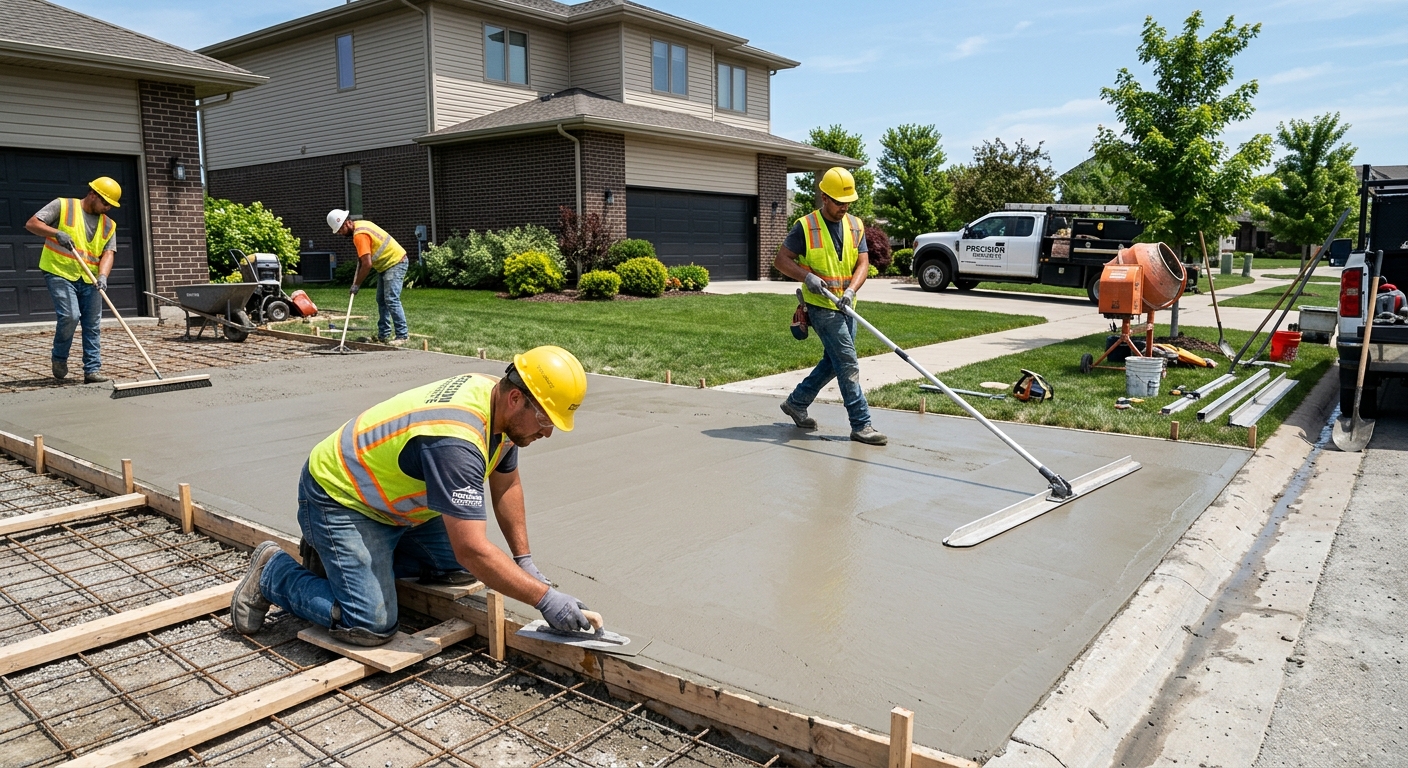
Concrete work options and costs in Fort Nelson
Fort Nelson homeowners typically start concrete projects with driveways, patios and walkways, because the town’s small, established residential pockets—especially around the Frontier/Two Mile area—are where curb-to-front access and reliable winter surfaces matter most. With a population of 2,611 (Statistics Canada, 2021 Census), the local market is tight, and many jobs are scheduled around a short pour window and the availability of crews who can handle cold-weather protection properly. In Fort Nelson, you’re also more likely to be working with a mix of older housing stock and newer builds; that matters because how close your slab is to compacted fill and drainage paths affects both durability and the price you’ll get.
Across the Kootenays, costs are shaped by cold continental winters, frequent freeze–thaw cycles, and the practical reality that footing bottoms often need to be set well below grade to resist frost heave. Contractors price accordingly: air-entrained mixes, tighter control-joint layouts, careful base prep, and cold-weather curing (insulating blankets, heat management and scheduling) all add labour and materials. That’s why two quotes for the same driveway can differ meaningfully even when the finish looks similar.
Below are realistic Fort Nelson budget bands to help you compare apples-to-apples before you request itemised quotes—then use the tables in the next sections to understand what drives the swings.
| Application |
Typical Size |
Key Spec |
Finish Option |
Price Range |
| Concrete driveway (standard broom finish) |
400 sq ft (approx. 20 ft × 20 ft) |
Air-entrained exterior mix; compacted granular base; control joints |
Broom |
$18,000–$28,000 |
| Exposed aggregate driveway |
400 sq ft (approx. 20 ft × 20 ft) |
Air-entrained mix; properly controlled surface exposure; sealant ready |
Exposed aggregate |
$22,000–$34,000 |
| Stamped concrete driveway or patio |
300 sq ft (approx. 15 ft × 20 ft) |
Air-entrained exterior mix; base prep; joints for movement |
Stamp + color |
$25,000–$40,000 |
| Plain concrete patio or walkway |
200 sq ft (approx. 10 ft × 20 ft) |
Air-entrained mix; dowels where tied in; sealed joints |
Plain broom or light trowel |
$14,000–$24,000 |
| Garage floor (interior slab) |
500 sq ft (approx. 20 ft × 25 ft) |
Vapour barrier (where required); thickened edges as needed; wire mesh or rebar |
Standard finish |
$20,000–$33,000 |
| Foundation footings (structural, below frost) |
Per lineal foot equivalent (typical footing walls) |
Excavate below design frost; compacted base; rebar cage; concrete pour below frost |
Structural concrete |
$70–$120 |
Prices are estimates only and vary by project scope, site access and material selection.
What affects the price of concrete work in Fort Nelson
In Fort Nelson, quotes for “the same” concrete job can swing by 30–50% because the real cost drivers aren’t visible in a photo: excavation depth, base thickness, reinforcement quantity, mix requirements, and—most importantly—winter scheduling and curing protection. In the Kootenays, cold continental winters and freeze–thaw cycles push engineers and experienced contractors to spec more conservative foundations and exterior slabs. That translates into more material, more labour time, and sometimes more days on site.
Here’s what matters most. First, frost line depth dictates how deep footings must go. The aim is to keep concrete below the design frost penetration to prevent frost heave, and in practical Fort Nelson terms that means excavation and form height increase rapidly on poorly drained or fill-based lots. Second, air-entrained concrete is essential for every exterior slab or walkway in this freeze–thaw environment; it helps concrete survive repeated expansion and contraction. Third, the shorter pour season means contractors often need heated enclosures, insulating blankets, or other cold-weather curing precautions—adding costs compared with milder parts of BC. Finally, de-icing salt accelerates surface wear and spalling if the mix and finish aren’t handled correctly, so sealing is commonly factored in.
Two examples of how local conditions can raise or lower cost in Fort Nelson: (1) If your lot requires deeper over-excavation to get a properly compacted base, your driveway can move up within the $18–$28 band; (2) If the site has good access for a truck and the contractor can stage materials efficiently, a simple patio may stay closer to the $14–$24 walkway/patio band rather than climbing.
| Price Factor |
Why It Matters |
Cost Impact |
| Frost line depth |
Determines footing depth and form height |
Higher excavation and concrete volume; can be a major swing on foundation work |
| Site preparation |
Excavation, grading, compacted granular base |
Extra truckloads and compaction time can add significant labour and equipment costs |
| Reinforcement |
Rebar or wire mesh requirement |
Material + labour for tying steel; more in thicker slabs and structural elements |
| Mix design |
Air-entrainment and compressive strength spec |
Cold-weather, exterior durability mixes typically cost more and require careful handling |
| Finish type |
Broom vs. stamped vs. exposed aggregate |
Stamped/exposed requires more labour and stricter timing and protection |
| Pour size and concrete truck access to site |
Concrete placement speed and distance |
Limited access can increase labour and create smaller pour logistics |
| Cold-weather curing precautions |
Heating and blankets |
Insulation materials, monitoring, and longer timelines add cost in winter |
| Control joint pattern and sealing cost |
Limits random cracking and protects from salts |
More joints and sealant follow-up is usually cheaper than repairs |
Permits & regulations in British Columbia
In British Columbia, structural concrete work typically needs municipal involvement. That means footings, foundation walls, and grade beams are usually handled through the building permit process, often with engineered drawings reviewed for structural requirements and compliance. Concrete flatwork—such as driveways, patios, sidewalks and walkways—usually does not require a permit by default, unless the work affects lot grading, drainage, or triggers constraints tied to impervious surface coverage, setbacks, or changes near the municipal right-of-way. The safe approach is always to confirm with the local authority before breaking ground, especially if you’re changing drainage patterns or tying into existing structures.
For a homeowner in Fort Nelson verifying a contractor’s credentials in BC, follow this practical step-by-step process:
- Check contractor licensing/registration online through the BC government licensing registry relevant to your contractor’s trade.
- Request a current certificate of liability insurance naming you (or confirming you’ll be protected as required) and verify the policy is active for the job period.
- Confirm WCB coverage (Workers’ Compensation Board) and ask for a clearance letter or proof of account in the contractor’s name.
- Ask for 2–3 references from projects of a similar scope and winter exposure (exterior slabs are where freeze–thaw matters).
- Make sure the quote matches the scope that will be inspected—especially for foundations and any engineered components.
Getting concrete right in Fort Nelson's freeze-thaw climate
Concrete fails in Fort Nelson when the slab or foundation can’t handle freeze–thaw movement, water ingress, or poor base support. The most common problems we see are surface scaling and spalling (often linked to inadequate air-entrainment), random cracking from movement restraint, and settlement when the granular base wasn’t compacted to the correct depth for local soils and drainage conditions. To spec the job correctly, you want the five fundamentals lined up: base preparation, mix design, control joints, curing, and sealing.
Base prep means excavation and a compacted granular sub-base sized for your frost and soil conditions. If water can sit under the slab, freeze–thaw will do its damage. Mix design in Fort Nelson should include air-entrainment—typically 5–7% air content for exterior flatwork—along with a minimum 32 MPa compressive strength spec that’s realistic for the exposure conditions. Control joints should be planned so cracking happens where you intended, not randomly across the slab. Curing is critical: aim for at least 7 days under appropriate conditions. In winter, that means insulation/blankets or heated protection. Finally, sealing with a penetrating sealer is typically applied about 28 days after the pour to help repel de-icing salt and reduce surface damage.
Price-wise, this is where better specs can actually be good value. For instance, moving from a plain patio in the $14–$24 band to a more durable exterior mix and properly spaced control joints may only add a few thousand dollars—but it can prevent an early resurface or crack repair that costs far more and disrupts your season. Sticking to proper air-entrainment is one of the best “don’t cut this” decisions in British Columbia’s coldest micro-climates.
| Spec |
Why It Matters in Fort Nelson |
What to Ask For |
Impact if Skipped |
| Compacted granular base (depth?) |
Supports the slab through freeze–thaw and reduces settlement |
State the excavation and granular base depth, plus compaction requirements |
Settlement cracks, pumping fines, and premature slab movement |
| Air-entrained concrete mix (target air %?) |
Improves freeze–thaw durability and reduces scaling/spalling |
Confirm exterior air content target of 5–7% and mix design for exposure |
Surface scaling, spalling, and faster deterioration in winter |
| Compressive strength (MPa rating) |
Provides structural durability and long-term performance |
Specify at least 32 MPa and curing expectations |
Lower durability, increased cracking risk under loading and cold cycles |
| Control joints (spacing per ACI guidelines) |
Controls where cracks form as the slab shrinks/expands |
Ask for the joint spacing plan and timing (sawed vs formed) |
Random cracking across visible areas and potential trip hazards |
| Minimum 7-day curing period |
Lets concrete gain strength before exposure to cold/wet conditions |
Confirm curing method; in cold weather ask about blankets/heat |
Reduced strength gain, surface damage, and compromised bond |
| Penetrating sealer (when applied after cure) |
Helps repel de-icing salts and reduces surface wear |
Ask for application after cure (about 28 days post-pour) |
More scaling and faster surface breakdown under winter maintenance |
How to choose a concrete work contractor in Fort Nelson
Choosing the right concrete contractor in Fort Nelson comes down to proof and process—not just price. In British Columbia, verify licensing/registration appropriate to the work and confirm you receive a current certificate of liability insurance before work starts. For jobsite coverage, ask for WCB (Workers’ Compensation Board) proof and confirm workers are covered for the duration of the project. If a contractor can’t provide up-to-date documentation quickly, that’s a red flag.
Get 2–3 itemised written quotes. Look for a breakdown that separates labour, concrete supply, reinforcement, excavation, formwork, finishing labour, and curing protection—don’t accept a single lump-sum number without inclusions. Scope clarity matters more in winter: ask whether permits are included (where required), who handles disposal of excavated material, and whether there are exclusions like removal of old concrete or trenching for drainage ties.
Warranty should be specific: ask for workmanship warranty length (and what it covers), and whether any product/manufacturer warranty applies to admixtures, sealers, or decorative systems. Also confirm whether warranties are transferable if you sell the home.
Payment scheduling should protect you. A safe guideline is never more than 10–15% upfront; hold back a portion until the final grading, joint finishing, curing protection removal, and clean-up are complete. Finally, insist on a written timeline with a start date and realistic completion estimate—cold weather can affect cure times and schedule windows.
- Provide proof of liability insurance (active policy dates, coverage limits).
- Provide WCB proof/clearance letter for the company and confirm coverage for workers.
- List the mix specs (air content, compressive strength) for exterior work.
- Confirm freeze–thaw plan: blankets/heating approach and how they monitor temps.
- Use itemised quotes (base prep, rebar/wire mesh, joints, finishing, sealing).
- Clarify exclusions: excavation of old concrete, hauling, disposal, drainage corrections.
- Confirm joint layout (spacing and how joints are created: formed vs sawed).
- Ask about sealing: sealer type and whether it’s included and scheduled after cure.
- Confirm reinforcement details for your slab thickness and loading conditions.
- Get a written warranty and identify what triggers repair versus replacement.
- Review payment schedule; avoid large deposits and change-order surprises.
- Ask for at least 2 references from similar exterior projects in cold climates.
Red flags to watch for in Fort Nelson: vague quotes that omit excavation depth and joint plan, no documented cold-weather curing approach, refusal to provide proof of WCB/liability coverage, “cheap” exterior concrete that doesn’t mention air-entrainment, and finishing or sealing promises without tying them to cure timing and protection measures.
Frequently asked questions — concrete work in Fort Nelson
Why does concrete crack in Fort Nelson and how is it prevented?
In Fort Nelson, cracking is usually movement-related: temperature swings create shrinkage and expansion, and freeze–thaw cycles expand moisture inside concrete. If the base isn’t properly compacted or drainage allows water underneath, the slab can settle and crack. Prevention starts with the right build-up (excavate to a stable base, then compact granular layers), specifying exterior air-entrained concrete for durability, and planning control joints so cracking happens in the intended locations. Contractors should also match the joint spacing to slab size and cut/saw joints at the correct time. Finally, cold-weather curing matters: if concrete is exposed too soon, strength gain is compromised and cracking risk increases. A well-prepped and properly jointed driveway is usually priced within the local $18,000–$28,000 band because it includes the labour and materials needed for a long-lasting exterior slab.
Stamped vs broom-finish concrete — cost difference?
Stamped concrete costs more than a broom-finish because it requires additional materials and more labour time for moulding, colouring and surface detailing, plus tighter control of timing. In the Fort Nelson market, you’ll typically see stamped driveways or patios budgeted around $25,000–$40,000, while standard broom-finish driveways tend to fall in the $18,000–$28,000 range (depending on size and access). The difference isn’t only the finish—often stamped work also includes careful base preparation and joint planning so the decorative surface doesn’t telegraph random cracks. If someone offers stamped pricing close to broom-finish levels, ask what’s omitted (usually joint detailing, curing protection, or sealer). In British Columbia’s freeze–thaw conditions, durable mixes and correct curing are still required for stamped surfaces to survive winter.
When is the best time to pour concrete in Fort Nelson?
In Fort Nelson, the “best” time is whenever you can meet cold-weather curing requirements. Late fall and winter can work only if the contractor has a plan for heating/insulating blankets and can maintain workable conditions long enough for proper strength gain. Practically, many pours are scheduled in a stable window where temperatures won’t interfere with placement and curing, because cold continental winters can cause surface damage or slow strength development. If you want decorative finishes like stamping or exposed aggregate, earlier in the season often reduces risk of delays. Even if the weather is workable on pour day, proper curing time still matters—especially if freeze–thaw cycles begin immediately after placement. Always ask for the contractor’s cold-weather protection method and confirm the curing duration is included in the schedule.
How long does concrete take to cure?
Concrete doesn’t reach full strength quickly, and “cure time” depends on temperature and protection. For typical exterior residential work in British Columbia, a good rule of thumb is that you want at least 7 days of curing under appropriate conditions before expecting normal exposure, with longer-term strength continuing beyond that. In Fort Nelson’s cold environment, curing is commonly extended using blankets or heating to keep temperatures in the safe range. For sealing, many exterior systems are planned around 28 days after the pour so the concrete has dried and developed enough strength for the sealer to perform. If a contractor rushes the schedule—walking on it early, removing protection too soon, or exposing it to freeze conditions right away—you’re more likely to see early scaling or cracking.
Do I need a permit for concrete work in British Columbia?
In British Columbia, structural concrete work like footings, foundation walls, and grade beams generally involves a building permit and often engineered drawings reviewed by the municipality. Concrete flatwork—such as driveways, patios, sidewalks and walkways—usually does not require a permit unless it affects lot grading, drainage, impervious surface limits, or work near municipal right-of-way constraints. Because rules can vary based on how your property is changing, you should confirm with the local authority before breaking ground. For your contractor selection, ask for clarity upfront: whether permits are pulled by the contractor (where required), and confirm the contractor has active liability coverage and WCB coverage. This protects you if inspection or documentation requirements change during the foundation or structural phase.
Concrete vs pavers for a patio in Fort Nelson?
Concrete is often the better value in Fort Nelson when you want a solid, low-maintenance surface with controlled joints and predictable long-term performance—especially if it’s built with an air-entrained mix and a proper granular base. A plain concrete patio/ walkway is commonly budgeted around $14,000–$24,000 for typical homeowner sizes, while pavers can vary widely based on base prep, edging, and labour intensity. Pavers offer design flexibility and easier spot repairs, but they can shift if the base isn’t compacted correctly—then freeze–thaw can work water under units. If you use pavers, insist on a properly engineered base and drainage strategy. For many homeowners, a well-made concrete patio with sealing after cure gives you fewer long-term surprises in British Columbia’s freeze–thaw climate.