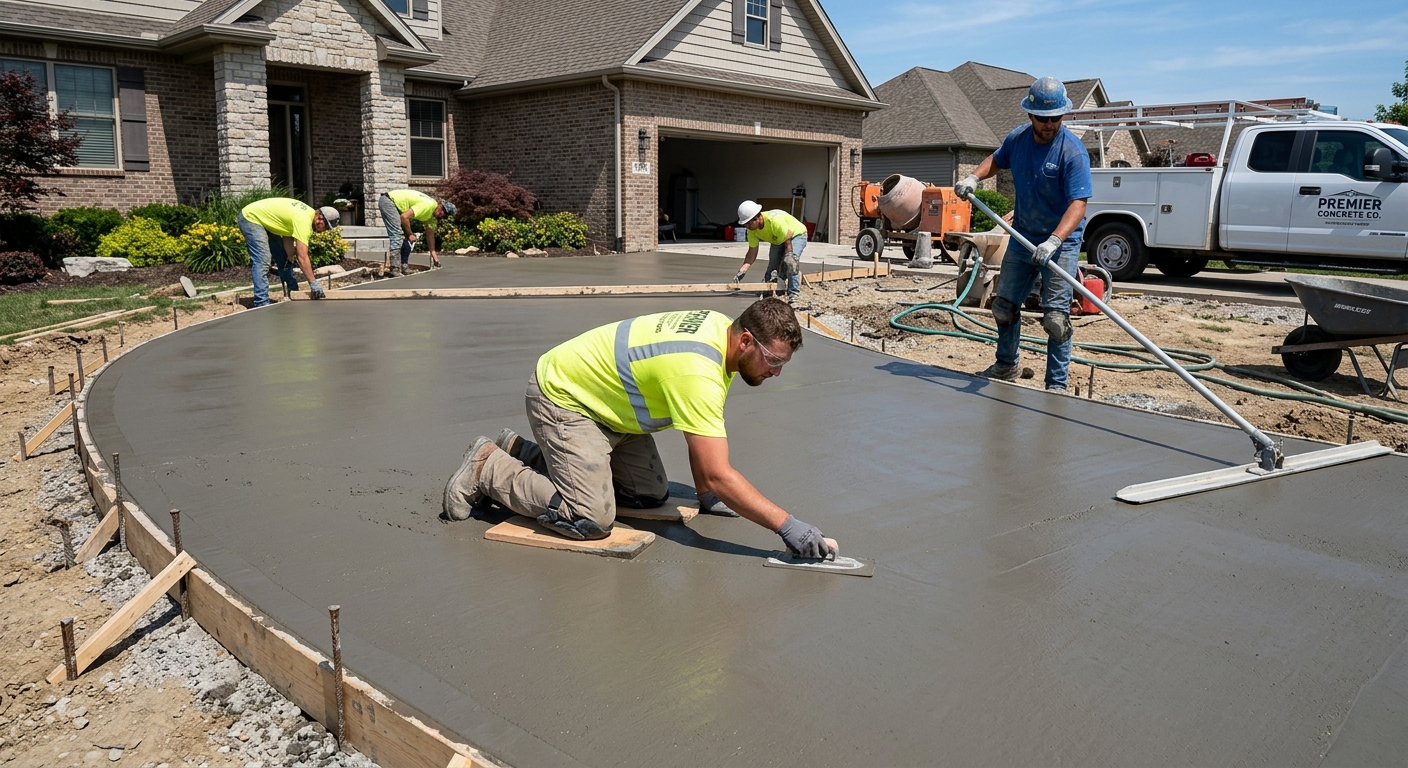
Concrete work options and costs in Shawnessy
Shawnessy, Alberta is where a lot of homeowners want durable concrete flatwork that can handle Calgary’s cold snaps and frequent freeze–thaw. With a population of 9,055 in 2021 (Statistics Canada, 2021 Census), the local market is active enough that you’ll typically find multiple crews for driveways and slabs, but foundation work still needs more scheduling due to frost-depth excavation requirements. In this area, concrete is most commonly used for the typical suburban upgrades—driveways, patios, walkways and interior garage floors—along with structural concrete that supports homes. Many lots feature older infill and new builds side-by-side, so contractors see everything from small backyard re-pours to full foundation and footing scopes.
Calgary-region concrete pricing is shaped by climate engineering: the design frost depth is about 1.2 m (roughly 4 ft), so footings for houses, garages and retaining structures must extend below that depth into undisturbed soil to reduce frost heave. Exterior slabs also need air-entrained concrete and good jointing because freeze–thaw cycles can cause scaling and spalling if the mix and curing are wrong. On top of that, the practical exterior pour season is shorter, and cold-weather placement can require insulated blankets or temporary heat to protect curing—costs that show up in every foundation and driveway quote.
In Shawnessy, demand is especially steady around established residential pockets near the commercial area and along major access routes, where homeowners often replace cracked asphalt with broom-finished concrete or upgrade to exposed aggregate for better curb appeal. Below are realistic cost ranges you can use to compare quotes before you call for a site visit.
| Application |
Typical Size |
Key Spec |
Finish Option |
Price Range |
| Concrete driveway (standard broom finish) |
12 m x 3 m (~36 m²) |
Air-entrained exterior mix, control joints, compacted granular base |
Broom finish + saw-cut joints |
$12,000 – $18,000 |
| Exposed aggregate driveway |
12 m x 3 m (~36 m²) |
Air-entrained exterior mix, proper finishing timing, sealed after cure |
Exposed aggregate with exposed stone texture |
$15,000 – $22,000 |
| Stamped concrete driveway or patio |
12 m x 3 m (~36 m²) or 30 m² patio |
Air-entrained exterior mix, color hardener, control joints |
Stamp pattern + integral color (or overlay colorant) |
$15,000 – $26,000 |
| Plain concrete patio or walkway |
6 m x 3 m (~18 m²) or 1 m x 10 m (~10 m²) |
Air-entrained exterior mix, compacted base, mesh/rebar as required |
Float + broom or smooth trowel (non-slip as needed) |
$5,000 – $9,000 |
| Garage floor (interior slab) |
6 m x 6 m (~36 m²) |
Vapour barrier as needed, 25–32 MPa concrete, interior finishing |
Broom finish or light saw-cut pattern |
$10,000 – $16,000 |
| Foundation footings (structural, below frost) |
Typical two-storey house footing perimeter (project dependent) |
Excavation to design frost depth, structural concrete, engineered reinforcement |
Structural grade concrete (no decorative finish) |
$28,000 – $45,000 |
Prices are estimates only and vary by project scope, site access and material selection.
What affects the price of concrete work in Shawnessy
In Shawnessy and the broader Calgary area, it’s common to see quotes for the “same” concrete job come in 30–50% apart. The difference usually isn’t the concrete itself—it’s the engineering details and site work behind it: how deep the excavation goes, what reinforcement is required, the concrete mix spec, whether the contractor plans for winter curing, and how tight the schedule is. In a region with a design frost depth of about 1.2 m, footings and foundation-related excavation are more intensive than in milder provinces, which raises both labour hours and concrete volumes. Add freeze–thaw cycling, and you also need air-entrained concrete and consistent control joints for exterior slabs.
Cold-weather placement is another cost driver. If you pour late fall or early spring, contractors often need winter-grade mixes plus insulating blankets and sometimes temporary heat to keep curing on track. Getting it wrong can mean surface scaling and later spalling—so careful curing increases cost today but prevents expensive callbacks later.
Here are a few real Shawnessy examples that swing price: (1) A driveway replacement that needs full-depth base rebuild after soft subgrade gets excavated deeper and hauled out, pushing the job toward the higher end of $12,000 – $18,000. (2) If your patio is near an entry where de-icing salt is used daily, sealing becomes more critical, and crews often recommend broom texture plus consistent jointing—moving the scope closer to $5,000 – $9,000 rather than a bare-minimum pour. (3) Foundation work can jump materially when access is tight or when the engineering calls for additional reinforcement; since footings must be below frost depth, you can’t “value engineer” those depths without redesign.
| Price Factor |
Why It Matters |
Cost Impact |
| Frost line depth — determines footing depth and form height |
Footings must bear on undisturbed soil below design frost depth to reduce heave |
Higher excavation and concrete volume; can shift foundation pricing by tens of thousands |
| Site preparation — excavation, grading, compacted granular base |
Proper base prevents settlement and keeps slabs level through freeze–thaw |
Soft spots or poor drainage require more haul/compaction |
| Reinforcement — rebar or wire mesh requirement |
Reduces cracking and controls slab movement when designed correctly |
Additional labour to place chairs/tie bars and material cost increases |
| Mix design — air-entrainment and compressive strength spec |
Air-entrainment helps resist freeze–thaw scaling; strength supports loading |
Winter-grade or higher-spec mix can increase per-yard material costs |
| Finish type — broom vs. stamped vs. exposed aggregate |
Decorative finishes require extra labour time and process control |
Stamped/exposed often adds crews’ time and finishing materials |
| Pour size and concrete truck access to site |
Access determines whether extra pumping/telebelting is needed |
Poor access can add equipment, labour, and scheduling delays |
| Cold-weather curing precautions — heating and blankets |
Maintains curing temperature and early strength development |
Blankets, heaters, and monitoring can materially increase the total |
| Control joint pattern and sealing cost |
Joints reduce random cracking; sealing helps limit salt-driven surface deterioration |
Saw-cut labour plus sealer materials and application time |
Permits & regulations in Alberta
In Alberta, most homeowners only need a permit when concrete work becomes part of structural support or changes drainage/grade in a way the municipality cares about. Concrete flatwork—such as patios, walkways and typical driveways—often does not require a building permit, unless it affects lot grading, changes stormwater/lot drainage, or triggers impervious surface/encroachment considerations within municipal rules. By contrast, structural concrete work does require a building permit in most cases: footings, foundation walls, grade beams, retaining walls, and basement foundation elements typically fall into the permit-and-engineering category. Always confirm specifics with the local authority before excavation.
Before you sign with a contractor in Shawnessy, verify three things: (1) liability insurance, (2) workers’ compensation coverage (WSIB/WCB), and (3) appropriate licensing/registration where applicable for their trade scope. Step-by-step for homeowners: First, ask the contractor for a current Certificate of Insurance showing they carry general liability for the work (request the effective dates and the jobsite address coverage). Second, request proof of coverage for workers—WSIB/WCB clearance or a certificate letter—so you’re not financially exposed if a worker is injured on your property. Third, check the contractor’s business listing/registry and any relevant trade registration details they should hold for concrete contracting in Alberta.
If they can’t provide documents promptly, that’s a warning sign. For anything structural, insist on engineered drawings and a permit-ready scope.
Getting concrete right in Shawnessy's freeze-thaw climate
The most common concrete failures in Shawnessy aren’t mysterious—they’re predictable outcomes of winter exposure, de-icing practices and shortcuts in base prep, mix design, joints and curing. Freeze–thaw cycles expand water in pores, and if the concrete isn’t air-entrained correctly, you’re far more likely to see spalling and scaling. The fix is to spec the job the way Calgary-area engineers expect: (1) base preparation with a properly compacted granular sub-base to the right depth for local soils and frost conditions, (2) air-entrained exterior mix with adequate strength, (3) control joints at an appropriate spacing to limit random cracking, (4) curing for long enough to develop early and long-term strength, and (5) sealing after the cure to repel meltwater and de-icing salts.
When you’re comparing options, don’t just compare the “finish.” For example, a standard broom driveway usually costs within $12,000 – $18,000. If the contractor offers stamped concrete at $15,000 – $26,000, the added cost is justified when the base prep, jointing plan and color/texture process are done correctly—because stamped work needs careful finishing timing and consistent substrate conditions. If the foundation of the job is poor, stamped concrete only makes the same failure look more expensive.
Use this as your checklist for technical questions: Ask what air content target they’ll use for exterior slabs, how they’ll build and compact the base, where the control joints will land, and what curing/temperature protection they’ll provide if the forecast turns cold. That’s how you avoid the spalling problem that hits a lot of poorly engineered patios and driveways in Alberta winter weather.
| Spec |
Why It Matters in Shawnessy |
What to Ask For |
Impact if Skipped |
| Compacted granular base (depth?) |
Prevents settlement and helps slabs tolerate freeze–thaw movement in Calgary-region soils |
Documented granular base depth and compaction method before pour |
Premature cracking, uneven surface, shortened service life |
| Air-entrained concrete mix (target air %?) |
Air entrainment provides freeze–thaw resistance and reduces scaling/spalling risk |
Exterior air content target (typically 5–7% for many exterior flatworks) on the spec sheet |
High likelihood of surface scaling and spalling after winters |
| Compressive strength (MPa rating) |
Adequate strength supports the loads and long-term durability |
Minimum 32 MPa compressive strength (or higher if engineering requires) |
Surface damage, increased cracking risk, reduced durability |
| Control joints (spacing per ACI guidelines) |
Controls shrinkage cracking in a predictable pattern through Alberta’s temperature swings |
Planned joint spacing and saw-cut timing, plus locations around edges/penetrations |
Random cracking and easier water intrusion into the slab |
| Minimum 7-day curing period |
Cold weather can slow early strength gain; proper curing improves performance |
Minimum 7-day curing under proper conditions (and winter protection if needed) |
Weak surface, scaling risk, longer-term defects |
| Penetrating sealer (when applied after cure) |
Repels meltwater and helps reduce de-icing salt damage |
Penetrating sealer applied after full cure—commonly 28 days post-pour |
Faster deterioration from salts and water cycling |
How to choose a concrete work contractor in Shawnessy
Choosing the right contractor in Shawnessy is mainly about proof and process. Start by verifying Alberta coverage documents. Ask for a current Certificate of Insurance for general liability and ensure it includes the scope of concrete work at your address. Then request WSIB/WCB clearance or proof of workers’ compensation coverage—this is critical in case of jobsite injuries. For licensing and trade registration, ask what registrations they hold for their specific scope and confirm the business is in good standing through the relevant online registry or listing. If a contractor can’t provide documents quickly, they’re usually not set up for predictable jobsite risk management.
Next, require 2–3 itemised written quotes. You want a breakdown that separates labour, excavation/base prep, concrete supply (mix spec), reinforcement, finishing, saw-cutting, curing protection and sealing. Watch for exclusions like “no disposal” (haul-away), “no permit allowance,” or “no cold-weather measures,” because those can turn a fair number into a surprise invoice. A good contractor states whether they pull permits when needed and includes forms of waste disposal in the scope.
Warranty matters too: ask for workmanship warranty length, and whether product/manufacturer warranties apply to admixtures, sealers, and decorative systems. Also clarify if the warranty is transferable to a future buyer. Payment should be controlled—never more than about 10–15% upfront, with a holdback until the job is complete and passes final inspection. Finally, get a written start date and completion estimate tied to site readiness and weather conditions; Calgary can change the pour schedule quickly, so timelines should be conditional and stated clearly.
- Request Certificate of Insurance (effective dates + jobsite address details).
- Request WSIB/WCB clearance or proof of coverage before work starts.
- Ask for at least 3 references with similar sizes (driveways, patios, or foundations).
- Get quotes itemised into labour, materials, reinforcement, disposal, and finishing.
- Confirm whether permits are included for structural concrete work.
- Verify base build: granular depth and compaction method.
- Ask for the concrete mix spec: air-entrainment and minimum compressive strength.
- Confirm reinforcement plan (rebar mesh type, chairs, spacing) if required.
- Ask who supplies and installs control joints and when they’re cut.
- Ask what winter curing measures they use (blankets/heating) and when.
- Clarify sealing: product type and schedule (often around 28 days).
- Use a payment schedule with a holdback; avoid large upfront deposits.
Red flags I see in Shawnessy include: vague scopes (“concrete only” with no base details), contractors who won’t show insurance/WSIB coverage, skipping air-entrainment references for exterior slabs, no jointing plan, and promises of “no need for sealing” when de-icing salt is used.
Frequently asked questions — concrete work in Shawnessy
What causes concrete to spall in Shawnessy winters?
In Shawnessy and the wider Calgary region, spalling usually comes from a combination of freeze–thaw cycling, de-icing salts, and inadequate concrete durability. The biggest technical cause is often poor or missing air-entrainment for exterior flatwork. Without the right air content, water inside the concrete freezes and expands, breaking the surface paste and leading to scaling that can progress into spalls. Salt accelerates the damage by pushing water to the surface and increasing freeze–thaw stress at the top layer. It can also happen when base preparation or curing is rushed—if the slab didn’t gain strength properly, you’ll see early deterioration. If you’re comparing quotes, pay attention to exterior mix specs and curing plans, not just the finish. Even a driveway that starts around $12,000 – $18,000 can fail early if the climate-driven requirements aren’t built into the scope.
What is rebar and when is it required in Alberta?
Rebar (reinforcing steel) is used to strengthen concrete in areas where it’s needed to handle tension forces and control cracking. In Alberta, the requirement for rebar isn’t “one-size-fits-all”—it’s determined by the structural design for the specific application. For structural concrete like foundation footings, foundation walls, and grade beams, engineered drawings commonly specify the rebar size, spacing and placement. For concrete flatwork (driveways, patios, walkways), reinforcement may be required based on slab thickness, subgrade condition, and loading (for example, heavier vehicle use or weak soils). In cold climates like Shawnessy, proper reinforcement alone doesn’t replace air-entrainment and base compaction, but it helps control cracking patterns. Ask your contractor for the reinforcement plan in writing and confirm whether engineering is involved for your specific foundation scope.
How long does a concrete project take in Shawnessy?
The timeline depends on the scope, site access, weather, and curing requirements. For typical residential exterior flatwork in Shawnessy, you can often break it into stages: base prep and forms (usually 1–3 days), the pour day (often 1 day), and finishing plus curing. While concrete gets ready for light touch soon after finishing, it still needs proper curing time. Minimum curing is commonly treated as at least 7 days before you expect full durability performance, and sealing is typically scheduled around 28 days post-pour. In cold snaps, Calgary-area crews plan extra time for blankets/heating and temperature monitoring, which can extend the schedule even if the pour is quick. Decorative work like stamped concrete can add time for texture and color work, especially if you’re aiming for a consistent pattern. For planning purposes, many homeowners see driveway replacements and patio pours handled within about 1–2 weeks from scheduling to final acceptance, depending on weather and curing protection needs.
What is a concrete overlay and is it suited to Shawnessy?
A concrete overlay is a new layer of concrete placed on top of an existing slab—often used to resurface damaged surfaces without removing everything. It can be suited to Shawnessy when the existing base is still structurally sound and properly prepared. The key issue is bonding and preventing moisture pathways: if the old slab has failed subgrade or widespread movement, an overlay can crack or debond quickly through freeze–thaw cycles and salt exposure. A good overlay contractor will assess cracks, determine whether the existing slab has stabilized, and prep the surface thoroughly (typically grinding/scarifying and cleaning) before placement. If your driveway is heaving or the base is pumping, full removal and a rebuild is usually the better long-term option. Overlays can also affect drainage slightly, so it’s worth checking lot grading considerations. If you’re trying to stay in the ballpark of driveway replacement pricing around $12,000 – $18,000, ask whether the overlay addresses the real cause of cracking or just covers the symptoms.
How do I seal concrete to protect it in Shawnessy?
Sealing is one of the most practical ways to protect exterior concrete in Shawnessy because meltwater and de-icing salts concentrate at the surface through the freeze–thaw cycle. For best results, seal after the concrete has fully cured—commonly around 28 days post-pour—so the sealer can properly penetrate rather than trap excess moisture. Use a penetrating sealer made for exterior flatwork; it helps repel water and reduces how quickly salts and moisture break down the surface. Preparation matters: the slab should be clean and dry, and any staining or laitance should be removed beforehand. When you get quotes, ask the contractor when they’ll apply sealer and which product they use, and confirm whether they include it in the scope or recommend it as an add-on. If you’re choosing between a standard broom driveway and a decorative option around $5,000 – $9,000 for patios/walkways, sealing is often what keeps the finish looking better and reduces early scaling on high-salt entry routes.
What is the difference between concrete and cement?
Concrete is the finished construction material you see—made from cement plus water, aggregates (sand and gravel), and often admixtures (like air-entraining agents for freeze–thaw durability). Cement is only one component inside the concrete mix; it’s the binding material that reacts with water to form the paste that hardens and holds everything together. That’s why mix design matters so much in Shawnessy: for exterior slabs, the contractor specifies the total mix—including air-entrainment and compressive strength—not just the cement content. Two pours can both be “concrete,” but if one mix has the right air-entrainment and proper curing procedures, it will resist spalling far better in Alberta winters. This is also why a stamped or exposed aggregate project may cost more: the concrete’s performance and the finishing process are engineered to work together. When reviewing quotes, ask for the mix spec details (air content and strength) rather than just “cement amount.”