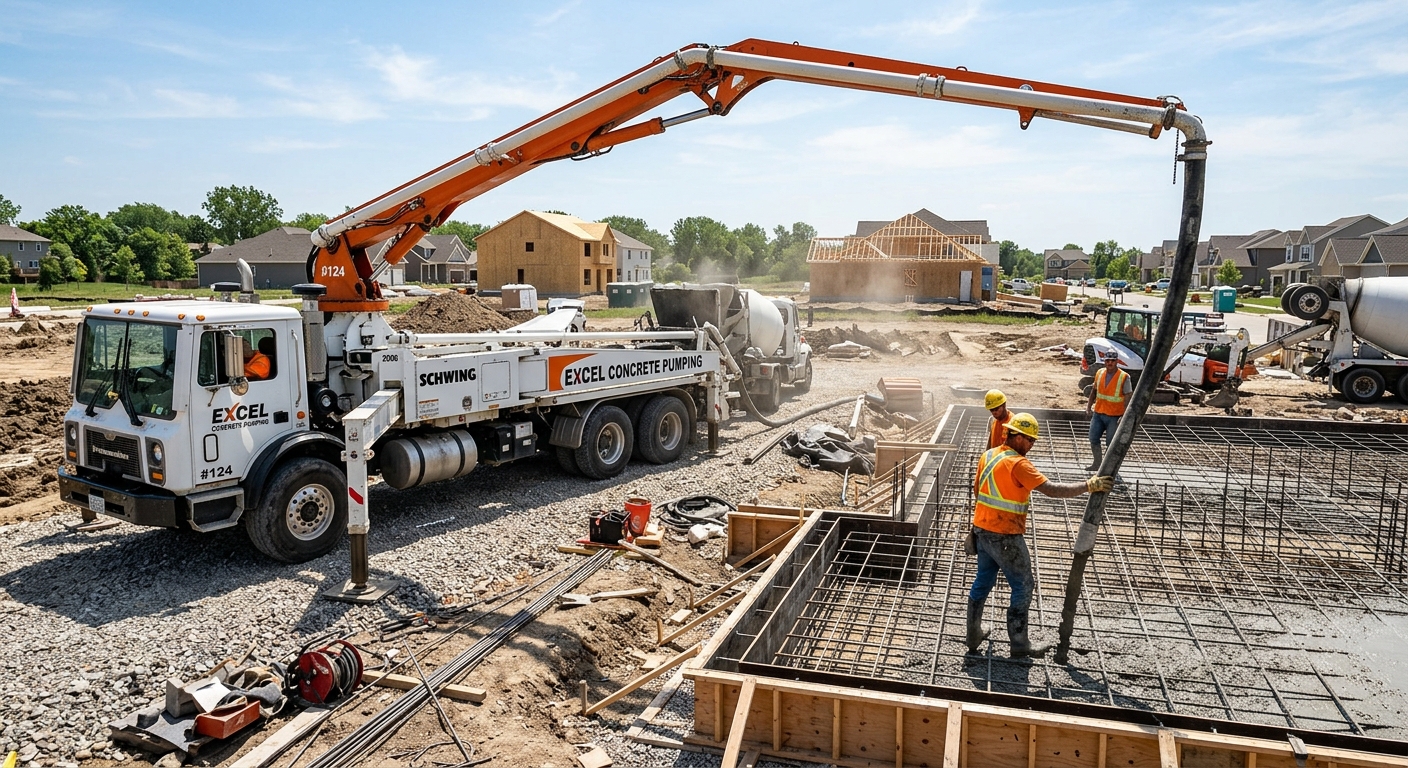
Concrete work options and costs in Newton
Concrete work in Newton, Alberta is all about building for winter—because Calgary’s freeze–thaw cycles are hard on driveways, patios and walkways. Newton’s population was 2,914 in the 2021 Census (Statistics Canada, 2021 Census), and that steady owner-occupier demand shows up in frequent upgrades to front entries and rear yards. In this area, a lot of neighbourhood activity clusters around family-oriented housing around Okotoks-facing and east-of-town corridors, where people commonly add or replace concrete flatwork to match new landscaping and garages.
Local pricing is shaped by engineering realities: the design frost depth in this region is about 1.2 m (roughly 4 ft), so footings and slab bases can’t be “shallow and hope for the best.” Exterior pours also need air-entrained mixes and careful curing, especially when the pour window tightens in fall and early spring. That’s one reason quotes for similar projects can differ—both the labour plan (excavation, forming, finishing) and the material spec (air content, strength, jointing, and sealing) affect cost.
Concrete contractors are typically busiest when weather aligns with the most reliable curing conditions, so getting on the schedule early can improve availability and reduce change-order risk. Below is a practical comparison of common options and what homeowners in Newton usually budget, before you dial in size, reinforcement and finish.
| Application |
Typical Size |
Key Spec |
Finish Option |
Price Range |
| Concrete driveway (standard broom finish) |
16 ft x 30 ft (480 sq. ft.) |
Air-entrained mix; compacted granular base; control joints |
Broom finish, light saw-cut pattern |
$12,000–$18,000 |
| Exposed aggregate driveway |
16 ft x 30 ft (480 sq. ft.) |
Air-entrained mix; proper base; double-check curing time |
Exposed aggregate (surface wash) |
$15,500–$22,500 |
| Stamped concrete driveway or patio |
14 ft x 28 ft (392 sq. ft.) |
Air-entrained mix; hardened release; joint strategy |
Stamp + colour; sealer |
$15,000–$26,000 |
| Plain concrete patio or walkway |
12 ft x 20 ft (240 sq. ft.) |
Air-entrained mix; compacted sub-base; edge forms |
Float/skim + broom or light texture |
$5,000–$9,000 |
| Garage floor (interior slab) |
24 ft x 24 ft (576 sq. ft.) |
Vapour control or insulation plan (if required); saw-cut joints |
Light broom or hard-trowel + sealer (optional) |
$10,500–$16,500 |
| Foundation footings (structural, below frost) |
Typical house system (engineered) |
Excavation to design frost depth; rebar cage; concrete strength spec |
Structural concrete, no decorative finish |
$28,000–$45,000 |
Prices are estimates only and vary by project scope, site access and material selection.
What affects the price of concrete work in Newton
In Calgary and the surrounding region, it’s common to see 30–50% swings for “the same” concrete job, even when the finish looks similar. The biggest drivers are engineered frost requirements, excavation volume, and whether the contractor designs the slab system for winter performance. In Alberta, exterior footings and structural elements must work with the local frost depth (about 1.2 m in this region), and that often means deeper excavation and more concrete volume than homeowners expect.
Freeze–thaw cycles also control the specs: air-entrained concrete is a must for exterior flatwork, and contractors typically plan a reliable control-joint layout to reduce random cracking and help protect against spalling. Because the practical exterior pour season is shorter, cold-weather curing precautions—insulated blankets, wind protection, and sometimes temporary heat—can add cost. Salt from de-icing accelerates surface wear, which is why sealing is usually recommended after cure.
In Newton, two real-world examples explain cost increases quickly. First, if your driveway sits on disturbed topsoil or you have soft areas from past construction, the “cheap” option turns into more granular base and compaction, pushing pricing toward the higher end of the concrete driveway band (starting around $12,000–$18,000). Second, a stamped driveway might look like an aesthetic upgrade, but it also demands more meticulous prep and finishing time; that’s why stamped work often aligns with the $15,000–$26,000 range once formwork, stamping, and colour/sealer steps are included.
Even housing age matters: older properties may have deeper service trenches, older drainage patterns, or established slopes that require regrading. Those site realities can translate to thousands in added excavation and disposal, on top of the frost-safe base plan.
| Price Factor |
Why It Matters |
Cost Impact |
| Frost line depth — determines footing depth and form height |
Footings must bear below design frost to prevent heave |
Higher excavation and concrete volume; can add major cost |
| Site preparation — excavation, grading, compacted granular base |
Bad sub-grade leads to settlement and cracking |
More base and labour if soil is poor or drainage is off |
| Reinforcement — rebar or wire mesh requirement |
Controls cracking and improves slab durability |
Material + placement labour increases price |
| Mix design — air-entrainment and compressive strength spec |
Air-entrainment reduces freeze–thaw damage and scaling |
Specialty mix and testing/QA time can raise costs |
| Finish type — broom vs. stamped vs. exposed aggregate |
Different finishing labour and curing/handling requirements |
Stamped/exposed typically add material and skilled time |
| Pour size and concrete truck access to site |
More volume needs more trucks; access affects time and risk |
Long carries, waiting time, and traffic control add cost |
| Cold-weather curing precautions — heating and blankets |
Protects strength gain and prevents early-age damage |
Can add labour, rental equipment, and material |
| Control joint pattern and sealing cost |
Joints manage cracking; sealer helps resist de-icing salts |
Additional labour and product—often small per square foot |
Permits & regulations in Alberta
In Alberta, many homeowners only need to think about permits for the structural parts of a project. Structural concrete work—such as footings, foundation walls, and grade beams—typically requires a building permit and, in many cases, engineered drawings that the municipality reviews. Flatwork like driveways, patios and walkways usually does not require a permit unless it affects lot grading or impervious surface coverage rules, or it impacts the municipal right-of-way (for example, modifying a driveway approach where it meets the street).
Here’s the practical step-by-step approach I recommend for Newton homeowners. First, ask your contractor what permit(s) are required for your exact scope and who is responsible for pulling them. Second, verify the contractor’s business standing and trade credentials through the relevant Alberta online resources (and/or the contractor’s provided licence details). Third, confirm insurance: request a current certificate of insurance showing liability coverage. Fourth, ask for WSIB/WCB coverage proof (or a clearance letter where applicable).
Finally, ask for references on similar-scale local jobs—driveways and foundations in the Calgary economic region have the same freeze–thaw challenges, so “portfolio photos” should include winter-tested projects, not just summer installs.
Getting concrete right in Newton's freeze-thaw climate
Concrete fails in Newton when the slab system isn’t designed for winter movement. The most common problems I see are surface scaling, spalling, and random cracking caused by inadequate base prep, insufficient air-entrainment, or poor curing. The good news is you can prevent most issues with the right specs and a clear quality plan that matches Calgary-area freeze–thaw behaviour.
(1) Base preparation: require a compacted granular sub-base sized for local soil conditions and designed to reach a frost-safe depth. With a design frost depth of about 1.2 m (roughly 4 ft) in this region, excavation volume is real, and skipping depth is a fast route to movement.
(2) Mix design: request air-entrained concrete with a target of 5–7% air for exterior flatwork and a minimum 32 MPa compressive strength (or higher if engineering specifies). This is what reduces freeze–thaw damage.
(3) Control joints: use a planned joint layout so cracks happen where you intend them, not through the field of the slab.
(4) Curing: ensure minimum 7-day curing under proper conditions. In cold snaps, the contractor should use insulation blankets and/or appropriate temporary heat to keep early-age concrete from freezing before strength gain.
(5) Sealing: add penetrating sealer after cure, commonly around 28 days post-pour, to better resist de-icing salt and reduce surface deterioration.
Is higher-cost concrete always worth it? Yes when it prevents failures. For example, if you choose a stamped driveway (often budgeted around $15,000–$26,000) but the contractor cuts corners on air-entrainment or base compaction, you’ll pay again in repairs. If the contractor matches the correct winter specs, the “extra” is justified by durability plus the finish you’re paying for.
| Spec |
Why It Matters in Newton |
What to Ask For |
Impact if Skipped |
| Compacted granular base (depth?) |
Provides stability and keeps the slab supported through frost cycles |
Specify sub-base depth, material type, and compaction targets |
Settlement, cracking, and uneven slab movement |
| Air-entrained concrete mix (target air %?) |
Protects against freeze–thaw scaling and spalling |
Confirm air target (typically 5–7% for exterior flatwork) |
Surface damage and premature deterioration |
| Compressive strength (MPa rating) |
Supports strength gain and long-term durability under loads |
Request minimum 32 MPa (or engineered higher) |
Weaker concrete, higher risk of cracking under stress |
| Control joints (spacing per ACI guidelines) |
Manages where cracks form during shrinkage and temperature swings |
Ask for planned joint spacing and saw-cut timing |
Random cracking and more costly repairs |
| Minimum 7-day curing period |
Ensures proper strength development despite cold weather risks |
Confirm cure protection plan in early cold/shoulder season |
Reduced strength and early-age surface scaling |
| Penetrating sealer (when applied after cure) |
Helps repel de-icing salts used through Alberta winters |
Ask for application timing after cure (often around 28 days) |
Faster wear and more spalling risk over time |
How to choose a concrete work contractor in Newton
When you’re hiring a concrete contractor in Newton, Alberta, start by verifying credentials that protect you if something goes wrong. Ask for proof of Alberta compliance as applicable to the work, then confirm they carry liability insurance. Next, verify WSIB/WCB coverage (or provide documentation/clearance where applicable). Don’t rely on verbal reassurance—request certificates and keep copies.
Then get 2–3 itemised written quotes that separate labour and materials, not just one lump number. A solid quote breaks out excavation/grading, formwork, reinforcement, concrete supply, finishing, and any required winter protection. Read the scope carefully: what’s excluded (for example, removing an old slab, regrading, tree root cutting, saw-cutting existing concrete)? Is a permit pull required and included? Is disposal of concrete and spoils included, or billed separately?
Warranty matters too. Ask for the workmanship warranty length and what it covers (cracks related to curing/base issues vs. minor cosmetic shrinkage). Also ask about the product/manufacturer warranty and whether it’s transferable if you sell the home. For payment, never pay the full amount up front—aim for 10–15% upfront at most and hold back payment until the job is complete and cleanup is done. Finally, require a written timeline with a start date and completion estimate that reflects the freeze–thaw reality of the Calgary market.
- Request proof of liability insurance and confirm coverage limits are adequate for your project.
- Verify WSIB/WCB coverage and ask for documentation before work starts.
- Ask whether the contractor pulls any required permits for foundations/footings or grading impacts.
- Get quotes with line items for excavation, base prep, reinforcement, concrete supply, finishing and sealing.
- Confirm the mix is air-entrained for exterior work and ask for the strength spec (MPa).
- Ask for the joint layout plan (spacing and saw-cut timing) rather than “we’ll do joints.”
- Clarify curing method for cold snaps (blankets/heating/wind protection).
- Ask whether sealing is included, and if so, the timing (after cure, often around 28 days).
- Confirm reinforcement plan: wire mesh vs. rebar, and where it’s placed.
- Ask how old concrete (if any) will be removed and whether disposal is included.
- Set a payment schedule with a holdback until final inspection/cleanup is complete.
- Require an on-site start date and completion window in writing.
Concrete red flags in Newton: “universal” quotes with no mention of air-entrainment or jointing, skipping base depth or compaction details, promising exterior pours in shoulder season without a curing plan, vague warranty language (“we stand behind it” with no term or scope), and refusing to provide certificates of insurance/WSIB/WCB documentation.
Frequently asked questions — concrete work in Newton
Can concrete be poured in cold weather in Newton?
Yes, but it has to be done correctly in Newton and across Alberta. The Calgary area’s freeze–thaw cycles and colder nights can threaten early-age strength gain if you pour “and hope.” A competent contractor will use a winter-grade mix plan, protect the slab during curing (insulated blankets, wind breaks, and sometimes temporary heat), and monitor conditions so the concrete doesn’t freeze before it reaches adequate strength. That’s why exterior projects can cost more in late fall or early spring—curing protection isn’t optional if you want durability against scaling. For context, a standard driveway typically falls in the $12,000–$18,000 range; winter protection and schedule compression are common reasons some quotes land closer to the upper end.
How do I maintain concrete in Newton's freeze-thaw climate?
Maintenance in Newton is mostly about protecting the surface from salt and moisture movement. Start with good drainage: keep slopes directed away from the slab so water doesn’t pool. Use de-icing products carefully—some salts are tougher on concrete. After a driveway or patio cures, consider a penetrating sealer (commonly applied around 28 days post-pour) to help repel de-icing salts. Re-seal timelines vary by product and exposure, but plan for periodic re-application. Keep leaves and debris off joints to avoid trapping moisture. When you do see early spalling, don’t ignore it—patching quickly reduces freeze-thaw expansion. These steps complement the correct winter specs (air-entrainment and joints) that contractors should build in at the start.
What causes concrete to spall in Newton winters?
Spalling in Newton winters usually comes from inadequate air-entrainment, poor curing, or a slab system that lets moisture reach vulnerable surfaces. When concrete doesn’t have the correct air content (commonly 5–7% for exterior flatwork) or when it’s placed and cured too cold, freeze–thaw cycles can damage the paste and pop the surface over time. The other common cause is insufficient base preparation: if the slab moves slightly during seasonal change, micro-cracks open and water gets in, then expands during freeze events. You can prevent this with a proper granular base, correct mix design, control joints, and curing protection. That’s also why the “decorative” part of a job shouldn’t be separated from the durability specs—stamped options often budget around $15,000–$26,000, but the durability failures are the same if the winter engineering is missing.
What is rebar and when is it required in Alberta?
Rebar (reinforcing steel) is used to strengthen concrete elements and help control cracking by adding tensile capacity. In Alberta, rebar requirements depend on structural design: foundation footings, foundation walls, grade beams, and engineered retaining structures often call for rebar in specific locations and quantities. For exterior flatwork like driveways and patios, reinforcement may be specified (wire mesh, rebar, or other systems) depending on slab thickness, soil conditions, loads, and local engineering practice. The key is that reinforcement isn’t a one-size-fits-all add-on—your quote should state what’s being installed and where it sits within the slab. For structural concrete in Newton, always expect permitting/engineering involvement; a contractor should be able to show how their reinforcement matches the drawings or spec.
How long does a concrete project take in Newton?
Typical timelines in Newton depend on whether you’re doing flatwork (driveways, patios, walkways) or structural concrete (footings/foundations). For a driveway, work often takes several days on site: excavation and forming, then the pour and finishing day, plus curing protection if temperatures demand it. The “visible” portion may be completed in a week, but concrete continues to gain strength over time. That’s why many contractors plan for at least a minimum 7-day cure before heavy use, and they’ll treat cold weather more conservatively. Decorative stamped or exposed aggregate work can take longer because finishing steps are more sensitive to timing. As a homeowner, ask your contractor for a written start date and completion estimate, and confirm what “ready for vehicles” means in their plan.
What is a concrete overlay and is it suited to Newton?
A concrete overlay is a new concrete layer placed over an existing slab to restore surface condition without fully removing the old concrete. It can be suited to Newton when the original slab is mostly stable—no widespread settlement, heavy structural cracking, or major drainage issues. The overlay still has to be engineered for bond and performance in freeze–thaw conditions; surface preparation (often grinding, cleaning, and proper bonding system selection) is critical. If the existing slab is moving, an overlay may fail faster because the movement transfers through the new layer. In practice, homeowners in Newton often compare overlay pricing to full replacement once they account for preparation and depth requirements. If your goal is long-term winter durability, full replacement with air-entrained concrete, correct base prep, and proper joints is usually the safer route—especially when the existing slab is already showing spalling.