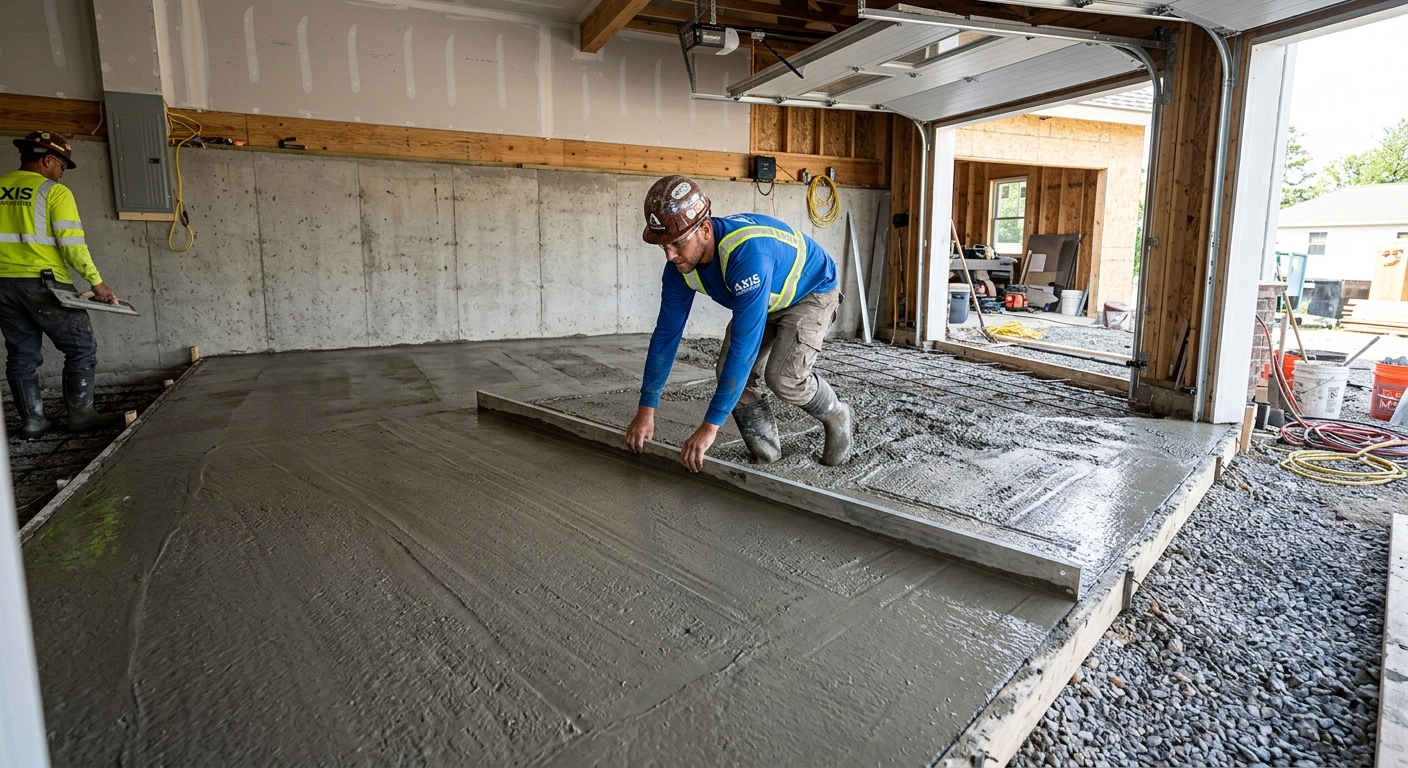
Concrete work options and costs in King Edward Park
In King Edward Park, Alberta, most concrete jobs start with the same reality: homeowners want durable flatwork that can handle Calgary’s deep winter cold and repeated freeze–thaw cycles. With a local population of 4,215 residents (Statistics Canada, 2021 Census), the market is tight enough that pricing often reflects both skilled labour availability and the extra engineering details needed for long-lasting exterior concrete. You’ll also notice a lot of concrete demand around established residential areas where driveways and patios get replaced as homes age and landscapes get reworked—common in neighbourhoods tied to the Calgary metro commuting belt.
Those climate-driven requirements are why costs in this region tend to run higher than in warmer provinces. Calgary’s winter season pushes contractors to plan pours carefully, because curing is less forgiving when temperatures drop. The design frost depth used in engineering practice is about 1.2 m (roughly 4 ft) here, so foundation footings and any structural concrete below grade must bear on undisturbed soil below that depth to reduce frost heave. On top of that, exterior slabs need proper air-entrainment and well-timed finishing and curing to reduce surface scaling and long-term spalling—especially where de-icing salt is used.
As a ballpark, homeowners typically budget $12,000–$18,000 for a driveway slab and $5,000–$9,000 for patios or walkway work, depending on excavation, reinforcement, and finish. If you’re deciding between basic broom-finish concrete and upgrades like exposed aggregate or stamping, the table below will help you compare typical scopes side-by-side.
| Application |
Typical Size |
Key Spec |
Finish Option |
Price Range |
| Concrete driveway (standard broom finish) |
24 ft × 10 ft (240 sq. ft.) |
Air-entrained mix; compacted granular base; rebar or mesh as required |
Broom finish + control joints |
$12,000–$18,000 |
| Exposed aggregate driveway |
24 ft × 10 ft (240 sq. ft.) |
Air-entrained mix; proper base; aggregate exposure method |
Exposed aggregate with sealing |
$15,000–$22,000 |
| Stamped concrete driveway or patio |
20 ft × 12 ft (240 sq. ft.) |
Air-entrained mix; colour hardener/colouring system |
Stamped with release + protective sealer |
$18,000–$26,000 |
| Plain concrete patio or walkway |
12 ft × 16 ft (192 sq. ft.) |
Air-entrained mix; slope to drainage; control joints |
Float/smooth + light broom texture |
$5,000–$9,000 |
| Garage floor (interior slab) |
22 ft × 22 ft (484 sq. ft.) |
Vapour barrier; compacted base; fibre or mesh; proper thickness |
Smooth finish (no decorative pattern) |
$7,500–$13,000 |
| Foundation footings (structural, below frost) |
Typical house/garage perimeter (varies by design) |
Engineered reinforcement; pour below frost depth (~1.2 m) |
Formed structural concrete |
$28,000–$45,000 |
Prices are estimates only and vary by project scope, site access and material selection.
What affects the price of concrete work in King Edward Park
In King Edward Park and across Calgary’s surrounding areas, you can see quotes for the same general concrete work end up 30–50% apart. That gap usually isn’t about “one contractor being cheaper”—it’s about differences in excavation depth, granular base thickness, reinforcement strategy, mix design, finish system, and how they protect concrete during cold placements. It’s also tied to contractor scheduling: winter-grade mixes, insulated blankets, and short exterior pour windows can push labour and equipment costs higher, especially when multiple crews are competing for available dates.
The biggest specification driver in this region is the frost line depth and how that interacts with freeze–thaw cycles. Local engineering practice uses a design frost depth of about 1.2 m (roughly 4 ft). That means exterior structural concrete like footings must extend below undisturbed soil at that depth to limit frost heave. For slabs exposed to weather, Calgary’s repeated freeze–thaw means you need air-entrained concrete and correct curing so the surface doesn’t scale and spall over time. If you pour late fall or early spring, you often need cold-weather curing precautions—insulated blankets, sometimes temporary heat—to achieve adequate early strength. De-icing salt in winter also accelerates surface damage if the concrete mix and curing weren’t done properly; sealing becomes more important.
In King Edward Park, two common cost swings are: (1) larger excavation volumes when sites have older backfill or soft subgrade, pushing foundation/footing and driveway costs toward the top of the $28,000–$45,000 footing band and the $12,000–$18,000 driveway band; and (2) the finish choice—stamped and decorative systems can add labour and material, so they’re often closer to the upper end of $15,000–$26,000 depending on stamping complexity and colour.
| Price Factor |
Why It Matters |
Cost Impact |
| Frost line depth — determines footing depth and form height |
Footings must bear below design frost to prevent frost heave and seasonal movement |
Major increase in excavation and concrete volume; often pushes structural work toward the top end |
| Site preparation — excavation, grading, compacted granular base |
Correct sub-base depth and compaction reduce settlement and keep slabs stable through freeze–thaw |
Can add significant labour and granular material; commonly 10–25% variance on flatwork |
| Reinforcement — rebar or wire mesh requirement |
Reinforcement supports slabs and controls cracking where soil or loads require it |
Material and placement time; affects mid-to-high portions of driveway/patio budgets |
| Mix design — air-entrainment and compressive strength spec |
Air-entrainment helps survive freeze–thaw; strength targets affect durability and early curing needs |
Premium mix and sometimes winter-grade requirements; reduces long-term failure risk |
| Finish type — broom vs. stamped vs. exposed aggregate |
Finishes require additional steps, labour time, and sometimes colour systems and curing/maintenance |
Stamped/exposed typically add the most cost relative to plain broom-finish |
| Pour size and concrete truck access to site |
Access determines whether pumps/telebelts are needed and how quickly the crew can place |
Pump/handling can add thousands; limited access can also increase labour hours |
| Cold-weather curing precautions — heating and blankets |
Maintains early strength and reduces scaling risk when temperatures fall |
Winter methods add materials and labour; can move costs upward during shoulder seasons |
| Control joint pattern and sealing cost |
Joints manage where cracking occurs; sealing helps repel de-icing salt effects |
Often overlooked—proper jointing and sealers can raise bid by a few hundred to over $1,000 |
Permits & regulations in Alberta
In Alberta, structural concrete work like foundation footings, foundation walls, and grade beams typically requires a building permit. Many of these projects also need engineered drawings that the municipality reviews to confirm the size and reinforcement align with site conditions and frost requirements. For homeowners in King Edward Park, that usually means your permit package and inspections are tied to the foundation stage—excavation checks, rebar inspections, and final concrete inspections are common touchpoints.
Concrete flatwork such as exterior patios, walkways, and driveways usually does not require a permit by itself. However, if your project affects lot grading, changes drainage in a way that impacts neighbouring property, or involves impervious surface coverage limits and municipal right-of-way considerations, the local authority may require approvals. Always confirm before you break ground, even for “just a driveway.”
Next, verify contractor compliance and risk coverage. Step one: confirm the contractor is licensed where applicable (and ask for their proof of ability to perform concrete work under Alberta requirements). Step two: request a current certificate of liability insurance showing the policy is active for your project period, and ensure your name/address are correctly listed as needed by your municipality or contract. Step three: ask for WSIB/WCB clearance documentation (or coverage proof) and review it for the correct business entity name. Step four: look up references for similar-scale projects in the Calgary area, ideally with winter-exposure experience.
Getting concrete right in King Edward Park's freeze-thaw climate
Concrete can fail in King Edward Park’s climate for predictable reasons: water gets into the slab or joints, expands when it freezes, and then repeats during freeze–thaw cycles. When that happens with an incorrect base build-up, insufficient air-entrainment, poor finishing timing, or rushed curing, you often see scaling, cracking, and spalling—especially on exterior surfaces exposed to de-icing salt.
Spec the work to prevent that chain of failure. First, base preparation: use a compacted granular sub-base to the right depth for local soil and to support the thickness required at frost-impacted areas. Second, mix design: for exterior flatwork, air-entrainment is critical (target typically in the 5–7% range) and your mix should meet a minimum compressive strength of at least 32 MPa for durable exterior performance. Third, control joints: plan them so cracking occurs at planned locations, with proper spacing and saw-cut timing. Fourth, curing: plan for a minimum 7-day curing period under appropriate conditions; in cold weather, the contractor should provide insulated blankets and/or heat so the concrete actually gains strength instead of “setting” and then weakening. Fifth, sealing: apply a penetrating sealer after the concrete has cured (commonly at 28 days post-pour) to help repel moisture and reduce the salt-related surface damage cycle.
Here’s a practical price perspective: if you choose a plain broom-finish driveway at the practical budget of $12,000–$18,000 but skip proper air-entrainment, curing measures, or sealing, the “savings” can cost far more when the slab starts scaling. Conversely, paying more for exposed aggregate or stamping is justified when the base, mix design, and joints are still correct—decorating doesn’t replace engineering.
| Spec |
Why It Matters in King Edward Park |
What to Ask For |
Impact if Skipped |
| Compacted granular base (depth?) |
Prevents settlement and supports the slab through freeze–thaw cycles |
Confirm granular depth, compaction method, and the required thickness for your soil conditions |
Uneven settlement, slab cracking, and premature surface damage |
| Air-entrained concrete mix (target air %?) |
Air voids help concrete resist freeze–thaw damage in Calgary-area winters |
Ask for air-content target in the 5–7% range for exterior flatwork and mix documentation |
Higher risk of scaling and spalling, especially where de-icing salt is used |
| Compressive strength (MPa rating) |
Adequate strength supports durability and early performance in cold periods |
Confirm minimum 32 MPa requirement and expected curing/strength timeline |
Weaker surface, faster wear, and increased cracking risk |
| Control joints (spacing per ACI guidelines) |
Controls where cracks form to reduce random cracking |
Ask how joints will be laid out for your slab dimensions and how soon they’ll saw-cut |
Random cracking and more moisture intrusion into the slab |
| Minimum 7-day curing period |
Strength gain needs time; cold weather can slow curing dramatically |
Confirm curing plan and whether blankets/heating will be used below set temperatures |
Surface scaling, reduced durability, and compromised long-term performance |
| Penetrating sealer (when applied after cure) |
Repels moisture and reduces salt-driven surface deterioration |
Ask for penetrating sealer application timing—commonly 28 days post-pour |
More moisture/salt exposure and faster surface deterioration |
How to choose a concrete work contractor in King Edward Park
Choosing the right contractor in King Edward Park usually comes down to proof, not promises. Start by confirming Alberta compliance: ask the contractor for their liability insurance certificate and verify it’s active for your project dates. For work coverage, request WSIB/WCB documentation (or proof of coverage) and make sure the company name matches the legal entity on the contract. If anything is “in progress” or unclear, treat it as a red flag—concrete delays and rework can be expensive in a region where curing conditions matter.
Next, get 2–3 itemised written quotes, not a single lump sum. A good quote breaks out labour, materials (including the air-entrainment/winter-grade concrete requirements), excavation/granular base prep, reinforcement, finishing, sealing, and any disposal or haul-away. Ask whether permits (when required) and inspections are included, and clarify what’s excluded—for example, removing unsuitable soils, replacing sub-base, or dealing with unexpected rock.
Warranty matters. Ask for the workmanship warranty length, what it covers (cracks, spalling, joint sealing), and whether any product/manufacturer warranty is provided. Check whether the warranty is transferable if you sell the home. For payments, never let the contract require more than about 10–15% upfront; hold back a portion until you see key completion steps such as final clean-up, jointing, and sealing (if included). Finally, insist on a written start date and completion estimate—winter weather can shift timelines, but reputable crews plan around it with curing protection.
- Verify Alberta registration/licensing where applicable and confirm the exact legal business name.
- Request liability insurance certificate and confirm adequate coverage for the job scope.
- Provide WSIB/WCB clearance or coverage proof for the work crew.
- Get 2–3 itemised quotes with labour and materials broken out separately.
- Confirm whether excavation, granular base, and disposal/haul-away are included.
- Ask what mix they’re using (air-entrained requirement) and whether winter-grade methods apply.
- Confirm reinforcement plan (mesh vs rebar vs fibre) for your loading and slab thickness.
- Ask for the control joint spacing plan and whether joints will be saw-cut on schedule.
- Require a curing plan (minimum 7 days) and ask about insulated blankets/heating criteria.
- Clarify whether sealing is included and the timing (commonly after 28 days cure).
- Check warranty length and what specific defects are covered vs excluded.
- Agree on payment schedule with a holdback until final completion and documentation.
In King Edward Park, I watch for red flags like: contractors who won’t discuss air-entrainment and curing methods for exterior work, quotes that don’t specify base depth or reinforcement, crews that start too late in the season without winter protection, “cash-only” arrangements that skip insurance/coverage proof, and contracts with no clear warranty or no written timeline.
Frequently asked questions — concrete work in King Edward Park
How do I seal concrete to protect it in King Edward Park?
In King Edward Park, sealing is one of the simplest ways to slow winter surface wear. Because Calgary-area freeze–thaw cycles and de-icing salt can drive moisture into the top surface, a penetrating sealer helps repel water and reduce salt-related deterioration. Ask your contractor to apply the sealer after the concrete has cured—typically at 28 days post-pour—so you don’t trap excess moisture inside. The crew should clean the slab thoroughly and ensure it’s dry before application; any dust or curing residue can reduce adhesion. If you’re budgeting, sealing may be a modest line item compared with the overall project, but skipping it can lead to faster scaling in the first couple of winters, especially on driveways. For reference, driveway projects often start around $12,000–$18,000, and a properly planned sealing step is usually part of finishing the job for long-term durability.
What is the difference between concrete and cement?
In everyday terms, homeowners in Alberta often use “cement” and “concrete” interchangeably, but they’re not the same. Cement is a key ingredient—typically Portland cement—that acts like a binder. Concrete is the finished material made by combining cement, water, sand, gravel (or other aggregates), and often admixtures (like air-entrainment) to meet freeze–thaw durability requirements. That’s why your contractor’s mix design matters in King Edward Park: exterior work typically needs air-entrained concrete and the correct strength rating so the slab resists scaling and spalling through winter. When contractors describe their “mix,” they should be talking about the full concrete recipe, not only the cement. If someone offers a “cement-only” explanation or can’t discuss air content and curing planning, ask more questions, because those details directly connect to how long your driveway or patio lasts.
How much does concrete work cost in King Edward Park?
Costs in King Edward Park depend heavily on excavation, granular base thickness, reinforcement, finish level, and whether winter-grade curing precautions are needed. For a common driveway replacement, many projects land in the $12,000–$18,000 range for a standard broom-finish slab, assuming typical access and proper base prep. Plain patios and walkways are often in the $5,000–$9,000 band depending on size and slope for drainage. Decorative upgrades can move budgets up quickly: stamped or decorative concrete often falls in the $15,000–$26,000 range due to extra labour and colour systems. Structural foundation footings are a different category and commonly run $28,000–$45,000 depending on engineered design and excavation below design frost depth (about 1.2 m). Always compare itemised quotes so you’re comparing the same specs, not just the same square footage.
How deep must footings be for King Edward Park's frost line?
For footing depth in King Edward Park, the key reference is the design frost depth used by engineering and local building practice. In the Calgary region, it’s commonly about 1.2 m (roughly 4 ft). Practically, that means footings should bear on undisturbed soil below that depth so the foundation doesn’t heave during winter freeze cycles. The exact depth can still vary based on your site conditions and engineered foundation design, so your structural drawings and inspection requirements govern. If a quote shows footing work without clearly stating “below frost” or without engineered details, that’s not something to accept. Also remember that excavation in Alberta can drive costs up because you’re not just digging shallow—you’re building for long-term stability against freeze–thaw movement. When you see footing budgets in the $28,000–$45,000 band, it’s usually tied to that required excavation volume and reinforcement.
Why does concrete crack in King Edward Park and how is it prevented?
Concrete cracking in King Edward Park is usually a mix of shrinkage, thermal movement, and moisture pressure—made more visible by freeze–thaw cycles. In cold climates, water in or at the slab surface can freeze and expand, which accelerates deterioration if the concrete isn’t properly air-entrained or if joints aren’t planned. The good news is that cracking can be managed. Prevention starts with compacted granular base prep, correct mix design (including air-entrainment for exterior flatwork), and proper curing so the slab gains strength before harsh temperature swings. Control joints are the other big factor: you want joints cut or formed on a timing and spacing plan that encourages cracks at predictable locations rather than random splitting. Finally, sealing helps reduce moisture and salt exposure. If you compare bids and someone is vague about air content, joint spacing, or curing blankets in cold weather, that’s often where problems begin—regardless of whether the slab is broom-finish or decorative.
Stamped vs broom-finish concrete — cost difference?
Stamped concrete costs more than broom-finish because it involves additional steps: form liners or stamp mats, release agents, typically more labour-intensive finishing, and often colour systems that must be applied consistently to get an even look. In King Edward Park, a standard broom-finish driveway commonly fits in the $12,000–$18,000 range, while stamped driveway or patio projects often land in the $15,000–$26,000 band depending on square footage, stamp complexity, and colour requirements. The key point: decorative finishes don’t replace engineering. You still need the same frost-aware base prep, air-entrained mix, correct control joint strategy, and curing protection in Calgary’s freeze–thaw climate. A fair comparison is one where both options include identical sub-base thickness, reinforcement decisions, and curing plans—then you’re only paying for the aesthetic upgrade.