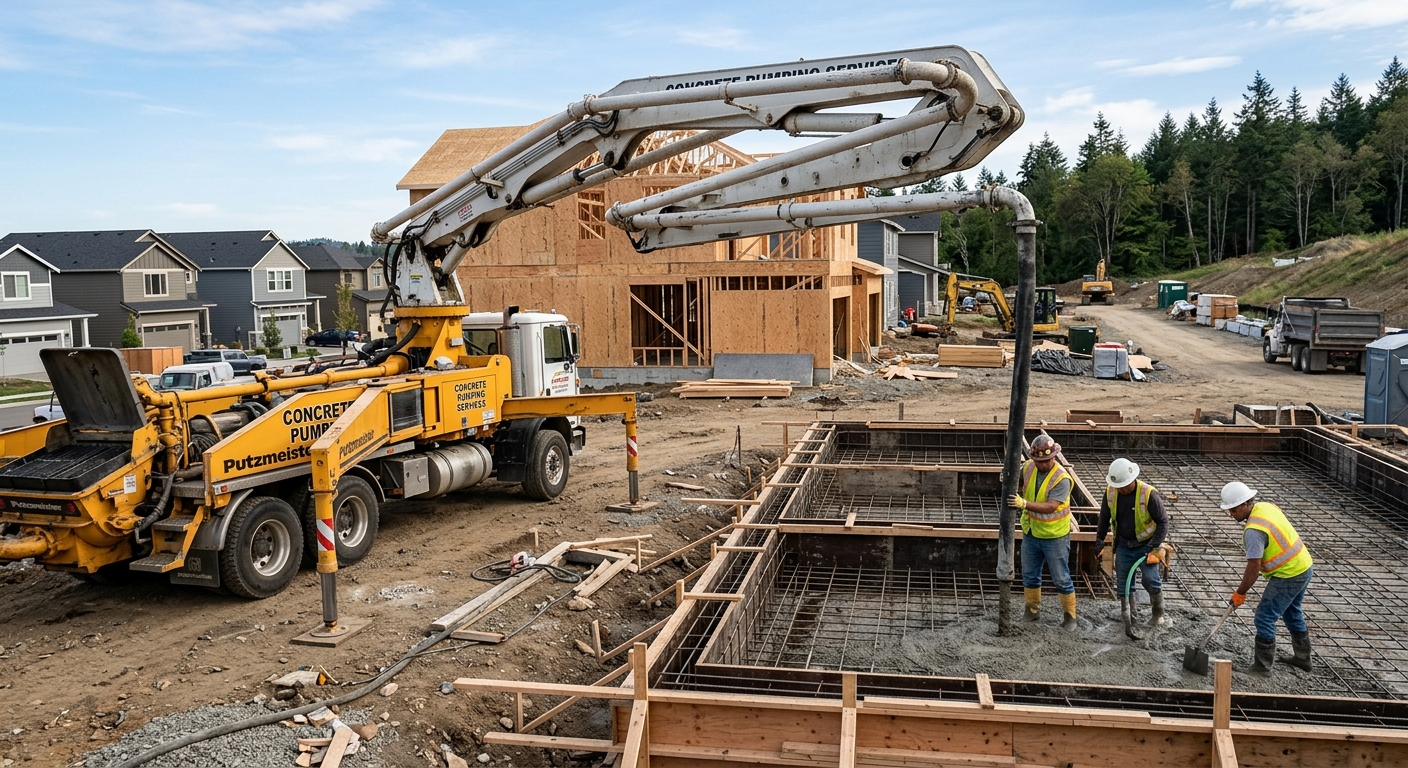
Concrete work options and costs in Belgravia
Belgravia, Alberta may be a smaller community, but the concrete market behaves like the wider Calgary area—especially for driveways, patios, walkways and concrete slabs. In Belgravia’s housing stock, the population was 2,134 in the 2021 Census (Statistics Canada, 2021 Census), which typically means many projects are tied to private homes, garages, and garden-level upgrades rather than high-volume developments. Calgary’s cold continental climate—and Belgravia’s exposure to it—also drives how we build: frost depth requirements mean deeper excavation for foundations and footings, and freeze–thaw cycles demand careful mix design, proper air entrainment, and well-spaced control joints on exterior flatwork.
In practice, that’s why you’ll see contractor availability concentrate around the busier spring-to-early fall period, and why late-season work carries a premium. Exterior pours often require winter-grade concrete strategies—insulated blankets and sometimes temporary heat—to protect curing. Also, de-icing salt used on icy Calgary streets accelerates surface deterioration if concrete isn’t specified for durability and finished/sealed correctly. Where you get the best day-to-day payoff tends to be in established residential pockets—particularly around older cul-de-sacs and infill-adjacent streets where replacing cracked driveways and adding patio extensions is common.
Below is a practical comparison of common options you’ll be quoted in Belgravia. Use these bands to sanity-check pricing before you sign an agreement.
| Application |
Typical Size |
Key Spec |
Finish Option |
Price Range |
| Concrete driveway (standard broom finish) |
400–500 sq. ft. |
Air-entrained exterior mix, rebar or mesh as required |
Broom finish, stamped borders optional |
$12,000–$18,000 |
| Exposed aggregate driveway |
400–500 sq. ft. |
Air-entrained mix, exposed surface treatment |
Exposed aggregate for improved texture and traction |
$15,000–$22,000 |
| Stamped concrete driveway or patio |
300–500 sq. ft. |
Durable exterior mix with proper air content |
Stone/brick patterns, integral colour or stain |
$15,000–$26,000 |
| Plain concrete patio or walkway |
200–350 sq. ft. |
Air-entrained exterior mix, compacted granular base |
Tool-finished or light broom |
$5,000–$9,000 |
| Garage floor (interior slab) |
480–650 sq. ft. |
Vapour barrier (as applicable), base compaction, reinforcement |
Float finish, optional densifier |
$9,000–$16,000 |
| Foundation footings (structural, below frost) |
Typical single-family bearing footprint |
Engineered footing size/depth below design frost depth |
Cast-in-place concrete to spec |
$28,000–$45,000 |
Prices are estimates only and vary by project scope, site access and material selection.
What affects the price of concrete work in Belgravia
In Belgravia and the broader Calgary market, you can see the same “concrete driveway” project come back 30–50% apart from contractor to contractor, even when the final square footage looks similar. The reason isn’t just concrete cost—it’s what’s underneath and what it takes to pour and cure properly in a cold continental climate. In Alberta, we build around deeper frost management than many homeowners expect. Footings and below-grade elements must be engineered to sit below the design frost depth (in this region it’s about 1.2 m, roughly 4 ft, as a baseline for how we engineer), and exterior slabs require durable mix design and base preparation to survive freeze–thaw cycling.
Freeze–thaw matters for pricing because it changes specifications: exterior slabs typically use air-entrained concrete, and we plan a control joint pattern to reduce random cracking. The shorter pour season for exterior work also raises labour and scheduling costs—especially when crews have to mobilize early, use insulating blankets, or apply winter-grade placement practices. De-icing salt is another real driver: without a proper sealing plan, spalling and scaling can accelerate, meaning the “cheapest” job costs more later.
Here are a few Belgravia examples where cost swings make sense. If your approach requires deeper excavation to remove unsuitable soils for stable granular base, that can push a patio closer to the upper end of the $5,000–$9,000 band. If your driveway replacement includes thicker slabs, reinforcement, and exposed aggregate detailing (often quoted like $12,000–$18,000 for standard broom, with premium finishes above that), the price gap is justified by materials and finish labour. Also, homes built around earlier eras of local development often have older subgrades—when we encounter compacted fill or poor drainage pathways, we need more grading and base replacement to protect the slab.
| Price Factor |
Why It Matters |
Cost Impact |
| Frost line depth — determines footing depth and form height |
Below-grade elements must bear below frost to prevent heave and seasonal movement |
Higher excavation and concrete volume; can add thousands on structural pours |
| Site preparation — excavation, grading, compacted granular base |
Proper drainage and compaction reduce settlement and slab cracking |
Unstable soils or soft spots can shift pricing by 20%+ for the same slab size |
| Reinforcement — rebar or wire mesh requirement |
Controls cracking and improves durability under freeze–thaw stresses |
Material + labour changes; thicker slabs usually require more steel |
| Mix design — air-entrainment and compressive strength spec |
Air-entrained concrete resists freeze–thaw damage and scaling |
Correct mix typically adds cost but prevents expensive repairs later |
| Finish type — broom vs. stamped vs. exposed aggregate |
Finish affects traction, aesthetics, and how the surface handles de-icing salts |
Stamped/exposed require more labour and specialized materials |
| Pour size and concrete truck access to site |
Access affects placement efficiency and may require pump/extra labour |
Poor access can add mobilization time and equipment costs |
| Cold-weather curing precautions — heating and blankets |
Ensures proper curing so concrete gains strength and durability |
Winter-grade measures can raise exterior flatwork pricing |
| Control joint pattern and sealing cost |
Jointing manages cracks; sealing helps repel de-icing salts and moisture |
Costs are predictable, but skipping them increases failure risk |
Permits & regulations in Alberta
In Alberta, structural concrete work is typically regulated because it affects the building’s primary structure. For Belgravia homeowners, that usually means a building permit and often engineered drawings reviewed by the municipality are required for things like foundation footings, foundation walls, grade beams, and other load-bearing concrete elements. In contrast, concrete flatwork such as patios, walkways and driveways typically does not require a permit—unless your plan affects lot grading, changes stormwater flow, impacts impervious surface coverage limits, or touches municipal right-of-way requirements (for example, certain driveway tie-ins).
Before breaking ground, always confirm the permit requirements with the local authority, especially if you’re altering drainage patterns or replacing a driveway that interfaces with curb/sidewalk areas. Also verify your contractor carries current liability insurance and WSIB/WCB coverage. For a homeowner-friendly checklist: request proof before work starts, not after mobilization.
Step-by-step verification you can do:
- Ask for the contractor’s Alberta business information and confirm the correct registration details on the relevant online registry they provide (or via their own documentation packet).
- Request a current certificate of insurance (COI) showing liability coverage for the contractor and the correct job address.
- Confirm WSIB/WCB clearance documentation or proof of coverage for the people doing the work.
- Compare the proposed scope to the permit scope: ensure the quote states whether permits are pulled by the contractor or the homeowner.
- Check references on similar-scale projects—especially exterior flatwork in cold-weather conditions.
Getting concrete right in Belgravia's freeze-thaw climate
Concrete failure in Belgravia is usually predictable when you look at the climate mechanics: water enters the surface, freezes, expands, and then spalls or scales the top layer. In a Calgary-area freeze–thaw pattern, the biggest preventable problem is insufficient air entrainment and weak surface protection—then add salt exposure and poor base support and you get cracking that “progresses” over winters.
To spec the job correctly, we focus on five areas. First is base preparation: compacted granular sub-base to the right depth for local soil conditions and engineered frost considerations, so the slab doesn’t settle. Second is mix design: for exterior flatwork, use air-entrainment and a minimum compressive strength (commonly 32 MPa) so freeze–thaw cycles don’t destroy the paste. Third is control joints: they need the right spacing so shrinkage and thermal movement break in predictable places. Fourth is curing: plan for at least 7 days of proper curing conditions—this is where late-fall or early-spring work often costs more because insulating blankets or temporary heat may be required. Fifth is sealing: apply a penetrating sealer after the cure period (typically at 28 days) to repel de-icing salt and moisture.
Ask the contractor for these specifics up front. If you compare broom-finish vs. stamped concrete in Belgravia, a typical broom driveway might land around $12,000–$18,000, while stamped options commonly fall into the $15,000–$26,000 band. The price difference is often justified by extra labour (forms/colouring/release agents) and additional curing attention. However, if a quote cuts corners on air content, base compaction, or joint sealing, it isn’t “good value”—it’s delayed repair cost.
| Spec |
Why It Matters in Belgravia |
What to Ask For |
Impact if Skipped |
| Compacted granular base (depth?) |
Prevents settlement and reduces stress during freeze–thaw cycles |
Documented base thickness, compaction method, and drainage plan |
Early cracking, pumping, uneven slab movement |
| Air-entrained concrete mix (target air %?) |
Protects the concrete from freeze–thaw damage and scaling |
Target air content for exterior flatwork (typically 5–7% air) |
Spalling and surface deterioration, especially with salt |
| Compressive strength (MPa rating) |
Strength gain supports durability and load resistance |
Minimum 32 MPa compressive strength spec |
Lower resistance to abrasion, cracking, and long-term scaling |
| Control joints (spacing per ACI guidelines) |
Controls where cracks form as concrete shrinks/expands |
Planned joint spacing and sawcut timing |
Random cracking and water infiltration into deeper layers |
| Minimum 7-day curing period |
Ensures proper strength development before winter stresses |
Curing method and cold-weather protection plan |
Surface weakness, scaling risk, reduced long-term performance |
| Penetrating sealer (when applied after cure) |
Repels de-icing salt and moisture from the surface |
Confirm sealer type and application timing after full cure (often 28 days) |
Faster deterioration and more frequent maintenance or replacement |
How to choose a concrete work contractor in Belgravia
Choosing the right contractor in Alberta comes down to documentation, clarity, and how seriously they take freeze–thaw durability. Start by verifying licensing/registration status the contractor provides and ensuring they carry liability insurance appropriate for the job. Then confirm WSIB/WCB coverage—request either proof of coverage or current clearance documentation for the workers who will be on site. If a contractor can’t provide certificates promptly, that’s a serious red flag.
Next, get 2–3 itemised written quotes. You want labour and materials broken out—not just a lump sum—so you can compare like-for-like. Ask whether permits are included and who pulls them. Clarify disposal and site restoration: who hauls away waste, and what happens to topsoil, forms, and any damaged landscaping or sod?
Warranty matters in concrete because problems often show up after a few winters. Ask for a workmanship warranty length and whether there’s a separate product/manufacturer warranty for coatings or sealers. Also confirm whether the warranty is transferable if you sell your home.
For payment, never front-load the project. A healthy approach is keeping upfront payment around 10–15% (as applicable) and holding a portion until completion and key cure milestones are met. Require a written start date and completion estimate, and ensure the quote states cold-weather handling if the schedule slips.
- Request proof of liability insurance and confirm it matches your project address.
- Confirm WSIB/WCB coverage (or clearance) for the workers on site.
- Insist on a signed scope that includes base thickness, reinforcement type, and joint plan.
- Ask for air-entrainment and compressive strength specs in writing.
- Verify whether sealing is included and when it will be applied after curing.
- Confirm excavation and disposal are included (not “allowances” that inflate later).
- Ask how they handle poor soils or high groundwater conditions.
- Require a pour-day plan for cold weather: blankets, heat, and curing protection.
- Get detail on truck access and placement method (including any pump requirements).
- Compare reinforcement: rebar/wire mesh grade, spacing, and placement depth.
- Clarify finish type (broom, exposed aggregate, stamped) and who supplies colour/hardeners.
- Keep a holdback until cleanup and final walkthrough are complete.
Concrete contractor red flags in Belgravia: they won’t discuss air-entrainment targets; they leave joint spacing vague; they dismiss sealing as unnecessary despite de-icing salt; they propose a late-season exterior pour with no curing protection plan; or their quote is not itemised and relies on vague “allowances” for base work and disposal.
Frequently asked questions — concrete work in Belgravia
How long does a concrete driveway last?
In Belgravia and the Calgary region, a well-built concrete driveway commonly lasts decades, but only if the spec fits the freeze–thaw environment. Longevity depends on base preparation, reinforcement, air-entrainment, and how the slab is jointed and sealed. For exterior driveways, we typically specify air-entrained concrete (often 5–7% air content) and a control joint pattern to manage shrinkage cracking. Sealing after curing helps repel de-icing salts used on winter roads, which accelerates spalling when protection is missing. If you’re comparing quotes, pay attention to the “durability line items,” not just the total. A standard broom driveway is often around $12,000–$18,000, while premium finishes can be higher—but either way, the foundation of performance is the same: correct mix, correct base, and correct curing.
What is air-entrained concrete and why does it matter here?
Air-entrained concrete is designed with small, evenly distributed air bubbles in the mix. In Belgravia’s Alberta climate, those microscopic voids give freezing water a place to expand, which greatly reduces surface scaling and spalling. Without adequate air entrainment, the paste can deteriorate over repeated freeze–thaw cycles, especially when de-icing salt is present. That’s why a driveway or patio that “looks fine” at first can still fail early after a few winters. Locally, exterior concrete placement needs to meet durability specs, commonly targeting 5–7% air for flatwork and a minimum 32 MPa compressive strength. When you request quotes, ask the contractor to state the air-entrainment and curing approach in writing—not just the finish style.
How do I prepare the base for a concrete slab?
Base prep is where success is made in Belgravia. The process starts with excavation to remove unsuitable soils and to reach a level where you can build a stable, properly graded granular base. Then we place and compact granular material in lifts so it achieves the required density—this reduces future settlement and cracking. Drainage matters too: if water is allowed to collect at slab edges, freeze–thaw pressure increases and deterioration speeds up. The right base thickness is influenced by your soil conditions and the slab type, but the goal is always the same: support the slab so it doesn’t move as temperatures change. When comparing proposals, ask for the documented base depth, compaction method, and how they’ll address soft spots or high moisture. Skipping base work is one of the fastest ways to shorten a driveway’s lifespan and cost you repairs sooner than expected.
How do I compare concrete quotes?
To compare quotes fairly in Alberta, don’t look only at the headline number. Ask for itemised breakdowns for labour, material, reinforcement, excavation/grading, disposal, and any special work like pumping or winter curing protection. Ensure each quote lists the same specs: air-entrainment for exterior slabs, minimum compressive strength, reinforcement type, control joint spacing, and whether sealing is included. Also confirm the finish: broom finish, exposed aggregate, or stamped requires different labour and curing attention. A driveway quoted near $12,000–$18,000 should not suddenly look like a premium stamped job without the matching finish scope. Finally, check schedule and exclusions: who pulls permits (if required), what’s excluded for landscaping restoration, and is cold-weather work planned with blankets/heating so curing isn’t compromised?
Can concrete be poured in cold weather in Belgravia?
Yes, concrete can be poured in cold weather in Belgravia/Calgary, but it’s not a “pour and hope” situation. Cold temperatures affect hydration and strength gain, so contractors need a winter-placement plan: winter-grade mixes, insulated blankets, protection against freezing, and sometimes temporary heating to keep curing conditions within acceptable ranges. This matters because rushing curing is a common cause of surface scaling and longer-term durability problems in freeze–thaw climates. If a contractor tells you they can pour anytime without discussing curing protection, that’s a concern. Compare quotes to see whether they include cold-weather measures and what conditions trigger adjustments. Exterior flatwork pricing can also shift based on those precautions—so if you’re getting a quote in late fall or early spring, make sure the scope explicitly addresses heating/blankets and curing time, not just the concrete quantity.
How do I maintain concrete in Belgravia's freeze-thaw climate?
Maintenance in Alberta is mainly about protecting the surface from salt, water intrusion, and abrasion. Start with sealing: for exterior slabs, penetrating sealer is typically applied after the cure period (often around 28 days). This helps repel de-icing salts and reduces moisture uptake, which is critical in a freeze–thaw environment. Sweep off grit and debris that can act like sandpaper during winter. If you see minor scaling, address it early with appropriate patching—don’t wait for water to penetrate deeper. Keep an eye on joints: if they’re sealed or caulked as specified, re-check them periodically because joint failure allows water movement and freeze action. When you plan repairs, use compatible materials and follow the same durability logic: air-entrained mix for any replacement areas and proper base/compaction beneath patches.