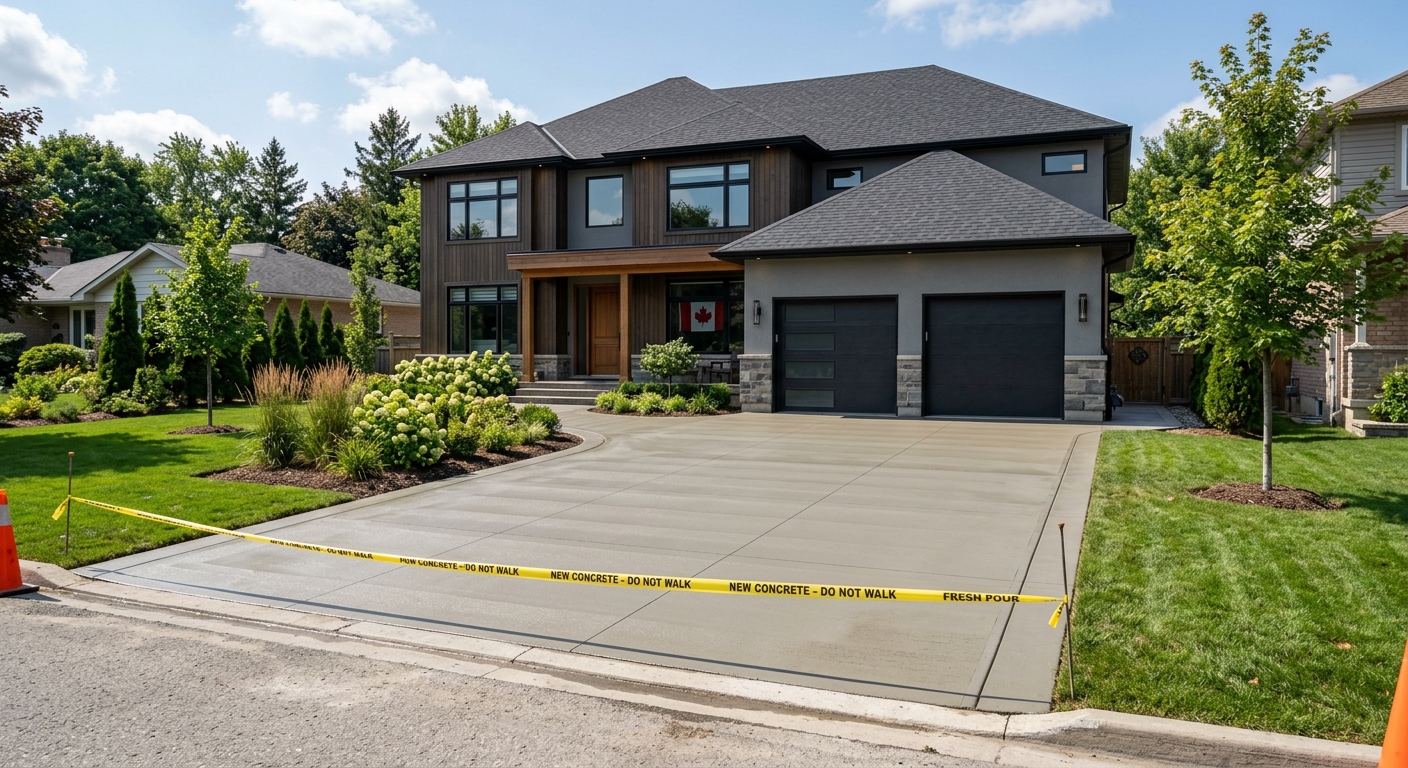
Concrete work options and costs in Beddington Heights
Beddington Heights, Alberta is a neighbourhood where concrete is constantly tested by Calgary-area freeze–thaw cycles, so the “same” driveway or patio can price very differently from one contractor to the next. In a community of 11,295 people (Statistics Canada, 2021 Census), most homeowners are dealing with single-family housing patterns typical of the area, and that drives steady demand for concrete flatwork: driveways, patios, walkway slabs, and garage floors. You’ll also see retaining work and foundation-related concrete repairs more often in established pockets as properties age and landscaping gets reworked.
Local climate is the big cost driver. With design frost depth around 1.2 m (about 4 ft) in engineering practice for the Calgary region, footings for houses, garages, decks, and retaining structures must sit on undisturbed soil below this depth to reduce frost heave and seasonal movement. Frequent freeze–thaw cycles also require air-entrained mixes for exterior slabs, granular base prep that’s compacted properly, and a control-joint plan that limits random cracking. If you pour later in the season, you’ll often pay more for cold-weather curing measures like insulated blankets, temporary heat, and winter-grade materials—because curing quality is non-negotiable here.
In Beddington Heights, this trade is especially busy around the newer service corridors and intensifying developments near areas that connect into Calgary routes, where homeowners are upgrading front access and backyards. Below is a practical comparison of typical sizes, specs, finish options, and price bands so you can line up your quote with what’s realistic for the area.
| Application |
Typical Size |
Key Spec |
Finish Option |
Price Range |
| Concrete driveway (standard broom finish) |
400–600 sq ft |
Air-entrained concrete; compacted granular base |
Broom finish + control joints |
$12,000–$18,000 |
| Exposed aggregate driveway |
400–600 sq ft |
Air-entrained mix; proper curing to support wash/exposure |
Exposed aggregate with sealer-ready surface |
$14,500–$21,500 |
| Stamped concrete driveway or patio |
300–600 sq ft |
Air-entrained concrete; reinforced where specified |
Stamp pattern + release + colour hardener |
$15,000–$26,000 |
| Plain concrete patio or walkway |
200–400 sq ft |
Air-entrained concrete; compacted base |
Float finish + light broom edges |
$5,000–$9,000 |
| Garage floor (interior slab) |
400–600 sq ft |
Fibre or wire mesh as specified; vapour consideration |
Power float / trowel finish |
$10,500–$16,500 |
| Foundation footings (structural, below frost) |
Typical 2-storey house build |
Reinforced concrete; designed below frost depth (~1.2 m) |
Structural finish only (not decorative) |
$28,000–$45,000 |
Prices are estimates only and vary by project scope, site access and material selection.
What affects the price of concrete work in Beddington Heights
In Beddington Heights and across the Calgary economic region, you can see the same concrete scope quoted 30–50% apart when contractors price the real risks and the “hidden work.” Labour rates, the amount of excavation and base replacement required, truck access logistics, and how well the contractor can control cold-weather curing all swing your total cost. A well-prepped job with air-entrained mix, proper reinforcement, and a consistent curing plan tends to cost more up front—but it’s precisely what reduces long-term repairs after freeze–thaw cycles.
Three climate-driven items affect almost every pour. First, frost line depth: local engineering practice uses a design frost depth of about 1.2 m (roughly 4 ft), so footings for structural concrete must extend below this to prevent frost heave. Second, freeze–thaw durability: exterior slabs require air-entrained concrete mixes to help resist scaling and spalling. Third, the short practical pour season: colder placement windows often mean cold-weather curing precautions—insulated blankets and sometimes temporary heat—adding cost, especially for late-fall or early-spring work. In winter, de-icing salt also accelerates surface wear, so sealing becomes important for driveways, patios, and walkways that see traffic.
In Beddington Heights, cost can go up when your soil is poor or drainage is questionable, because you end up with deeper excavation and more granular base. It can also go down when site access is straightforward (wide driveway, minimal re-grading, and easy concrete truck placement). For example, a standard driveway broom finish commonly lands in the $12,000–$18,000 band, while stamped options often justify the extra work and materials, landing closer to the $15,000–$26,000 band when stamping, colouring, and additional detailing are included. If you’re upgrading an older home where landscaping was poorly sloped, you’ll often pay more for re-grading before the slab goes in—sometimes adding several thousand dollars just to set the correct drainage.
| Price Factor |
Why It Matters |
Cost Impact |
| Frost line depth — determines footing depth and form height |
Footings must bear below design frost depth to prevent frost heave and seasonal movement |
Raises excavation and concrete volume; can add thousands on structural work |
| Site preparation — excavation, grading, compacted granular base |
Controls drainage and supports the slab during freeze–thaw cycles |
Poor soils or limited access increase labour and hauling costs |
| Reinforcement — rebar or wire mesh requirement |
Improves slab toughness and reduces cracking risk under loads |
Material and placement time; essential in many garage and driveway designs |
| Mix design — air-entrainment and compressive strength spec |
Air-entrainment helps prevent freeze–thaw surface deterioration |
Higher-spec mix costs more but reduces premature scaling/spalling |
| Finish type — broom vs. stamped vs. exposed aggregate |
Complex finishes require extra labour, materials, and tight timing |
Stamped/exposed typically costs more than standard broom |
| Pour size and concrete truck access to site |
Concrete placement speed affects cold-weather curing and finishing quality |
Long distance pumping/limited access can increase labour and equipment |
| Cold-weather curing precautions — heating and blankets |
Protects strength development and reduces surface scaling in winter conditions |
Temporary heat/blankets add line-item cost, especially during shoulder season |
| Control joint pattern and sealing cost |
Joints manage cracking locations; sealing helps repel salts and moisture |
Often a relatively small upcharge that prevents expensive rework later |
Permits & regulations in Alberta
In Alberta, structural concrete work typically needs a building permit and often engineered drawings reviewed through the municipal building permit process. That includes foundation elements like footings, foundation walls, and grade beams—because these supports affect the building’s structural safety and must be designed for local conditions. Concrete flatwork like patios, walkways, and driveways usually does not require a permit, but there are common exceptions: if the work changes lot grading, impacts stormwater flow, affects impervious surface coverage limits, or touches municipal right-of-way requirements (for example, approach/sidewalk ties), you may need approvals.
Before breaking ground in Beddington Heights, verify the contractor is properly insured and properly documented. Step-by-step, homeowners should: (1) confirm the contractor’s business details and credentials through applicable provincial licensing/registry listings where available; (2) request a Certificate of Insurance (liability) and ensure it’s current and matches the project address; (3) ask for WSIB/WCB clearance or account proof for workers—this is often a straightforward document and should be provided before work starts; and (4) ask for references from similar-size jobs in the Calgary region, especially exterior slabs poured under cold-weather conditions.
Also, confirm who pulls the permit (if required) and whether engineering drawings are included for structural scopes. If you’re being quoted without clarifying the permit responsibility, that’s a red flag.
Getting concrete right in Beddington Heights's freeze-thaw climate
Concrete fails in Beddington Heights mainly through freeze–thaw damage and moisture intrusion—especially when the mix and base prep aren’t engineered for Calgary’s winters. The most common homeowner-visible problem is spalling (surface scaling/flaking), often tied to inadequate air-entrainment, insufficient curing, or poor sealing after the cure. The region’s frost depth of about 1.2 m means exterior and structural work must be supported on properly prepared materials; if drainage is off or the granular base is too shallow or poorly compacted, the slab can move microscopically and concentrate stress at the surface.
To spec the job correctly, focus on five items. (1) Base preparation: compacted granular sub-base to the required depth and well-graded for drainage and support. (2) Mix design: for exterior flatwork, air-entrainment around 5–7% is standard practice to withstand freeze–thaw cycles, plus a minimum 32 MPa compressive strength for typical residential applications. (3) Control joints: place them so cracks occur in predictable locations (not randomly through the middle of the slab). (4) Curing: plan for at least 7 days of proper curing under suitable conditions; in cold weather, that usually means insulated blankets and/or controlled heating so strength develops. (5) Sealing: apply a penetrating sealer about 28 days after the pour (once cured) to help repel moisture and de-icing salt.
Ask technical questions like: “What’s your target air content and compressive strength?” and “How do you protect curing in shoulder-season temperatures?” If you skip air-entrainment and sealing, you may save some money up front but increase the odds of needing repairs. As a simple example, upgrading from plain broom-finished concrete toward an exposed or stamped finish can cost more, but the investment is justified when the contractor also nails the freeze–thaw durability specs. In practice, standard driveways often fall into the $12,000–$18,000 range, while decorative options can reach the $15,000–$26,000 range; if the durability specs aren’t included, paying for a premium look doesn’t protect you from winter damage.
| Spec |
Why It Matters in Beddington Heights |
What to Ask For |
Impact if Skipped |
| Compacted granular base (depth?) |
Proper support prevents movement during freeze–thaw |
Confirm base depth and compaction method for your soil/drainage |
Settlement and cracking; uneven slab wear that accelerates spalling |
| Air-entrained concrete mix (target air %?) |
Air improves freeze–thaw durability for exterior slabs |
Request target air content (typically 5–7% for exterior flatwork) |
Higher risk of surface scaling and spalling in Alberta winters |
| Compressive strength (MPa rating) |
Strength development supports long-term load capacity |
Ask for minimum 32 MPa and whether strength tests/material certs are provided |
Premature wear, reduced toughness, and early failure under freeze cycles |
| Control joints (spacing per ACI guidelines) |
Joints control where shrinkage/cracks happen as the slab moves |
Request joint layout and spacing guidance used by the crew |
Random cracking across visible areas; more complex repairs |
| Minimum 7-day curing period |
Ensures strength gain before exposure to winter conditions |
Ask how curing is protected (blankets/heat) during cold weather |
Weak surface, scaling, and long-term durability issues |
| Penetrating sealer (when applied after cure) |
Helps repel moisture and de-icing salts that attack surfaces |
Confirm penetrating sealer application timing (about 28 days post-pour) |
Faster surface deterioration and increased maintenance/reseal costs |
How to choose a concrete work contractor in Beddington Heights
Choosing the right concrete contractor in Beddington Heights comes down to documentation, clarity, and how they plan for winter curing. First, verify Alberta compliance: ask for proof of liability insurance (Certificate of Insurance) and WSIB/WCB coverage or clearance for workers. Don’t accept “we’re covered” statements—request the certificates, check they’re current, and confirm coverage amounts align with typical job risks. Also ask whether the company has experience with cold-weather placements in the Calgary area (blankets, heaters, curing procedures) rather than only summer pours.
Second, get 2–3 itemised written quotes that break down labour and materials (concrete supply, rebar/wire mesh if included, granular base, excavation, forming, finishing, sealing, and disposal). Avoid a quote that’s purely a lump sum without listing key components. Read the scope for exclusions: is permit pull included if required, is debris/disposal hauled away, and who does base replacement and compaction? Confirm finish details too—broom finish vs. stamped, joint pattern, and whether joints are cut or formed to plan.
Third, review warranty terms. Ask for a workmanship warranty length and whether there’s a separate product/manufacturer warranty (and whether it’s transferable if you sell the home). Finally, payment scheduling matters: never pay more than about 10–15% upfront, and hold back a portion until the job is fully complete and cleaned. Get a written start date and a completion estimate, especially if the work straddles late fall or early spring—curing timelines are part of the contract.
- Request itemised quotes (labour, concrete, base, reinforcement, finishing, sealing, disposal).
- Confirm whether the contractor pulls permits (if structural work is involved).
- Verify liability insurance and keep the COI on file for your records.
- Ask for WSIB/WCB clearance or proof of coverage before work starts.
- Confirm cold-weather curing methods (blankets/heating/temperature plan).
- Ask for the mix design specifics (air-entrainment and target strength).
- Confirm reinforcement requirements (where mesh/rebar is needed and why).
- Review joint spacing and finish details in writing.
- Ask about base depth, compaction method, and drainage slope.
- Clarify whether sealing is included and when it will be applied after cure.
- Agree on warranty terms: workmanship length and any exclusions.
- Set a payment schedule with a holdback until final walkthrough completion.
Concrete red flags in Beddington Heights: (1) no discussion of air-entrainment or curing protection for winter/shoulder-season temps; (2) vague scopes like “standard concrete” without strength/air specs; (3) missing insurance/coverage documents or reluctance to provide them; (4) payment requests that exceed 10–15% upfront without a signed contract and schedule; and (5) ignoring site drainage or base prep, especially where re-grading is clearly needed.
Frequently asked questions — concrete work in Beddington Heights
What causes concrete to spall in Beddington Heights winters?
In Beddington Heights and the broader Calgary area, spalling is usually driven by freeze–thaw pressure plus water getting into the concrete. When exterior concrete isn’t properly air-entrained (or the air content is too low), freezing water expands inside the surface pores and breaks down the face of the slab. Add de-icing salts and repeated wetting, and you can get scaling that worsens over multiple seasons. Another common contributor is curing shortcuts—if strength development is rushed in late fall/early spring, the surface can be weaker and more vulnerable. Poor base prep and drainage can also keep water around the slab, increasing the freeze–thaw damage cycle. A properly specified exterior mix with air entrainment, adequate curing time, and sealing (typically around 28 days post-pour) is the best protection.
What is rebar and when is it required in Alberta?
Rebar (reinforcing steel bars) is used in concrete to improve tensile strength and control cracking under loads and temperature movement. In Alberta, the “when” is mainly driven by structural design and engineering requirements, not by a one-size rule. For structural elements like foundation footings, walls, and grade beams, reinforcement is commonly required by the engineered drawings because those components carry building loads and must resist movement. For exterior slabs like driveways and garage floors, reinforcement may be specified based on thickness, expected vehicle loads, soil conditions, and span/unsupported edges. Some residential projects use wire mesh or fibre reinforcement, but mesh/fibre doesn’t always replace rebar where structural calcs require it. Always ask your contractor for the specific reinforcement plan tied to your slab thickness and design—especially in Calgary’s freeze–thaw environment.
How long does a concrete project take in Beddington Heights?
The visible “pour day” is often only a fraction of the timeline. For a typical residential exterior flatwork job, demolition/excavation and base prep can take 1–3 days depending on access and how much re-grading is needed. The pour and finishing are frequently completed in a single day, but curing and protection affect when you can use the surface. In Calgary-area cold conditions, contractors may add time for insulated blankets or temporary heat to meet curing needs. For exterior slabs, you should plan around a minimum 7-day curing period before treating it as fully ready, with careful use earlier if your contractor requires it. If your project includes sealing, it’s typically applied after the concrete has cured—commonly about 28 days post-pour—so the “finished and protected” stage can extend beyond the pour. Discuss your exact schedule in writing, especially if you’re working in spring or late fall.
What is a concrete overlay and is it suited to Beddington Heights?
A concrete overlay is a new concrete layer poured over an existing concrete surface after preparation. In theory, it can be a fast way to refresh a worn driveway or patio without full removal, but it’s not always a good fit in Beddington Heights. Freeze–thaw cycles can cause underlying issues—if the existing slab is still moving, badly cracked, or has moisture/drainage problems, an overlay can fail and reflect the original defects. The success of an overlay depends on surface condition, proper bonding preparation, and whether joints and drainage are addressed. If your existing concrete is sound and well-draining, an overlay may be cost-effective versus full replacement. If the slab is heaving, extensively spalled, or undermined, full replacement is usually the more durable fix. Ask contractors to inspect and explain the condition before choosing overlay vs. removal—don’t decide based on price alone.
How do I seal concrete to protect it in Beddington Heights?
For Beddington Heights driveways and patios, sealing is about repelling moisture and limiting the impact of de-icing salts. The best practice is timing: apply a penetrating sealer after the concrete has cured—commonly around 28 days post-pour—so you don’t trap excess moisture in the slab. Before sealing, the surface must be clean and dry; contractors typically wash, remove dust/efflorescence, and confirm it’s ready for absorption. Choose a penetrating sealer intended for freeze–thaw performance rather than a surface film that can wear unevenly. Also, sealing is not a cure-all: it works best when the job includes air-entrained concrete, correct base prep, and a sound joint/control plan. If your quote is only discussing finish colour and not durability steps, ask why sealing is excluded. Depending on your scope, sealing may be a relatively modest cost compared to replacing a prematurely damaged slab.
What is the difference between concrete and cement?
Concrete is the final building material you see and use—it’s a mixture of cement, water, sand, gravel (or other aggregates), and sometimes additives like air-entrainment admixtures. Cement is one ingredient inside concrete, typically Portland cement, which reacts with water to form the binding paste that hardens. In Alberta projects like driveways, patios, and exterior slabs, the concrete specification matters most: air-entrainment (for freeze–thaw resistance), compressive strength requirements (often minimum 32 MPa for typical residential exterior applications), and curing conditions. Homeowners often hear “cement” when contractors mean the full concrete mix. When comparing quotes in Beddington Heights, ask for the concrete mix design details rather than just whether “cement” is used. For budgeting, you still look at project categories—like a standard driveway often landing in the $12,000–$18,000 range—because labour, base prep, and finish work drive totals as much as the ingredient terminology.