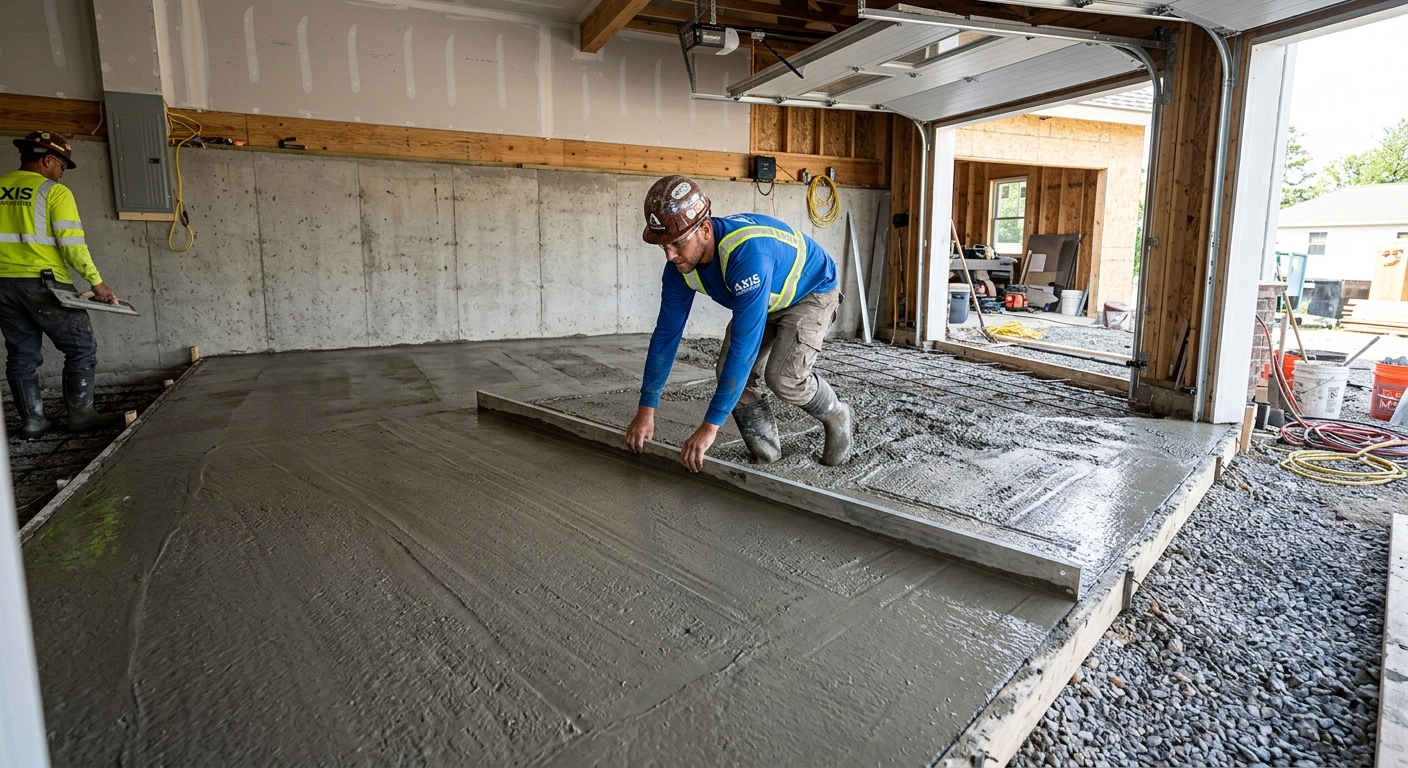
Concrete work options and costs in Weston-Pellam Park
Concrete work in Weston-Pellam Park has a real local rhythm: driveways, patios, and walkways all need to handle the Toronto-area freeze–thaw cycle, not just summer rain. With Weston-Pellam Park’s population sitting at 11,098 people (Statistics Canada, 2021 Census), there’s steady demand for curb-to-garage concrete—especially around the older, established pockets of the neighbourhood where homeowners are renewing entrances and extending living space outdoors. In practice, much of the market is single-detached housing, which is why exterior flatwork is one of the most common projects we see—replacing cracked slabs, upgrading entryways, and adding accessible paths.
In the Toronto economic region, pricing is strongly tied to frost-depth requirements, base preparation, and how well the concrete is protected during curing. Ontario expectations generally mean structural footings extend at least 1.2 m below grade to help prevent frost heave and differential movement. For slabs and flatwork, contractors typically use air-entrained mixes and a controlled joint plan to manage winter movement and reduce random cracking. Labor availability also tightens in the warmer pour months, so scheduling in late spring and summer can carry a small premium versus off-season work.
Because of that mix of structural requirements and climate-driven specifications, it’s normal to see the same “looks simple” project come in different ways—especially when comparing a standard broom finish to stamped or exposed aggregate. Below is a practical cost range guide to help you compare options for Weston-Pellam Park properties, then you can match the scope to your quote.
| Application |
Typical Size |
Key Spec |
Finish Option |
Price Range |
| Concrete driveway (standard broom finish) |
400–500 sq. ft. |
Air-entrained mix + compacted granular base |
Broomed surface, simple edges |
$18,000–$28,000 |
| Exposed aggregate driveway |
400–500 sq. ft. |
Air-entrained mix + proper jointing |
Exposed aggregate (surface wash) |
$22,000–$34,000 |
| Stamped concrete driveway or patio |
300–450 sq. ft. |
Air-entrained mix, colour hardener |
Stamped pattern with release & sealer |
$24,000–$40,000 |
| Plain concrete patio or walkway |
200–300 sq. ft. |
Compacted base, edge forms, joints |
Float + broom finish (or trowel for walkway) |
$16,000–$26,000 |
| Garage floor (interior slab) |
300–500 sq. ft. |
Interior grade prep + vapour considerations |
Broom finish, optional saw-cut joints |
$14,000–$24,000 |
| Foundation footings (structural, below frost) |
Varies by foundation |
Typical depth: at/around 1.2 m below grade |
Rebar tied + engineered concrete |
$180,000–$300,000 |
Prices are estimates only and vary by project scope, site access and material selection.
What affects the price of concrete work in Weston-Pellam Park
In Weston-Pellam Park and the broader Toronto area, two quotes for the “same” concrete job can differ by 30–50% because the hidden scope drives cost: excavation depth, granular base thickness, reinforcement needs, mix design, and how the contractor manages curing when temperatures swing. One contractor may price a surface-level pour, while another includes the right sub-base build-up, proper air-entrainment, and a joint layout designed for freeze–thaw. Those differences show up fast—especially on exterior slabs exposed to wet fall, snowy winter loads, and salty de-icing in spring.
Frost depth and freeze–thaw cycles dictate the entire spec in Ontario. Exterior work typically needs footings set below the design frost depth (often at least 1.2 m below grade for many structural applications) to reduce frost heave and differential movement. For slabs and flatwork, contractors normally specify air-entrained concrete mixes so the paste can handle repeated freeze–thaw cycles without rapid scaling or spalling. When temperatures drop toward about 10 °C or below, curing and protection become more complex—blankets, heaters, and longer cure schedules can raise labour and setup costs. Salt also accelerates surface breakdown, which is why sealing is commonly recommended after curing.
In Weston-Pellam Park, cost commonly rises when a driveway needs full-depth reconstruction (removal, haul-off, rebuild of compacted base) rather than a simple overlay. It also rises on sites with limited truck access—narrow driveways and landscaped entrances can add labour for material handling. Conversely, costs can come down when the existing base is sound and only crack repairs and top replacement are needed. If you compare options, standard broom-finished driveways often land near the lower end of the local flatwork pricing, while stamped & decorative concrete typically moves toward the $24,000–$40,000 band because of colour and labour-intensive finishing.
| Price Factor |
Why It Matters |
Cost Impact |
| Frost line depth — determines footing depth and form height |
Deeper footings reduce frost heave and movement |
Can add excavation, rebar height, and formwork time |
| Site preparation — excavation, grading, compacted granular base |
Wrong base leads to settlement and early cracking |
More material haul-off and labour if soils are poor or wet |
| Reinforcement — rebar or wire mesh requirement |
Controls cracking and adds structural capacity |
Costs increase with thicker slabs or engineered designs |
| Mix design — air-entrainment and compressive strength spec |
Air-entrainment helps manage freeze–thaw durability |
Often modest per yard, but critical for exterior longevity |
| Finish type — broom vs. stamped vs. exposed aggregate |
Texture choice affects labour, curing, and sealing |
Decorative finishes typically add material and finishing time |
| Pour size and concrete truck access to site |
Access limits how quickly concrete can be placed |
Truck access issues can require pumps or extra labour |
| Cold-weather curing precautions — heating and blankets |
Prevents freezing damage during early strength gain |
Added equipment, labour time, and schedule management |
| Control joint pattern and sealing cost |
Joints reduce random cracking; sealing repels salt intrusion |
Planning and product cost, but reduces future repair risk |
Permits & regulations in Ontario
In Ontario, structural concrete work generally needs more oversight than decorative flatwork. In Weston-Pellam Park, structural items such as footings, foundation walls, and grade beams typically require a building permit, and in many cases engineered drawings are reviewed by the municipality as part of the permit package. That’s because these elements carry load and must meet design and safety requirements that account for soil conditions and frost exposure.
Concrete flatwork—driveways, patios, and walkways—often does not require a permit when it’s limited to surface reconstruction and doesn’t materially change lot grading or increase impervious coverage beyond municipal expectations. However, if you’re altering drainage patterns, changing elevation significantly, adding improvements near municipal right-of-way, or impacting required surface water management, you should confirm first.
Step-by-step for a homeowner: (1) ask the contractor for their Ontario business information (and any related contractor details) before work starts; (2) request a Certificate of Insurance showing general liability and verify it’s valid for the job dates; (3) request proof of WSIB/WCB coverage (or that they’re properly registered/cleared, as applicable); (4) confirm who pulls the permit (if required) and whether it’s included in the quote; and (5) verify references on similar projects in the GTA, ideally with dates, photos, and addresses that match the type of concrete you’re planning. If they can’t provide clear documentation, pause and get a second quote.
Getting concrete right in Weston-Pellam Park's freeze-thaw climate
Concrete failures in Weston-Pellam Park usually trace back to three issues: weak base support, inadequate mix durability, and poor early curing. When saturated soils freeze and thaw, the slab “moves” microscopically—if the base isn’t compacted to the right depth or if water can’t drain away, you’ll see settlement, pumping, and cracking. The Toronto-area freeze–thaw cycle also punishes exterior concrete surfaces: without air-entrainment, trapped water expands as it freezes, leading to spalling and rapid surface breakdown (especially near driveways where de-icing salt is common).
To spec the job correctly, start with base preparation: use a compacted granular sub-base to the required thickness for local soil conditions and drainage so the slab doesn’t float on inconsistent material. Next, ensure the mix is designed for exterior Ontario service: for flatwork, contractors commonly target 5–7% air content and a minimum 32 MPa compressive strength. Then lock in a practical control joint plan; joints need to be spaced to limit random cracking and make the cracks occur where they’re intended. Curing matters just as much: aim for at least 7 days under proper conditions. If colder nights hit during your pour window, protection (insulation blankets or heating) can be the difference between “good” and “premature failure.” Finally, sealing: a penetrating sealer applied 28 days after the pour helps repel de-icing salts and reduces moisture intrusion.
Here’s a dollar example. If an exterior slab comes in at the lower end of the plain patio/walkway budget near $16,000–$26,000 but skips proper base thickness and air-entrainment, you might “save” money up front—then pay again when spalling shows up after the first couple winters. A higher quote for the same square footage is often justified because it includes base compaction, durable mix design, and the sealing schedule that extends service life.
| Spec |
Why It Matters in Weston-Pellam Park |
What to Ask For |
Impact if Skipped |
| Compacted granular base (depth?) |
Supports the slab through wet freeze–thaw seasons |
Specified granular base thickness and compaction test method |
Settlement, cracking, and edge failure |
| Air-entrained concrete mix (target air %?) |
Prevents freeze-related scaling/spalling |
Air content target (often 5–7%) for exterior flatwork |
Surface pop-outs and premature deterioration |
| Compressive strength (MPa rating) |
Ensures strength gain for load-bearing durability |
Minimum 32 MPa and mix design statement |
Weaker concrete, higher chance of cracking |
| Control joints (spacing per ACI guidelines) |
Controls where cracks open under seasonal movement |
Joint spacing plan and saw-cut timing |
Random cracking and unsightly repairs |
| Minimum 7-day curing period |
Helps concrete reach early strength before cold stresses |
Curing method, protection when nights are cold |
Reduced strength and early surface damage |
| Penetrating sealer (when applied after cure) |
Repels salt and limits moisture uptake |
Sealer type and application timing (after ~28 days) |
Faster scaling and more frequent resurfacing |
How to choose a concrete work contractor in Weston-Pellam Park
Choosing a concrete contractor in Weston-Pellam Park starts with proof and clarity. First, verify Ontario licensing where applicable for the scope (especially if the project involves structural components or any related construction trades). Next, confirm general liability insurance with a current Certificate of Insurance—this should match the work dates and include appropriate coverage limits. Then ask for WSIB/WCB coverage so you’re not exposed if a worker is injured on-site. A reputable crew will provide documents quickly and won’t hesitate to explain how coverage applies to your specific job.
For pricing, request 2–3 itemised written quotes rather than a single lump sum. Look for a breakdown that separates demo/removal, excavation, granular base, reinforcement, concrete supply, labour, finishing, curing/protection, and sealing (if included). Also confirm what’s excluded: permit fees, disposal/haul-off, winter protection, pump requirements, or site restoration like sod/stone reinstatement. For warranty, ask for (1) a workmanship warranty length, (2) whether product/manufacturer warranties apply to sealers or specific materials, and (3) if warranties are transferable to future owners.
On payment, avoid large deposits. A typical safe structure is no more than 10–15% upfront, with a holdback held until the job is complete and deficiencies (if any) are corrected. Finally, timeline matters in the Toronto climate—get a written start date, pour date, and completion estimate that account for temperature and curing needs.
- Ask for proof of insurance and WSIB/WCB before signing anything.
- Confirm whether permits are required for your scope and who pulls them.
- Get itemised labour/material quantities, not just totals.
- Ask about granular base depth and compaction method.
- Confirm air-entrainment and minimum compressive strength for exterior work.
- Discuss joint spacing and saw-cut timing.
- Ask how cold weather curing will be handled if temperatures drop.
- Confirm how water will drain away from the slab.
- Verify disposal/haul-off is included if removal is needed.
- Request a protection plan for curing (blankets/heaters if required).
- Check warranty terms in writing, including what “workmanship” covers.
- Agree on payment schedule and keep a holdback until close-out.
Concrete red flags in Weston-Pellam Park: (1) no discussion of air-entrained mix or durability for freeze–thaw, (2) vague joint plans (“we’ll just seal later”), (3) refusing to provide insurance/WSIB documentation, (4) quoting without explaining base thickness and compaction, and (5) pushing a big deposit or no written schedule.
Frequently asked questions — concrete work in Weston-Pellam Park
What is a concrete overlay and is it suited to Weston-Pellam Park?
A concrete overlay is a bonded layer of new concrete placed over an existing slab, typically after surface preparation (grinding, cleaning, and sometimes patching). In Weston-Pellam Park, overlays can be suited to patios, walkways, and some driveways only when the existing slab is structurally sound—meaning it isn’t significantly settled, severely spalled throughout, or cracked in a way that indicates movement. Freeze–thaw cycles and salt exposure in the Toronto area can cause overlays to fail early if moisture is trapped under a poor bond. If your current slab has isolated cracks and the base is stable, an overlay may be cost-effective compared with full replacement. For reference, a standard concrete patio/walkway project often falls in the $16,000–$26,000 band, while a full replacement is usually higher due to excavation and base rebuild.
How do I seal concrete to protect it in Weston-Pellam Park?
Sealing in Ontario is mainly about moisture and de-icing salt management. For most exterior slabs in Weston-Pellam Park, we recommend applying a penetrating sealer after the concrete has cured—commonly around 28 days post-pour—so the surface can dry and the sealer can penetrate properly. Before sealing, the contractor should clean the surface (remove dust, debris, and any curing compounds if present) and ensure the slab is dry. In freeze–thaw conditions, sealing helps slow water uptake, which reduces salt-driven deterioration and scaling. Ask your contractor what type of penetrating sealer they use, whether it’s appropriate for exterior flatwork, and whether they’ll include crack cleaning/repairs before sealing. Avoid sealing too early; trapping moisture can shorten the slab’s lifespan.
What is the difference between concrete and cement?
Concrete is the finished construction material you see on site—it’s a mixture of cement, water, sand, and gravel (and sometimes air-entraining admixtures). Cement is one component inside the mix. In Weston-Pellam Park, what matters most for performance is not just “more cement,” but how the concrete is designed for freeze–thaw durability: air-entrainment for exterior flatwork, adequate compressive strength (often at least 32 MPa), and proper curing. Contractors also manage water content and placement to ensure the mix achieves the spec without adding too much water on site. When you read a quote, ask for the mix design or performance targets rather than focusing only on brand names. This helps ensure your driveway or patio is built for Toronto’s winter conditions, not just summer appearance.
How much does concrete work cost in Weston-Pellam Park?
Concrete cost in Weston-Pellam Park depends on the application, thickness, base preparation, reinforcement, and finish. For typical exterior flatwork like patios and walkways, homeowners often see budgets around $16,000–$26,000 depending on size and whether the job includes proper base build-up and joints. For decorative driveway options (like stamped concrete), pricing typically sits higher, commonly around $24,000–$40,000 because of colour materials, labour-intensive finishing, and sealing. Standard broom-finished driveways often land in the broader local driveway range of $18–$28 per square foot for typical projects, but the final number changes with excavation depth, truck access, disposal, and whether you’re replacing versus repairing. If you want, tell me your approximate square footage and whether it’s replacement or overlay, and I can help you narrow a realistic budget range.
How deep must footings be for Weston-Pellam Park's frost line?
For Ontario structural concrete like foundations and footings, local requirements generally target footings set below the design frost depth to reduce frost heave risk. In the Toronto region, that typically means around 1.2 m (about 4 ft) below grade for many structural applications, though your exact requirement depends on the engineering design, soil conditions, and the foundation system. In Weston-Pellam Park, contractors must also consider drainage and grading, because water management affects how soils behave during freeze–thaw cycles. If you’re building or doing foundation work, ask for the engineered footing detail and verify the permit package includes the specified footing depth and reinforcement requirements. Getting the depth right is not optional—shallow footings can lead to movement and serious cracking over time.
Why does concrete crack in Weston-Pellam Park and how is it prevented?
Cracking is common in Weston-Pellam Park because concrete naturally shrinks as it cures and because Toronto-area soils expand and contract with moisture through freeze–thaw cycles. The good news is that most cracking is manageable when the slab is designed correctly. Prevention starts with a proper compacted granular base and correct drainage so the slab isn’t sitting on inconsistent support. Next, exterior concrete should be air-entrained to resist freeze–thaw damage and reduce the likelihood of spalling that can worsen cracking. A control joint plan is also critical: the contractor needs to place joints at appropriate spacing and saw-cut them in the right window so cracks form where they’re intended. Finally, curing must be adequate—at least 7 days under suitable conditions—and sealing helps slow salt-driven surface deterioration. When you get quotes, ask how they’ll handle joints, air content, and curing protection to reduce both cracking and spalling.