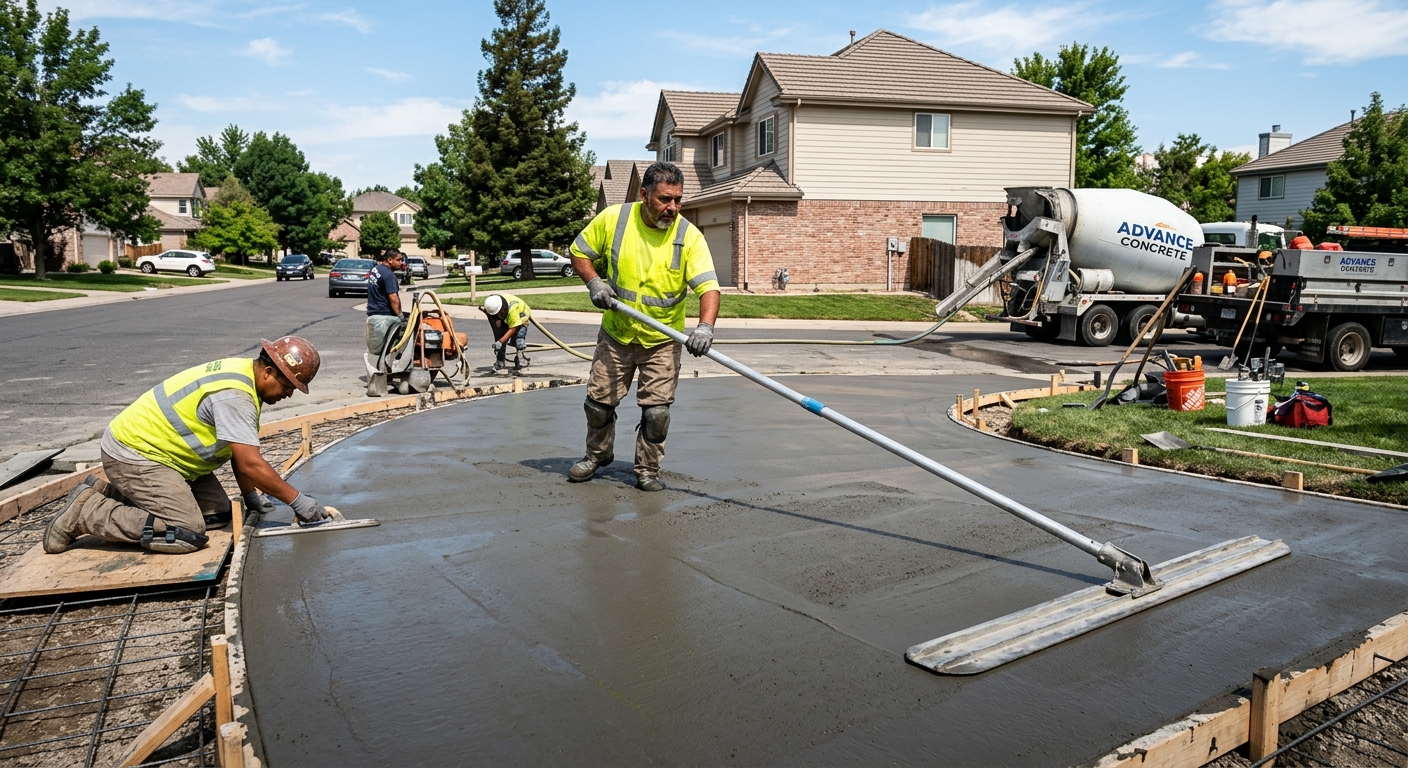
Concrete work options and costs in Parkhill
Concrete work in Parkhill, Ontario is mostly about getting the right foundation for the job—literally. With a population of 1,737 (Statistics Canada, 2021 Census), Parkhill’s housing mix is smaller and more localized than the GTA core, but demand for driveways, patios, and walkways still tracks how long-term residents invest in their homes. In these neighbourhoods, concrete flatwork tends to be durable value for money, especially where people are preparing for wet springs and winter freeze–thaw cycles. You’ll often see work pop up around the Main Street / downtown area, where older homes and more frequent driveway replacements keep crews busy.
Pricing is shaped by the Toronto economic region’s weather pattern: repeated freezing and thawing means exterior concrete needs air-entrained mixes, proper drainage, and well-compacted granular base. Ontario Building Code expectations also steer many structural pours toward deeper, more engineered footing solutions, which can move some projects into the higher end of the market once excavation, reinforcement, and formwork are factored in. Seasonal timing matters too—exterior flatwork is commonly concentrated in warmer months to keep curing reliable, because when temperatures dip toward 10 °C or below, crews add protection measures to hit proper strength gain.
Below are realistic cost bands homeowners in Parkhill typically receive for common concrete options, and what you should expect for size, specs, and finish level before you compare quotes.
| Application |
Typical Size |
Key Spec |
Finish Option |
Price Range |
| Concrete driveway (standard broom finish) |
12 ft x 20 ft (240 sq. ft.) |
Air-entrained exterior mix, compacted granular base |
Broom finish + control joints |
$18,000–$28,000 |
| Exposed aggregate driveway |
12 ft x 20 ft (240 sq. ft.) |
Air-entrained exterior mix, base and drainage planned |
Exposed aggregate finish |
$22,000–$32,000 |
| Stamped concrete driveway or patio |
10 ft x 18 ft (180 sq. ft.) |
Air-entrained mix, proper curing protection |
Stamped pattern + integral colour |
$24,000–$40,000 |
| Plain concrete patio or walkway |
8 ft x 16 ft (128 sq. ft.) |
Air-entrained exterior mix, compacted base |
Float/trowel with light broom or brushed texture |
$16,000–$26,000 |
| Garage floor (interior slab) |
20 ft x 22 ft (440 sq. ft.) |
Vapour barrier, steel mesh or rebar as required |
Power-trowel or broom finish |
$6,500–$11,000 |
| Foundation footings (structural, below frost) |
Typical single-family footprint |
Engineered reinforcement + excavation to design depth |
Rebar cage and formwork; concrete to spec |
$180–$300 |
Prices are estimates only and vary by project scope, site access and material selection.
What affects the price of concrete work in Parkhill
If you ask for two quotes in Parkhill for “the same” driveway, it’s normal to see the number swing by 30–50%. In the Toronto economic region, the variables aren’t just finish preference—they’re engineering details, excavation depth, base requirements, and how well the contractor can manage curing during shoulder-season weather. Concrete pricing is labour- and prep-heavy, so any change in site conditions can quickly cascade into more truck time, more granular, more labour hours, and additional protection measures.
Start with frost depth and freeze–thaw cycles. Ontario specifications generally require exterior structural footings to extend at least 1.2 m (about 4 ft) below grade in many typical cases, which prevents frost heave and differential movement. That means more excavation, taller forms, and often more reinforcement work. Next, exterior slabs need an air-entrained mix to survive repeated freeze–thaw. On top of that, the pour season is shorter and colder fall/spring weather can force cold-weather curing precautions (heating, insulating blankets, and longer protection), adding cost. Even after the pour, de-icing salt accelerates surface wear and spalling—so sealing is a practical add-on for durability.
In Parkhill, a few real-world items often push costs higher or lower. For example, if your driveway subgrade is soft or saturated, contractors must strip to stable soil and rebuild with compacted granular base, which can add several thousand dollars. If you’re upgrading from broom-finish to stamped concrete, you’re typically trading a straightforward finish for labour-intensive stamping, colour, and more careful curing—commonly moving you from the $18–$28 driveway band toward the $24–$40 stamped range. Conversely, a straightforward plain patio with good access may land closer to the $16–$26 band because there’s less prep for complex drainage and less finishing time. Finally, older homes in town can mean more buried services and tighter excavation paths, which can shift labour costs quickly by the job’s first day.
| Price Factor |
Why It Matters |
Cost Impact |
| Frost line depth |
Determines footing depth and form height |
More excavation and formwork; can increase structural scope |
| Site preparation |
Excavation, grading, compacted granular base |
Soft/poor drainage sites require additional base and labour |
| Reinforcement |
Rebar or wire mesh requirement |
Extra materials and labour for tying chairs/spacers |
| Mix design |
Air-entrainment and compressive strength spec |
Higher-spec mix and batching controls can cost more |
| Finish type |
Broom vs. stamped vs. exposed aggregate |
Stamped/exposed work adds labour, colour, and precision |
| Pour size and concrete truck access to site |
Access affects wheelbarrowing and pour efficiency |
Tighter access increases labour time and may add equipment |
| Cold-weather curing precautions |
Heating and blankets to protect strength gain |
Extra labour and materials if pouring near cold thresholds |
| Control joint pattern and sealing cost |
Reduces random cracking and helps repel salts |
Better jointing and sealer add line-item cost |
Permits & regulations in Ontario
In Ontario, structural concrete work needs the right approvals—especially anything tied to a foundation’s structural capacity. In Parkhill, concrete that typically requires a building permit includes: foundation footings, foundation walls, grade beams, underpinning, and any structural concrete associated with changing loads or supporting the building. These projects are commonly reviewed with engineering documents, and municipal intake processes can affect timelines.
Concrete flatwork like driveways, patios, and walkways typically does not require a permit, as long as it doesn’t impact lot grading, drainage in a way that triggers municipal requirements, or impervious surface coverage limits. If your work changes how water flows (for example, rerouting runoff closer to a foundation), the municipality may ask for details even for flatwork.
Here’s how a Parkhill homeowner can verify a contractor properly, step by step. First, confirm liability insurance: request a certificate of insurance and ensure the policy is current and lists your jobsite as applicable. Second, verify WSIB/WCB coverage (relevant for Ontario construction work): ask for the contractor’s clearance letter or proof of account status. Third, ask for their Ontario trade licensing/registration details where applicable for the scope (and match it to the exact work they’re pricing). Fourth, check references for similar-scale flatwork or structural tasks and ask for photos from jobs with comparable access and ground conditions. Finally, confirm whether demolition, forms, reinforcement supply, and concrete disposal are included before any scheduling begins.
Getting concrete right in Parkhill's freeze-thaw climate
Parkhill’s freeze–thaw climate is hard on concrete when the job is rushed or specified too lightly. The most common failure I see is spalling and early surface breakdown caused by inadequate air-entrainment, poor base prep, or missing/incorrect curing protection. When moisture enters the slab, freezes, and expands, it puts stress on the surface. Over multiple winters, that stress leads to scaling, cracking patterns that don’t behave, and unnecessary repairs.
To spec a durable exterior pour, focus on five categories. (1) Base preparation: compacted granular sub-base to the right depth for local soil and frost protection. This reduces settlement and keeps water from pooling under the slab. (2) Mix design: air-entrainment is the key; for exterior flatwork, target about 5–7% air and specify at least 32 MPa compressive strength. (3) Control joints: plan the joint pattern so cracks happen where you expect, not randomly. (4) Curing: plan for at least 7 days of proper curing conditions; cold weather means you need protection so strength development isn’t compromised. (5) Sealing: use a penetrating sealer applied after curing (commonly around 28 days) to help repel de-icing salts and reduce moisture absorption.
When you compare options, the price difference should be tied to these essentials—not just appearance. For example, moving from a plain broom-finished patio into stamped concrete may add roughly $8,000–$20,000 depending on size and site prep, but it only makes sense when the base, joints, and air-entrainment are built correctly. If those are missing, a decorative finish won’t prevent spalling. In Ontario’s Toronto-region climate, the contractor who manages curing and drainage well is usually the one delivering the long-term “it looks good after a few winters” outcome.
| Spec |
Why It Matters in Parkhill |
What to Ask For |
Impact if Skipped |
| Compacted granular base (depth?) |
Stabilizes subgrade against frost movement and settlement |
Granular base type and compacted thickness to suit site conditions |
Uneven settling, cracking, and water pooling under the slab |
| Air-entrained concrete mix (target air %?) |
Improves freeze–thaw durability under humid wet/dry cycles |
Specify exterior air-entrainment, typically 5–7% air |
Spalling/scaling from freeze damage and moisture ingress |
| Compressive strength (MPa rating) |
Ensures adequate strength gain for service in Ontario winters |
Minimum 32 MPa at specified age |
Surface weakness, cracking, and poor long-term wear |
| Control joints (spacing per ACI guidelines) |
Controls where cracks form as slabs expand/contract |
Proposed joint layout and spacing details |
Random cracking and wider repair scope |
| Minimum 7-day curing period |
Cold snaps can slow strength development without protection |
Curing method and temperature protection plan if pouring near cold weather |
Reduced strength, more cracking, and compromised durability |
| Penetrating sealer (when applied after cure) |
Reduces salt/meltwater penetration in freeze–thaw exposure |
Penetrating sealer application after cure (commonly ~28 days) |
Faster wear, staining, and higher risk of surface scaling |
How to choose a concrete work contractor in Parkhill
Picking the right concrete contractor in Parkhill comes down to documentation, workmanship clarity, and a quote you can compare line by line. Start by verifying Ontario coverage items. Ask for a current certificate of insurance (liability) and confirm the jobsite is covered. For WSIB/WCB, request a clearance letter or proof of active coverage before work begins—contractors should be comfortable providing this without pressure. Next, get comfortable that the contractor’s registration and experience match the exact scope, whether it’s exterior flatwork or structural footings.
Then, request 2–3 itemised written quotes—not just a single lump sum. You want the breakdown separated into labour, concrete supply, base/grading, reinforcement (if applicable), forms, excavation, and disposal. Ask whether a permit is included when required (structural concrete typically needs it), and whether charges for cold-weather curing protection (heating blankets, insulating measures) are included if the pour window is tight.
Warranty matters too. Look for a defined workmanship warranty (for example, cracks under normal use due to installation) and confirm whether product/manufacturer warranties apply separately. Ask if the warranty is transferable and what exclusions exist (like de-icing practices or surface sealing schedule).
For payment, keep it controlled: never pay more than about 10–15% upfront, and hold a reasonable completion holdback until forms are removed, the site is cleaned, and the work meets grade and finish expectations. Finally, insist on a written timeline with a start date and completion estimate that includes weather contingency for Ontario’s freeze–thaw season.
- Provide WSIB/WCB clearance letter before scheduling the pour
- Give a current liability insurance certificate (and confirm jobsite coverage)
- Quote is itemised: labour, materials, base prep, and disposal separated
- Spec details included: air-entrainment, compressive strength, and joint layout
- Base thickness and compacted granular depth stated (not “assumed”)
- Reinforcement plan stated when required (mesh/rebar type and placement)
- Protection plan for cold nights (blankets/heating) if temperatures drop
- Sealing plan included (penetrating sealer after cure) if exterior exposure is expected
- Confirm drainage approach so water doesn’t sit against the slab
- Site access plan for concrete trucks and any cutting/coring allowances
- Clear warranty terms: duration, what’s covered, and exclusions
- Payment schedule with a completion holdback until final inspection
Concrete red flags I watch for in Parkhill include: quotes that don’t mention air-entrainment for exterior work, “we’ll handle it later” curing plans, no stated joint spacing or drainage design, heavy upfront payments beyond 10–15%, and vague scope language around excavation depth and disposal.
Frequently asked questions — concrete work in Parkhill
How do I seal concrete to protect it in Parkhill?
In Parkhill (and across Ontario’s freeze–thaw cycle), sealing is about reducing moisture and de-icing salt penetration so the concrete surface wears more slowly. For exterior flatwork, you typically wait until the slab has cured—often around 28 days—before applying a penetrating sealer. The contractor should clean the surface first (no sealant over mud, curing compounds, or loose material), and apply the sealer evenly without puddling. Ask what sealer type they use (penetrating vs film-forming) and whether they’ll include a coverage rate suited to your texture (broom vs brushed vs stamped). If your driveway budget is closer to the $18,000–$28,000 band for standard finishes, sealing is a smaller add-on than decorative upgrades, and it can meaningfully improve longevity against salt-driven wear.
What is the difference between concrete and cement?
In everyday conversation people say “cement,” but the product you get for a driveway or patio in Parkhill is concrete, which is a mixture of several components. Cement is one ingredient—typically Portland cement—that acts as the binder. Concrete also includes aggregates (sand and stone), water, and often admixtures such as air-entraining agents for freeze–thaw durability. That’s why the contractor’s specification matters: for exterior slabs in Ontario’s climate, air-entrainment is a must to reduce freeze damage and spalling. If you compare quotes, look for wording about air content and compressive strength, not just whether “cement” is used. A good contractor will tie the mix design to the freeze–thaw exposure and finishing schedule, which directly affects performance and long-term repair costs.
How much does concrete work cost in Parkhill?
Concrete pricing in Parkhill depends mainly on size, excavation/base prep, reinforcement, finish type, and how the job is managed around curing temperatures. Typical homeowner bands for this area commonly land in these ranges: standard broom-finished driveways around $18–$28, plain patios and walkways around $16–$26, and stamped/decorative work around $24–$40. Foundation footings are handled differently because they’re structural—costs are usually quoted per scope of excavation and engineered reinforcement, commonly shown in a band like $180–$300 for typical footing budgeting (site conditions can move this). If your site is saturated, you may need deeper base work and that’s where quotes can diverge by 30–50%. Always compare itemised quotes, not lump sums.
How deep must footings be for Parkhill's frost line?
For Parkhill/Ontario conditions, structural footings are generally required to be below the frost depth to prevent frost heave and differential movement. In the GTA region, concrete specs typically reference at least 1.2 m (about 4 ft) below grade for many structural footing applications, though the exact design depth should be confirmed with engineering drawings and the building permit documents for your specific soil and structure. The reason is straightforward: if a footing is too shallow, freeze–thaw moisture can expand and shift the bearing pressure, leading to cracking or settlement issues. When you’re comparing quotes for foundation work, ask how excavation depth is determined and whether engineered reinforcement details are included. If a contractor can’t clearly explain the footing depth basis, that’s a major warning sign.
Why does concrete crack in Parkhill and how is it prevented?
Concrete in Parkhill cracks mostly because it’s expected to expand and contract with temperature, and because shrinkage occurs as it cures. Ontario’s repeated freeze–thaw cycles add extra stress when moisture enters the slab. Cracking prevention is about controlling where cracks go and ensuring durability: use an air-entrained exterior mix, build a proper compacted granular base to limit settlement, and install control joints at the planned spacing so shrinkage cracks form predictably. Curing is equally critical—minimum 7 days under the right conditions, with protection when temperatures drop. Sealing later (after cure) helps reduce moisture/salt penetration that worsens freeze damage. If you see quotes that mention joints vaguely or omit air-entrainment, expect higher repair risk over multiple winters.
Stamped vs broom-finish concrete — cost difference?
Stamped concrete costs more because it involves extra labour and process control: moulds, pattern alignment, integral colour (or overlays), and careful finishing tied to the curing timeline. In Parkhill’s market bands, a driveway or patio with stamped/decorative work commonly lands around $24–$40, while a standard broom-finished driveway is often in the $18–$28 range. The difference isn’t only appearance—stamped work requires tighter scheduling and consistent timing so the surface captures the pattern without compromising durability. If your primary goal is longevity and maintenance simplicity, a broom finish can provide excellent performance for less money. If your goal is curb appeal and you’re planning for the full durability package (base prep, air-entrainment, joints, curing, and sealing), stamped concrete can be a justified upgrade.