Concrete work options and costs in Willowdale
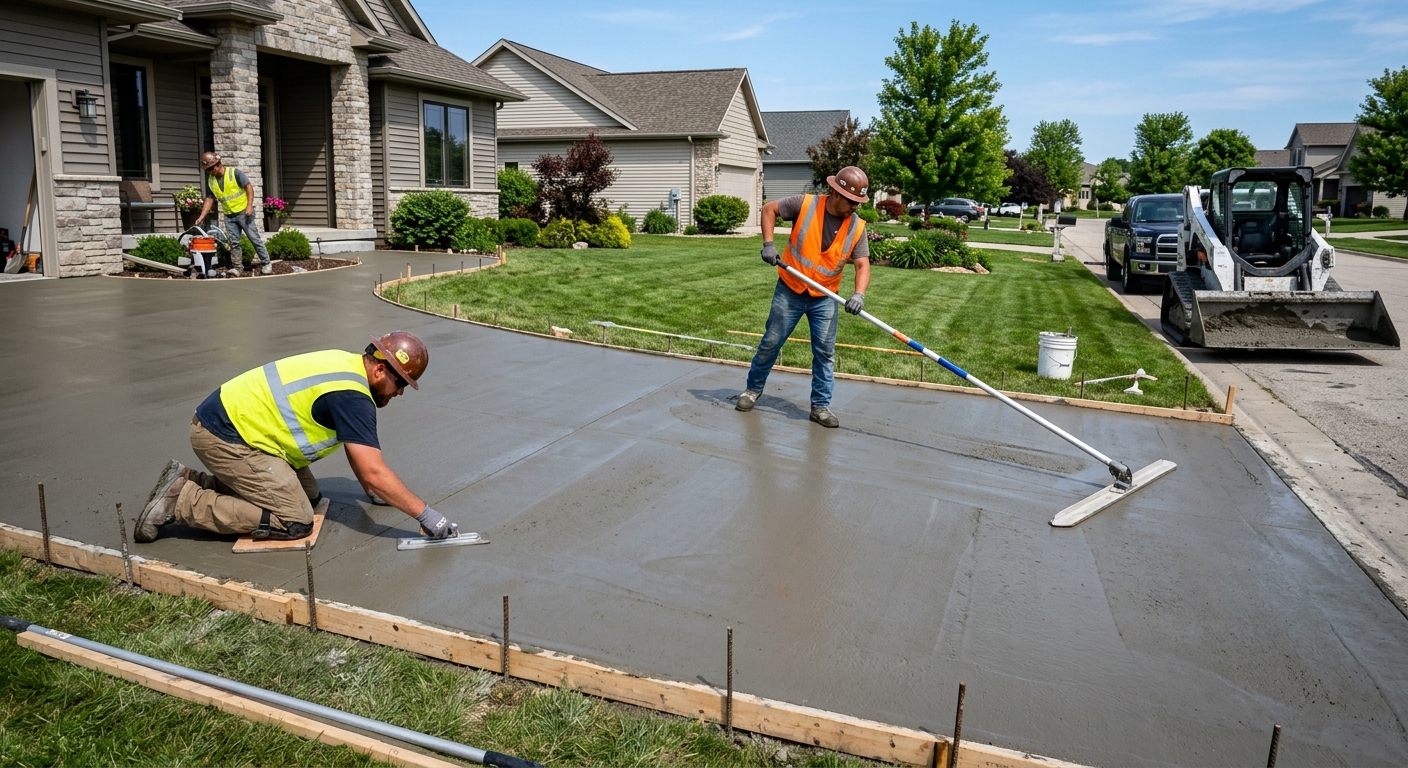
Willowdale, Ontario is a prime neighbourhood for exterior concrete, especially for homeowners who want a driveway, patio, or walkway that stays serviceable through Toronto’s relentless freeze–thaw cycles. With Willowdale’s population at 79,440 (Statistics Canada, 2021 Census), the market is active year-round, but concrete demand peaks when the ground is workable and curing conditions are reliable. Most properties here are established residential lots, and the Toronto-area housing pattern often centres on single-detached homes that benefit from durable, well-drained concrete flatwork. In 2021, Canada’s homebuyers also increasingly focused on longer-term maintenance planning, and that shows up in how people compare finish types, sealing systems, and base preparation before they pick a contractor (Statistics Canada, 2021 Census).
In the Toronto economic region, costs aren’t just about concrete volume. Local building practices expect structural footings to extend at least 1.2 m below grade for frost protection, and exterior slabs need air-entrained concrete plus properly compacted granular base and drainage. That means contractors spend more time on excavation, formwork, reinforcing, and curing protection than you might see in milder climates. Pricing is also influenced by short “best window” periods for exterior work and the need for extra care when night temperatures trend toward 10 °C or below.
Trade demand is especially noticeable around North York Centre and the Sheppard corridor, where infill activity and older-home upgrades often include driveway replacements and patio refurbishments. Use the table below to compare realistic Willowdale price ranges by application, then we’ll break down the specific factors that move those numbers up or down.
| Application |
Typical Size |
Key Spec |
Finish Option |
Price Range |
| Concrete driveway (standard broom finish) |
16 ft x 24 ft (384 sq ft) |
4 in slab, air-entrained mix, compacted granular base, control joints |
Broomed surface |
$6,900–$10,700 |
| Exposed aggregate driveway |
16 ft x 24 ft (384 sq ft) |
4–5 in slab, air-entrained mix, thicker edges, curing and seeding protection |
Exposed aggregate |
$8,200–$13,200 |
| Stamped concrete driveway or patio |
12 ft x 20 ft (240 sq ft) |
4 in slab, air-entrained mix, integral color, proper base and joint layout |
Stamped pattern + release agent |
$6,000–$9,600 |
| Plain concrete patio or walkway |
10 ft x 16 ft (160 sq ft) |
4 in slab, air-entrained mix, drainage slope, control joints |
Broom finish |
$2,400–$4,200 |
| Garage floor (interior slab) |
18 ft x 20 ft (360 sq ft) |
4 in slab, vapour considerations, straightedge flatness, cured and protected |
Plain trowel or broom |
$5,900–$9,000 |
| Foundation footings (structural, below frost) |
Per footing scope (varies) |
Excavate to design depth (often 1.2 m+), reinforced concrete, formwork |
Structural concrete only |
$180–$300 |
Prices are estimates only and vary by project scope, site access and material selection.
What affects the price of concrete work in Willowdale
If you ask for quotes for what looks like the same job in Willowdale, it’s common to see swings of 30–50% across the Toronto region—especially when the bids treat “concrete” as one line item instead of a system. The real variables are base prep, reinforcing, mix design for freeze–thaw durability, finishing level, curing protection, and site logistics (access, excavation depth, disposal, and how many days the crew can work). A contractor who includes proper drainage and air-entrainment typically costs more on day one, but that’s what helps prevent the cracking, scaling, and spalling you notice after a few winters.
In the Toronto economic region, frost depth and freeze–thaw cycles dictate specs. Structural footings must extend below design frost depth (commonly at least about 1.2 m in Ontario) to reduce frost heave and differential movement. Exterior slabs also need air-entrained concrete mixes to survive repeated temperature swings. When colder weather reduces reliable pour time and curing conditions, crews often add labour and protection (insulating blankets, temperature monitoring, longer cure management). De-icing salts accelerate surface deterioration, so sealing—done at the correct stage—can meaningfully extend service life.
Here’s how local conditions move numbers in Willowdale: (1) older neighbourhood lots often have soft or poorly drained soils near foundation lines, which pushes excavation and granular replacement and can move a basic plain walkway toward the higher end of the $16–$26/sq ft band; (2) driveways with tight side-yard access in areas like the Sheppard corridor may require smaller pumps or multiple staging trips, increasing labour and equipment time, which helps explain why stamped concrete can land closer to the $24–$40/sq ft range. If your project includes foundation/footings, pricing is typically driven by the structural scope—at roughly $180–$300 per unit of footing scope depending on design and depth—rather than by finish choice.
| Price Factor |
Why It Matters |
Cost Impact |
| Frost line depth |
Determines footing depth and form height |
Deeper excavation and more forming can add substantial labour and material cost |
| Site preparation |
Excavation, grading, compacted granular base |
Hard access, unstable soil, and extra granular replacement increase time and haul/disposal |
| Reinforcement |
Rebar or wire mesh requirement |
Material and placement labour increases—especially for structural and thicker slabs |
| Mix design |
Air-entrainment and compressive strength spec |
Higher-spec mix and careful batching cost more but improves freeze–thaw resistance |
| Finish type |
Broom vs. stamped vs. exposed aggregate |
Decorative finishes add labour, templates, and additional finishing/curing steps |
| Pour size and concrete truck access to site |
Impacts productivity and placement method |
Tighter logistics can require pumping/extended staging and increase crew time |
| Cold-weather curing precautions |
Heating and blankets |
Extra protection and monitoring can raise costs during shoulder-season projects |
| Control joint pattern and sealing cost |
Controls cracking and reduces salt damage |
Better jointing plus correct sealing schedule adds measurable material and labour |
Permits & regulations in Ontario
In Ontario, the permit question depends on what concrete work you’re doing and whether it affects the structure or site drainage. Structural concrete work—including footings, foundation walls, and grade beams—normally requires a building permit, and municipalities often expect engineered drawings or structural sign-off for the design. That’s because these elements carry loads and must be built to code for safety and durability.
By contrast, concrete flatwork like driveways, patios, walkways, and steps usually does not require a permit on its own. However, it can require municipal review if the project changes lot grading, affects stormwater flow, impacts impervious surface coverage limits, or touches municipal right-of-way or setback requirements. If you’re resurfacing, excavating for a new base, or modifying drainage around a house, don’t assume it’s automatically “permit-free.”
Step-by-step, here’s how a Willowdale homeowner should verify a contractor before work starts:
- Ask for the contractor’s liability insurance certificate (make sure it covers the work you’re approving).
- Confirm WSIB/WCB coverage (the certificate should list the correct business and coverage period).
- Check licensing/registration status using Ontario’s online resources where applicable for the contractor’s trade category.
- Request recent references on similar-size driveway/patio or footing projects in the GTA.
- Ensure the quote clearly states whether a permit pull is included when needed.
Getting concrete right in Willowdale's freeze-thaw climate
Concrete fails in Willowdale most often due to a system problem—usually weak or poorly prepared base, inadequate air-entrainment, or cracks that aren’t controlled and sealed. Toronto’s humid seasons and repeated freeze–thaw cycles push water into the concrete and along the edges. When that water freezes, it expands and can cause spalling (surface scaling and flaking), especially in areas exposed to de-icing salts. That’s why the spec matters as much as the appearance: a driveway that’s “smooth and straight” but missing correct base depth or joint spacing will often look worse after a few winters.
To spec the job correctly, focus on five areas. (1) Base preparation: ensure a compacted granular sub-base to the right depth for local soil conditions, then confirm proper grading and drainage so water doesn’t pool. (2) Mix design: request air-entrainment targeted at about 5–7% air for exterior flatwork, with a minimum 32 MPa compressive strength. (3) Control joints: install them to limit random cracking and provide predictable crack locations. (4) Curing: plan for at least 7 days of curing under proper conditions—when nights drop, the crew may need insulation blankets to protect the surface. (5) Sealing: apply a penetrating sealer after cure (typically at about 28 days) to help repel de-icing salts.
In terms of cost, it’s usually worth paying for the “boring” items. For example, a plain driveway might be in the $18–$28 per sq ft band, while stamped work often rises into the $24–$40 per sq ft band. If the only difference between two quotes is the stamp or colour, you’re comparing aesthetics—not durability—so always verify both bids include the same base prep, air-entrainment, jointing, and curing protection.
| Spec |
Why It Matters in Willowdale |
What to Ask For |
Impact if Skipped |
| Compacted granular base (depth?) |
Reduces settlement and keeps water from migrating toward the slab in freeze–thaw cycles |
Base thickness and compaction standard for your soil; confirm drainage slope |
Premature cracking, edge failure, and pumping/voids under the slab |
| Air-entrained concrete mix (target air %?) |
Creates space for freeze–thaw expansion so water doesn’t damage paste |
Minimum air content typically around 5–7% for exterior flatwork |
Higher risk of spalling and surface scaling after winters |
| Compressive strength (MPa rating) |
Ensures strength development and durability under traffic and weathering |
Minimum 32 MPa compressive strength at specified testing age |
Reduced durability and earlier surface breakdown |
| Control joints (spacing per ACI guidelines) |
Controls where cracks form during shrinkage and temperature movement |
Joint spacing and layout that match slab dimensions and traffic areas |
Random cracking pattern and increased water intrusion |
| Minimum 7-day curing period |
Allows proper strength gain before the slab experiences cold snaps |
How curing will be protected when temperatures drop (blankets/heating if needed) |
Weaker surface, dusting, and increased early-age defects |
| Penetrating sealer (when applied after cure) |
Helps reduce salt and moisture penetration during winter maintenance |
Confirm sealer type and application timing (often after ~28 days cure) |
Faster salt damage, mottling, and reduced service life |
How to choose a concrete work contractor in Willowdale
Choosing a contractor in Willowdale comes down to verifying proof, matching scope, and ensuring they build for Toronto’s climate—not just for looks. First, verify Ontario trade credentials/registration where applicable to the work they’re performing, then confirm liability insurance and WSIB/WCB coverage. You should ask for a current certificate of insurance and a current coverage clearance letter or certificate for WSIB/WCB. If they can’t produce current documents, that’s a serious red flag.
Next, get 2–3 itemised written quotes that separate labour and materials. You want line items for excavation/grading, compacted granular base, reinforcing, concrete mix specifications, formwork, finishing, and curing/sealing. Make sure each quote clearly states what’s included: site protection, disposal, permit pull (if required), saw-cutting timing, and sealing products. Don’t accept a quote that says only “concrete supply and install” without technical specs.
Finally, protect yourself with the business details. Ask about a workmanship warranty length and whether it covers cracking due to curing/base failures. Confirm any manufacturer warranty applies to sealers or decorative systems and whether it’s transferable. On payment schedule, avoid paying more than 10–15% upfront; use a holdback until completion and final cleanup. Require a start date and completion estimate in writing, including what happens if weather forces a delay.
- Insurance certificate matches the legal name of the contractor/company.
- WSIB/WCB coverage is current for the correct business.
- Quote lists base prep details, not just concrete thickness.
- Air-entrained mix and minimum compressive strength are stated (or provided in writing).
- Reinforcement method is clear (wire mesh vs rebar, where used).
- Joint layout and saw-cut timing are specified.
- Curing plan is described (blankets/heating if needed in cooler weather).
- Sealing product and timing are included if you’re doing exterior flatwork.
- Disposal of excavated material is included or priced separately.
- Traffic control and protection of landscaping/driveway access are addressed.
- Payment terms keep a holdback until the final inspection.
- Contractor provides prior project photos from the GTA with similar scope.
In Willowdale, concrete contractor red flags include: (1) refusing to discuss air-entrainment and jointing, (2) pricing decorative work without matching base and reinforcement to the slab design, (3) asking for a large deposit before any site prep begins, (4) skipping curing protection when temperatures drop, and (5) vague wording that excludes disposal, permit handling, or sealing—even when sealing is critical for salt resistance.
Frequently asked questions — concrete work in Willowdale
What is rebar and when is it required in Ontario?
Rebar (reinforcing steel) is used to add tensile strength to concrete, which is strong in compression but weaker in tension. In Ontario, whether rebar is required depends on the structural design and the concrete element you’re building. For typical homeowners, rebar is often part of footings, foundation walls, grade beams, and some thicker slabs where the engineer or building plans call for reinforcement. For exterior flatwork like driveways and patios, reinforcement may still be recommended based on thickness, sub-base condition, and loading, but it’s not always “one-size-fits-all.” In Willowdale and the Toronto region, good design also accounts for freeze–thaw durability—so if a bid promises durability but avoids discussing reinforcement and base prep, ask why.
How long does a concrete project take in Willowdale?
Typical timelines in Willowdale depend on weather, access, and whether the work is flatwork or structural. For a driveway or patio replacement, you’ll usually see site prep (excavation, forms, base, and sub-grade work) in the first days, then a single pour day with finishing and jointing, followed by curing protection. Even when the pour happens quickly, you should plan for at least several days of work on-site and more time before full use—especially in late fall when night temperatures can affect curing. Interior garage floors often move faster because there’s less cold exposure, while exterior pours can require insulating blankets when temperatures drop toward 10 °C or below. If you’re budgeting, consider that properly curing concrete is part of the scope you’re paying for, not something that “happens on its own.”
What is a concrete overlay and is it suited to Willowdale?
A concrete overlay is a new layer placed on top of an existing slab—often using a bonding method and sometimes a resurfacing system. In Willowdale, overlays can work when the existing concrete is still structurally sound, stable, and properly prepared (clean, profiled, and free of significant spalling or settlement). However, overlays usually aren’t a good fix if the original slab is moving, has widespread cracking, or has drainage issues that keep water trapped—because freeze–thaw will continue to attack the interface. If your goal is salt resistance and long-term durability, base and drainage corrections usually matter more than just adding thickness. Pricing also varies: if the concrete is failing structurally, replacing may cost closer to the $18–$28 driveway band rather than trying an overlay with uncertain longevity.
How do I seal concrete to protect it in Willowdale?
Sealing is about reducing moisture and de-icing salt penetration, which helps lower spalling and surface deterioration risk during Toronto winters. The key is timing: sealing should be applied after the concrete has cured (commonly around 28 days for exterior slabs). Use a penetrating sealer designed for freeze–thaw durability rather than a film-forming product unless your contractor recommends a specific system for your finish. For Willowdale, sealing also needs surface preparation—your contractor should clean and test moisture conditions so the sealer bonds properly. Ask your contractor what product they’re using, expected coverage rate, and whether they’re sealing joints appropriately. If your driveway or walkway receives regular winter maintenance, sealing is typically one of the most cost-effective steps within the scope of exterior work.
What is the difference between concrete and cement?
Cement is a component, while concrete is the final material. Cement (usually Portland cement) is the binder that reacts with water and helps harden. Concrete is cement combined with water, aggregates (sand and stone), and in many projects an air-entraining admixture. The reason this matters in Willowdale is that exterior flatwork must handle freeze–thaw cycles, so the concrete mix design is what you should focus on—especially air-entrainment for durability and the specified compressive strength. A contractor can talk about “cement” generally, but you want them to state mix specs like target air content (often 5–7% for exterior flatwork) and minimum strength (commonly at least 32 MPa) in the quote. That’s how you ensure you’re paying for durability, not just material volume.
How much does concrete work cost in Willowdale?
In Willowdale, concrete costs depend on the scope, base preparation, and finish level—along with access and curing needs in Toronto’s freeze–thaw climate. As a quick benchmark, concrete driveways often land in the $18–$28 per sq ft range for standard work, while stamped concrete tends to cost more, commonly in the $24–$40 per sq ft range due to extra labour and decorative finishing steps. Patios and walkways commonly fall around $16–$26 per sq ft. Structural footings are priced differently (often in a scope-based way) and typically come with a rough band of about $180–$300 depending on excavation depth and reinforcement requirements below frost. If you compare two quotes, insist that they match base prep, air-entrained mix spec, jointing, and curing/blanket requirements—those details are what most often explain quote differences.