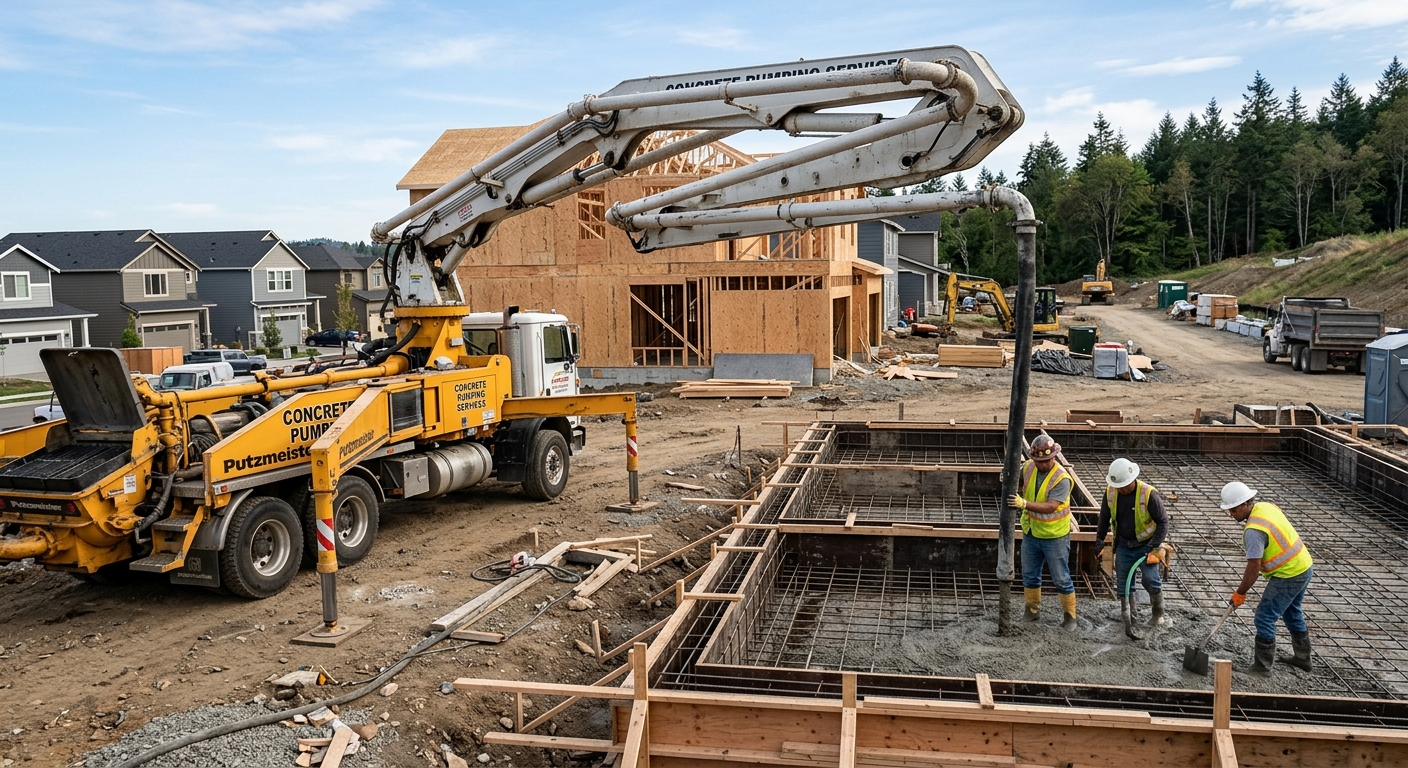
Concrete work options and costs in O'Connor-Parkview
O'Connor-Parkview is one of those Toronto neighbourhood pockets where homeowners want clean, durable concrete because winters can be brutal on surfaces. With a population of 18,675 (Statistics Canada, 2021 Census), the area supports steady demand for driveway and flatwork repairs, especially as many properties have older grading around porches, walks, and garages. In this part of Toronto, concrete contractors also see a lot of work tied to family homes—driveways, patios and walkways are the first upgrades most people budget for when they’re renovating an entryway or re-lining a garden bed.
Prices aren’t just about decorative choices; they’re heavily driven by Toronto’s freeze–thaw cycle and the way Ontario typically requires structural elements to sit below design frost depth to limit frost heave. For exterior flatwork, we generally rely on air-entrained mixes, proper drainage, and control joints to manage seasonal movement and cracking. Because of this, the same job can cost meaningfully more when excavation reveals soft subsoil, when rebar is needed to meet performance expectations, or when truck access is tight in older lanes and side yards. Contractor availability can also tighten during the late spring rush when weather windows open and municipalities are most active with inspections and permit reviews.
In O'Connor-Parkview—particularly around the more established residential stretches near the heart of the Parkview area—driveway replacement and porch-adjacent walkways are especially common. Below is a practical comparison of typical applications and realistic price ranges to help you align your quote with the right specifications.
| Application |
Typical Size |
Key Spec |
Finish Option |
Price Range |
| Concrete driveway (standard broom finish) |
400 sq. ft. (approx. 20’ x 20’) |
Air-entrained mix; compacted granular base; control joints |
Broom finish |
$7,200–$11,200 |
| Exposed aggregate driveway |
400 sq. ft. |
Proper base and drainage; higher material and finishing effort |
Exposed aggregate (surface wash) |
$9,600–$14,800 |
| Stamped concrete driveway or patio |
300 sq. ft. (typ. patio/entry) |
Air-entrained mix; reinforcement based on load and base |
Stamp + release + color hardener |
$7,200–$12,000 |
| Plain concrete patio or walkway |
240 sq. ft. (typ. 12’ x 20’) |
Compacted base; edge forms; control joints as needed |
Plain broom/float finish |
$3,800–$6,200 |
| Garage floor (interior slab) |
480 sq. ft. (typ. 20’ x 24’) |
Vapour barrier (as applicable); thicker slab if required |
Steel-trowel + sealer (optional) |
$8,000–$14,500 |
| Foundation footings (structural, below frost) |
Varies (typ. per linear footage) |
Excavation; rebar; concrete placed to frost depth |
Structural concrete |
$180–$300 |
Prices are estimates only and vary by project scope, site access and material selection.
What affects the price of concrete work in O'Connor-Parkview
In the Toronto area, homeowners often see quotes for the “same” concrete job swing by 30–50% because the real cost drivers are usually buried in preparation and specs: subgrade condition, drainage strategy, reinforcement, and the concrete mix design. Two contractors might both say “new driveway,” but one may include proper granular base thickness and engineered reinforcement, while the other plans for a more basic pour. In older parts of O'Connor-Parkview, excavation can also reveal variable soil or demolition debris that adds disposal and rebuild time before concrete can even be placed.
Toronto’s frost depth and freeze–thaw cycles dictate the entire approach. Footings for structural work typically need to extend at least 1.2 m below grade to help prevent frost heave and differential movement. Exterior slabs and flatwork must use air-entrained concrete because repeated freezing and thawing will expand and contract moisture in the slab and sub-base. The GTA also has a shorter, warmer, reliable pour season; when temperatures drop toward 10 °C or below, cold-weather curing measures (insulating blankets, heaters, longer protection) can add labour and rental costs. Add de-icing salt, and surface spalling risk increases—good sealing and correct mix and air content become non-negotiable.
Local conditions that raise costs in O'Connor-Parkview include poor drainage at the garage approach (more sub-base drainage work), tight truck access in side yards (extra crew time for forms and finishing), and thicker-than-standard slabs for heavier vehicles. Costs can also be lower when the existing base is sound and demolition is minimal. For reference, standard driveway work may land around the $18–$28 range for typical flatwork pricing guidance, while stamped and decorative work often runs higher because of additional materials and labour (commonly $24–$40 for decorative surfaces).
If your home sits on older landscaping, timing matters too: waiting for the right weather window can cost less than “patching” a surface that didn’t cure properly in colder periods—failed curing can show up as scaling or early deterioration, which turns a mid-range budget into a repeat project.
| Price Factor |
Why It Matters |
Cost Impact |
| Frost line depth — determines footing depth and form height |
Below-frost placement reduces frost heave and movement |
Higher excavation and concrete volume can increase foundational budgets substantially |
| Site preparation — excavation, grading, compacted granular base |
Concrete performs only as well as the base and drainage |
Soft soils or extra removal can add labour and disposal costs |
| Reinforcement — rebar or wire mesh requirement |
Improves crack control and load capacity where needed |
Material + rebar placement labour increases cost on driveways/garage slabs |
| Mix design — air-entrainment and compressive strength spec |
Air-entrainment helps survive freeze–thaw and limits scaling |
Upgrading mix spec is usually a modest material premium with big durability returns |
| Finish type — broom vs. stamped vs. exposed aggregate |
Finishes add set-up, labour time and specialty materials |
Stamped and exposed aggregate typically cost more than plain broom-finish |
| Pour size and concrete truck access to site |
Access affects form set, placement speed and labour efficiency |
Tight access can mean more hands, pump use or extra time |
| Cold-weather curing precautions — heating and blankets |
Protects strength gain and reduces surface defects in cooler conditions |
Adds crew time and equipment rental when temps are low |
| Control joint pattern and sealing cost |
Joints reduce random cracking; sealing helps repel salt and water |
Joint saw cuts and sealer are line items that many “cheap” quotes miss |
Permits & regulations in Ontario
In Ontario, structural concrete work—think footings, foundation walls, and grade beams—almost always needs a building permit, and it often relies on engineered drawings that the municipality or its plan review process will assess. For many homeowners in O'Connor-Parkview, that means if you’re changing the foundation system, supporting new load paths, or excavating significantly around the house for structural elements, you should expect permitting and inspection steps.
Concrete flatwork (patios, walkways, driveways) typically does not require a building permit by default, but it can trigger approvals if it affects lot grading, drainage, or impervious surface coverage limits, or if the work touches municipal right-of-way features (like boulevards and certain sidewalk/road interfaces). Also, if your flatwork changes how water sheds—especially near foundations—that can become a compliance issue.
Here’s how you can verify a contractor in a homeowner-friendly way:
- Confirm licensing for the contractor/company (Ontario licensing is job-type specific, but a legitimate contractor will be readily able to provide proof).
- Request a certificate of insurance showing general liability.
- Ask for WSIB/WCB clearance or proof of coverage (as applicable) before work starts.
- Verify the scope matches the permit (if a permit is required): footings, foundation walls, and inspections must align.
- Ask for references on similar-scale projects nearby in the GTA and confirm who pulled any permit paperwork.
Always confirm requirements directly with the local authority before breaking ground, because drainage/grading details can change whether approvals are needed even when the concrete surface seems “simple.”
Getting concrete right in O'Connor-Parkview's freeze-thaw climate
Concrete can fail quickly in O'Connor-Parkview when the base isn’t built correctly, when the mix isn’t designed for freeze–thaw, or when curing is rushed. The most common homeowner-visible problem is spalling or scaling—tiny surface losses that often start after winter salt exposure. The root cause is frequently inadequate air-entrainment and/or poor finishing practices that reduce resistance to freeze–thaw. If the sub-base is under-compacted or poorly drained, water migrates under the slab, freezes, expands, and then stresses the concrete. Once that happens, even the prettiest finish won’t hold up.
To spec the job correctly, start with the base: compacted granular sub-base to the right depth for local soil and frost conditions, with proper grading to keep water moving away from the slab. Next, demand the right mix: exterior flatwork should use air-entrained concrete (commonly targeting about 5–7% air content) and a minimum 32 MPa compressive strength so the slab achieves durability, not just initial setting. Control joints then need a planned pattern to limit random cracking. Curing matters too: aim for at least 7 days of proper curing conditions, and in cooler weather, add protection so strength gain isn’t compromised. Finally, apply a penetrating sealer after the concrete has cured (typically around 28 days) to help repel de-icing salts and water.
Technical questions that prevent spalling: “What air content are you targeting?” “What base depth and compaction method are you using?” “Where exactly will control joints be cut, and when?”
Dollar-wise, sometimes upgrading saves money. For example, if a plain broom-finish driveway estimate comes in around the $18–$28 typical flatwork band, choosing the correct air-entrained mix and base prep usually costs less than repairs later. Cutting corners on base or air entrainment can turn a one-time driveway project into a re-do within a few winters—far more than the modest upfront difference between a basic and properly specified exterior pour.
| Spec |
Why It Matters in O'Connor-Parkview |
What to Ask For |
Impact if Skipped |
| Compacted granular base (depth?) |
Supports slab and limits water movement under freeze–thaw |
Base thickness and compaction method; drainage/grading plan |
Settlement, cracking, and shortened service life |
| Air-entrained concrete mix (target air %?) |
Air spaces relieve pressure from freezing water |
Target air content (about 5–7% for exterior flatwork) |
Spalling/scaling after winters and salt exposure |
| Compressive strength (MPa rating) |
Ensures durability and proper long-term performance |
Minimum 32 MPa compressive strength spec |
Surface wear and increased cracking risk |
| Control joints (spacing per ACI guidelines) |
Controls where cracks form instead of random breaks |
Planned joint spacing and timing of saw cuts |
Uncontrolled cracking and water infiltration |
| Minimum 7-day curing period |
Allows strength gain despite GTA weather swings |
How curing will be protected (especially near 10 °C) |
Reduced strength and early surface defects |
| Penetrating sealer (when applied after cure) |
Repels moisture and salt at the surface |
Penetrating sealer applied after cure (around 28 days) |
More scaling and faster deterioration of the top surface |
How to choose a concrete work contractor in O'Connor-Parkview
Choosing the right contractor in O'Connor-Parkview starts with verifying the basics—licensing where applicable, general liability, and worker coverage. In Ontario, reputable concrete contractors can provide documentation quickly: request their certificate of insurance (with adequate limits), and ask for WSIB/WCB proof or clearance. If a company won’t share paperwork before you sign, that’s a red flag. You can also confirm their standing using available online resources and by contacting references directly.
Next, demand 2–3 itemised written quotes instead of a lump sum. Look for line items that separate labour, materials, excavation, base prep, reinforcement, finishing, saw cuts, and sealing. Concrete prices can swing because “scope gaps” are common—one quote may include disposal and proper base thickness while another quietly assumes you’ll handle those items.
Read the exclusions carefully: is snow removal/disposal included? Is the permit (if required for structural work) pulled and included or billed separately? Will they remove and haul the old slab?
Finally, focus on warranty and payment terms. Ask for a workmanship warranty length and whether the product/manufacturer warranty transfers to you. Payment should be staged—never pay more than about 10–15% upfront, and keep a holdback until the job is complete and cleaned up. Get a written start date and a realistic completion estimate; in the GTA, finishing and curing protection are easier to manage when crews aren’t rushed by weather or scheduling gaps.
- Request insurance and WSIB/WCB proof before work begins.
- Ask for 3 recent references on similar-size driveway/patio projects.
- Get quotes with itemised base prep, reinforcement, and finishing.
- Confirm whether disposal/haul-away is included.
- Ask who is responsible for any permit required for the scope.
- Verify target mix spec: air-entrainment and minimum 32 MPa.
- Confirm base thickness and compaction testing/standards used.
- Review control joint locations and timing (when saw cuts happen).
- Ask how curing is protected in cooler weather windows.
- Confirm sealer type (penetrating) and when it’s applied (around 28 days).
- Check warranty details: workmanship term, exclusions, and transferability.
- Agree on a payment schedule with a holdback for completion and defects.
Concrete contractor red flags in O'Connor-Parkview: (1) no discussion of air-entrainment or freeze–thaw durability, (2) “one-size-fits-all” joint spacing, (3) vague curing protection plans when temps drop toward 10 °C, (4) quotes that don’t mention base prep thickness/compaction, and (5) asking for large upfront payments without a written schedule and scope.
Frequently asked questions — concrete work in O'Connor-Parkview
Stamped vs broom-finish concrete — cost difference?
In O'Connor-Parkview, stamped concrete usually costs more than broom-finish because it takes more specialized labour and materials (stamps, release agents, colour systems, and extra finishing time). A plain broom-finished driveway typically follows the more basic flatwork pricing guidance (for example, about $18–$28 per sq. ft. depending on scope). Stamped concrete is commonly priced in the higher decorative band (often around $24–$40 per sq. ft.). That higher price is justified when you want curb appeal for a driveway or patio and you also get the right underlying prep—proper granular base, air-entrained mix for freeze–thaw, and a joint plan that won’t create random cracking. Always ask whether the quote includes reinforcement where needed and sealing after cure, because those details affect longevity as much as the look.
When is the best time to pour concrete in O'Connor-Parkview?
The best time to pour concrete in Ontario’s Toronto area is during the warmer months when curing conditions are stable. In O'Connor-Parkview, crews typically target the period when daytime temperatures are consistently above about 10 °C so the concrete strength gain and finishing work aren’t compromised. If a pour has to happen during cooler or rainy weather, a reputable contractor will plan cold-weather protection—insulating blankets and, in some cases, temporary heating—to avoid weak surface development and durability issues later. It’s also important to schedule based on your project readiness: good base prep and drainage rough-in should be finished before the concrete date. Pouring too early can increase risk of surface scaling after the first few freeze–thaw cycles; pouring at the right time helps the slab mature properly before winter salt exposure becomes a daily factor.
How long does concrete take to cure?
Concrete “sets” faster than it “cures.” In practical terms for homeowners in O'Connor-Parkview, you should plan for at least 7 days of proper curing conditions for exterior flatwork, assuming normal Ontario conditions and correct protection. During that window, the concrete is building strength; rushing foot traffic or vehicle loads can lead to surface damage and long-term performance problems. Full design strength is longer—often measured in weeks—so we also recommend delaying critical use and applying a penetrating sealer only after the concrete has fully cured (commonly around 28 days). If the weather is cool or damp, a contractor should extend protection time and use curing measures so strength gain isn’t interrupted. When you ask for your schedule, request written details on curing protection and when saw cuts and finishing will happen.
Do I need a permit for concrete work in Ontario?
In Ontario, it depends on what you’re building. For structural concrete work—like footings, foundation walls, and grade beams—you typically need a building permit, often supported by engineered drawings and municipal review. For concrete flatwork such as patios, walkways and driveways, a permit usually isn’t required by default; however, approvals may be necessary if the work affects lot grading, drainage, or impervious surface rules, or if it involves the municipal right-of-way. For homeowners in O'Connor-Parkview, the safest approach is to confirm with the local authority before excavation starts. A good contractor will also be able to tell you whether a permit is expected for your specific scope and who handles it. Before signing, ask for the permit responsibility details and verify your contractor carries liability insurance and WSIB/WCB coverage.
Concrete vs pavers for a patio in O'Connor-Parkview?
Concrete and pavers can both be excellent for patios, but they behave differently under Toronto-area freeze–thaw conditions. Concrete patio pricing often lands in the flatwork band (commonly about $16–$26 per sq. ft. for plain concrete), and stamped concrete adds cost in the decorative band (often $24–$40 per sq. ft.). Pavers can be easier to repair locally if a section shifts, but they still require excellent base prep and drainage to avoid movement. Concrete is usually faster to install for larger uniform areas and can look more seamless, but if control joints aren’t planned properly or base prep is poor, cracking can appear over time. In O'Connor-Parkview, where de-icing salt and winter moisture are persistent, the key is the base and drainage in both systems—only the surface “language” changes. Ask contractors how they handle compaction, slope away from the house, and what they recommend for sealing or joint maintenance.
How long does a concrete driveway last?
A well-built concrete driveway in Ontario can last for decades, but the timeline depends heavily on freeze–thaw durability details. The biggest factors are the concrete mix (air-entrainment), adequate base prep and drainage, correct thickness for the load, and a joint plan that limits random cracking. If those are done right, many driveways perform well through repeated winters in areas like O'Connor-Parkview, especially when a penetrating sealer is applied after cure (often around 28 days) to help resist salt scaling. If a driveway is installed with poor base compaction, non-air-entrained concrete, or inadequate control joints, you may see spalling and scaling sooner—sometimes within a few winters—turning a “maintenance-free” plan into repeated repairs. As a budgeting anchor, homeowners typically start with the $18–$28 pricing guidance for standard exterior concrete, but true longevity depends on what’s included in that quote: base depth, reinforcement, joints, curing protection, and sealing.