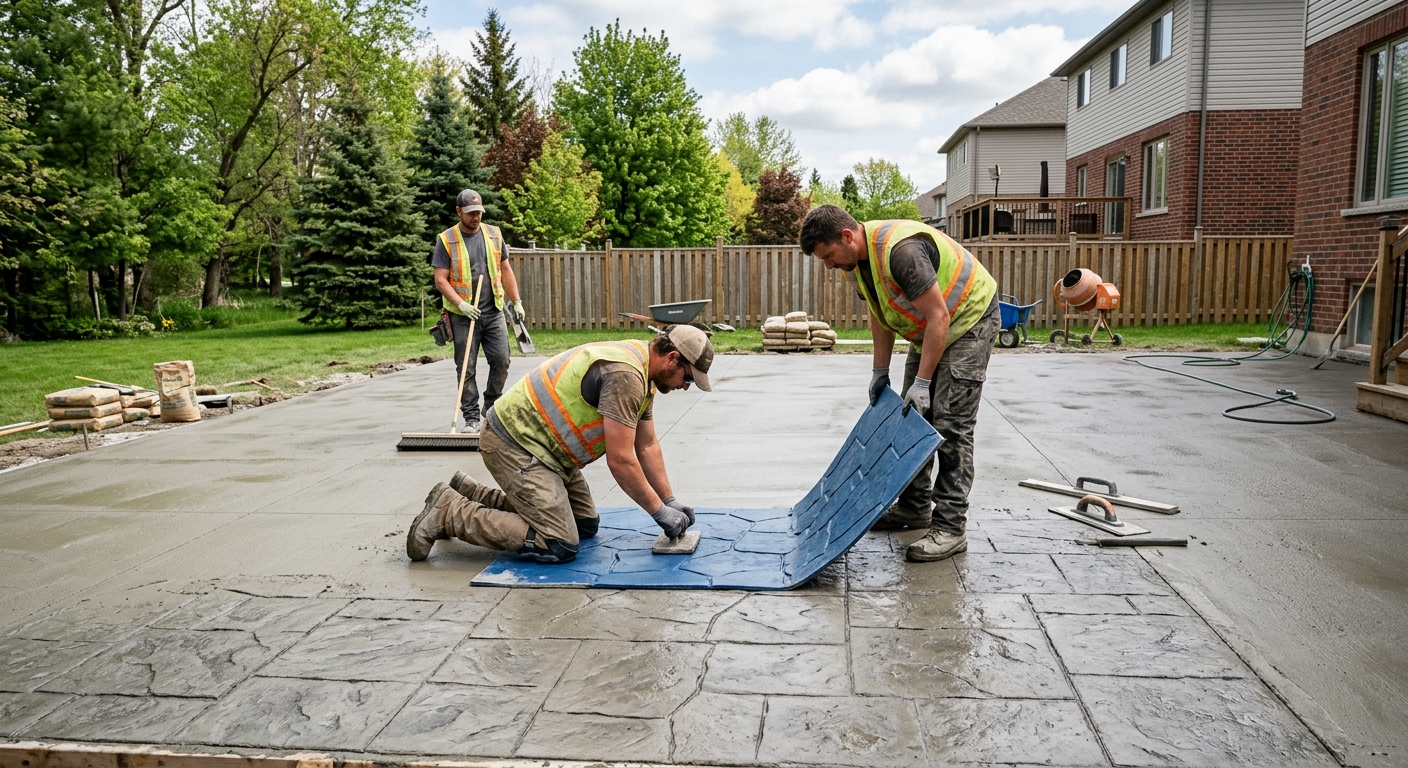
Concrete work options and costs in North Bay
Concrete work in North Bay, Ontario is mainly driven by how well it can survive long, hard winters and the freeze–thaw cycles that rack up stress on exterior slabs. In North Bay, a large share of housing is single-detached—48.7% of dwellings are that type—so driveways, patios, walkways, and garage floors are constant demand items. With 13,900 homeowner households (59.2% of households owning), most projects are homeowner-led upgrades rather than mass commercial builds, which keeps crews focused on repeatable flatwork scopes.
Even though the Northeast region has no coastal moderating effect, the Ontario reality is similar: exterior concrete sits through repeated winter expansion and contraction. That means we plan the foundation and slab system for durability—compacted granular base, air-entrained mix, and properly spaced control joints—so you don’t end up with early cracking, scaling, or spalling. Pricing also reflects seasonality and scheduling pressure: contractors concentrate pours into frost-free windows, and colder conditions often require extra protection for curing. In North Bay, areas around West Ferris and North Bay proper tend to be busy because of frequent driveway and front-step replacements on older homes.
Below are practical price bands you’ll see from local contractors for common scopes, which we’ll use as a comparison baseline in the rest of this guide.
| Application |
Typical Size |
Key Spec |
Finish Option |
Price Range |
| Concrete driveway (standard broom finish) |
400–600 sq. ft. |
Air-entrained exterior mix, compacted base, control joints |
Broom finish, typical saw cuts |
$18,000 – $28,000 |
| Exposed aggregate driveway |
400–600 sq. ft. |
Air-entrained mix with aggregate reveal plan |
Exposed aggregate (surface retarder/reveal) |
$24,000 – $34,000 |
| Stamped concrete driveway or patio |
250–500 sq. ft. |
Air-entrained mix, reinforcement as needed |
Stamp mats + release agent + color hardener |
$20,000 – $40,000 |
| Plain concrete patio or walkway |
200–400 sq. ft. |
Minimum thickness, compacted base, joints |
Float/trowel top with light broom texture |
$15,000 – $25,000 |
| Garage floor (interior slab) |
400–600 sq. ft. |
Interior mix, vapor considerations for damp areas |
Broom finish + edge hardener (optional) |
$17,000 – $30,000 |
| Foundation footings (structural, below frost) |
Varies by foundation plan |
Structural concrete, below frost depth, proper rebar |
Formed and reinforced as per drawings |
$10,000 – $18,000 |
Prices are estimates only and vary by project scope, site access and material selection.
What affects the price of concrete work in North Bay
It’s common to see the “same” concrete job land 30–50% higher (or lower) when you get multiple quotes in and around North Bay. The biggest drivers are not just the concrete itself—it’s the system behind it. In cold regions, freeze–thaw cycles and frost penetration force specific specs: exterior slabs need air-entrained concrete, and footings must extend below the design frost depth to prevent frost heave and slab cracking. On top of that, cold-weather operations compress the pour season, so labour scheduling and equipment standby can raise costs when the calendar is tight.
Two projects illustrate why pricing swings: a standard broom-finished driveway usually stays closer to the typical flatwork band (for example, $18–$28 for a concrete driveway), while decorative work like stamping or exposed aggregate adds time for forming, coloring, release agents, and surface finishing—pushing many jobs into higher ranges. Meanwhile, foundation work generally follows foundation complexity—reinforcement details, excavation volume, and backfill costs often dominate the final number, even if the concrete quantity looks similar on paper.
Local conditions also matter in real dollars. For example, older homes built before 1981 are common in North Bay (69.7% of housing stock built before 1981), and retrofits often involve broken-out existing slabs, unknown subgrade conditions, and utility relocations. That can add excavation and re-compaction. Conversely, a straightforward, level lot with easy truck access can keep you near the lower end of the patio/walkway band ($15–$25) because the base prep is quicker and rework risk is lower.
| Price Factor |
Why It Matters |
Cost Impact |
| Frost line depth |
Determines footing depth and form height so concrete isn’t lifted by frost. |
Often the largest variable on foundation quotes; deeper excavation increases labour/equipment and backfill. |
| Site preparation |
Excavation, grading, and compacted granular base prevent voids and settlement. |
More haul-off, regrading, or poor soil increases costs quickly. |
| Reinforcement |
Rebar or wire mesh controls cracking and improves slab performance. |
Material + install time; required reinforcement can add noticeable labour. |
| Mix design |
Air-entrainment and compressive strength spec improve freeze–thaw durability. |
Premium mix and higher cement content cost more; wrong mix can cause early failures. |
| Finish type |
Broom vs. stamped vs. exposed aggregate changes labour steps and tools. |
Decorative finishes add process time (coloring, stamping, revealing, additional curing/protection). |
| Pour size and concrete truck access to site |
Smaller pours and difficult access can force more labour and pump/short-haul logistics. |
Longer days, extra handling, and standby charges push pricing up. |
| Cold-weather curing precautions |
Heating, insulation blankets, and protected curing help reach strength without freezing. |
Increases material and labour; prevents weakened slabs and surface damage. |
| Control joint pattern and sealing cost |
Joints manage cracking locations; sealing reduces water and salt intrusion. |
Correct joint layout takes design/thought and extra cutting + later sealing labour/materials. |
Permits & regulations in Ontario
In Ontario, concrete work that is part of a structure generally requires a building permit and often engineered drawings that the municipality reviews. That includes footings, foundation walls, and grade beams—work that carries structural load or supports the foundation system. Concrete flatwork such as driveways, patios, and walkways usually does not require a permit by default, unless the scope affects things like lot grading, drainage, impervious coverage limits, or municipal right-of-way conditions. In practical terms for North Bay homeowners, that means you should still confirm the plan if you’re regrading, changing runoff direction, or adding a surface that changes drainage patterns.
Before signing, verify your contractor’s coverage and compliance. Step-by-step: (1) Ask for their liability insurance certificate—ensure the dates cover your project and that the limits are appropriate for your risk profile; (2) ask for evidence of WSIB coverage (or applicable proof if they’re exempt/covered differently); (3) confirm workers are protected and the contractor is in good standing; (4) check online listings for provincial eligibility/records where available; (5) request references from similar concrete scopes completed within the last 12–24 months. If a permit is required for your foundation work, your contractor should be comfortable explaining who pulls it and what documentation is needed. If they can’t, that’s a red flag you don’t want to discover after excavation.
Getting concrete right in North Bay's freeze-thaw climate
Concrete failures in North Bay are usually predictable: poor base preparation, weak or improperly air-entrained mix, sloppy joint spacing, and curing shortcuts that let early freezing damage the slab. To spec the job correctly, treat it like a layered system rather than “just pouring concrete.”
(1) Base preparation: compacted granular sub-base to the correct depth for the local soil and frost conditions. If the subgrade is soft or drainage is poor, you’ll get settlement and hairline cracking that grows with winter cycles. (2) Mix design: use air-entrained concrete for exterior flatwork (typically 5–7% air target) and a minimum 32 MPa compressive strength spec for durability in freeze–thaw conditions. (3) Control joints: cut joints in a tight, planned pattern to keep cracking controlled. (4) Curing: aim for at least 7 days curing under proper conditions; when temperatures drop, curing must be protected with blankets or enclosure and, if needed, temporary heat. (5) Sealing: apply a penetrating sealer after cure (often at 28 days) so de-icing salts and meltwater have less to work with.
Here’s a dollar example from our market: upgrading a broom-finished driveway toward a decorative finish (stamped) often adds cost, but if the base and mix are already correct, the jump is mainly finish labour and materials—not “bigger concrete.” In other words, moving from broom-finish pricing near the typical $18–$28 driveway band to a stamped option is justified when you’re getting the same durable foundation spec under it. Cutting corners under the decorative surface is how you still end up with premature spalling, even if the pattern looks great on day one.
| Spec |
Why It Matters in North Bay |
What to Ask For |
Impact if Skipped |
| Compacted granular base (depth?) |
Reduces settlement and improves frost resistance under repeated freeze–thaw loading in North Bay. |
Granular sub-base thickness and compaction requirements (including moisture conditioning if needed). |
Uneven settling, cracking, and failed edges that worsen over winters. |
| Air-entrained concrete mix (target air %?) |
Air voids relieve freeze expansion and help prevent scaling/spalling. |
Target air content stated on the proposal (typically 5–7% for exterior flatwork) with acceptable test tolerances. |
Early spalling/scaling, surface flaking, and faster deterioration from de-icing salt exposure. |
| Compressive strength (MPa rating) |
Strength determines whether the slab develops reliably through cold snaps. |
Minimum 32 MPa compressive strength spec and mix design confirmation. |
Weak concrete that cracks more easily and can lose durability with winter cycling. |
| Control joints (spacing per ACI guidelines) |
Controls where cracks form when concrete shrinks. |
Joint spacing plan, saw-cut timing, and sealant-ready edges. |
Random cracking across the slab, trip hazards, and more water intrusion. |
| Minimum 7-day curing period |
Cold-weather curing is essential so the slab reaches strength before the deep cold arrives. |
Curing method (blankets/insulation/heating if required) and protection timeframe. |
Reduced strength, surface damage, and increased cracking risk. |
| Penetrating sealer (when applied after cure) |
Repels meltwater and salt so the surface weathers more gracefully through winter. |
Penetrating sealer type and application timing (commonly after 28 days). |
Accelerated scaling/spalling from de-icing salts and repeated wetting/drying. |
How to choose a concrete work contractor in North Bay
Choosing the right concrete contractor in North Bay comes down to proof, not promises. First, verify Ontario compliance and coverage. Ask for their liability insurance certificate and confirm the policy is active for your job dates. Next, request evidence of WSIB coverage (or appropriate proof if applicable). In Ontario, you’ll also want to confirm the contractor can legally perform the work and provide references—especially for foundations and structural-related concrete scopes where permits and engineered details typically apply.
When you request quotes, don’t accept a single “lump sum” without a clear breakdown. Get 2–3 itemised written quotes that separate labour and materials, including excavation/disposal, granular base, reinforcement, concrete mix spec (air-entrainment and strength), forming, finishing, curing protection, joints, and sealing (if included). Read the scope line-by-line: what’s excluded? Is permit handling included where needed? Is saw-cutting and sealing included in the same price or treated as a separate follow-up? Disposal and haul-off can be a hidden cost in older neighbourhoods where driveways and access paths are tight.
Also check warranty terms. Ask how long the workmanship warranty lasts, whether there’s a separate manufacturer/product warranty, and whether your coverage is transferable. For payment schedule, a solid rule of thumb is never more than 10–15% upfront, then hold back payment until completion and cleanup. Finally, get the start date and a realistic completion estimate in writing, because weather protection and curing time can affect timeline.
- Provides a written scope with concrete mix spec (air content and strength), not just “concrete supply.”
- Shows joint spacing plan and when saw cuts will be done.
- Explains base prep method and compaction approach.
- States curing protection plan for cold nights (blankets/heaters if needed).
- Includes reinforcement details (mesh/rebar, spacing) if required.
- Clarifies disposal/haul-off and whether it’s included or extra.
- Confirms whether sealing is included (and when applied) for exterior slabs.
- Lists finishes clearly: broom vs stamped vs exposed aggregate, including color options.
- Shows how drainage and runoff will be handled around the slab edges.
- Provides a warranty in writing and what it covers/doesn’t cover.
- Uses a staged payment schedule (max 10–15% deposit) with holdback until completion.
- Provides references for similar-size North Bay projects and photos of completed work.
Concrete contractor red flags in North Bay: they won’t discuss air-entrainment for exterior slabs; they refuse to itemize base prep and reinforcement; they pressure you for a large upfront payment; they can’t show proof of WSIB/liability coverage; or they promise “no cracking ever” without explaining control joints and curing requirements.
Frequently asked questions — concrete work in North Bay
Stamped vs broom-finish concrete — cost difference?
In North Bay, the biggest difference is labour and materials. A broom-finished concrete driveway is typically priced around the local flatwork band of $18,000 – $28,000 depending on size, base prep, reinforcement, and access. Stamped concrete adds steps like form/texture tools, color hardeners or releases, and more careful finishing timing, so it commonly lands higher (often closer to decorative pricing bands). The key is that the underlying durability spec shouldn’t change just because you’re stamping—air-entrainment, proper granular base, and correct control joints still matter for freeze–thaw survival. If a contractor is trying to offset stamp costs by reducing prep or skipping curing protection, you’ll likely pay later in repairs.
When is the best time to pour concrete in North Bay?
The best time is when the ground and air temperatures support proper finishing and curing—typically late spring through summer when frost risk is lower. In Ontario’s winter climate, early cold snaps can freeze the surface before the concrete gains strength, which can lead to surface scaling or deeper weakness. For North Bay projects, reputable crews schedule pours around weather and will build in curing protection if temperatures drop at night (insulating blankets, enclosures, and sometimes heating). If you’re planning a driveway or patio, aim for a window where you can still complete base prep, formwork, pour, finish, and protect the slab through the minimum curing period. A contractor who treats curing as optional instead of mandatory is not a good fit for exterior work.
How long does concrete take to cure?
Concrete needs time to reach strength, and “cured” doesn’t mean you can ignore it after a day. For typical Ontario exterior flatwork, you should plan for at least 7 days of proper curing before expecting full performance, with surface protection continuing as needed if the weather stays cold or damp. Full design strength is reached much later (often around 28 days), which is why sealing is usually planned after the slab has sufficiently cured—commonly near the 28-day mark. In North Bay, the risk is not just summer heat; it’s winter return. If you pour near the cold edge of the season, the contractor should include curing blankets or heat so the slab doesn’t freeze early.
Do I need a permit for concrete work in Ontario?
In Ontario, whether you need a permit depends on what concrete work you’re doing. Structural concrete—like footings, foundation walls, and grade beams—usually requires a building permit and often engineered drawings reviewed by the municipality. Concrete flatwork such as driveways, patios, and walkways usually does not require a permit unless it impacts lot grading, drainage, impervious surface limits, or conditions near a municipal right-of-way. For North Bay homeowners, the safest approach is to ask your contractor to confirm whether a permit is needed for your exact scope before excavation. Also verify the contractor carries liability insurance and WSIB coverage so you’re not exposed if something goes wrong during construction.
Concrete vs pavers for a patio in North Bay?
Concrete is often the most cost-effective option when you want a clean look, straightforward maintenance, and a durable slab. Pavers can be attractive if you prefer easy localized repairs, because a damaged area can sometimes be lifted and reset without replacing the entire pad. For pricing, plain concrete patios/walkways commonly fall around $15,000 – $25,000 depending on size, base prep, and finish level. Paver costs typically rise with excavation, bedding sand, and installation time, especially on sites that need drainage corrections. In North Bay’s freeze–thaw environment, both systems can last if the base is right; the difference is that concrete depends heavily on mix air-entrainment, curing, and joint planning, while pavers depend on bedding stability and proper edge restraint.
How long does a concrete driveway last?
A properly built concrete driveway in North Bay commonly lasts for decades, often 20–30 years or more, but longevity depends on how it’s built for winter stress. Key durability factors are air-entrained exterior mix, compacted granular base, correctly spaced control joints, and protected curing so it achieves strength before harsh cold. Sealing also helps defend against de-icing salt and meltwater intrusion, which are major contributors to scaling and surface breakdown. Many driveways fail early because of poor subgrade drainage or weak mix/cold-weather curing rather than because concrete is “low quality.” Since North Bay has a large share of older housing stock (69.7% built before 1981), retrofit driveways sometimes face challenging base conditions, and that’s why thorough site prep is critical for long service life.