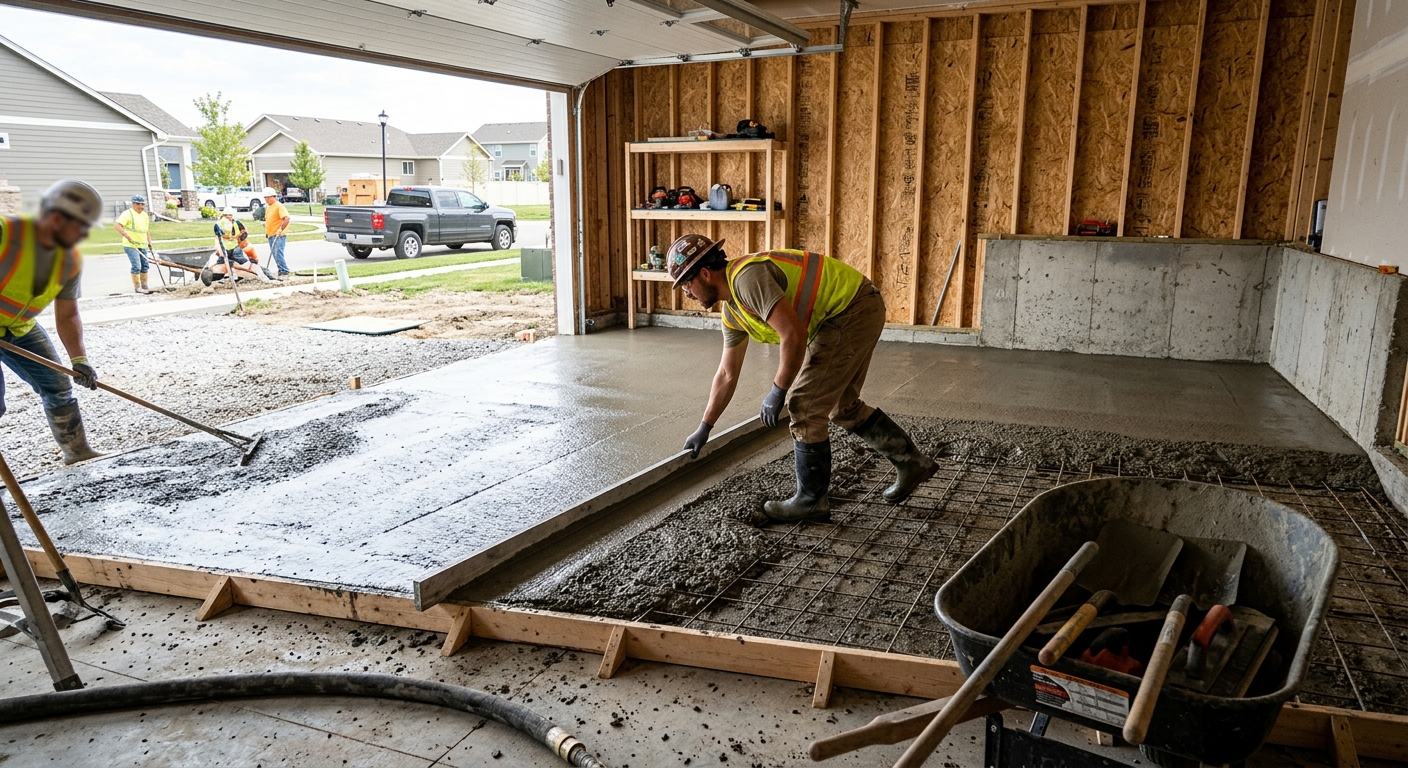
Concrete work options and costs in ByWard Market
ByWard Market is a busy, older neighbourhood in Ottawa where homeowners still build and renew driveways, patios, and sidewalks every spring. With a 2021 population of 3,063 (Statistics Canada, 2021 Census), the local market is smaller than the GTA, so skilled concrete crews can be booked quickly when the weather cooperates. In Ottawa’s housing stock, many properties are long-established, which means tie-ins to existing grades, curbs, and drainage often take extra labour compared with a greenfield lot. That matters for concrete flatwork—driveways, patios, and walkways—because Toronto-area style freeze–thaw performance requirements show up as similar durability expectations across Ontario, even if frost depth varies by site.
In the Toronto economic region, contractors price concrete with frost depth and freeze–thaw cycles in mind: structural footings typically extend about 1.2 m (roughly 4 ft) below grade, and exterior slabs are usually air-entrained with control joints to manage cracking. Those same principles are why quotes can swing meaningfully in Ontario when excavations uncover soft subgrade, drainage is poor, or access is tight. Around ByWard Market, particularly near York Street and the ByWard Market proper commercial corridor, demand is higher for sidewalk ramps, driveway replacements, and garden walkways—work that also needs careful scheduling to minimize disruption.
Below is a practical comparison of common options you’ll see in ByWard Market and how pricing usually lands once specs like base prep, air-entrainment, reinforcement, and finishing are set. Use this as a starting point before you compare itemized quotes.
| Application |
Typical Size |
Key Spec |
Finish Option |
Price Range |
| Concrete driveway (standard broom finish) |
300 sq. ft. (approx. 20 ft x 15 ft) |
Air-entrained mix; compacted granular base; control joints |
Broom |
$6,000–$8,400 |
| Exposed aggregate driveway |
300 sq. ft. (approx. 20 ft x 15 ft) |
Air-entrained mix; proper curing; base and drainage prep |
Exposed aggregate |
$7,800–$10,200 |
| Stamped concrete driveway or patio |
200 sq. ft. (approx. 20 ft x 10 ft) |
Air-entrained mix; thicker slab often used for durability |
Stamped |
$5,200–$8,000 |
| Plain concrete patio or walkway |
150 sq. ft. (approx. 15 ft x 10 ft) |
Compacted base; slope to drain; joints as required |
Plain |
$2,400–$3,900 |
| Garage floor (interior slab) |
400 sq. ft. (approx. 20 ft x 20 ft) |
Vapour barrier; reinforcement typically included; proper curing |
Broom/light trowel |
$7,200–$11,000 |
| Foundation footings (structural, below frost) |
Varies by home footprint; typical 1–2 day pour |
Excavation; forms; rebar; below-frost depth spec |
Structural (reinforced) |
$12,000–$21,000 |
Prices are estimates only and vary by project scope, site access and material selection.
What affects the price of concrete work in ByWard Market
In Ontario, even when two homeowners request “the same” concrete, quotes can differ by 30–50% because the real drivers are site conditions and the durability specifications required for frost and freeze–thaw. For example, contractors in the Toronto economic region build pricing around frost depth and freeze–thaw exposure: footings must extend below design frost depth (often 1.2 m minimum for structural work in Ontario), and exterior flatwork needs air-entrained concrete plus a control-joint plan. If the subgrade is weak or drainage is questionable, the cost can jump fast because excavation, granular base replacement, and regrading aren’t optional—they protect the slab from movement.
Cold-weather curing precautions also matter. When temperatures drop toward 10 °C or below, contractors may need longer cure times and additional protection (insulating blankets, heating measures, and schedule adjustments). That impacts labour hours and makes pour windows shorter. De-icing salt accelerates surface deterioration on poorly detailed slabs, which is why sealing and proper finishing are frequently recommended—especially for driveways that get regular winter use.
In ByWard Market, a few concrete examples that commonly raise costs are: replacing old driveway edges where the base was never properly compacted; working around established landscaping so excavation is deeper and more labour-intensive; and correcting drainage so water doesn’t pond against the slab. Costs can be lower when sites have easy access for a pump or truck, stable soil is confirmed, and demolition is straightforward—so a plain patio may land closer to the lower end of the $16–$26/sq. ft. band for Ontario flatwork, while stamped jobs often align with the higher $24–$40/sq. ft. band because labour and finishing labour increase.
| Price Factor |
Why It Matters |
Cost Impact |
| Frost line depth — determines footing depth and form height |
Footings must be set below design frost depth to prevent frost heave and differential movement |
Higher depth increases excavation and concrete/formwork; can add several thousand dollars |
| Site preparation — excavation, grading, compacted granular base |
Concrete fails when water saturates subgrade or when the slab sits on inconsistent support |
Soft/poor drainage sites often increase base depth and granular quantity |
| Reinforcement — rebar or wire mesh requirement |
Rebar/wire mesh improves crack resistance for driveways, slabs, and structural elements |
Material cost plus tying/placement time |
| Mix design — air-entrainment and compressive strength spec |
Freeze–thaw survival depends on correct air-void system and strength |
More robust specs usually raise material cost and can extend cure requirements |
| Finish type — broom vs. stamped vs. exposed aggregate |
Finishes require different labour, tooling, and surface preparation |
Stamped and exposed aggregate generally cost more than broom-finish |
| Pour size and concrete truck access to site |
Access affects whether a truck, chute, or pump is needed; smaller pours can mean more setups |
Poor access can add labour and pumping charges |
| Cold-weather curing precautions — heating and blankets |
Durability depends on achieving proper strength gain before freeze conditions |
Heating/protection adds crew time and rental costs |
| Control joint pattern and sealing cost |
Joints and sealing manage cracking and reduce salt scaling on exterior slabs |
More precise joint layout and sealer line items can increase the total—but extend service life |
Permits & regulations in Ontario
In Ontario, the general rule is that structural concrete work is more regulated than exterior flatwork. Structural concrete—footings, foundation walls, grade beams, and any work tied to a structural foundation system—usually requires a building permit, and engineered drawings are often reviewed by the municipality. Concrete flatwork (patios, walkways, driveways) typically does not require a permit, unless it affects lot grading, drainage, impervious surface coverage limits, or ties into the municipal right-of-way (for example, changes near a sidewalk apron or curb access). Before breaking ground in ByWard Market or anywhere in Ontario, confirm the requirement with the local authority—especially if you’re changing elevations, adding a new driveway approach, or re-routing drainage.
For contractor accountability, verify three things step-by-step: (1) Ontario licence/eligibility (where applicable for the contractor’s trade and scope), (2) liability insurance certificate, and (3) WSIB/WCB clearance status. Here’s how homeowners usually verify:
- Ask the contractor for a current Certificate of Insurance (liability) naming you as an additional insured if possible.
- Request proof of WSIB or WCB coverage (or a clearance letter, depending on their coverage situation).
- Check any online contractor registry information relevant to their licensing/eligibility and the business name.
- Confirm references for similar-size pours and ask whether they’ve handled winter scheduling and cure protection.
Finally, keep the permit/inspection plan in writing so expectations are clear—structural pours should not proceed on assumptions.
Getting concrete right in ByWard Market's freeze-thaw climate
In ByWard Market, concrete durability is primarily tested by moisture, freeze–thaw cycling, and de-icing salt. The most common failure homeowners see—especially on driveways and flatwork—is spalling and surface scaling caused by inadequate air-entrainment or poor base preparation. When water enters the slab edge or sits under it because the granular base wasn’t compacted or drainage wasn’t corrected, the slab can heave and crack. Those micro-cracks then become pathways for more water, and freeze–thaw does the rest.
To spec the job correctly in the Ontario climate, focus on five essentials. First, base prep: compacted granular sub-base to the correct depth for the soil conditions so the slab is supported evenly. Second, mix design: air-entrainment is crucial for exterior durability (commonly targeted at 5–7% air content for exterior flatwork) and minimum compressive strength (often at least 32 MPa) so the concrete gains strength reliably. Third, control joints: plan joint spacing to reduce random cracking paths. Fourth, curing: plan for proper curing—minimum 7 days under favourable conditions, and additional protection if temps approach or fall below about 10 °C. Fifth, sealing: apply a penetrating sealer after the cure window (typically at 28 days post-pour) to repel moisture and reduce de-icing salt damage.
Here’s a practical dollar example: if a stamped patio quotes around the upper end of the $24–$40/sq. ft. range, part of what you’re paying for is the added labour for stamping plus careful curing and sealing prep. If the contractor skips those steps, the “savings” often show up as early surface deterioration. For basic broom-finish flatwork, staying closer to the lower end of the driveway/slab bands ($18–$28) is realistic when excavation and drainage are straightforward.
| Spec |
Why It Matters in ByWard Market |
What to Ask For |
Impact if Skipped |
| Compacted granular base (depth?) |
Even support prevents settlement and water retention during freeze–thaw |
Confirm granular type and compacted depth based on site soil and drainage |
Cracking, lifting at edges, and early scaling from moisture intrusion |
| Air-entrained concrete mix (target air %?) |
Air voids protect concrete against freeze–thaw damage |
Request air-entrainment target (commonly 5–7% for exterior flatwork) |
Spalling and surface scaling within a few winters |
| Compressive strength (MPa rating) |
Adequate strength gain ensures durability and load resistance |
Specify minimum 32 MPa and test/certification documentation if provided |
Lower strength can lead to abrasion damage and faster deterioration |
| Control joints (spacing per ACI guidelines) |
Joints control where cracking happens during shrinkage |
Ask for joint spacing and layout before pour |
Random cracking across finished surfaces, especially in patios and driveways |
| Minimum 7-day curing period |
Concrete must develop strength before cold nights set in |
Confirm curing plan; ask about protection if temps drop |
Weak surface and increased risk of freeze–thaw scaling |
| Penetrating sealer (when applied after cure) |
Helps repel water and reduce salt-related surface damage |
Ask for penetrating sealer and timing (typically after 28 days cure) |
Higher moisture uptake and faster spalling on exterior slabs |
How to choose a concrete work contractor in ByWard Market
Choosing the right contractor in ByWard Market is less about marketing and more about proof. In Ontario, before you sign, verify three items. First, licensing/eligibility for the scope being performed (ask directly what category applies to their concrete contracting activities). Second, liability insurance—request a current Certificate of Insurance and confirm coverage limits are appropriate for your project. Third, WSIB/WCB coverage—ask for a clearance letter or proof of active coverage so you aren’t responsible for contractor workplace injury liabilities.
Next, get 2–3 written, itemised quotes. Look for a breakdown that separates labour, excavation/site prep, concrete supply, reinforcement, finishing, and any sealing. Avoid comparing only a single “total” line because one quote may quietly exclude disposal, rebar, or saw-cut joints. Ask whether the permit pull is included (when required) and whether inspection scheduling is part of the scope. Also ask about cleanup and waste hauling—these can change the final cost more than people expect.
Warranty matters. Ask for the workmanship warranty length and whether it covers labour only or also materials. Confirm product/manufacturer warranties for sealers or specialty mix components and whether the warranty is transferable to you as the homeowner. For payment, keep it controlled: never pay more than 10–15% upfront; hold back until the job is complete and meets finish/level tolerances. Finally, insist on a timeline: start date and completion estimate in writing, with weather contingencies due to cold snaps.
- Ask for proof of liability insurance and confirm effective dates.
- Request WSIB/WCB clearance or proof of coverage.
- Get itemised labour + materials breakdown, not lump sum only.
- Confirm whether excavation includes hauling/disposal of excess material.
- Verify base prep scope: granular type, compacted depth, and compaction method.
- Confirm reinforcement (rebar/wire mesh) and where it’s placed.
- Ask for mix spec: air-entrainment and minimum compressive strength.
- Check finish inclusions: broom vs. stamped vs. exposed aggregate.
- Review joint layout: spacing and whether joints are saw-cut or formed.
- Clarify curing and protection plan for cooler nights.
- Ask when sealing is applied (and what product is used).
- Put warranty terms, claim process, and timeline in writing.
Concrete red flags I see in ByWard Market include: quoting a “cheap” driveway with no mention of air-entrainment or control joints, skipping base compaction details, starting pours when temperatures are too low without blankets/heating, using only verbal promises about sealing timing, and offering a large upfront payment with no holdback tied to completion.
Frequently asked questions — concrete work in ByWard Market
Stamped vs broom-finish concrete — cost difference?
In Ontario, stamped concrete usually costs more than broom-finish because the finishing steps are labour-intensive and require careful curing and surface prep. For ByWard Market homeowners, it’s common to see stamped driveways or patios land closer to the $24–$40/sq. ft. decorative band, while broom-finish flatwork often tracks nearer the $18–$28 driveway/slab range or the $16–$26 patio/walkway range. The difference isn’t just “looks”—contractors also tend to specify a slightly more robust build-up to handle exterior freeze–thaw performance and surface longevity. When comparing quotes, make sure both options include the same base preparation, air-entrained mix, and joint pattern. If the stamped quote is much cheaper, that’s a sign to ask what was reduced.
When is the best time to pour concrete in ByWard Market?
The best time to pour in ByWard Market is when daytime temperatures are consistently workable and nights won’t freeze the surface too early. In Ontario, concrete performance is tied to curing; colder conditions increase the risk of weak strength gain and later scaling during freeze–thaw cycles. In practice, many crews target late spring through early fall so the concrete can cure properly and crews can manage protection if temperatures drift toward cooler ranges (especially near 10 °C). If you’re planning a driveway replacement or a patio pour, ask your contractor about their cold-weather plan: insulating blankets, heating where needed, and how long they’ll protect the slab. A well-managed schedule can protect durability as much as the mix design.
How long does concrete take to cure?
Concrete curing happens in stages. For most exterior work in Ontario, you should plan on at least 7 days of curing before treating the slab as “usable,” and you should expect full strength development closer to 28 days—especially when you want sealing to perform well. In ByWard Market and throughout Ontario, freeze–thaw cycles make early-age protection important; if the slab isn’t gaining strength and is exposed to freezing before it’s ready, you can get surface damage later. Ask your contractor what curing method they’ll use (covers/blankets) and whether they’ll protect against wind and early cold snaps. If your project includes a penetrating sealer, it’s typically applied after the full cure window (commonly around the 28-day mark) to help repel moisture and reduce salt scaling.
Do I need a permit for concrete work in Ontario?
It depends on the scope. In Ontario, structural concrete work—such as footings, foundation walls, and grade beams—typically requires a building permit and, in many cases, engineered drawings reviewed through the municipality. Concrete flatwork like patios, walkways, and most driveways usually does not require a permit unless it changes lot grading/drainage, touches municipal right-of-way rules, or impacts impervious surface coverage limits. For ByWard Market homeowners, the practical step is simple: confirm with the local authority before demolition and excavation. Also, don’t rely on a contractor’s assumption—ask whether permit pulling (if required) is included, who will handle inspections, and how the work is documented. When in doubt, require the permit plan in writing.
Concrete vs pavers for a patio in ByWard Market?
Concrete is often the better fit when you want a smooth, monolithic surface and predictable pricing. For patio and walkway projects in Ontario, plain concrete commonly lands in the $16–$26/sq. ft. band, while decorative options like stamped concrete typically cost more. Pavers can be a good choice if you want easier spot repairs and more design flexibility, but they usually require a carefully engineered base as well—otherwise they shift with freeze–thaw. In ByWard Market, both systems must manage drainage and base compaction to prevent movement. If you expect heavy de-icing use or regular winter traffic, concrete with air-entrainment, control joints, and proper sealing tends to perform well. If the site has complex elevations or you may want frequent future changes, pavers can be worth the extra installation coordination.
How long does a concrete driveway last?
A concrete driveway in Ontario can last 20–30 years or more when it’s built correctly for freeze–thaw and moisture control: air-entrained mix, compacted granular base, proper slopes, control joints, and sealing when appropriate. In ByWard Market, the real longevity factor is whether water is managed—if the base is weak or drainage is poor, freeze–thaw movement can show up as cracking, heaving, or edge scaling much earlier. That’s why a broom-finish driveway in the $18–$28 pricing band is often tied to solid base prep and correct exterior specifications. If you’re comparing bids, don’t just look at the total; confirm the mix spec, joint pattern, and whether a penetrating sealer is included for exterior durability. A correctly detailed slab typically ages better than one that’s only finished “fast.”