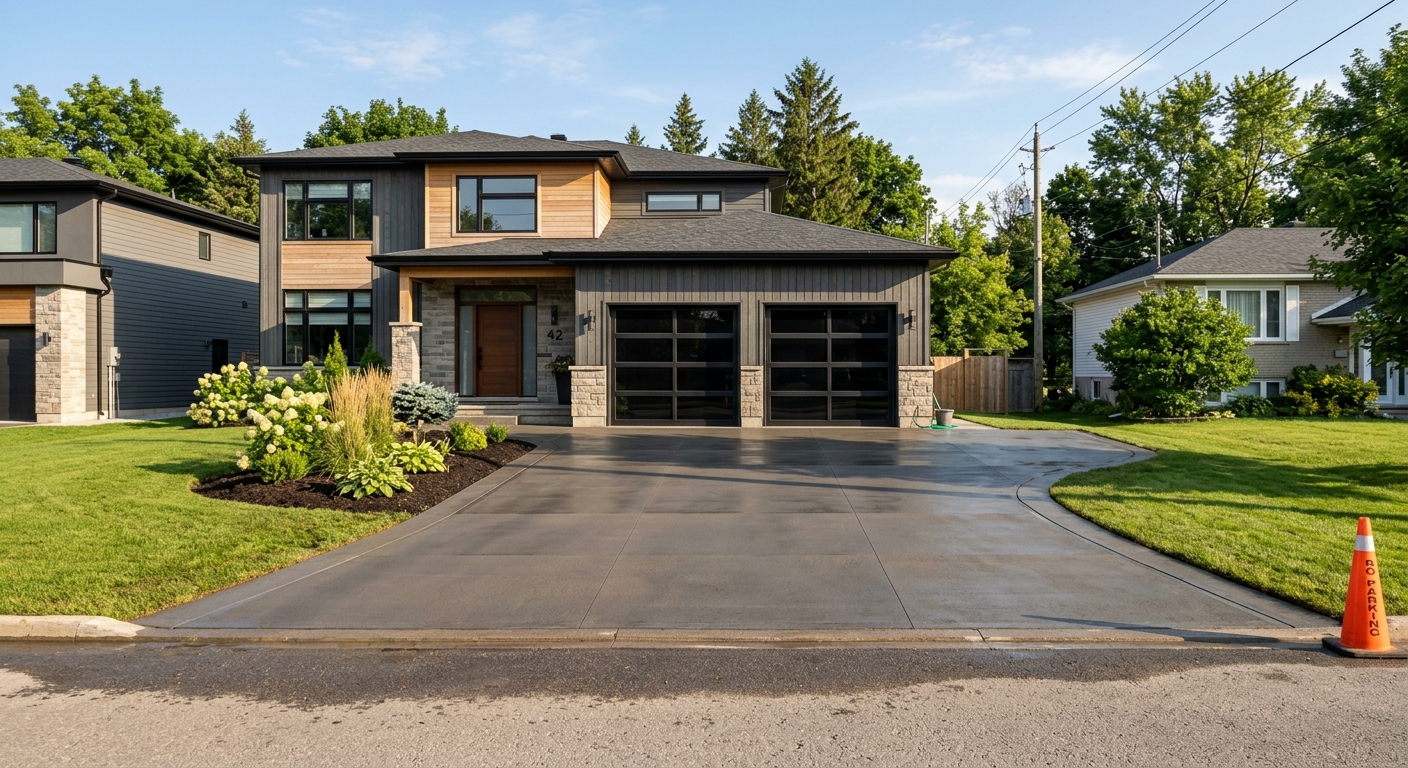
Concrete work options and costs in East End
In East End, Ontario, concrete is a go-to material for driveways, patios, walkways, and slabs—especially because most homes in the area are traditional detached properties where homeowners expect flatwork to look good and handle winter abuse. With a small local population of 1,446 (Statistics Canada, 2021 Census), you may notice that the best crews get booked quickly around the warmer months, particularly for exterior work in areas like Leslieville and the Danforth corridor where traffic and footfall are high. For flatwork, Toronto-area pricing is strongly shaped by freeze–thaw cycles: concrete footings and slab bases must be built for frost protection, and exterior mixes are typically air-entrained to reduce spalling. That’s also why you’ll see contractors favour scheduled spring-to-early-fall pours and add curing protection when temperatures hover near 10 °C or drop lower during a pour window.
If you’re comparing options, think in terms of how much performance you’re buying. Standard broom-finished driveways are usually the most economical entry point, while exposed aggregate and stamped concrete cost more because of additional surface preparation and labour time. For foundations and below-frost footings, the cost drivers are different: excavation, forming, reinforcement, and the depth required for structural elements under Ontario’s building requirements. Below, you’ll find typical project sizing and realistic local ranges to help you translate a quote into scope.
| Application |
Typical Size |
Key Spec |
Finish Option |
Price Range |
| Concrete driveway (standard broom finish) |
400 sq. ft. (approx. 20 ft x 20 ft) |
Air-entrained exterior mix, control joints, compacted granular base |
Broom finish, optional seal coat |
$7,200–$11,200 |
| Exposed aggregate driveway |
400 sq. ft. (approx. 20 ft x 20 ft) |
Air-entrained mix, higher finishing labour, proper cure before exposure |
Exposed aggregate (acid/retarder method), sealed |
$9,000–$14,000 |
| Stamped concrete driveway or patio |
350 sq. ft. (approx. 17 ft x 20 ft) |
Air-entrained mix, integral colours, release powder system, joints |
Stamp pattern + colour, sealed |
$10,000–$17,500 |
| Plain concrete patio or walkway |
240 sq. ft. (approx. 12 ft x 20 ft) |
Air-entrained exterior mix, slope for drainage, rebar mesh (often) |
Float + broom finish, optional seal coat |
$3,900–$6,200 |
| Garage floor (interior slab) |
480 sq. ft. (approx. 20 ft x 24 ft) |
Vapour barrier (if required), fibre or mesh, 28-day strength target |
Broom finish, optional hardener |
$8,600–$13,400 |
| Foundation footings (structural, below frost) |
Per linear foot equivalent (commonly 40–60 linear ft total) |
Structural concrete, excavation, forming, reinforcement, below-grade depth |
Typical formed/finished as required |
$7,200–$18,000 |
Prices are estimates only and vary by project scope, site access and material selection.
What affects the price of concrete work in East End
In the Toronto economic region, quotes for the same concrete scope can swing by 30–50% because contractors price for risk: soil conditions, access, excavation depth, and how long they can protect a pour to cure properly. In East End specifically, frost depth and freeze–thaw cycles dictate the specs—structural footings are generally required to extend at least 1.2 m (about 4 ft) below grade to manage frost heave and differential movement. For exterior slabs like driveways, patios and walkways, Ontario crews typically use air-entrained mixes so the concrete can handle repeated freezing and thawing without spalling.
There’s also a practical schedule effect. The Toronto market concentrates exterior pours in warmer months, and when temperatures drop toward 10 °C or below, contractors often add cold-weather curing precautions (insulating blankets, temporary heating, and longer protection). That labour and equipment cost is real. Finally, de-icing salt accelerates surface wear; sealing is usually recommended after the cure cycle so the finish can better resist moisture and salt intrusion.
Two common East End examples: (1) if your driveway sits on soft topsoil that needs deeper removal and extra granular base, you’ll pay more than the baseline patio rate (patios often land near $16–$26 per sq. ft.), and (2) if you want a textured look like exposed aggregate or stamped work, the finish steps cost more than a plain broom slab (driveways often start around $18–$28 per sq. ft. for standard work depending on size and base prep). Housing stock matters too—older properties with mature landscaping can require additional excavation and disposal, which can add hundreds to over a thousand dollars even before concrete is poured.
| Price Factor |
Why It Matters |
Cost Impact |
| Frost line depth |
Determines footing depth and form height to reduce frost heave |
Higher depth increases excavation and concrete volume |
| Site preparation |
Excavation, grading, and compacted granular base control settlement and cracking |
Poor soil removal can add hours and truckloads |
| Reinforcement |
Rebar or wire mesh improves performance in exterior flatwork and footings |
Material + tie-in labour varies widely by design |
| Mix design |
Air-entrainment and specified strength help resist freeze–thaw damage |
Improved mixes and batching specs add per-yard cost |
| Finish type |
Broom vs. stamped vs. exposed aggregate affects labour and curing steps |
Stamped/exposed typically costs more per sq. ft. |
| Pour size and concrete truck access to site |
Access limits can force smaller lifts, pumping, or extra labour |
Hard access can add mobilization and pump charges |
| Cold-weather curing precautions |
Heating and insulating blankets protect early-age strength |
When temps drop, protection can add noticeable cost |
| Control joint pattern and sealing cost |
Joints manage cracking; sealing helps repel salts and water |
Sealer + extra labour for joint work increases total |
Permits & regulations in Ontario
In Ontario, structural concrete work—think footings, foundation walls, and grade beams—typically requires a building permit and often engineered drawings reviewed through the municipal review process. For concrete flatwork such as patios, walkways, driveways and sidewalks, permits usually aren’t required by default; however, you may still need approvals if the work affects lot grading, drainage, or impervious surface coverage rules, and if any work touches the municipal right-of-way (for example, modifying a curb cut or doing work close to a sidewalk). The safest approach in East End is to confirm with the local authority before any excavation begins.
Regardless of permit needs, verify the contractor’s paperwork: liability insurance and coverage for workers (WSIB/WCB as applicable). Ask for proof during quoting—don’t wait until the day of the pour.
Step-by-step for a homeowner in East End:
1) Confirm the contractor’s licence/registration status using Ontario’s online business and contractor search resources (and request their number on the bid).
2) Request a current certificate of insurance and confirm the effective dates cover the actual pour and restoration period.
3) Ask for WSIB/WCB clearance documentation or proof of coverage (or the applicable exemption paperwork if they’re not required).
4) Request references with similar permit scopes—especially foundation work—and ask what inspections were involved.
5) Get the permit responsibility in writing: whether the contractor will pull the permit (where required) and who pays.
Getting concrete right in East End's freeze-thaw climate
Concrete can fail in East End mainly because water moves in and out of the slab and base during freeze–thaw cycles. When the water freezes, it expands and pushes pressure against the concrete. Over time, that leads to surface scaling, spalling, and random cracking—especially if the base isn’t properly compacted, the concrete isn’t air-entrained, or curing and sealing are rushed. The fix starts before the first truck arrives.
To spec the job correctly, focus on five areas. (1) Base preparation: use a compacted granular sub-base to the correct depth for the frost and drainage conditions at your site, with proper grading so water doesn’t pool. (2) Mix design: for exterior flatwork, ask for air-entrainment in the 5–7% range and a minimum 32 MPa compressive strength target. (3) Control joints: place joints early enough and at a planned spacing to manage where cracks develop. (4) Curing: plan on at least 7 days under proper conditions; when temperatures slide near or below 10 °C, request cold-weather curing protection. (5) Sealing: schedule a penetrating sealer around 28 days after the pour to repel de-icing salts and moisture.
Ask yourself what you’re paying to prevent. For example, if a quote for a 240 sq. ft. patio shows a small difference between plain broom and stamped, the cheaper option may be justified if you mainly want durability. But if the stamped bid includes proper jointing, air-entrainment, and proper cure protection, the extra cost can be worthwhile because the main failure mode—spalling from insufficient air content—doesn’t care whether the surface is stamped or broomed.
| Spec |
Why It Matters in East End |
What to Ask For |
Impact if Skipped |
| Compacted granular base (depth?) |
Prevents water retention and settlement that intensify freeze–thaw damage |
State the granular base depth and compaction method, and confirm drainage slope |
Premature cracking, rocking, and debonding |
| Air-entrained concrete mix (target air %?) |
Reduces freeze–thaw pressure and surface scaling/spalling |
Confirm exterior air content typically 5–7% for flatwork and show mix description |
Spalling and scaling even if thickness looks correct |
| Compressive strength (MPa rating) |
Helps achieve durable performance and early-age strength |
Confirm minimum 32 MPa and curing/protection plan for your pour temperature |
Lower durability and increased surface wear |
| Control joints (spacing per ACI guidelines) |
Controls crack locations during shrinkage and seasonal movement |
Ask for proposed joint spacing and tool-cut vs. saw-cut schedule |
Random cracking and wider joint openings over winters |
| Minimum 7-day curing period |
Builds strength and reduces early surface defects before freeze conditions return |
Confirm curing duration and whether blankets/heaters will be used if temps drop |
Weak surface, higher cracking risk, reduced service life |
| Penetrating sealer (when applied after cure) |
Helps repel salt and moisture on exterior surfaces in Ontario winters |
Confirm sealer type and that application occurs after the 28-day cure window |
Faster scaling and salt-related surface deterioration |
How to choose a concrete work contractor in East End
To choose a solid concrete contractor in East End, start with verification. In Ontario, ask for proof of liability insurance (certificate of insurance) and coverage for workers through WSIB/WCB documentation. A reputable crew will provide these up front with the quote package, and their certificate will match the job address and dates. If you’re hiring for foundation footings, insist they can show experience with permit-driven work and how they handle inspections. If it’s just driveways and patios, you still want proof they routinely place air-entrained mixes, joints, and proper base prep for exterior freeze–thaw exposure.
Next, get 2–3 itemised written quotes that break down labour and materials. Don’t accept a single lump-sum number without: concrete volume estimate, base thickness and compaction spec, reinforcement description (if any), finish type, and whether sealing is included. Confirm what’s excluded—often disposal, uneven removal, tree root grinding, and forms for raised edges. Ask whether the contractor pulls any required permit and whether that cost is included.
Warranty matters: look for a workmanship warranty length, what’s covered (cracking management vs. replacement), and whether the warranty survives if you sell the home. Payment should be scheduled conservatively—generally no more than 10–15% upfront—then progress payments tied to completed milestones. Hold back the remainder until clean-up and final finish are complete. Get the start date and expected completion estimate in writing to avoid “winter delay surprises” when cure protection is needed.
- Ask for insurance and WSIB/WCB proof before you sign anything.
- Require itemized pricing (concrete, base, reinforcement, finishing, joints, sealing).
- Confirm air-entrained mix use for all exterior work.
- Check whether control joints and edging are included in the scope.
- Verify base depth, granular type, and compaction requirements.
- Ask about truck access and whether pumping is included if needed.
- Confirm curing protection plan for cool evenings or temperatures near 10 °C.
- Ensure disposal and site restoration are explicitly included or excluded.
- Get the concrete thickness and finish details in writing (broom, stamped, exposed).
- Review warranty terms in plain language; ask about transferability.
- Use a payment schedule with a holdback until completion and final clean-up.
- Request references with similar-sized East End projects and ask about any cracking issues.
Concrete red flags I commonly see in East End: quotes that don’t mention air-entrainment or joints, “we’ll pour no matter the weather” promises without curing protection, missing insurance/WSIB proof, vague scopes without base thickness details, and payment schedules that demand too much upfront before forms and base work are verified. If your driveway is being priced near the low end (for example, around the $18–$28 per sq. ft. band for standard work), the quote should still include the performance specs—not just a thinner pour and hope.
Frequently asked questions — concrete work in East End
Concrete vs pavers for a patio in East End?
For a patio in East End, concrete usually wins on cost and long-term “reset” simplicity, while pavers can look more customizable. Concrete flatwork is typically air-entrained and can be built with good drainage and control joints to manage freeze–thaw movement. In practical terms, plain patio concrete commonly lands around the $16–$26 per sq. ft. band (depending on base prep and finish), and stamping lifts the price. Pavers can be competitive if you’re doing intricate patterns, but weeds, shifting blocks, and uneven base prep become the homeowners’ headache over time. If your soil holds water or you get poor drainage near your house, both materials need a solid compacted base—but concrete tends to feel more “forgiving” when properly cured and sealed. Ask for the exact base depth and compaction plan either way, and confirm joint/drainage details are included in the contract.
How long does a concrete driveway last?
A well-built concrete driveway in Ontario’s freeze–thaw climate often gives you 20–30 years of service life, and sometimes longer, but the timeline depends on specs—not just age. The biggest drivers are base prep (compacted granular depth), air-entrainment for exterior exposure, control joints, and whether the surface was sealed after the cure. East End homeowners typically see the earliest problems when water sits under/around the slab or when de-icing salt exposure accelerates scaling. If your contractor uses air-entrained mix and plans joints correctly, it reduces random cracking and spalling. If the quote is close to the low end of the driveway band (roughly $18–$28 per sq. ft. for standard broom-finished work), make sure it still includes the performance items—otherwise “cheap” often means less durability. For context, Ontario’s housing stock often includes older lots with mature landscaping, and those sites can add settlement risk if excavation and base work aren’t thorough.
What is air-entrained concrete and why does it matter here?
Air-entrained concrete is mixed with microscopic air bubbles that give freezing water somewhere to expand safely. In East End (and across Ontario), the freeze–thaw cycle is the main reason exterior concrete can spall and scale. Without adequate air content, water expands inside the concrete during winter, pushing off surface material and accelerating wear around edges and joints. That’s why many GTA contractors specify air-entrained mixes for driveways, patios, and walkways, and why you’ll see “air content” discussed in the quote—especially for colder-season durability. For a typical exterior flatwork spec, ask for air content in the 5–7% range and confirm a minimum 32 MPa target strength. This isn’t cosmetic; it’s the difference between a slab that survives winters versus one that looks rough in a few seasons. If a quote doesn’t mention air-entrainment or joints, treat it as incomplete.
How do I prepare the base for a concrete slab?
Base prep is where strong concrete projects start. For East End sites, you want excavation down to stable material, then placement of a properly graded compacted granular sub-base at the depth your contractor specifies for your soil and drainage. The base should be compacted in lifts and shaped with the right slope so water drains away from the house. If saturated soil gets trapped beneath the slab, freeze–thaw movement becomes much more severe. A good contractor will explain what they’re removing (topsoil/organic matter), what granular material they’re using, and how they’ll compact it. They should also confirm reinforcement details (wire mesh or rebar, if required by the design) and whether you need a vapour barrier for interior slabs. If you’re budgeting, don’t cut the base depth to hit a price—your total may drop, but the slab is more likely to crack or heave later. Ask for the compaction method and the base depth in writing.
How do I compare concrete quotes?
Comparing quotes is easiest when you force them to answer the same technical questions. Start by requesting itemised pricing so you can see labour vs materials, and confirm the concrete thickness, base prep depth, reinforcement type, and finish. For exterior work in East End, make sure each quote specifies air-entrained concrete and includes control joints—skipping either is a common reason prices look “better.” Also compare sealing: many good bids include or at least offer it after curing. Use the local price bands as a reality check: standard driveway work often falls around $18–$28 per sq. ft., and patios around $16–$26 per sq. ft.; if one bid is far below that without explaining extra excavation or smaller scope, ask why. Finally, check exclusions—disposal, demolition, permit responsibility, and site restoration—so you’re comparing apples to apples rather than paying surprises later. A clear contract that matches the site conditions is what protects you most.
Can concrete be poured in cold weather in East End?
Yes, concrete can be poured in cold weather in Ontario, but it requires planning. The critical point is early-age curing: concrete needs time and protection to achieve strength before it freezes. In East End, when nighttime temps drop and conditions approach or fall below roughly 10 °C, contractors should use cold-weather curing precautions such as insulating blankets, temperature monitoring, and sometimes temporary heating to keep the slab protected. If a contractor says they’ll “pour and figure it out later,” that’s a red flag. A proper bid will include a curing protection plan tied to the forecast, not just a general statement. Also ask whether they’ll adjust the mix timing or use cold-weather admixtures (where appropriate) and how they’ll protect the surface from premature freezing. For durability in freeze–thaw conditions, don’t compromise on curing—especially for exterior flatwork where spalling risk rises if the concrete isn’t allowed to build strength under the right conditions.