Concrete work options and costs in Windsor
Concrete work in Windsor covers everything from everyday flatwork to heavier structural pours, and pricing is closely tied to how the Windsor–Sarnia climate attacks concrete. Windsor is a market where many lots are improved with driveways, patios and entry walks: about 60.1% of dwellings are single-detached homes (Statistics Canada, 2021 Census), and that drives steady demand for exterior concrete. The homeowner base is also large—there are 58,960 homeowner households (62.5% of households own), which typically means more projects for replacements and upgrades as older homes age and landscaping changes.
In the Windsor–Sarnia region, freeze–thaw cycling is a major cost driver. Off Lake Erie and Lake Huron, moisture and temperature swings increase the risk of surface scaling and cracking, so contractors specify air-entrained mixes, properly compacted granular bases, and correct control-joint layouts. Footings also need to be installed below the frost line, which usually means deeper excavation, more form height, and more reinforcement than you’d see in milder regions. Add in a shorter practical pour season in spring and fall, and cold-weather curing steps (heaters, blankets, and schedule control) can push labour and supervision costs up during shoulder months.
Because of that, you’ll see the most concrete activity in areas with lots of older housing stock and ongoing renovations, such as East Windsor and surrounding neighbourhoods near the core. For many homeowners, the next decision is choosing the right application and finish—so here’s a practical comparison table to anchor budget conversations.
| Application |
Typical Size |
Key Spec |
Finish Option |
Price Range |
| Concrete driveway (standard broom finish) |
10 m x 3 m (30 m²) |
Air-entrained mix, compacted base, control joints |
Broomed, sealer optional |
$6,500–$13,000 |
| Exposed aggregate driveway |
10 m x 3 m (30 m²) |
Air-entrained mix, aggregate reveal, good curing |
Exposed aggregate (shot-blast or wash reveal) |
$9,500–$16,500 |
| Stamped concrete driveway or patio |
8 m x 4 m (32 m²) |
Air-entrained mix, proper release timing, edges detailed |
Stamped pattern + integral colour |
$10,500–$20,000 |
| Plain concrete patio or walkway |
6 m x 3 m (18 m²) |
Air-entrained mix, compacted base, joints as required |
Float/screed + light broom |
$3,800–$8,000 |
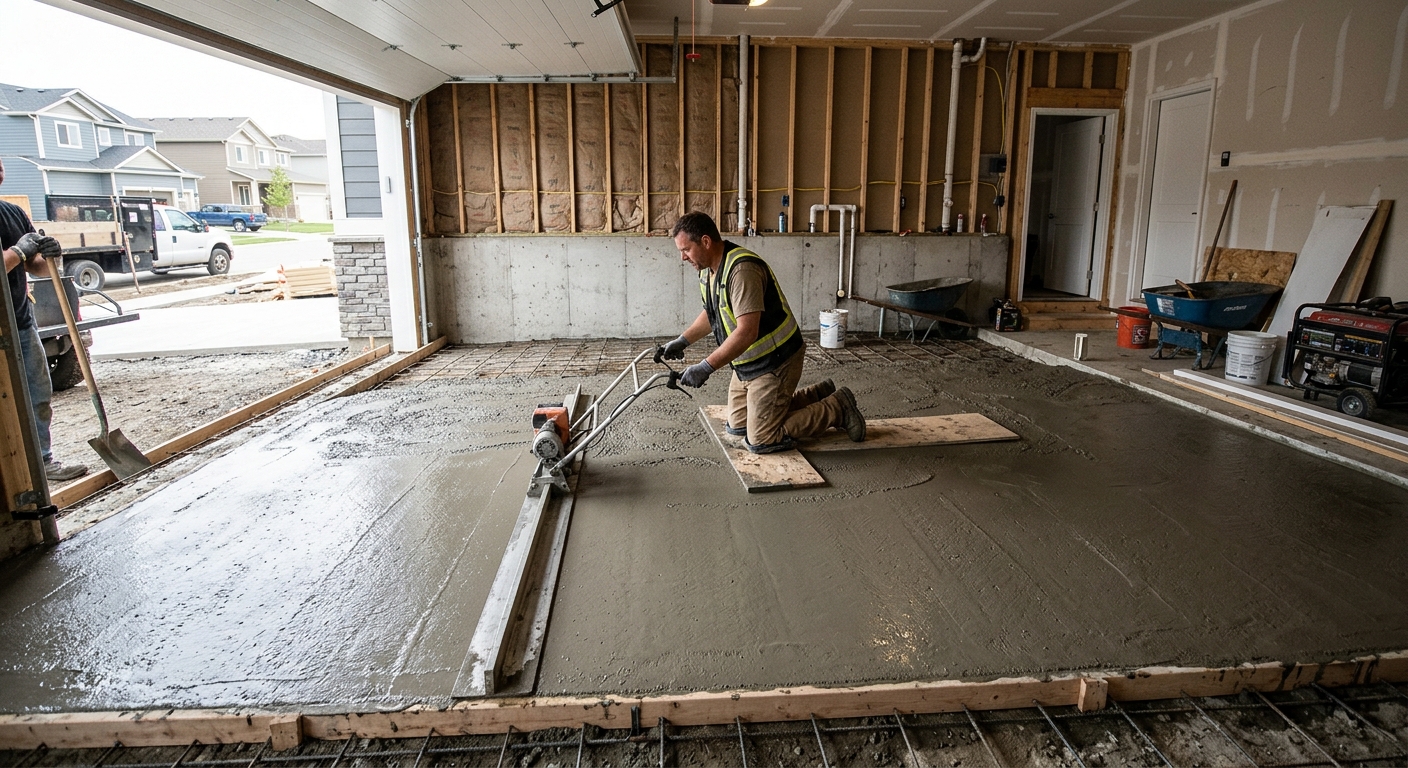
| Garage floor (interior slab) |
6 m x 7 m (42 m²) |
6–100 mm typical thickness, vapour control as needed |
Smooth finish, optional diamond grind |
$6,500–$12,500 |
| Foundation footings (structural, below frost) |
Perimeter footing ~60 m linear |
Below frost line, rebar cage, engineered requirements |
Structural concrete (not decorative) |
$18,000–$42,000 |
Prices are estimates only and vary by project scope, site access and material selection.
What affects the price of concrete work in Windsor
In Windsor–Sarnia, two bids for the same general concrete project can realistically swing by about 30–50% once you account for site conditions, engineering requirements, and the cold-weather specs needed for durability. The reason is simple: in our region, frost and moisture dictate how deep materials must go, how much reinforcement is required, and how carefully crews must protect fresh concrete. That same “base + mix + curing” discipline can make the job costlier than in warmer parts of Ontario, even when the square footage looks identical.
First, frost line depth drives excavation and formwork height for structural pours. Contractors in Windsor typically place footings below the design frost depth to control frost heave, which increases concrete volume and labour. Second, freeze–thaw cycles require air‑entrained mixes for exterior slabs and patios; without the right air content and finishing timing, you’ll see early scaling and cracking. Third, the pour season is shorter. In spring and fall, crews may need heaters, insulating blankets, and admixture choices to keep placement and curing on track—an added line item versus projects done in summer. Finally, de-icing salt accelerates surface deterioration, so sealing and drainage details matter.
Here are a few local examples that change the number quickly. A driveway replacement on a poorly drained lot often costs more because the contractor must improve sub-base drainage before pouring; that pushes costs toward the mid-to-high end of the driveway band (for example, the $5,500–$15,000 range). A stamped finish looks “bigger” than it is on paper, and the labour for base preparation, colour timing, texture tooling, and sealing can justify budgets in the $7,500–$22,000 decorative band. On older homes built before 1981 (68.0% of homes), you may also find more foundation adjustments and site rework that add to foundation / footing budgets (Statistics Canada, 2021 Census).
| Price Factor |
Why It Matters |
Cost Impact |
| Frost line depth — determines footing depth and form height |
Controls frost heave risk for structural stability |
Higher excavation and concrete volume (often +10% to +25% on foundations) |
| Site preparation — excavation, grading, compacted granular base |
Ensures load support and drainage in wet/cold swings |
Extra labour, granular supply, and hauling (+5% to +30% depending on soil) |
| Reinforcement — rebar or wire mesh requirement |
Crack control and structural capacity |
Material and fabrication time (+3% to +20%) |
| Mix design — air-entrainment and compressive strength spec |
Air voids and strength protect against freeze–thaw damage |
Ready-mix premium (+2% to +12%) |
| Finish type — broom vs. stamped vs. exposed aggregate |
Complex finishes require more labour and timing control |
Labour and finishing supplies (+15% to +60%) |
| Pour size and concrete truck access to site |
More transfers or tight access slows production |
Additional crew time and pump/boom needs (+5% to +25%) |
| Cold-weather curing precautions — heating and blankets |
Keeps concrete gaining strength and reduces early cracking |
Heaters/blankets and schedule management (+5% to +20%) |
| Control joint pattern and sealing cost |
Manages where cracks form and helps resist salt scaling |
Saw-cut labour and sealer (+2% to +10%) |
Permits & regulations in Ontario
In Ontario, structural concrete work such as footings, foundation walls, and grade beams typically requires a building permit, and it’s often tied to engineered drawings reviewed by the municipality. Concrete flatwork—driveways, patios, and walkways—usually does not require a permit by default, but it can trigger permit requirements if the work affects lot grading, impervious surface coverage limits, or municipal right-of-way (for example, drainage changes near a sidewalk or curb). Always confirm with the City of Windsor or the applicable approval process before you break ground, especially if you’re altering drainage, lowering/raising the sidewalk approach, or reworking a retaining edge.
For homeowners, the safest approach is to verify the contractor and the job fit in writing:
Step 1: Ask what permits (if any) are required for your specific scope (structural vs. flatwork, drainage/grade changes). Step 2: Confirm the contractor has liability insurance and a current WSIB clearance (or WCB coverage where applicable). Step 3: Request a certificate of insurance and a clearance letter before work starts, and keep copies with your contract. Step 4: Check the Ontario business/contractor licensing information and the company’s details, then compare that to what’s on their invoices.
Also ask for references on similar-scale Windsor projects so you can validate they understand frost, curing windows, and the finish specs needed for our freeze–thaw conditions.
Getting concrete right in Windsor's freeze-thaw climate
Concrete fails in Windsor mainly because it’s repeatedly exposed to water and freeze–thaw cycling, which expands moisture in pores and along interfaces. The most common problems homeowners see are scaling, spalling, and random cracking—often caused by inadequate base preparation, weak or non-air‑entrained concrete, delayed or insufficient curing, and control joints that aren’t cut on time. If you spec concrete correctly, you reduce the pathways for water and give the slab strength to handle expansion and contraction.
To get it right in Windsor: (1) base preparation must include a properly compacted granular sub-base at the correct depth for your soil and frost considerations; this also supports drainage so the slab doesn’t stay saturated. (2) mix design should be air‑entrained for exterior flatwork, typically targeting about 5–7% air content, and meet a minimum compressive strength such as 32 MPa (project-specific). (3) control joints should be laid out to limit random cracking—spacing and saw-cut timing matter. (4) curing should be at least 7 days under appropriate conditions; in colder shoulder seasons, crews may need blankets/heaters so curing isn’t compromised. (5) sealing is typically applied after the concrete cures (commonly around 28 days post-pour) to repel de-icing salts and reduce moisture uptake.
When comparing quotes, look at the details—not just totals. For example, if your driveway quote is near the lower end of the driveway band (around $5,500–$15,000), it may be using fewer steps for joints or base, or cutting corners on curing. Spending a bit more for the correct air-entrainment and a thorough base often prevents early repairs, which is far more expensive than doing it right the first time. If you choose stamped concrete, the price jump can be justified by improved finishing workflow and consistent colour and texture—provided the slab base and joints are still treated with the same seriousness.
| Spec |
Why It Matters in Windsor |
What to Ask For |
Impact if Skipped |
| Compacted granular base (depth?) |
Reduces pumping and keeps the slab from staying wet during freeze–thaw |
Confirm granular thickness and compaction testing/standards; drainage plan |
More settlement, early cracking and failure at slab edges |
| Air-entrained concrete mix (target air %?) |
Air void system gives freeze–thaw tolerance under Lake Erie moisture exposure |
Target 5–7% air for exterior flatwork and specify air entrainment on the mix |
Higher risk of scaling/spalling within a few winters |
| Compressive strength (MPa rating) |
Strength gain supports durability and resists surface wear |
Minimum 32 MPa for typical residential exterior work (confirm project spec) |
Soft surface, faster erosion under traffic and salt |
| Control joints (spacing per ACI guidelines) |
Directs cracking to predictable locations in temperature swings |
Planned joint spacing and saw-cut timing “on the clock” |
Random cracks and moisture pathways under the slab |
| Minimum 7-day curing period |
Cold nights and humidity can slow early strength development |
How curing will be managed for your pour month; curing duration |
Surface weakness and increased cracking probability |
| Penetrating sealer (when applied after cure) |
Helps resist de-icing salts and reduces water absorption |
Application schedule after cure (commonly ~28 days) and compatible product |
Faster surface deterioration and discoloration |
How to choose a concrete work contractor in Windsor
Choosing the right concrete contractor in Windsor starts with documentation. For Ontario work, verify liability insurance (ask for a certificate showing coverage limits), and confirm WSIB clearance (or WCB coverage where applicable) before work begins. You should also ask to see proof of active coverage close to your start date, not months-old paperwork. Next, check licensing/business details through Ontario sources and make sure the contractor’s legal name matches what’s on your contract and invoices.
Then get 2–3 itemised written quotes that break down labour and materials (concrete supply, excavation/grading, granular base, reinforcement, saw-cutting/joints, finishing, and disposal). You’re looking for apples-to-apples scope: what’s included for permit pulling, if needed; whether overhead costs and concrete delivery/pumping are figured in; and who is responsible for site cleanup. If a quote is a “lump sum” with vague exclusions, it’s harder to trust when costs rise due to winter conditions or unexpected soil.
Be strict with warranty and payment. A workmanship warranty should be written, and you should know the duration and what it covers. Clarify whether product/manufacturer warranties apply to materials like sealers or admixtures and whether they’re transferable if you sell your home. For payment schedule, avoid paying more than 10–15% upfront; use a holdback until substantial completion and confirm any remaining balance is tied to punch-list items. Finally, request start date and completion estimate in writing—because in Windsor’s freeze–thaw climate, schedule slippage is often what forces added heaters/blankets or shortens finishing windows.
- Written scope with dimensions and thicknesses (slab, base, footings where applicable).
- Concrete mix specified as air-entrained for exterior work.
- Joint layout and saw-cut timing described in the proposal.
- Base depth and compaction plan included (not “allowance”).
- Reinforcement details (mesh vs. rebar; sizes and spacing) stated clearly.
- Cold-weather curing plan if pouring in spring/fall (blankets/heating, protection time).
- Disposal/hauling included for excess soil and concrete waste.
- Permit responsibility stated (who pulls permits, if required).
- Drainage notes included if you’re near downspouts, grading changes, or low spots.
- Itemised costs for sealing (if offered) and what “sealer” product is used.
- Proof of insurance and WSIB clearance before the first delivery.
- Clear warranty document in the contract.
Concrete contractor red flags in Windsor include: refusing to show current insurance/WSIB clearance, quoting without discussing air-entrainment and joints, promising “same-day cure” or skipping curing time, not explaining how they’ll manage freeze–thaw risk in your pour month, and leaving bases/grading as an afterthought when you’re replacing an older driveway or patio on a wet lot.
Frequently asked questions — concrete work in Windsor
How do I maintain concrete in Windsor's freeze-thaw climate?
In Windsor and across Ontario, maintenance comes down to keeping water out and managing salt exposure. Sweep debris off regularly so surface pores don’t stay clogged with grime, and avoid blasting with harsh chemicals that can damage sealer. If you use de-icing salt, apply it as needed rather than “soaking” the surface, and re-check drainage so water doesn’t pond near garage slabs or driveway edges. For exterior flatwork, sealing after the concrete cures (commonly around 28 days post-pour) helps reduce moisture uptake and scaling risk. If you’re budgeting, a typical plain patio or walkway can fall around the mid part of the patio band, but maintenance is what protects your investment through multiple winters. If you notice hairline cracking, don’t ignore it—pinpoint the cause (base/drainage) rather than just patching.
What causes concrete to spall in Windsor winters?
Spalling—flaking or scaling of the surface—usually comes from a moisture-and-salt cycle plus freeze–thaw expansion. In Windsor’s cold, lake-influenced conditions, water works into the concrete through pores or microcracks. When temperatures drop, that water expands and stresses the paste at the surface. If the concrete isn’t properly air-entrained, the freeze–thaw tolerance drops dramatically, and you can see early scaling after one or more winters. Another common contributor is poor base preparation or insufficient drainage, where the slab stays saturated. De-icing salt can worsen it by accelerating deterioration when the surface is wet. The fix isn’t just patching; it’s verifying the original specs (air-entrainment, curing, joints) and improving drainage where needed.
What is rebar and when is it required in Ontario?
Rebar (reinforcing steel) is steel bars placed within concrete to help it resist cracking and improve structural capacity. In Ontario, whether you need rebar depends on what you’re building and whether an engineer specifies reinforcement. For structural elements like foundation footings, foundation walls, and grade beams, reinforcement is commonly required and governed by the design and building permit drawings. For many residential slabs and exterior flatwork, reinforcement may be required depending on slab thickness, soil support, and whether the slab is designed to carry heavier loads (for example, driveways with vehicle traffic). A good Windsor contractor will explain why they’re using rebar or mesh and reference the intended performance in freeze–thaw conditions. Don’t accept “we’ll see later”—ask for the reinforcement spec in writing, including sizes and spacing.
How long does a concrete project take in Windsor?
Timeline depends on the project size and the season. For typical residential flatwork in Windsor, you can often plan for demolition/excavation day(s), base work, then the pour and finishing. Concrete needs proper curing, but “time” isn’t the same as “working days”—crews protect the slab while it gains strength. In colder spring and fall periods, the schedule can extend because contractors may need heaters or blankets to maintain placement temperatures and support curing. If you’re budgeting, many homeowners compare driveway pricing—often roughly within the $5,500–$15,000 band—to patio options—often around the $3,500–$9,000 range—because smaller slabs generally finish faster and require less complex base and finishing. Structural foundation work takes longer due to excavation, inspections, and engineered sequencing.
What is a concrete overlay and is it suited to Windsor?
A concrete overlay is a new concrete layer placed over an existing slab (usually with surface prep and crack/edge remediation). It can be a good option when the old concrete is mostly sound but rough, discoloured, or slightly uneven. However, in Windsor’s freeze–thaw climate, the biggest question is why the original slab failed—if water is getting in or the slab has widespread deterioration, an overlay may trap moisture and accelerate future damage. Successful overlays require thorough surface preparation (often grinding/scarifying), proper bonding plan, crack repair, and attention to drainage. For driveways, overlays can be cheaper than full replacement in some cases, but you still need to price in prep. If the existing slab is heaving, heavily spalled, or has significant structural issues, replacement typically performs better long-term.
How do I seal concrete to protect it in Windsor?
Sealing in Windsor is most effective when it’s timed correctly and applied to the right concrete. The usual approach is to let the slab cure first—often about 28 days post-pour—then apply a penetrating sealer designed to reduce water absorption (helping with moisture and salt exposure). Before sealing, the surface must be clean and dry; oil spots, dust, or curing compounds can block penetration. If you’ve got soft or actively scaling areas, sealing on top of failing concrete won’t stop the underlying process. Ask your contractor what sealer type they use and whether they recommend a specific recoat cycle based on traffic and salt use. If you’re choosing finishes, note that a sealed stamped or exposed aggregate surface also needs maintenance, but sealing is generally a smart step for exterior slabs and patios where de-icing salt is common in Ontario winters.