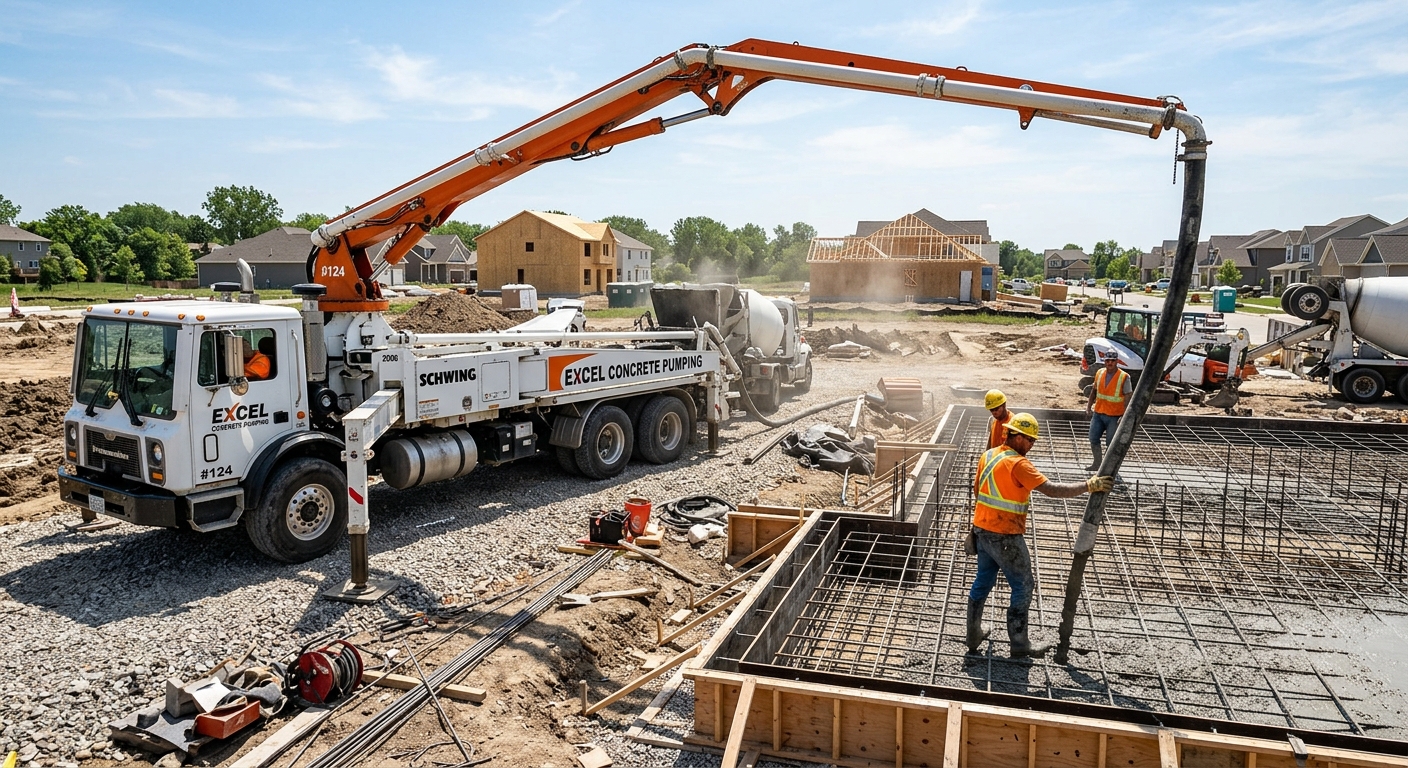
Concrete work options and costs in Shuniah Township
In Shuniah Township, concrete projects start with the same practical goal: build flatwork and foundations that can handle Ontario’s freeze–thaw and the real-world timing of pours. With a population of 3,247 (Statistics Canada, 2021 Census), you’ll generally find a smaller local pool of crews than in the GTA—so scheduling and truck access can affect pricing, especially during busy late-spring months. Most driveway and patio work serves existing single-detached neighbourhoods, where residents typically want “finished-for-life” durability rather than a quick patch. That matters in Shuniah because the ground repeatedly expands and contracts as temperatures swing across winter and early spring.
In the wider Toronto economic region, costs are strongly shaped by frost depth requirements and how contractors protect concrete during curing. Exterior slabs and driveways are commonly specified with air-entrained concrete and well-compacted granular base to reduce the risk of frost heave and surface breakdown. When temperatures drop toward cooler curing conditions, crews often need longer protection and more labour planning—this is one reason quotes can differ even when the drawings look identical. You’ll typically see the strongest demand around the Superior Shores / lake-adjacent cottage and residential areas, where properties tend to have frequent driveway and walkway upgrades after freeze-thaw damage.
Use the table below as a realistic starting point for budgeting in Shuniah Township. After that, the price drivers and the spec details will show you where to spend (and where you can safely avoid overpaying).
| Application |
Typical Size |
Key Spec |
Finish Option |
Price Range |
| Concrete driveway (standard broom finish) |
24 ft x 10 ft (240 sq. ft.) |
Minimum 100 mm slab on compacted granular base; air-entrained mix |
Broom finish + optional sealer |
$18,000 – $28,000 |
| Exposed aggregate driveway |
24 ft x 10 ft (240 sq. ft.) |
Air-entrained mix; proper curing and surface control |
Exposed aggregate (scrub/wash finish) |
$20,000 – $33,000 |
| Stamped concrete driveway or patio |
20 ft x 12 ft (240 sq. ft.) |
Reinforcement per design; air-entrained mix |
Stamp + colour integral or hardener |
$24,000 – $40,000 |
| Plain concrete patio or walkway |
12 ft x 12 ft (144 sq. ft.) |
Compact granular base; joints planned to control cracking |
Float trowel/finishing + light broom |
$16,000 – $26,000 |
| Garage floor (interior slab) |
20 ft x 20 ft (400 sq. ft.) |
Vapour barrier where needed; thickness for vehicle loading |
Standard trowel finish |
$18,000 – $30,000 |
| Foundation footings (structural, below frost) |
Per linear foot (typical house) |
Below frost depth; excavation, forms, and rebar per engineered plan |
Structural concrete |
$180 – $300 |
Prices are estimates only and vary by project scope, site access and material selection.
What affects the price of concrete work in Shuniah Township
If you compare two quotes for the “same” driveway in the Toronto region, it’s common to see a 30–50% difference once you zoom in on specs. Concrete pricing isn’t just about cubic metres; it’s labour logistics, base preparation depth, reinforcement decisions, and how a contractor manages curing under Ontario weather. In Shuniah Township, the labour market can also tighten during peak season, and truck access (narrow lanes, soft ground from spring thaw, uneven grades) can add time and equipment.
Here’s what drives the spread most often: frost depth and freeze–thaw cycles dictate the foundation and slab design. Footings are typically required to extend at least 1.2 m (about 4 ft) below grade in Ontario structural applications to reduce frost heave and differential movement, and exterior flatwork needs well-prepared granular base and drainage. For driveways and patios, contractors usually specify air-entrained concrete mixes so the freeze–thaw cycle doesn’t break down the surface. When crews pour closer to cooler conditions (around 10 °C and below), they may need cold-weather curing precautions—like insulating blankets and additional protection—adding labour and material cost. Finally, de-icing salts accelerate surface damage on under-protected concrete, which is why sealing after curing is often recommended for exterior flatwork.
In practical Shuniah examples: a job with heavy excavation to reach solid base and improve drainage typically costs closer to the upper end of the $18–$28 driveway/slab band. A stamped or exposed option can add cost because finishing steps are more labour-intensive, pushing projects toward the $24–$40 stamped/decorative range. On older homes or cottage properties with poor runoff control, extra grading and sub-base work can add “hidden scope” that lowers durability if skipped—so it’s often the difference between a driveway that survives one winter season versus many.
| Price Factor |
Why It Matters |
Cost Impact |
| Frost line depth |
Determines footing depth and form height |
Higher excavation and concrete volume; can move structural jobs toward the upper end of the $180–$300/linear-foot band |
| Site preparation |
Excavation, grading, compacted granular base |
Unstable soil, poor drainage, or soft spring ground increases hours and materials; often a major quote driver |
| Reinforcement |
Rebar or wire mesh requirement |
More material and labour; can also affect slab thickness and joint design |
| Mix design |
Air-entrainment and compressive strength spec |
Better freeze–thaw performance; usually small cost premium compared with likely repair costs |
| Finish type |
Broom vs. stamped vs. exposed aggregate |
Stamped/exposed require more labour and curing attention; commonly pushes work toward the $24–$40 decorative band |
| Pour size and concrete truck access to site |
Impacts crew size, batching logistics, and time on grade |
Long carry distances or limited access can increase labour and equipment rentals |
| Cold-weather curing precautions |
Heating and blankets |
More materials and monitoring; can raise costs in shoulder-season pours |
| Control joint pattern and sealing cost |
Controls where cracking happens and reduces salt/moisture attack |
Sealing and correct joint detailing add line items but extend service life |
Permits & regulations in Ontario
In Ontario, structural concrete work—such as footings, foundation walls, and grade beams—typically requires a building permit. Many projects also rely on engineered drawings that municipalities review as part of the permit process. For concrete flatwork like patios, walkways, and driveways, permits are often not required by default, but there are common exceptions. If the project affects lot grading, changes drainage patterns, increases impervious surface coverage beyond municipal expectations, or impacts municipal right-of-way elements (for example, work tied into boulevard areas), you should confirm requirements with the local authority before you schedule excavation.
Before work starts in Shuniah Township, insist that the contractor is properly insured and in good standing. Confirm they carry liability insurance and the correct workplace coverage (WSIB/WCB as applicable). Then verify references on similar-scale projects—driveways and slabs in freeze–thaw climates reveal much about base prep and finishing discipline.
Step-by-step for homeowners: (1) Ask for the contractor’s business number and licence details, then check the Ontario registry listing that matches the contractor’s legal entity; (2) request a current certificate of insurance naming you properly as an interested party (wording varies by policy); (3) ask for WSIB/WCB status and a clearance letter (or equivalent proof) dated recently; (4) review their written quote for what they’ll do around your permit needs—especially for grading and any municipal approval you may need.
Getting concrete right in Shuniah Township's freeze-thaw climate
Concrete fails in Shuniah Township’s winter pattern mainly because water gets into the wrong places and the freeze–thaw cycle turns that water into expansion pressure. If the granular base isn’t compacted to the right depth, drainage is poor, or the concrete mix doesn’t have correct air-entrainment, you can see early spalling, scaling, and random cracking. The fix is a specification that matches how Ontario performs—not just the look of the finish.
To get it right, spec the job around five essentials. First is base preparation: use a compacted granular sub-base sized for local soil and frost movement risk, and ensure the slope and drainage direct water away from the slab. Second is mix design: exterior flatwork should use air-entrained concrete (targeting about 5–7% air) and typically a minimum 32 MPa compressive strength to support long-term durability. Third is control joints: planned joint layout and correct timing limit random cracking. Fourth is curing: plan for at least 7 days of curing under proper conditions; when temperatures are cooler, protection measures are critical to reach strength. Fifth is sealing: apply a penetrating sealer after the slab has cured (often around 28 days) to help repel moisture and de-icing salt attack.
Ask technical questions such as: “What air content will you target?” and “How do you plan your joint spacing?” Those details prevent the most common issue—spalling caused by inadequate air-entrainment and poorly managed curing. If you’re comparing options, the price difference is often justified: for example, a stamped patio might be closer to the upper $24–$40 decorative band versus a plain patio in the $16–$26 range, but only when the contractor also nails base prep, air content, joints, and sealing. Otherwise, decorative work won’t save a slab that was built to fail.
| Spec |
Why It Matters in Shuniah Township |
What to Ask For |
Impact if Skipped |
| Compacted granular base (depth?) |
Controls settlement and reduces water retention that feeds freeze–thaw damage |
Confirm base depth and compaction method for your soil condition |
More settlement, cracking, and early surface breakdown |
| Air-entrained concrete mix (target air %?) |
Helps concrete survive freeze–thaw cycles without scaling and spalling |
Ask for target air content (typically about 5–7% for exterior flatwork) |
Higher risk of scaling/spalling after winters |
| Compressive strength (MPa rating) |
Strength development supports abrasion resistance and structural performance |
Confirm minimum 32 MPa rating and whether mix design supports it |
Weaker surface, faster wear from moisture and traffic |
| Control joints (spacing per ACI guidelines) |
Controls where cracking occurs as the slab contracts/expands |
Request proposed joint spacing and layout before pour |
Random cracking pattern and potential trip hazards |
| Minimum 7-day curing period |
Ensures concrete reaches strength needed for durability in a cold climate |
Ask how they’ll protect curing (especially below about 10 °C) |
Reduced strength and increased chance of surface deterioration |
| Penetrating sealer (when applied after cure) |
Repels moisture and reduces de-icing salt impact |
Confirm sealer type and timing (often about 28 days after pour) |
Faster scaling/spalling where salts collect |
How to choose a concrete work contractor in Shuniah Township
Choosing the right contractor in Shuniah Township comes down to verification and documentation, not just price. Start with Ontario licensing and insurance: ask for their business/legal name, then check their Ontario licence details through the appropriate online listing that corresponds to their entity. Next, request a current certificate of insurance showing liability coverage. Then verify workplace coverage (WSIB/WCB as applicable) by asking for the most recent clearance letter or proof of coverage—don’t accept “we’ll insure you on the day.” These checks protect you if someone gets hurt or if property is damaged during excavation and concrete placement.
Get 2–3 written quotes that are itemised—labour and materials separately—rather than one lump sum. Look for what’s included: site clearing, excavation, disposal of spoils, granular base, reinforcement, and formwork. Clarify whether a permit is your responsibility or the contractor’s (especially if grading or drainage changes trigger municipal review). Make sure the quote includes curing protection and sealing if you want long-term performance.
Warranty matters too: ask for the workmanship warranty length and what “covered” means for shrinkage cracks, joint failures, or surface scaling. Separate that from any product/manufacturer warranty on sealers or related materials, and confirm whether it’s transferable. For payment, keep upfront deposits to about 10–15% maximum, and hold back a portion until the job is complete and cleaned up. Finally, get a start date and completion estimate in writing so winter weather doesn’t extend the project into less reliable curing conditions.
- Provide proof of Ontario licensing details and the legal entity name
- Show a current certificate of liability insurance
- Provide WSIB/WCB clearance proof (dated recently)
- Quote is itemised: excavation, base, rebar/wire mesh, concrete supply, finishing, and sealing
- Scope clarifies disposal of excess soil and concrete washout handling
- Includes proposed thickness and reinforcement approach (not just “standard”)
- Lists air-entrainment and curing/protection plan for cool weather
- Defines control joint layout and timing
- States whether and when penetrating sealer will be applied
- Written timeline: pour date, curing window, and finish date
- Payment schedule: no more than 10–15% upfront; holdback until complete
- References and photos of similar freeze–thaw exterior work in Ontario
Concrete red flags in Shuniah Township: crews who won’t discuss air content and curing protection, quotes that skip granular base thickness/compaction details, promises of “no cracks” without joint spacing plans, pressure to pay the full amount before sealing or cleanup, and vague scopes that exclude drainage/grading adjustments needed to prevent water pooling.
Frequently asked questions — concrete work in Shuniah Township
What is a concrete overlay and is it suited to Shuniah Township?
In Shuniah Township, a concrete overlay is typically a cement-based topping applied over an existing concrete surface after cleaning and preparation (sometimes with patching first). Overlays can be a good choice when the original slab is generally sound—meaning it isn’t lifting, failing at joints, or causing major trip issues. However, freeze–thaw cycles in Ontario can worsen problems if the old concrete is already moving, allowing moisture to keep getting underneath. In those cases, an overlay can trap water and lead to faster debonding. If your driveway is only cosmetically worn but the base still holds, an overlay may be cost-effective compared with full replacement—especially when your contractor can show prep steps and a compatible system. If the slab has active cracking at control joints or drainage issues, replacement is often the more durable long-term option.
How do I seal concrete to protect it in Shuniah Township?
Sealing in Ontario is about timing and product choice, not just “painting something on.” After you pour exterior concrete, you need proper curing—typically a minimum 7-day cure, and many systems require about 28 days before applying penetrating sealer so the concrete has developed and moisture levels are appropriate. In Shuniah Township, sealing helps repel water and reduces de-icing salt penetration, both of which drive winter spalling and scaling. Ask your contractor for a penetrating sealer (not a film-forming coating) and confirm surface readiness: clean the slab thoroughly, let it dry to the recommended moisture condition, and apply evenly. Also confirm whether the sealer warranty requires temperature limits or specific cure timelines. If you’re budget-conscious, sealing is usually far cheaper than repeating exterior repairs—especially compared with moving from a basic $16–$26 patio/walkway up to higher decorative work.
What is the difference between concrete and cement?
Concrete is the final building material you see and build with, while cement is one ingredient inside it. Cement (usually Portland cement) reacts with water to create the “glue” that binds everything together. Concrete is cement plus water plus aggregates (sand and gravel), and for exterior Ontario work it often includes admixtures—like air-entrainment—to improve freeze–thaw durability. When your contractor talks about an air-entrained mix (commonly targeting about 5–7% air for exterior flatwork), they’re describing the concrete recipe. Similarly, when a quote references a minimum compressive strength such as 32 MPa, that’s for the concrete performance, not the cement alone. For homeowners in Shuniah Township, the important takeaway is to request the concrete specifications—air content, strength, thickness, base prep, curing, and joints—because those determine how the driveway or walkway survives our winters.
How much does concrete work cost in Shuniah Township?
Costs vary based on thickness, base prep, drainage work, reinforcement, and finish level. As a practical budget guide for Shuniah Township, a standard concrete patio or walkway commonly falls in the $16–$26 range, while driveways and slabs often land around the $18–$28 band depending on size and access. If you want decorative work—stamped or exposed aggregate—you should expect the $24–$40 range because more labour and careful finishing are required in our freeze–thaw environment. For structural work like foundation footings, pricing is typically quoted per linear foot and often falls in the $180–$300 band, reflecting excavation depth and reinforcement needs below grade. A concrete quote that’s much lower than these bands usually means something is being reduced—often base prep depth, reinforcement, air-entrainment, or curing protection. Always ask for an itemised scope so you can compare “apples to apples.”
How deep must footings be for Shuniah Township's frost line?
In Ontario, frost protection is driven by Ontario building practice and municipal requirements. As a baseline used for many structural designs in Ontario, footings are typically required to extend at least 1.2 m (about 4 ft) below grade to help prevent frost heave and reduce differential movement. Exact depth can vary based on soil conditions, design frost depth for the project, and engineered requirements for your foundation system. That’s why you should rely on the engineered foundation drawings for your specific site rather than guesswork. In Shuniah Township, where winter temperature swings can create repeated freeze–thaw pressures, contractors also need to ensure excavation reaches suitable bearing conditions and that backfill and drainage around the foundation are handled properly. If a quote offers a footing depth “by rule of thumb” without referencing the plan, that’s a red flag.
Why does concrete crack in Shuniah Township and how is it prevented?
Concrete commonly cracks because it naturally shrinks as it cures and then expands/contracts with temperature and moisture. In Shuniah Township’s Ontario winter conditions, freeze–thaw cycles and water movement increase stress, especially if drainage isn’t correct or the base is under-compacted. Cracking also worsens when air-entrainment is inadequate and when curing is rushed or improperly protected in cooler weather (especially as temperatures drop toward 10 °C or below). Prevention is mainly specification and execution: compacted granular base, air-entrained concrete, correct slab thickness, planned control joints, and adequate curing. Control joints don’t stop cracking—they guide it into predictable locations to keep it tight and less visible. Sealing after the cure helps reduce moisture and de-icing salt intrusion. If you’re budgeting, investing in those steps is usually far smarter than choosing decorative finishes—spalling and uncontrolled cracking will show up regardless of stamp patterns.