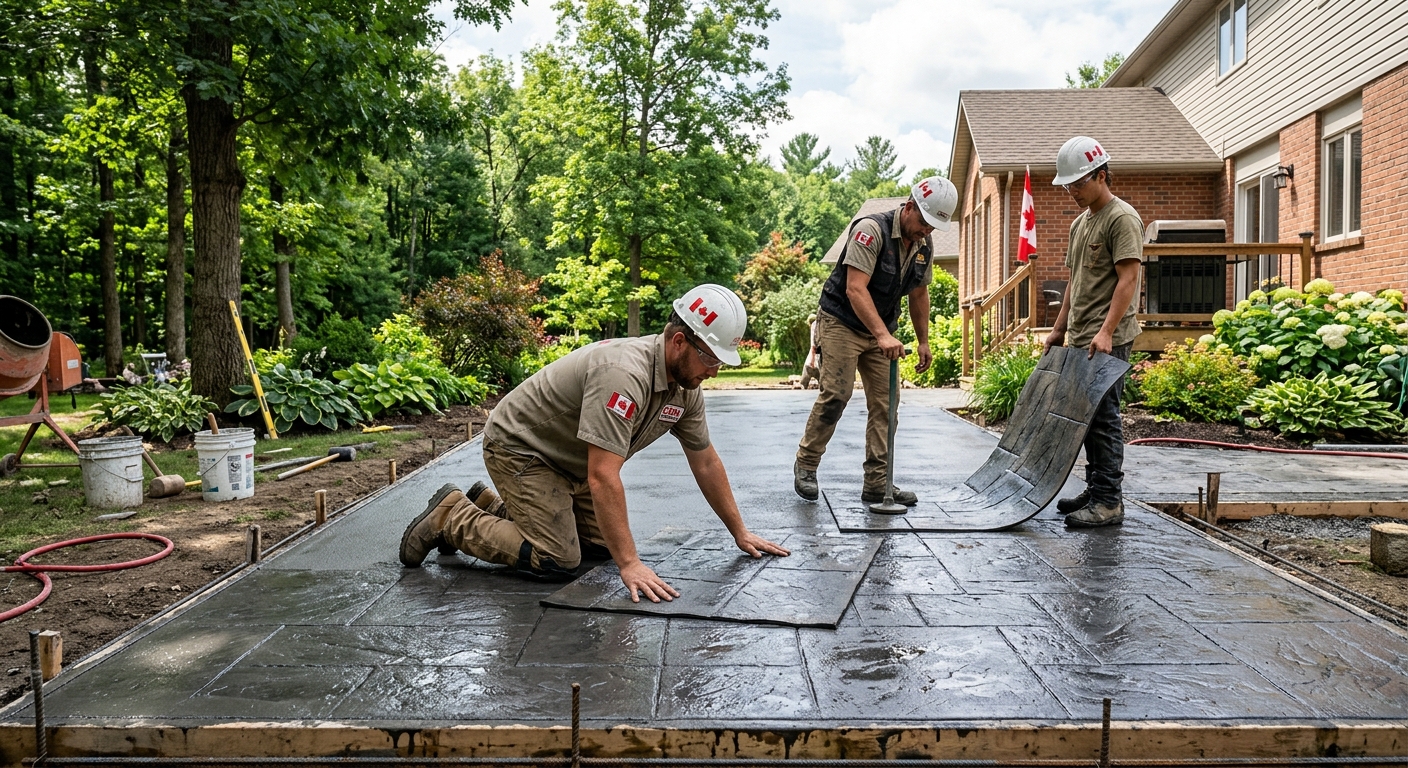
Concrete work options and costs in Welcome Beach
Welcome Beach, British Columbia has a small but steady demand for concrete flatwork, largely from homeowners updating driveways, patios, and entry walks. With a population of 1,125 (Statistics Canada, 2021 Census), you’ll see fewer large crews than in the Lower Mainland core—so scheduling and access can influence pricing. Most concrete jobs here are tied to the local housing stock and home improvements that keep properties functional through wet winters, cool nights, and periodic freeze–thaw cycles along the coast.
In the Lower Mainland–Southwest, concrete costs are shaped by a shallow design frost depth (practice commonly assumes about 450 mm / 18") and by the need to manage water. Even though winters are mild, saturated soils and temperature swings still create freeze–thaw stress, so base prep, drainage detailing, and air-entrained concrete aren’t optional. We also plan pours around prolonged rain and high humidity; curing blankets and longer cure times are common when nights run cool.
Concrete is especially in demand around the beachfront and lake-adjacent areas where drainage and surface durability matter—so driveways and patios that handle coastal-wet weather without scaling are a frequent request. If you’re comparing options, it helps to look at what you’re really paying for: excavation and granular base, reinforcement, the right mix, and the finishing/curing system. Use the table below to compare typical ranges for common projects in Welcome Beach.
| Application |
Typical Size |
Key Spec |
Finish Option |
Price Range |
| Concrete driveway (standard broom finish) |
400 sq. ft. (about 20' x 20') |
Reinforced slab on compacted granular base; air-entrained mix |
Broom finish + control joints |
$7,200 – $11,200 |
| Exposed aggregate driveway |
400 sq. ft. (about 20' x 20') |
Proper surface retarder and base drainage; air-entrained concrete |
Exposed aggregate + sealer |
$8,800 – $13,200 |
| Stamped concrete driveway or patio |
350 sq. ft. |
Stamped system over reinforced, properly cured slab |
Stamp + integral color + light release/finish sealer |
$9,000 – $14,000 |
| Plain concrete patio or walkway |
300 sq. ft. (about 15' x 20') |
Air-entrained mix; compacted granular base; joints as needed |
Float finish + broom or scored pattern |
$4,800 – $7,800 |
| Garage floor (interior slab) |
500 sq. ft. (about 20' x 25') |
Vapour control as needed + reinforced slab; standard mix |
Light broom or power trowel (as specified) |
$9,000 – $14,500 |
| Foundation footings (structural, below frost) |
Typical 2,000–2,500 sq. ft. footing perimeter |
Excavate below design frost; reinforced concrete; formwork |
Structural finish (typ. smooth formed) |
$2,500 – $5,500 |
Prices are estimates only and vary by project scope, site access and material selection.
What affects the price of concrete work in Welcome Beach
In the Lower Mainland–Southwest, it’s common to see quotes for the “same” concrete project vary by 30–50% between contractors. The gap usually isn’t the concrete itself—it’s the hidden scope behind the slab: excavation and haul-off, base drainage, reinforcement quantity, the mix spec (especially air-entrainment for exterior work), and curing protection during cool, wet periods. In British Columbia, contractors also manage seasonal timing differently than in interior regions: you may get similar weather risk, but you can still pay more if the pour date slips into colder, wetter weeks and the crew needs additional curing protection.
Frost depth and freeze–thaw cycles dictate specs. Footings and thickened edges must extend below the design frost depth (practice commonly assumes around 450 mm / 18" in coastal BC) to reduce frost heave. Exterior slabs should be air-entrained (to handle freeze–thaw scaling pressure), and de-icing salt use makes sealing more than a “nice to have.” In colder regions elsewhere in BC, deeper excavations and shorter pour seasons typically raise forming, heating and scheduling costs—so the same detail line-item can look very different across the province.
Two examples from Welcome Beach: (1) a driveway with poor existing drainage and saturated subgrade often requires deeper granular base and regrading—this pushes the driveway toward the upper end of concrete driveway pricing (around the $18–$28 per sq. ft. backbone). (2) choosing stamped concrete can be worth it because the finish system and curing discipline are more complex—so you’ll commonly see results tied to the stamped range (about $22–$36 per sq. ft.), not a standard broom-price outcome.
| Price Factor |
Why It Matters |
Cost Impact |
| Frost line depth — determines footing depth and form height |
Footings and thickened edges must sit below design frost to prevent heave |
More excavation and rebar/formwork can add significant labour and material |
| Site preparation — excavation, grading, compacted granular base |
Controls settlement and water; saturated soils increase deterioration risk |
Removal/haul-off and added base thickness can push costs up |
| Reinforcement — rebar or wire mesh requirement |
Reduces cracking from loads and shrinkage in exterior slabs |
Higher rebar quantity and placement time increases labour |
| Mix design — air-entrainment and compressive strength spec |
Exterior freeze–thaw and scaling resistance depends on air-entrainment |
Correct mix can cost more but prevents early surface spalling |
| Finish type — broom vs. stamped vs. exposed aggregate |
Finish impacts labour time, materials, and curing/handling discipline |
Stamped/exposed typically adds surface system costs |
| Pour size and concrete truck access to site |
Smaller pours and difficult access increase setup and material handling |
Traffic control, pump needs, or extra labour can raise the ticket |
| Cold-weather curing precautions — heating and blankets |
Cool nights and high humidity slow strength gain |
Blankets/heaters and longer supervision increase costs |
| Control joint pattern and sealing cost |
Joints manage cracking; sealing helps repel salts and water |
Added saw cuts + sealer product/labour increase overall price |
Permits & regulations in British Columbia
In British Columbia, structural concrete work—think footings, foundation walls, and grade beams—usually requires a building permit and may involve engineered drawings reviewed by the municipality. Concrete flatwork such as patios, walkways, and driveways typically does not require a permit on its own, unless your project affects lot grading, drainage, or triggers constraints tied to impervious surface coverage and municipal requirements (or touches municipal right-of-way). Before you break ground in Welcome Beach, confirm with the local authority so your scope matches what they need approved.
Here’s the practical homeowner sequence to verify a contractor is set up correctly in BC:
- Request the contractor’s licence/registration details (and licence number) in writing.
- Ask for a certificate of liability insurance and confirm the policy is current and includes your project’s work scope.
- Confirm WCB coverage (Workers’ Compensation coverage) for the crew that will be onsite.
- Verify the address/project number on the COI (certificate of insurance) if your municipality or the contractor provides it.
- Ask for references on similar-scale flatwork or foundation pours in your region and request photos from comparable site conditions (wet soil, drainage challenges, access constraints).
Use the online registry sources when available, then match the documents to the exact job you’re hiring for.
Getting concrete right in Welcome Beach's freeze-thaw climate
Concrete fails in Welcome Beach when freeze–thaw damage and surface water get into the slab or when the base isn’t stable enough to keep the slab supported. The most common homeowner-visible issues are scaling and spalling—often caused by insufficient air-entrainment, inadequate curing, or a base that traps moisture. To spec the job correctly for the Lower Mainland–Southwest, you want a layered system: (1) solid base preparation with compacted granular to the right depth for local subgrade and frost protection; (2) an air-entrained exterior mix, typically targeting about 5–7% air for freeze–thaw durability; (3) control joints placed to limit random cracking; (4) adequate curing—minimum 7 days under proper conditions; and (5) penetrating sealer applied after cure to repel de-icing salts and reduce water ingress.
When cold nights and coastal humidity slow strength gain, we adjust our approach with curing blankets and careful scheduling. That’s why two contractors can show different prices: the lower-cost quote may cut corners on curing protection or base drainage. For a simple example, if one crew is broom-finishing a 400 sq. ft. driveway and another is detailing drainage and air content properly, the difference can land near the driveway backbone ($18–$28 per sq. ft.). That extra cost is justified if it prevents early surface breakdown in a wet-freeze cycle environment.
Before signing, ask technical questions about the mix air content, how the base is compacted, the proposed joint layout, and how the contractor will protect the concrete during cool weather. If they can’t clearly answer those points, that’s where the failures often start.
| Spec |
Why It Matters in Welcome Beach |
What to Ask For |
Impact if Skipped |
| Compacted granular base (depth?) |
Stable support prevents settlement and keeps water from pumping under the slab in wet coastal conditions |
Granular depth and compaction method; confirm drainage plan for saturated soils |
Premature cracking, uneven slabs, and accelerated deterioration |
| Air-entrained concrete mix (target air %?) |
Freeze–thaw resistance in coastal-wet cycles reduces scaling and spalling |
Target air content (typically 5–7% for exterior flatwork) and mix design sheet |
Surface scaling/spalling, especially where salt hits |
| Compressive strength (MPa rating) |
Adequate strength is needed to withstand loading and weather exposure |
Minimum 32 MPa rating and planned curing conditions |
Lower durability and increased risk of surface damage |
| Control joints (spacing per ACI guidelines) |
Joints guide cracking to predictable locations in shrinkage and temperature movement |
Joint spacing plan and where saw cuts will be placed |
Random cracking and cosmetic failure that can widen over time |
| Minimum 7-day curing period |
Curing drives strength gain; cool/wet weather requires extra attention |
What happens during cold snaps (blankets/heating) and traffic restrictions |
Weak surface layer leading to dusting, scaling and reduced service life |
| Penetrating sealer (when applied after cure) |
Helps repel de-icing salts and water that contribute to freeze–thaw damage |
Penetrating sealer application after full cure (commonly around 28 days) and product type |
Higher water absorption, faster wear, and more frequent maintenance |
How to choose a concrete work contractor in Welcome Beach
Choosing the right contractor in Welcome Beach comes down to proof—licensing/registration where applicable, insurance, and a scope you can actually compare. Start with British Columbia verification: ask for their licence/registration details and confirm them using the available online registry when possible. Then request a certificate of liability insurance and check that the policy is active and matches the type of concrete work (driveways, patios, or foundation work). Finally, confirm WCB/WCB coverage for the crew that will be onsite. If the company can’t provide these documents promptly, treat that as a serious red flag.
Next, get 2–3 itemised written quotes—not just a single lump sum. You want labour and materials broken out so you can see what’s included in the base prep, reinforcement, concrete mix spec (air content for exterior), finishing, joints, and cleanup/disposal. Carefully read the exclusions: is site access included, is permit support included (if required for structural work), and does the quote cover haul-off of unsuitable soil?
Look for a clear warranty: workmanship warranty length, whether there’s a product/manufacturer warranty (and whether it’s transferable). Agree on a payment schedule that’s sensible—never more than about 10–15% upfront, with the remainder tied to completion milestones. Also insist on a written timeline with a start date window and a completion estimate, because in coastal BC, rain and cool nights can shift pour days and curing protection.
- Written, itemised quote with separate line-items for excavation, base, rebar/wire mesh, and concrete supply
- Exterior mix spec explicitly states air-entrainment for freeze–thaw durability
- Drainage plan described (especially for driveways) and base compaction method noted
- Control joint layout shown (where saw cuts will be made)
- Finishing method described (broom, stamped system, exposed aggregate retarder process)
- Concrete curing plan explained (blankets, curing time, traffic restrictions)
- Sealer included or clearly excluded, with timing (after cure)
- Disposal/haul-off included if unsuitable soils are removed
- Concrete truck access noted; any pump/extra equipment priced if required
- Proof of current liability insurance and WCB coverage provided before scheduling
- Warranty terms in writing (workmanship + product terms) and who honours them
- Payment schedule: small deposit, holdback until key inspections/milestones are complete
Red flags I see in Welcome Beach include: quotes that don’t specify air content for exterior slabs, skipping base drainage details, “we’ll cure it somehow” promises without blankets or restrictions, unclear joint/saw-cut plans, and requiring large upfront payments before forms or excavation are completed.
Frequently asked questions — concrete work in Welcome Beach
How long does concrete take to cure?
Concrete curing has two timelines: strength gain and surface readiness. For most flatwork in British Columbia, contractors target at least 7 days of curing before you treat the surface as fully protected from weather and routine use, assuming normal temperature conditions. Even after that, the concrete continues to gain strength over weeks; that’s why we typically recommend sealers around 28 days after the pour—especially in Welcome Beach where coastal-wet conditions and de-icing salt exposure can accelerate scaling if water gets into the surface.
Do I need a permit for concrete work in British Columbia?
In BC, it depends on the type of concrete work. Structural items like footings, foundation walls, and grade beams generally require a building permit and may need engineered drawings reviewed by the municipality. For concrete flatwork such as driveways, patios, and walkways, a permit is commonly not required by default, but it can be triggered if your project affects lot grading, drainage, or impervious surface rules.
Before you dig in Welcome Beach, confirm with the local authority. If you’re unsure, ask your contractor to state whether they’re pulling any permit or if the homeowner must handle it.
Concrete vs pavers for a patio in Welcome Beach?
Concrete and pavers both work well in coastal BC, but they fail differently. Concrete patios—especially air-entrained, properly jointed slabs with good base prep—can be lower maintenance, and the cracking pattern is predictable when control joints are done right. Pavers can be easier to repair locally if a section settles, but they rely heavily on the base system; if the bedding material washes out in saturated soils, joints can open and weeds can show.
Price-wise, a plain concrete patio or walkway often lands around the concrete patio band (commonly in the $16–$26 per sq. ft. range). Decorative upgrades like stamped work cost more (often $22–$36 per sq. ft.), while pavers vary widely by material and labour. In Welcome Beach’s freeze–thaw climate, the bigger determinant is the base and drainage either way.
How long does a concrete driveway last?
A well-built concrete driveway in Welcome Beach can last decades, but “lasts” depends on how it was built for freeze–thaw cycles and wet conditions. Durability comes from: air-entrained concrete, correct base preparation and compaction, reinforcement as specified, appropriate control joints, and adequate curing. Sealing also helps repel salt and water ingress, which are major drivers of surface deterioration.
If you’re getting quotes, compare what’s included rather than focusing only on price. For example, driveway pricing commonly follows the backbone range (about $18–$28 per sq. ft.); the higher end often reflects stronger base drainage details and proper curing protection—not just thicker concrete.
What is air-entrained concrete and why does it matter here?
Air-entrained concrete is mixed with tiny, evenly distributed air bubbles that give freezing water space to expand without breaking the cement paste. In Welcome Beach and the Lower Mainland–Southwest region, freeze–thaw cycling plus saturated soils can create repeated stress on the surface. If the concrete isn’t air-entrained (or if the air content is incorrect), you can see scaling and spalling earlier—often around edges, joints, and areas exposed to de-icing salts.
For exterior flatwork, ask for an air-entrained mix with a target air content (typically 5–7%) and a minimum compressive strength spec. These details are a direct part of durability performance, not just a line item.
How do I prepare the base for a concrete slab?
Base preparation is where good results begin. The contractor should excavate to the required depth, remove unsuitable material, and grade so water drains away—not into the slab. Then they place compacted granular base (often in layers) and compact to reduce settlement and prevent pumping of fines during wet/cold cycles.
For Welcome Beach, ensure the scope specifically addresses drainage and frost protection requirements (practice commonly assumes around 450 mm / 18" frost depth for design, with footings placed below it). Ask what granular depth is planned, how compaction will be verified, and how they’ll keep the subgrade stable before the pour. If those details aren’t clear in the quote, you’ll be exposed to cracking and premature deterioration.