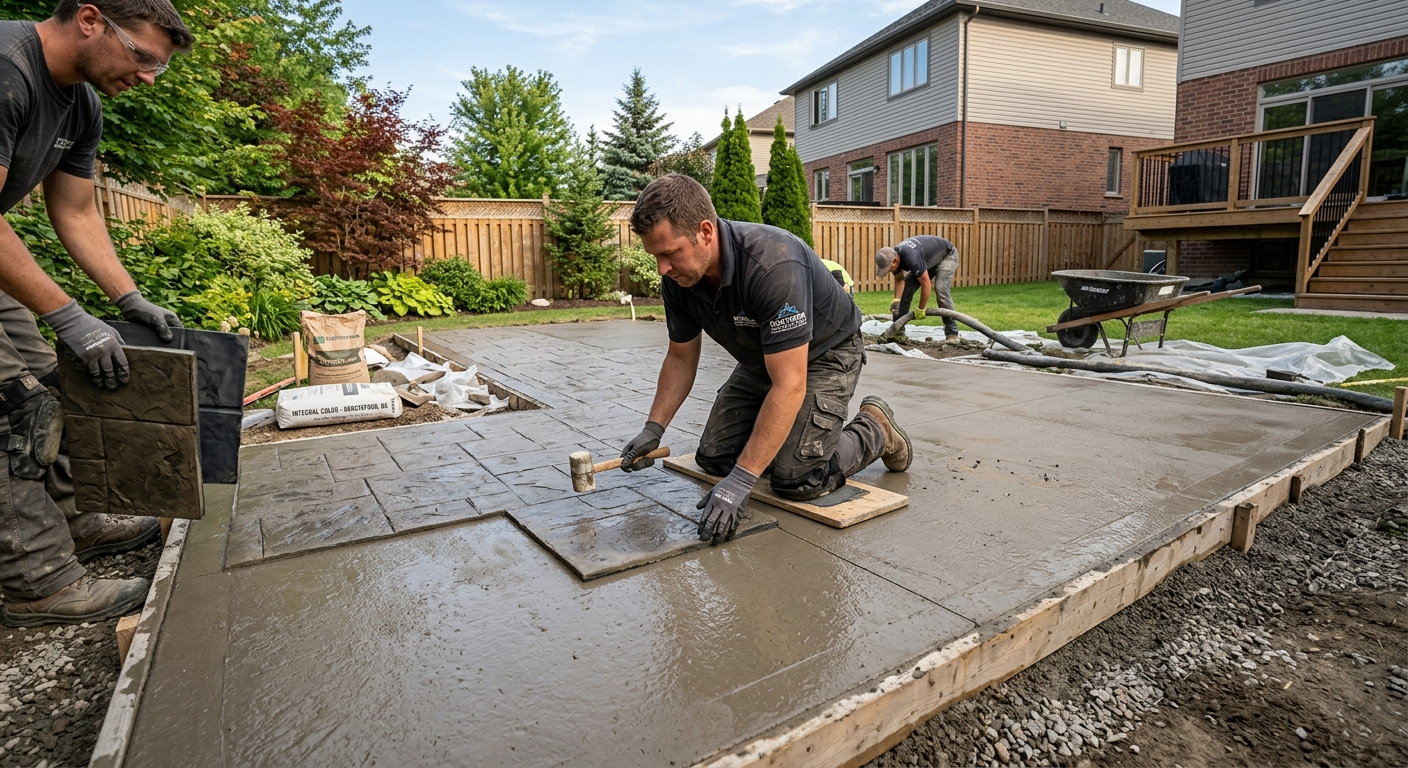
Concrete work options and costs in Metchosin
Metchosin homeowners typically choose concrete because it’s durable, low-maintenance, and well-suited to coastal Vancouver Island conditions. In Metchosin, 77.9% of dwellings are single-detached homes, which is the primary home type that drives demand for driveways, patios, and walkways. With 1,525 homeowner households (82.2% of households own), there’s steady year-round replacement and improvement work—especially where older homes built before 1981 need upgraded entrances, new walkways, or foundation repairs. (Statistics Canada, 2021 Census)
On Vancouver Island and the Coast, pricing and design are influenced by freeze–thaw cycling and a relatively shallow frost line compared with colder interior regions. Even though winters are milder, wetting and freezing can still cause surface scaling and random cracking if the mix, base prep, and joints aren’t right. That’s why local exterior concrete typically uses air-entrained mixes, proper drainage, and control joints. Contractors in areas like Metchosin proper (including Highway 14 corridor properties) also manage heavy coastal rains and short windows for ideal curing, which can affect scheduling and labour availability.
Because some jobs require extra excavation, granular base, reinforcement, and weather protection, you’ll often see price gaps between “similar-looking” pours. Use the table below as a practical way to compare options—then we can narrow the estimate based on thickness, access, and finish.
| Application |
Typical Size |
Key Spec |
Finish Option |
Price Range |
| Concrete driveway (standard broom finish) |
400–600 sq. ft. |
6 in thickness, air-entrained, control joints |
Broomed top, sealed after cure |
$6,400 – $12,500 |
| Exposed aggregate driveway |
400–600 sq. ft. |
6 in thickness, surface retarder/aggregate reveal, joints |
Exposed aggregate with sealer |
$9,000 – $16,500 |
| Stamped concrete driveway or patio |
300–500 sq. ft. |
4–6 in thickness (site-dependent), air-entrained, release agent |
Stamp pattern + color hardener |
$8,000 – $18,000 |
| Plain concrete patio or walkway |
150–350 sq. ft. |
4–5 in thickness, proper slope/drainage |
Float/smooth or light broom |
$2,200 – $6,800 |
| Garage floor (interior slab) |
300–500 sq. ft. |
4 in thickness, vapor control plan (as needed) |
Steel trowel (smooth) or broom |
$5,000 – $11,500 |
| Foundation footings (structural, below frost) |
Varies by design |
Engineered dimensions, below frost, granular base + drainage |
Structural concrete (no decorative finish) |
$10,000 – $28,000 |
Prices are estimates only and vary by project scope, site access and material selection.
What affects the price of concrete work in Metchosin
Even when you’re comparing the same basic scope (say, a driveway replacement), quotes on Vancouver Island and the Coast can vary by about 30–50% due to differences in foundation and drainage details, excavation realities, and the concrete/mix specifications needed for our freeze–thaw conditions. Contractors may also price weather contingencies differently—particularly for curing. On British Columbia projects, that “hidden scope” is often what separates a budget broom-finish job from a more durable, well-jointed slab that holds up to wetting, freezing, and de-icing use.
In this region, frost and freeze–thaw cycles dictate every major spec. Footings must extend below the design frost depth (coastal BC is often around 0.5–1.2 m depending on location and design assumptions) to reduce frost heave risk. Exterior slabs generally require air-entrained concrete so the paste can survive repeated freezing and thawing. Where colder snaps extend curing risk, cold-weather precautions—insulating blankets, protection, and sometimes heating—add labour and material costs. De-icing salt can accelerate surface spalling on unsealed or incorrectly mixed concrete, which is why sealing and joint detailing are often included in durable specs.
In Metchosin, the biggest cost drivers usually come down to site prep and drainage. For example: if your existing base is soft or mixed with organics, excavation and replacement can push a plain walkway toward the higher end of the $14 – $22/sq. ft.-type band. If you choose stamped or exposed aggregate, your finish system and additional materials can justify the premium versus standard broom, especially on driveways where appearance is front-and-centre and freeze–thaw exposure is constant.
| Price Factor |
Why It Matters |
Cost Impact |
| Frost line depth |
Determines footing depth and form height |
More excavation increases labour/equipment time and concrete quantity |
| Site preparation |
Excavation, grading, compacted granular base |
Soft subgrade or poor drainage can add base replacement and rework |
| Reinforcement |
Rebar or wire mesh requirement |
Material cost + labour time for placement and chairs/spacers |
| Mix design |
Air-entrainment and compressive strength spec |
Higher-spec mix and stricter placement control can raise material costs |
| Finish type |
Broom vs. stamped vs. exposed aggregate |
Decorative systems add colour, tooling, labour time, and waste allowance |
| Pour size and concrete truck access to site |
Shortens or extends pumping/handwork |
Pumping, long carries, or restricted access increases labour and logistics |
| Cold-weather curing precautions |
Heating and blankets protect strength gain |
Extra rentals and labour during shoulder-season pours |
| Control joint pattern and sealing cost |
Reduces random cracking; protects from de-icing exposure |
More sawcut time and sealer material/application |
Permits & regulations in British Columbia
In British Columbia, most structural concrete work needs a building permit—especially where the foundation is involved. Typical permit-required projects include foundation walls, footings, grade beams, and other structural elements that support the house. These usually also involve engineered drawings that the municipality reviews as part of the permit process.
Concrete flatwork such as patios, walkways, and driveways often does not require a permit, unless it changes lot grading, affects stormwater/lot drainage, triggers impervious surface considerations, or touches a municipal right-of-way. If your driveway modification involves regrading swales, altering drainage to a ditch system, or changing how water flows off your property, confirm first with the local authority before excavation.
For Metchosin homeowners, the easiest way to verify the contractor is to do it in three steps:
1) Licence and contractor status: Ask for the contractor’s business details and check the relevant provincial online listings/registries associated with contracting. 2) Liability insurance: Request a current certificate of insurance (COI) and verify it matches the scope (concrete, excavation, forming). 3) Workplace coverage: Confirm WSIB coverage (or the applicable WCB coverage pathway used in BC) and request written confirmation/clearance documentation.
Then ask for 2–3 references on similar projects in the Capital Regional District area so you can see how they detail base prep and joints for Vancouver Island’s freeze–thaw conditions.
Getting concrete right in Metchosin's freeze-thaw climate
Concrete usually fails in Metchosin not because it “can’t handle the weather,” but because critical specs get skipped—especially in our freeze–thaw cycle where moisture repeatedly enters the slab edge and surface. The biggest culprit is spalling (surface scaling/chipping) caused by inadequate air-entrainment, poor base drainage, or weak/uneven curing. The fix is to spec the job for durability from the ground up.
First: base preparation. Exterior concrete needs a compacted granular sub-base to the correct depth for the local soil and frost considerations. If the base is too thin or not compacted, the slab settles and cracks—then water gets in and expands during freezing. Second: mix design. Exterior flatwork should be air-entrained (commonly about 5–7% air content) and meet a minimum compressive strength of 32 MPa for typical exterior applications. Third: control joints. Joints must be planned and spaced so the slab cracks where you want it, not randomly across the field.
Fourth: curing. Strength gain is slower in cool, wet Vancouver Island weather. Plan for at least a minimum 7-day curing period under proper conditions; in cold snaps, crews may need blankets and protection to avoid early freeze damage. Fifth: sealing. Apply a penetrating sealer after the concrete cure—often around 28 days—so de-icing salts and water are less likely to penetrate.
When comparing options, it’s common to see budget choices that look similar in plan but fail early. For example, a basic broom-finish driveway might land in the lower end of the $6,400 – $12,500 range, while stamped concrete often runs higher (finish systems and labour). The price difference can be justified—if, and only if, the base prep, air-entrainment, and joint plan are still done to durable specs.
| Spec |
Why It Matters in Metchosin |
What to Ask For |
Impact if Skipped |
| Compacted granular base (depth?) |
Supports slab and limits frost-related movement |
Granular depth and compaction test method; confirm drainage plan |
Settlement and cracking; water migration into slab edges |
| Air-entrained concrete mix (target air %?) |
Protects against freeze–thaw scaling and spalling |
Document air content target (commonly 5–7% for exterior flatwork) |
Surface scaling/chipping after a few cold seasons |
| Compressive strength (MPa rating) |
Ensures adequate strength gain and durability |
Minimum 32 MPa (or higher if required by design/spec) |
Weak concrete; higher risk of damage under traffic and freeze cycles |
| Control joints (spacing per ACI guidelines) |
Controls where shrinkage cracks form |
Proposed joint layout, spacing, and sawcut timing |
Random cracking and water entry leading to freeze damage |
| Minimum 7-day curing period |
Strength gain is slower in cool, wet coastal conditions |
Planned curing/protection steps if temperatures drop |
Early freeze damage; reduced performance and premature failure |
| Penetrating sealer (when applied after cure) |
Repels water and reduces de-icing salt penetration |
Sealer application schedule—often around 28 days post-pour |
Faster deterioration and higher likelihood of scaling/spalling |
How to choose a concrete work contractor in Metchosin
Start by verifying the contractor meets British Columbia requirements and can stand behind workmanship. Ask for a current certificate of liability insurance—your COI should list the correct legal business and cover the activities involved (excavation, forming, concrete placement, and finishing). Next, confirm workplace coverage (WSIB/WCB as applicable) and request clearance documentation before work begins.
Then get 2–3 itemised written quotes instead of one lump sum. A solid quote breaks out labour and materials (excavation, granular base, reinforcement, concrete supply/mix spec, finishing, sawcuts/joints, and sealer). If a contractor won’t itemize, they may be making assumptions that change later.
Read the scope carefully for exclusions: Is site disposal included? Are permit-related items included where required for structural work? Who supplies traffic protection, forms/removal, and any needed drainage adjustments? For warranties, look for a clear workmanship warranty length and whether the concrete product/manufacturer warranty applies to the mix used. Also ask if the warranty is transferable if you sell your home.
For payment schedule, avoid paying full amounts early. A common safe approach is to keep upfront payments around 10–15% and hold back a portion until the job is complete and cleaned up. Finally, demand a written timeline with a start date window and completion estimate—on Vancouver Island, rain events and curing conditions matter, so schedule details protect you.
- Confirm insurance COI is current and matches the exact contractor legal name.
- Verify workplace coverage and request written clearance/coverage confirmation.
- Ask for 2–3 itemised quotes (labour + materials) with unit rates where possible.
- Require mix details: air-entrainment and minimum compressive strength (not “standard mix”).
- Confirm granular base depth and compaction approach for your soil conditions.
- Review reinforcement plan (mesh/rebar) and how it’s supported (chairs/spacers).
- Ask for proposed control joint layout and sawcut timing.
- Confirm curing/protection plan if temperatures drop or rain is expected.
- Ask whether sealing is included and when it will be applied (after cure).
- Check whether disposal of excess materials and site clean-up are included.
- Request references for similar-size work in nearby communities and ask about cracking/spalling outcomes.
- Get a written schedule: pour date window, cure/return-to-service expectations, and lead time for materials.
Concrete red flags in Metchosin include: vague mix wording (“we’ll do standard concrete” with no air-entrainment mention), no clear plan for drainage/base prep, skipping or “guessing” control joint spacing, promises to pour during questionable cold/rain windows without cure protection, and quotes that won’t itemize exclusions like excavation, granular replacement, or disposal.
Frequently asked questions — concrete work in Metchosin
How long does a concrete driveway last?
In Metchosin and across coastal Vancouver Island, a well-built concrete driveway commonly lasts 20–30 years, and longer if it’s detailed for freeze–thaw exposure. The biggest factors are base preparation (proper granular depth and compaction), air-entrained concrete for exterior durability, and control joints placed to reduce random cracking. Sealing also helps protect the surface from water penetration and de-icing salts. If your driveway is older (many homes here were built before 1981), you’ll often see spalling or cracking where water sits near the edges and joints. A driveway poured with correct specs can still be a strong value—typical replacement pricing often falls in the $6,400 – $12,500 range for standard broom finishes depending on size and access.
What is air-entrained concrete and why does it matter here?
Air-entrained concrete includes tiny air bubbles in the mix that give expanding water somewhere to go during freeze–thaw cycles. On Vancouver Island and the Coast, the temperature swings plus moisture exposure can still lead to surface scaling and spalling if the concrete isn’t designed for freeze–thaw durability. In other words: air-entrainment isn’t cosmetic—it’s a performance requirement for exterior flatwork. For Metchosin projects, ask your contractor to specify an exterior air-entrained mix (often around 5–7% air content) and confirm it meets the minimum strength rating used in the design/spec (commonly 32 MPa for typical exterior applications). When this is done properly, you reduce the chance of early deterioration even with frequent wet winters and occasional cold snaps.
How do I prepare the base for a concrete slab?
Base prep is where most driveway and patio longevity is won or lost in Metchosin. A durable slab starts with excavation to remove unsuitable soil (organics, topsoil, or soft fill), then adding a compacted granular sub-base to the proper depth for your soil and drainage conditions. The crew should grade for slope so water doesn’t pond and should compact in lifts. If frost heave risk exists due to local soil moisture, the team must ensure the base is stable and the design considerations for below-frost work (where applicable) are met. Ask your contractor how they determine the granular depth and compaction approach, and whether drainage adjustments are included. If the base is weak, you can see cracking soon after—sometimes within a few seasons—which defeats the point of investing in higher-quality exterior concrete.
How do I compare concrete quotes?
When comparing quotes for a driveway, patio, or walkway in Metchosin, don’t compare only the total price—compare what’s included. Look for itemized labour and materials (excavation, base, reinforcement, concrete supply/mix spec, finishing, sawcuts/joints, sealing, and disposal). Confirm the finish description is specific (broom finish, stamped system, exposed aggregate) and whether control joints and sealing are included. Also check weather and curing provisions: will the contractor protect the pour if temperatures drop or rain is expected? It’s normal for quotes to vary widely on Vancouver Island because of access, base remediation, and spec upgrades. For reference, typical standard broom driveway work may land in the $6,400 – $12,500 range, while stamped work is often higher due to finish materials and labour.
Can concrete be poured in cold weather in Metchosin?
Yes, concrete can be poured in cold weather in Metchosin, but only if the contractor uses cold-weather concrete practices that protect curing. Coastal BC can have mild winters, yet freeze–thaw cycles and cold snaps still happen, and early freeze damage can reduce strength and lead to surface defects. A reputable crew will plan for temperature monitoring, insulation blankets, curing protection, and sometimes schedule adjustments. Ask how they protect the concrete during curing and what the minimum conditions are for placement and finishing. Also ask whether they’ll include those precautions in the quote—some contractors price that into the job, while others treat it as an extra. If a quote is unusually low, it may mean they haven’t accounted for the cost of proper protection.
How do I maintain concrete in Metchosin's freeze-thaw climate?
Maintenance in Metchosin is mainly about limiting water penetration and protecting the surface from de-icing salts. First, let the concrete cure fully before heavy use, and avoid early salt exposure. After the concrete has cured (often around 28 days), use a penetrating sealer if it wasn’t included in the original scope—this helps repel moisture that drives freeze–thaw deterioration. Keep the surface clean so debris doesn’t hold water, and address small cracks or joint issues quickly so water doesn’t find pathways under the slab. If your driveway sees regular winter de-icing, re-sealing at appropriate intervals can extend service life. Well-detailed exterior slabs are designed for freeze–thaw cycles, but sealing and drainage awareness are what keep them looking good season after season.