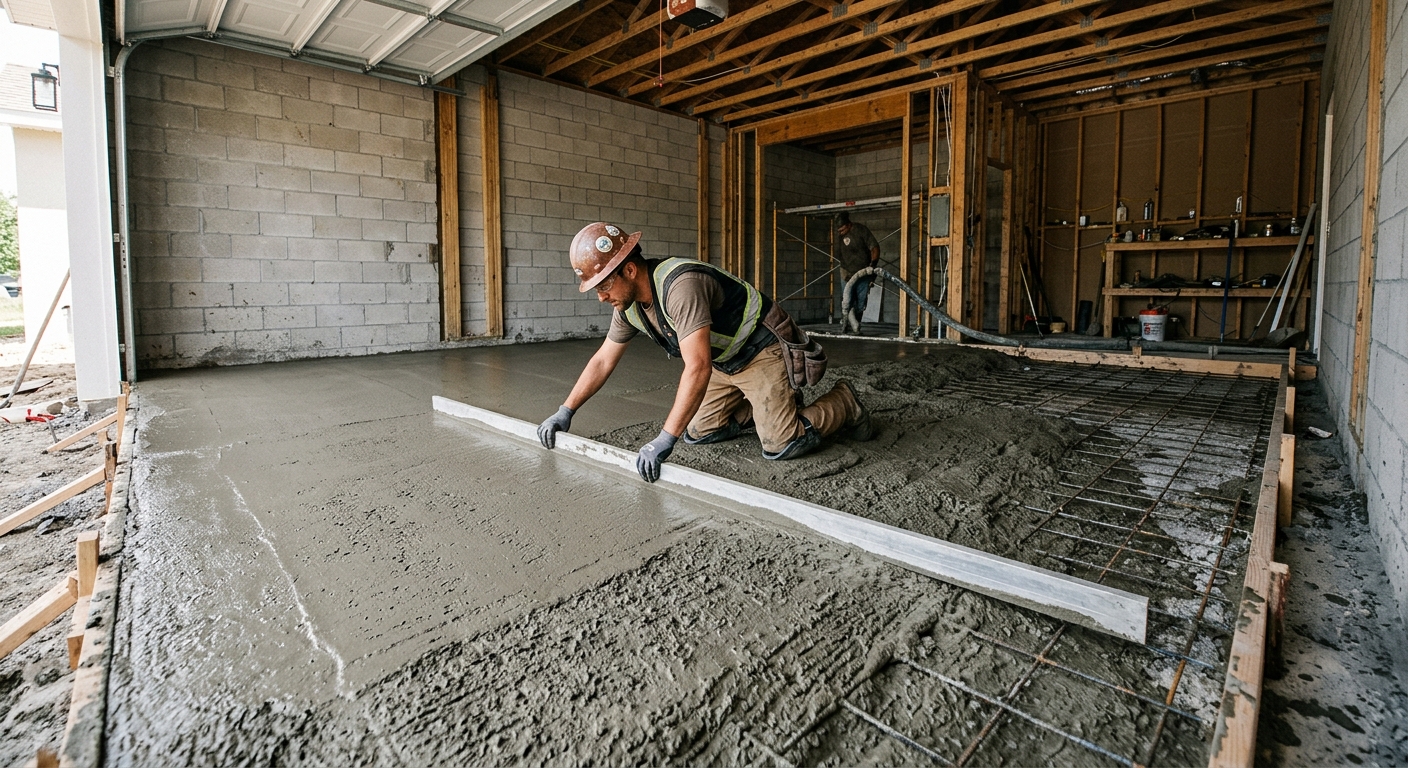
Concrete work options and costs in North Kamloops
Concrete contractors in North Kamloops see steady demand year-round, but the “best value” option depends on how you want your flatwork to look and how much movement your site is likely to experience. With a population of 10,995 (Statistics Canada, 2021 Census), North Kamloops has a healthy mix of homes, and the most common concrete projects typically serve the large share of detached housing that families build and maintain around Kamloops neighbourhoods like Valleyview and Juniper Ridge. Those areas tend to have driveways and walkways that are exposed to winter slush, traction grit, and repeated freeze–thaw cycles—exactly the conditions that drive our specs and pricing.
In the Thompson–Okanagan region, costs are shaped by frost depth assumptions (footings and foundations need to sit below frost, not just “minimum” depths) plus climate-driven durability requirements for exterior slabs. Frequent freeze–thaw events increase the need for well-compacted granular base preparation, air-entrained concrete, and disciplined control joint placement. On top of that, the practical pour season is shorter in interior BC than in milder coastal zones, which can mean more scheduling pressure and added curing/protection labour in shoulder months. That’s why regional pricing usually comes in above generic “BC average” numbers—you’re paying for frost-appropriate excavation/forming, correct mix design, and protection so the concrete can gain strength reliably.
Use the ranges below to compare common options in North Kamloops, then match the finish and specs to your freeze–thaw exposure, de-icing habits, and how you access the site.
| Application |
Typical Size |
Key Spec |
Finish Option |
Price Range |
| Concrete driveway (standard broom finish) |
10 ft x 20 ft (200 sq. ft.) |
Frost-appropriate base, air-entrained mix, control joints |
Broomed surface |
$3,600 – $5,600 |
| Exposed aggregate driveway |
10 ft x 22 ft (220 sq. ft.) |
Well-compacted base, air-entrained mix, proper curing |
Exposed aggregate with sealer |
$4,100 – $6,900 |
| Stamped concrete driveway or patio |
200 sq. ft. driveway OR 120 sq. ft. patio |
Reinforcement as required, release agent + stamping plan |
Stamp + color hardener (or integral color) |
$4,800 – $7,600 |
| Plain concrete patio or walkway |
10 ft x 12 ft (120 sq. ft.) OR 4 ft x 30 ft (120 sq. ft.) |
Air-entrained mix, joints at planned intervals |
Float/steel trowel + light broom, or broom only |
$1,700 – $2,900 |
| Garage floor (interior slab) |
20 ft x 22 ft (440 sq. ft.) |
Vapor barrier (if required), 32 MPa mix, control joints |
Light broom or trowel finish |
$6,600 – $10,800 |
| Foundation footings (structural, below frost) |
Typical 1–2 storey footing set |
Engineered sizing, rebar, concrete below frost depth |
Structural concrete |
$220 – $350 |
Prices are estimates only and vary by project scope, site access and material selection.
What affects the price of concrete work in North Kamloops
In the Thompson–Okanagan, it’s common to see quotes for the “same” concrete job swing by 30–50% once frost requirements, site conditions, and finish selection are properly itemized. Across British Columbia, the big difference isn’t just labour—it’s that interior climates require deeper frost-conscious construction details and more winter-ready protection steps. For North Kamloops, we typically plan for frost depth in the ~45–60 cm range for exterior work, and for foundations/footings we design to sit below local design frost assumptions so the slab and walls don’t experience heaving and cracking over time.
Freeze–thaw cycles also dictate mix design. Exterior slabs need air-entrained concrete to resist scaling and spalling, and cold-weather curing precautions (insulating blankets, curing compounds, or temporary heating) can add real labour and fuel costs when pours land in shoulder months. De-icing salts accelerate surface deterioration if the concrete isn’t properly cured and sealed, so sealing can be a smart “cost now, save repairs later” step.
Here’s where cost moves up or down locally. (1) A driveway on clay or variable fill can require extra excavation and thicker, well-compacted granular base before the pour—often the biggest driver of price. (2) Longer truck access or working in a tight Valleyview or Juniper Ridge lot may increase forming, waste, and labour time. (3) Choosing stamped concrete can add labour for stamping, texture control, and color application, but on the right site it can be worth the jump from basic broom finishes (for example, driveway broom finishes commonly land around the $18–$28 per sq. ft. tier, while stamped can sit higher).
As a practical example, if a plain patio is near the $14–$24 band and you switch to stamped and decorative treatment, the increase is usually justified by prep complexity and finishing time—not by “extra cement.”
| Price Factor |
Why It Matters | Cost Impact |
Cost Impact |
| Frost line depth |
Determines how deep footings/forms must go to reduce heaving |
More excavation + higher forming = higher costs |
| Site preparation |
Excavation, grading, and well-compacted granular base for stability |
Unstable soils can add thickness, hauling, and compaction time |
| Reinforcement |
Rebar or mesh supports structural behaviour and reduces cracking risk |
Material + tie-in labour increases with larger or exposed slabs |
| Mix design |
Air-entrainment and required compressive strength for freeze–thaw durability |
Proper air content and strength spec can raise mix cost but improves lifespan |
| Finish type |
Broom vs. stamped vs. exposed aggregate changes labour and materials |
Stamped/exposed require more steps, release agents, and curing control |
| Pour size and concrete truck access to site |
Impacts pumping, number of loads, and labour time |
Tight access increases labour; longer distances can add pump/transport charges |
| Cold-weather curing precautions |
Heating/blankets protect strength gain when temperatures drop |
Seasonal protection can add setup and consumables |
| Control joint pattern and sealing cost |
Controls cracking locations and helps repel salts and moisture |
More joints and sealing add material + application labour |
Permits & regulations in British Columbia
In British Columbia, most structural concrete work requires a building permit, and municipalities often expect engineered drawings for foundations. That typically includes footings, foundation walls, grade beams, and other load-bearing concrete elements. Concrete flatwork—like patios, walkways, and most driveways—usually does not require a permit unless it affects site grading, drainage, or triggers municipal rules around impervious surface coverage and right-of-way concerns. Before you schedule a pour in North Kamloops, confirm with the local authority so you don’t get caught rebuilding after the fact.
Start by verifying your contractor’s paperwork. Ask for (1) liability insurance (so you’re protected on a jobsite incident), and (2) WSBC coverage for workers (British Columbia’s workers’ compensation system). Then request references from similar-scale projects in the Thompson–Okanagan—driveways and exterior slabs in freeze–thaw areas like Kamloops and Vernon are a good sign they build to the right durability standards.
Step-by-step homeowner checks:
- Licence/registration: look up the contractor on the relevant provincial business/contractor listing (confirm the correct legal entity, address, and status).
- Certificate of insurance: request a current COI and verify the policy is active and matches the company name on the quote.
- Workers’ coverage: ask for proof of WSBC coverage and ensure it lists the correct employer entity.
- Clearance (if applicable): if the company provides it, review the coverage/clearance letter for validity dates.
- References: confirm dates, scope, and whether joints/curing/sealing were handled correctly for freeze–thaw exposure.
Getting concrete right in North Kamloops's freeze-thaw climate
Concrete failures in North Kamloops usually aren’t random—they’re predictable when the base isn’t prepared to the right depth, the mix doesn’t include air, joints aren’t planned, or curing/protection is rushed. In the Thompson–Okanagan, repeated freeze–thaw cycles put stress on the surface and near-surface paste. If the concrete mix isn’t properly air-entrained, water can freeze inside the concrete and pop the surface (spalling), especially when de-icing salts are used. That’s why the “spec” matters as much as the price you pay.
To spec the job correctly, start with base preparation: excavate to the required depth, grade accurately, and compact a granular sub-base to create a stable, well-drained platform suited to local soil. Next, choose a mix design for exterior exposure—air-entrained concrete (commonly 5–7% air content for exterior flatwork) and a minimum 32 MPa compressive strength rating to support durability and strength gain. Plan control joints so cracking happens in the intended locations; they’re not just cosmetic. For curing, you want at least 7 days under proper conditions, and in cold weather you must protect the slab so it reaches strength reliably. After cure, apply a penetrating sealer (typically applied after the 28-day cure window) to repel moisture and de-icing salts.
Ask technical questions like: “What air content are you targeting for this exposure level?” and “How are you sizing and placing control joints for my slab?” If you compare options, the price gap is often justified by the extra steps that prevent spalling. For instance, a sealed, air-entrained broom-finish driveway usually costs less than stamped ($18–$28 per sq. ft. tier for broom finishes versus higher stamped pricing), but both can fail without correct base, air content, and curing—so prioritize those line items before decorative upgrades.
| Spec |
Why It Matters in North Kamloops |
What to Ask For |
Impact if Skipped |
| Compacted granular base (depth?) |
Stable support reduces settlement and cracking through freeze–thaw |
Base depth and compacted thickness designed to your soil + frost conditions |
Uneven settlement, premature cracking, water pooling and scaling |
| Air-entrained concrete mix (target air %?) |
Helps concrete survive freeze–thaw cycles without surface damage |
Target air content and confirmation it’s for exterior exposure |
Increased spalling and scaling in winter months |
| Compressive strength (MPa rating) |
Strength development supports long-term durability |
Minimum 32 MPa rating for exterior flatwork |
Lower performance, weaker slab edges, higher chance of surface deterioration |
| Control joints (spacing per ACI guidelines) |
Controls random cracking patterns |
Joint spacing plan and how joints align with slab dimensions |
Random cracks, joint failure, harder-to-repair driveway/coping |
| Minimum 7-day curing period |
Strength gain must be protected in colder interior weather |
How curing will be done and what conditions trigger protection |
Reduced strength, higher risk of early cracking and scaling |
| Penetrating sealer (when applied after cure) |
Repels salts and reduces moisture ingress during winter cycles |
Application timing (after cure), product type, and coverage method |
Faster salt damage, more visible deterioration on driving/walking surfaces |
How to choose a concrete work contractor in North Kamloops
Choosing the right concrete contractor in British Columbia starts with verification and documentation. First, confirm licensing/registration status for the correct legal company and address—don’t rely on a shared name or a website alone. Next, request proof of liability insurance (certificate of insurance) and ensure it lists the same company that will perform the work. For worker protection, ask for WSBC coverage information and verify the policy is active and current. If a contractor can’t provide these quickly, treat it as a serious warning sign.
Get 2–3 itemised written quotes. You want a breakdown of labour + concrete/materials, including base prep, excavation, rebar/mesh, forms, jointing, finishing, and any curing/protection. Clarify what’s excluded: permit pull responsibilities, disposal/haul-away, saw cutting, reinforcement upgrades, or sealing. A “low” lump sum often hides extra costs like pump charges, additional loads, or thicker granular requirements after the site is assessed.
Warranty matters: ask for the workmanship warranty length and what it covers (surface scaling, joint-related issues, settlement tolerance). Also ask whether product warranties—if any—are from the manufacturer and whether they’re transferable to you as the homeowner. For payment schedule, never pay more than about 10–15% upfront; hold back a portion until the final walk-through. Finally, get a written start date and completion timeline that aligns with the short interior pour window and curing needs.
- Use the same scope in each quote (size, thickness, reinforcement, finish, and joint plan).
- Confirm frost-appropriate base/footing assumptions—not just “minimum” depths.
- Ask for air-entrainment details for exterior slabs.
- Verify curing plan for cold nights (blankets/compound/heating).
- Check whether sealing is included and when it will be applied (after cure).
- Confirm disposal/haul-away is included if excavation is required.
- Ask if saw cutting timing is specified for joints.
- Confirm truck access and whether pumping is assumed.
- Request proof of insurance and WSBC coverage before signing.
- Review warranty terms in writing (length, coverage, exclusions, claim process).
- Ensure permits/engineering responsibilities are clearly stated.
- Pay in milestones (small deposit, mid-pay on progress, holdback on completion).
Red flags we see in North Kamloops concrete projects include: “We’ve always done it this way” with no discussion of air-entrainment, missing or vague joint and curing notes, quotes that exclude base preparation depth, asking for large upfront payments, and contractors who can’t provide insurance/WSBC proof or credible references for similar freeze–thaw exposure.
Frequently asked questions — concrete work in North Kamloops
When is the best time to pour concrete in North Kamloops?
In North Kamloops and the Thompson–Okanagan, the best window is typically late spring through summer when daytime temperatures support strength gain and you can protect the pour during cooler nights. Interior BC has frequent freeze–thaw cycles, so shoulder-season pours can still work—but only if the contractor plans cold-weather curing (insulating blankets, curing compound timing, and sometimes supplemental heating) and protects the slab properly for at least the first several days. If you’re considering a driveway or patio, booking early helps avoid rushed placements. In practice, many homeowners schedule their exterior flatwork to finish before persistent fall cold, which helps reduce cost add-ons for heating and protection. Your quote should reflect those conditions rather than assuming “generic BC” timelines (Statistics Canada, 2021 Census).
How long does concrete take to cure?
Concrete has two timelines: initial set/finish time and strength gain. After placement, you can walk on the slab sooner, but strength development continues for weeks. For typical exterior flatwork in North Kamloops, plan on a minimum 7-day curing period under proper conditions for safe progression and early strength. Full design strength is usually achieved around 28 days, which is why sealing is commonly scheduled after the cure window to maximize performance against moisture and de-icing salts. If weather drops quickly, the contractor should use insulation/blankets and curing compound as needed—cold spells can delay strength gain and increase cracking risk. Always ask how they will protect the slab and whether their cure schedule is written in the scope.
Do I need a permit for concrete work in British Columbia?
In British Columbia, structural concrete work—such as footings, foundation walls, and grade beams—typically requires a building permit and may require engineered drawings reviewed by the municipality. For concrete flatwork like patios, walkways, and most driveways, permits are often not required unless the work affects lot grading, drainage, impervious surface rules, or municipal right-of-way considerations. Since every North Kamloops lot is different (slopes, drainage paths, and existing surfaces vary), you should confirm with the local authority before breaking ground. A reputable contractor will also clarify whether permit responsibilities are included in the quote. If a contractor won’t tell you what is or isn’t permitted, that’s a good moment to slow down and verify before scheduling the pour.
Concrete vs pavers for a patio in North Kamloops?
For a patio in North Kamloops, concrete usually costs less per square foot for a uniform surface and provides a cleaner, more continuous look when joints and drainage are done right. Pavers can be excellent if you want easy section-by-section repairs later, but they still need proper base preparation and careful compaction to avoid shifting during freeze–thaw cycles. In Thompson–Okanagan conditions, concrete’s durability comes from air-entrainment and correct curing, plus planned control joints that limit random cracking. Typical plain concrete patios/walkways often land in the $14–$24 band, while decorative work (stamped) increases cost. If you want a stone-like aesthetic, stamped concrete can bridge the gap—just remember that both pavers and concrete can fail when drainage and base depth are wrong.
How long does a concrete driveway last?
A well-built concrete driveway in North Kamloops can last many years—often 15–30 years—because longevity is driven by base preparation, air-entrained concrete, jointing, curing, and proper drainage. Freeze–thaw cycles and the use of de-icing salts are the main stressors on exterior slabs, so sealing after curing and keeping water from pooling along the edges matter. If the contractor uses correct mix design and installs control joints at a reasonable spacing, you’ll typically see fewer visible cracks and less surface scaling. If you skip air-entrainment or rush curing, the driveway can show spalling much sooner even if it looks okay at first. When comparing quotes, don’t only compare price; make sure the job includes the durability specs. Driveway broom-finish options commonly sit in the $18–$28 tier.
What is air-entrained concrete and why does it matter here?
Air-entrained concrete is mixed with microscopic air bubbles that give freezing water somewhere to expand, reducing internal damage. In British Columbia’s interior—especially around North Kamloops where you get repeated freeze–thaw cycles—air entrainment is a major reason properly built exterior slabs resist scaling and spalling. Without it, water can freeze inside the concrete’s pores and break down the surface over time, and salt exposure accelerates the damage. For exterior flatwork, contractors typically target about 5–7% air content (depending on mix design and exposure). Ask your contractor what air content they’re targeting and how they’ll ensure the right mix is delivered. It’s one of the most important questions you can ask before signing off on price.