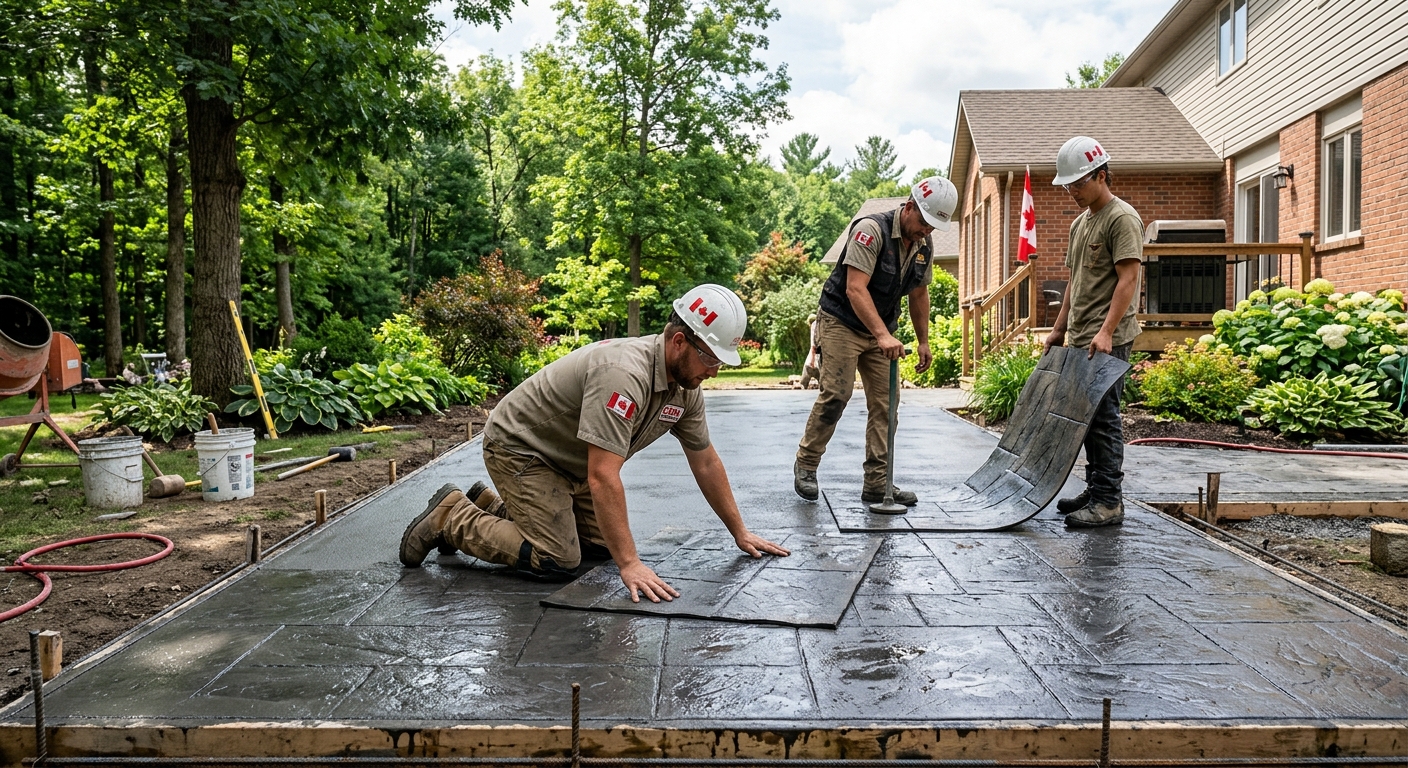
Concrete work options and costs in Rundle
In Rundle, Alberta, homeowners usually start with one of three priorities: fixing flatwork that’s heaving or cracking, upgrading curb appeal with a new driveway, or replacing worn patios and walkways. With a population of 10,545 (Statistics Canada, 2021 Census) and a housing market dominated by single-detached style properties common across the Calgary area, concrete flatwork is a year-round conversation—especially when weather cycles start exposing weak base prep or curing mistakes. In Rundle and nearby communities, demand is particularly strong in the older pockets closer to established residential streets, where driveways and entry steps often date back to the era of thicker mud-beds and less engineered frost protection.
In the Calgary region, pricing tends to run higher than milder provinces because the design frost depth is about 1.2 m (roughly 4 ft). That engineering requirement affects excavation depth, footing volumes, and formwork—so foundation work doesn’t just “add a little more,” it changes the whole job. Exterior pours also have to be engineered for freeze–thaw cycles: air-entrained mixes, granular base prep, proper control joints, and cold-weather curing precautions (insulated blankets or heat) can add both materials and labour. On top of that, the practical pour season is shorter, so contractor availability can tighten and crews must protect curing schedules more carefully.
Below are realistic budget bands you’ll see for common projects in Rundle, so you can compare quotes apples-to-apples before you call for an on-site measurement.
| Application |
Typical Size |
Key Spec |
Finish Option |
Price Range |
| Concrete driveway (standard broom finish) |
24 ft x 12 ft (288 sq. ft.) |
Air-entrained mix, compacted granular base, control joints |
Broom finish |
$12,000–$18,000 |
| Exposed aggregate driveway |
24 ft x 12 ft (288 sq. ft.) |
Air-entrained mix, surface retarder + curing protection, joints |
Exposed aggregate |
$15,000–$22,000 |
| Stamped concrete driveway or patio |
24 ft x 12 ft (288 sq. ft.) |
Engineered base, decorative stamp mats, release agent, joints |
Stamped pattern |
$15,000–$26,000 |
| Plain concrete patio or walkway |
12 ft x 10 ft (120 sq. ft.) |
Air-entrained mix, compacted base, joints |
Float/smooth + light broom |
$5,000–$9,000 |
| Garage floor (interior slab) |
24 ft x 22 ft (528 sq. ft.) |
Vapour barrier as applicable, fibre or mesh, proper curing |
Smooth trowel/brush edge |
$10,500–$16,500 |
| Foundation footings (structural, below frost) |
Typical detached house footprint (varies) |
Reinforced concrete to code; depth below design frost |
Structural/form-faced concrete (not decorative) |
$28,000–$45,000 |
Prices are estimates only and vary by project scope, site access and material selection.
What affects the price of concrete work in Rundle
In Rundle and the wider Calgary market, even “the same” concrete job can land 30–50% apart because contractors price risk: excavation conditions, engineering requirements, and the cold-weather work needed to protect curing. A driveway that looks straightforward on paper can change quickly once a crew discovers weak subgrade, poor drainage, or the need to deepen a base to meet frost and freeze–thaw performance. The local climate also shortens the safe pour window for exterior work, so winter-grade mix, insulated blankets, and scheduling pressure all show up in labour and overhead.
Frost line depth dictates footing depth. In Alberta, the design frost depth is commonly treated at about 1.2 m (roughly 4 ft) for residential engineering intent, so footings must bear below that level to prevent frost heave. That same concept drives exterior slab build-ups: granular base prep must be engineered and compacted to the right depth so water can’t freeze beneath the concrete. Freeze–thaw cycles also require air-entrained concrete for exterior flatwork; without it, surface scaling and spalling accelerate. Finally, de-icing salt in Calgary-area winters can magnify early surface damage—so sealing becomes part of long-term durability.
Two Rundle examples that swing cost: (1) If your driveway area needs more excavation due to a saturated clay pocket or uneven grading, your granular base and haul-away costs rise—often pushing a project toward the upper end of the $12,000–$18,000 driveway band. (2) If you upgrade from broom finish to stamped or exposed aggregate, the added materials, stamping labour, and more careful curing often move a driveway or patio toward the $15,000–$26,000 range. For context, foundation/footings budgets commonly sit in the $28,000–$45,000 band because depth, excavation, and reinforcement are structural, not cosmetic—so scope changes are more expensive to absorb.
| Price Factor |
Why It Matters |
Cost Impact |
| Frost line depth — determines footing depth and form height |
Footings must bear below the design frost to resist heave and seasonal movement |
Higher excavation depth increases concrete volume, rebar work, and formwork labour |
| Site preparation — excavation, grading, compacted granular base |
Freeze–thaw performance depends on removing weak material and compacting the right base |
Extra trucking and base material can move a flatwork quote toward the top of its range |
| Reinforcement — rebar or wire mesh requirement |
Reinforcement controls cracking and improves load distribution, especially under heavier vehicles |
Adds material cost and labour for placement and chairs/spacing |
| Mix design — air-entrainment and compressive strength spec |
Air-entrained mixes help survive freeze–thaw; strength ensures long-term structural performance |
Winter-grade or higher spec mix can increase per-yard concrete costs and delivery planning |
| Finish type — broom vs. stamped vs. exposed aggregate |
Decorative work requires more labour, careful surface timing, and additional steps |
Stamped/exposed finishes typically raise total cost versus plain broom-finish |
| Pour size and concrete truck access to site |
Smaller access can require pump or extra material handling |
Access limitations can increase labour and equipment rental time |
| Cold-weather curing precautions — heating and blankets |
Curing slows in cold; insulation/heating protect strength gain and reduce scaling risk |
Blankets/heaters add direct materials plus extra supervision time |
| Control joint pattern and sealing cost |
Joints manage shrinkage; sealing helps protect against de-icing salt damage |
Proper layout can add labour; sealing adds a separate line item but reduces long-term repairs |
Permits & regulations in Alberta
In Alberta, whether your concrete job needs a permit mostly depends on whether it affects structure, grading, or drainage. Structural concrete work—like foundation walls, grade beams, and reinforced footings—typically requires a building permit and often engineered drawings that get reviewed by the municipality. In plain terms: if the concrete is part of the building’s load path or the engineered foundation system, expect permitting.
Concrete flatwork (driveways, patios, walkway slabs) usually does not require a permit unless it changes lot grading, impacts lot drainage, or triggers municipal considerations tied to impervious surface coverage and right-of-way/municipal boulevard rules. Even when a permit isn’t required, contractors should confirm setbacks and drainage direction so you don’t create meltwater problems that can damage foundations.
For Rundle homeowners, a practical step-by-step contractor check looks like this:
- Ask for proof of liability insurance and a current certificate of insurance (COI) listing the insured address/client coverage as applicable.
- Ask for WSIB/WCB clearance or coverage documentation, depending on the contractor’s registration status.
- Confirm licensing/credentials where applicable for the scope (especially for structural or foundation-related scopes).
- Check references: request photos and contact info for 2–3 recently completed, similar-scale projects in Calgary-area freeze–thaw conditions.
- Before you sign, verify who pulls any required permits and whether site access, disposal, and restoration are included in the quote.
If your contractor can’t provide documentation or the scope is vague (depth, reinforcement, curing conditions), treat that as a warning sign before any excavation starts.
Getting concrete right in Rundle's freeze-thaw climate
Concrete problems in Rundle usually trace back to one of five things: poor base preparation, wrong mix design, inadequate air entrainment, incorrect jointing, or rushed curing in cold weather. In Calgary’s freeze–thaw environment, water is the enemy—if it finds a path into weak soils or unprotected surface paste, cycles can lead to scaling and spalling long before you expect it. The specification that matters most for exterior flatwork is air-entrainment: it helps the concrete tolerate freeze–thaw internally, reducing surface damage even when de-icing salts are used.
To spec your job correctly, start with (1) base preparation: excavate to the required depth, place compacted granular sub-base, and confirm grading that sheds water away from the slab. Next (2) mix design: for exterior driveways and walkways, require an air-entrained mix with typical target air content in the 5–7% range and a minimum 32 MPa compressive strength spec. Then (3) control joints: plan a joint pattern that limits random cracking and provides predictable weak planes. (4) Curing matters: insist on proper curing conditions for at least 7 days, and if temperatures drop, require insulated blankets and/or heating so strength gain continues. Finally (5) sealing: schedule a penetrating sealer applied 28 days after the pour to help repel salts and surface moisture.
As an example of where the price difference is justified: upgrading from a basic broom-finish driveway spec to one that includes engineered air entrainment and proper curing blankets may add a few thousand dollars, but it’s cheaper than replacing a driveway after premature scaling or slab settlement. In the Rundle market, that typically keeps you within the $12,000–$18,000 driveway band when the scope is standard, while decorative upgrades like stamping often increase budget toward $15,000–$26,000 because the labour and process steps are different.
| Spec |
Why It Matters in Rundle |
What to Ask For |
Impact if Skipped |
| Compacted granular base (depth?) |
Prevents trapped moisture and reduces freeze–thaw pumping beneath the slab |
Confirm excavation depth, base thickness, and compaction method |
Settlement, cracking, and spalling from water movement and weak support |
| Air-entrained concrete mix (target air %?) |
Improves freeze–thaw durability under Calgary-area winters and salt exposure |
Require air-entrainment target of 5–7% for exterior flatwork |
Higher risk of surface scaling and spalling even if the slab looks fine initially |
| Compressive strength (MPa rating) |
Ensures adequate strength gain for load performance and long-term durability |
Ask for minimum 32 MPa (and confirm winter-grade when applicable) |
Reduced strength development leading to early deterioration and cracking |
| Control joints (spacing per ACI guidelines) |
Controls shrinkage cracking into planned locations under temperature swings |
Request joint spacing and layout plan before scheduling the pour |
Random cracking that may open with freeze–thaw and allow moisture penetration |
| Minimum 7-day curing period |
Cold weather slows curing; proper curing is key in Rundle’s temperature swings |
Confirm curing plan and duration; require cold-weather protections if needed |
Surface scaling, reduced strength, and increased long-term cracking risk |
| Penetrating sealer (when applied after cure) |
Helps reduce salt and moisture impact on the exterior concrete surface |
Schedule penetrating sealer at 28 days post-pour (after adequate curing) |
Faster degradation from de-icing salt and water ingress |
How to choose a concrete work contractor in Rundle
For concrete work in Rundle, the best contractor isn’t just the cheapest—it’s the one who proves they can build for Alberta’s freeze–thaw reality. Start by verifying licensing/credentials where applicable to your scope, then confirm liability insurance and WSIB/WCB coverage. For insurance, ask for an up-to-date certificate of insurance (COI) before work begins and check that the coverage is active and the job location is within the scope. For WSIB/WCB, request clearance or coverage documentation so you’re not left holding the risk if a worker is injured on site.
Next, get 2–3 itemised written quotes instead of a single lump sum. A good quote breaks labour and materials and should clearly list excavation and disposal, base prep thickness and compaction, reinforcement type, concrete mix/air-entrainment spec, finish method, control joints, curing protections (especially for any late-season pours), and sealing if you’re doing exterior flatwork. Ask whether permits are included where required (structural foundation work) and whether municipal or drainage-related considerations are accounted for.
Warranty should be explicit: workmanship warranty length, what’s covered, and whether it’s transferable to a new owner if you sell your home. Payment schedules matter too—never pay more than about 10–15% upfront. Hold back a portion until the job is complete, cleaned up, and meets the agreed finish and grade.
Finally, demand a start date and completion estimate in writing so you can protect curing time. In Calgary-area conditions, a late pour with inadequate curing protection can cost you more than the initial quote difference.
- Request COI (liability insurance) and confirm it’s current.
- Verify WSIB/WCB clearance/coverage documentation before excavation.
- Ask whether a permit is required for your specific scope (structural vs flatwork).
- Get itemised quotes (labour, materials, excavation, disposal, base prep, concrete spec).
- Confirm concrete mix includes air entrainment for exterior slabs.
- Confirm frost-depth/bearing requirements for footings where applicable.
- Ask for reinforcement details: rebar size/spacing or mesh and chairs/spacing.
- Require a joint plan: spacing and where joints will land relative to forms and edges.
- Ask what happens in cold weather: blankets/heating and curing monitoring.
- Clarify finish steps and timing (broom vs stamped vs exposed aggregate processes).
- Review warranty terms in writing (workmanship vs product/manufacturer coverage).
- Use a payment schedule that limits upfront payments (10–15% max) and includes holdback.
Red flags in Rundle: (1) quotes that omit air-entrainment or curing protections, (2) vague wording like “standard concrete” with no strength spec, (3) no written joint or sealing plan for exterior slabs, (4) requiring full payment upfront, and (5) refusing to provide references or insurance/WSIB/WCB paperwork.
Frequently asked questions — concrete work in Rundle
What is the difference between concrete and cement?
In Alberta, people often say “cement” when they mean the full concrete product. Cement is actually one ingredient inside concrete—it's the powder that reacts with water to form the binder. Concrete is the complete mix: cement plus water plus aggregates (sand and gravel) and often additives such as air-entrainment for exterior durability. For Rundle’s freeze–thaw climate, the air-entrainment portion of the mix design is especially important for driveways, patios, and walkways because it helps the slab tolerate internal freezing without rapid surface scaling. When you’re comparing quotes in Rundle, don’t just ask what “cement” they use—ask for the air content target and the minimum compressive strength (commonly 32 MPa for exterior flatwork).
How much does concrete work cost in Rundle?
Pricing in Rundle generally follows the same local Calgary-area bands used by contractors: for example, a typical concrete driveway (standard broom finish) often comes in around $12,000–$18,000, assuming standard access and scope. For exterior flatwork upgrades, plain patios and walkways commonly fall around $5,000–$9,000, while stamped decorative work is frequently higher because of additional labour and process steps—often $15,000–$26,000 depending on size and complexity. Foundation/footings budgets are commonly $28,000–$45,000 because frost-bearing depth drives excavation, formwork, and reinforcement volumes. In Calgary’s colder winters, cold-weather curing precautions can also add cost, especially if you’re trying to pour late in the season.
How deep must footings be for Rundle's frost line?
For Rundle, the key concept is that footings must bear below the design frost depth to prevent frost heave. In Alberta engineering practice for this region, the design frost depth is about 1.2 m (roughly 4 ft). That means contractors typically excavate to the required depth and then place reinforced concrete footings on undisturbed soil below that level. The exact depth can vary by geotechnical conditions and the engineered foundation design for your home, so you can’t treat 1.2 m as a universal “one size fits all” number for every lot. When you get a quote for foundation work, ask how they determined footing depth for your soil conditions and whether engineered drawings are part of the permit package. That’s where cost differences often originate.
Why does concrete crack in Rundle and how is it prevented?
Concrete cracks in Rundle mainly due to shrinkage, temperature changes, and movement caused by freeze–thaw cycles interacting with moisture and base conditions. Even “good” concrete will crack at some point; the goal is to control where it cracks so it doesn’t become a structural problem. Prevention is about proper engineering and process: compacted granular base prep, correct air-entrainment for exterior slabs, proper joint spacing, and adequate curing time—especially when temperatures are near freezing. Control joints should be planned using a joint pattern that limits random cracking, and exterior slabs should be protected long enough to gain strength (minimum 7 days under proper curing conditions). For long-term protection in Calgary winters, sealing after the cure period also helps reduce moisture and de-icing salt impacts that can widen cracks over time.
Stamped vs broom-finish concrete — cost difference?
Stamped concrete usually costs more than broom-finish because it requires additional labour steps and materials: stamp mats, release agents, colour hardeners or integral colouring (depending on the design), and careful timing to get crisp pattern edges without defects. In Rundle, a basic broom-finish driveway is often around $12,000–$18,000, while stamped driveway or patio projects commonly move into $15,000–$26,000 once you account for the increased labour and more controlled finishing process. Exposed aggregate can land in a similar or slightly different range depending on surface technique. If you’re comparing quotes, make sure you’re comparing the same slab size, thickness, reinforcement, and base prep—decorative finish is only one part of the total durability story in freeze–thaw conditions.
When is the best time to pour concrete in Rundle?
The best time to pour in Rundle is during the warmer portion of the year when crews can maintain proper curing conditions and achieve strength gain without extra winter measures. In Calgary’s freeze–thaw climate, exterior pours need special planning when temperatures drop—contractors may require insulated blankets, heating, and winter-grade mix, which can raise cost and scheduling complexity. If you’re aiming for a driveway or patio, your contractor should schedule the pour so that curing can be protected for at least 7 days. Late fall and early spring can still work, but only if the contractor has a clear cold-weather curing plan and monitors the conditions. Ask how they’ll protect the slab against surface scaling risk, and confirm whether sealing will be scheduled once the concrete is fully cured.