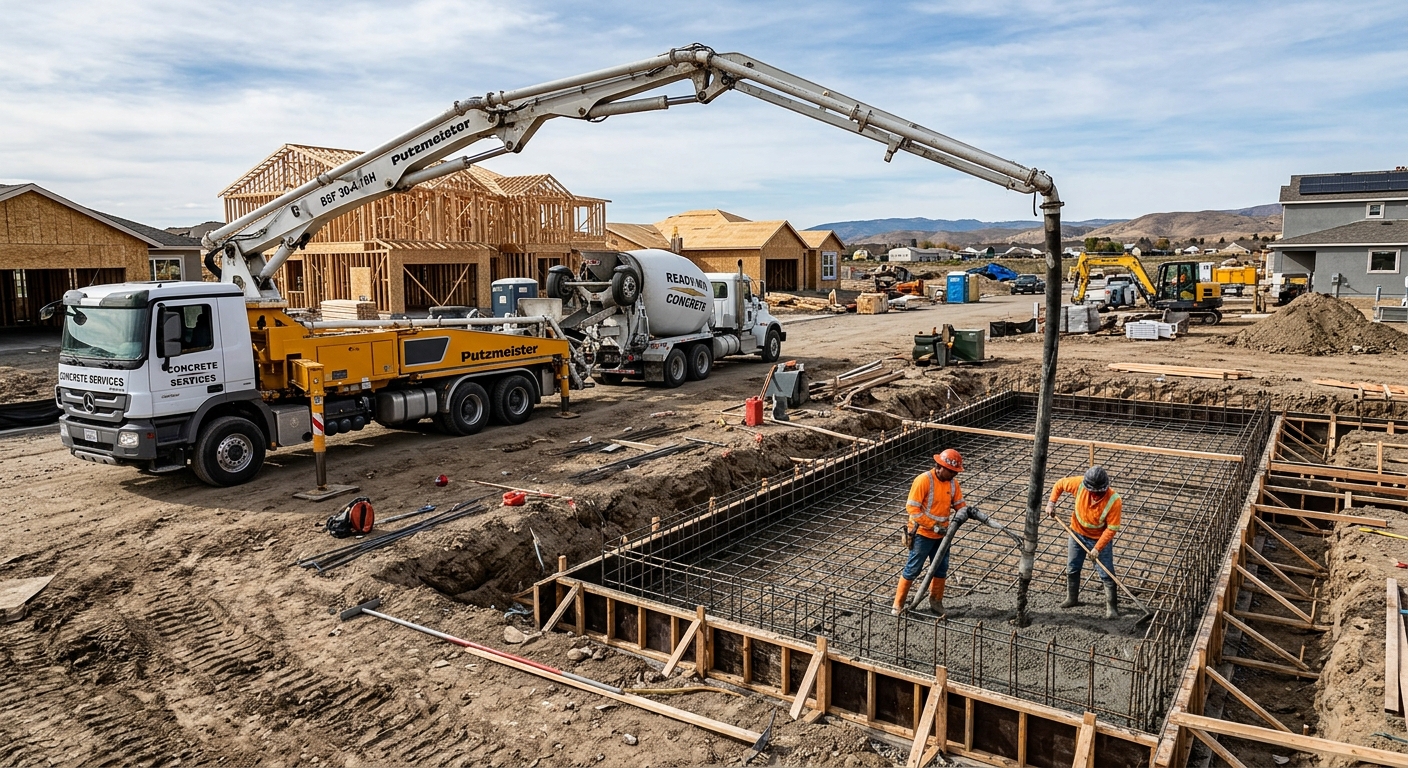
Concrete work options and costs in Palliser
Palliser, Alberta is a small community on the Calgary side of the market, and it’s where homeowners typically want durable concrete flatwork that can handle deep frost and frequent freeze–thaw cycles. With a 2021 population of 3,285 people (Statistics Canada, 2021 Census), the local pool of concrete crews can be tight during the exterior pour season. That scarcity, plus higher engineered foundation requirements driven by Alberta frost, is a big reason quotes can move quickly when work is booked.
Most concrete projects here track the same core needs: driveways, patios/walkways, and foundation footings for houses and garages. Palliser’s housing profile leans toward established residential neighbourhoods like Brentwood Meadows area (and surrounding Calgary-metro subdivisions), where routine concrete upgrades are common—especially when older asphalt or loose gravel starts to fail under winter traffic and thawing conditions.
In a cold continental climate, costs are not just about “how many yards.” Calgary-area jobs require engineered specs to prevent frost heave, including footings that bear below the design frost depth and exterior slabs made with air-entrained concrete. Frequent freeze–thaw also means granular base prep is non-negotiable, and control joints plus proper curing become part of the price—not an optional add-on. If a pour slips late in fall or is rushed in early spring, cold-weather curing precautions (blankets, heating, cure protection) are often required to avoid scaling and long-term surface damage.
Below is a practical comparison of common concrete options in Palliser, with realistic budget bands to help you line up quotes.
| Application |
Typical Size |
Key Spec |
Finish Option |
Price Range |
| Concrete driveway (standard broom finish) |
24' x 10' (240 sq. ft.) |
Air-entrained, reinforced where required |
Broomed |
$12,000–$18,000 |
| Exposed aggregate driveway |
24' x 10' (240 sq. ft.) |
Proper base + air-entrained concrete |
Exposed aggregate (retarded wash) |
$15,000–$22,000 |
| Stamped concrete driveway or patio |
20' x 14' (280 sq. ft.) |
Air-entrained, colour integral or overlay |
Stamped pattern |
$15,000–$26,000 |
| Plain concrete patio or walkway |
12' x 10' (120 sq. ft.) |
Frost-safe base and control joints |
Broom finish or trowel-lite |
$5,000–$9,000 |
| Garage floor (interior slab) |
22' x 20' (440 sq. ft.) |
Vapour barrier, reinforced slab (per design) |
Sealed broom or lightly trowelled |
$10,000–$16,000 |
| Foundation footings (structural, below frost) |
Approx. 1,000–1,600 sq. ft. of footing area |
Engineered depth below design frost |
Structural concrete (no decorative finish) |
$28,000–$45,000 |
Prices are estimates only and vary by project scope, site access and material selection.
What affects the price of concrete work in Palliser
In Calgary-area markets like Palliser, the same “concrete slab” can come back with a 30–50% quote spread because the scope usually isn’t the same underneath the surface. One contractor might include frost-safe excavation, the right granular base depth, and proper reinforcement; another might assume softer soil conditions or omit reinforcement entirely. On top of that, engineered requirements tied to frost depth drive footing volume and labour—especially in Alberta.
Climate is the anchor. In a region where design frost depth is about 1.2 m (roughly 4 ft) for many residential design assumptions, exterior concrete must be detailed so it bears on undisturbed soil below that depth. When excavation expands and footing-form height increases, costs rise fast. Freeze–thaw cycling also dictates an air-entrained mix and careful curing. If you’re placing exterior slabs closer to the shoulder seasons, contractors may need winter-grade mix, insulation blankets, and sometimes temporary heat to hit proper curing conditions—those labour and equipment steps add cost.
Another pricing driver is surface durability versus appearance. A plain patio might land near the $5,000–$9,000 band, while decorative options like stamped or exposed aggregate often land in the $15,000–$26,000 band depending on square footage and preparation complexity. De-icing salt use around driveways is common here and can accelerate surface spalling if air-entrainment and sealing aren’t specified.
Local examples in Palliser: (1) stiffer soils and deeper frost-safe excavation can add days of labour and haul-off; (2) tight driveway access can limit truck placement, increasing placement time and forming labour; and (3) older homes being retrofitted in established neighbourhoods can require removal of failed asphalt, curb cut adjustments, or drainage corrections—each changing the earthwork scope and budget.
| Price Factor |
Why It Matters |
Cost Impact |
| Frost line depth |
Determines footing depth and how much soil must be removed/replaced |
Higher depth usually increases excavation, formwork and concrete volume |
| Site preparation |
Grading and compacted granular base control settlement and frost movement |
More base material and compaction time raises price (often a major driver) |
| Reinforcement |
Rebar/wire mesh improves slab performance where loads and cracking risk are higher |
Adds material and labour; omission can lead to early cracking and patching |
| Mix design |
Air-entrainment + strength rating controls freeze–thaw durability and structural capacity |
Winter-grade and engineered mixes can increase material cost |
| Finish type |
Broom vs stamped vs exposed aggregate changes labour, tooling and materials |
Stamped/exposed adds steps (forms/texture/wash/release/sealer system) |
| Pour size and concrete truck access to site |
Impacts scheduling, crew size and the logistics of pumping/placement |
Poor access may require pump time or more labour for shuttling |
| Cold-weather curing precautions |
Protects concrete while it reaches adequate strength and resists scaling |
Heating, insulated blankets and longer curing protection increase cost |
| Control joint pattern and sealing cost |
Controls random cracking and improves surface resistance to de-icing salts |
Joint saw cuts + sealer add line-items but reduce long-term repairs |
Permits & regulations in Alberta
In Alberta, structural concrete work typically requires a building permit. That includes foundation footings, foundation walls, grade beams and other structural elements that affect the building’s support system. These projects are often backed by engineered drawings, and municipal review may occur as part of the permit process. For homeowners in Palliser, the key is to treat “structural concrete” differently from “cosmetic flatwork.”
Concrete flatwork like driveways, patios and walkways usually does not require a permit on its own, unless it changes lot grading, impacts impervious surface coverage limits, or affects the municipal right-of-way (for example, a major driveway approach or work tied to municipal road drainage). Even when a permit isn’t required, you should confirm with the local authority before breaking ground, especially if you’re altering drainage patterns.
Before hiring, verify the contractor carries liability insurance and the proper workers’ compensation coverage (WCB/WSIB equivalent coverage in Alberta). Step-by-step:
- Ask for a current certificate of insurance and confirm it includes general liability for the job.
- Request proof of workers’ compensation coverage (so you’re not stuck with liability if someone gets hurt).
- Get the contractor’s company details and reference projects of similar size in the Calgary region.
- If structural concrete is involved, ask how they handle permit coordination and engineering requirements.
- Confirm everything in writing before starting: scope, schedule, and exclusions.
For verification steps, use the province’s online resources for business licensing/registrations where applicable and ask your contractor to provide clearance or coverage documents on request.
Getting concrete right in Palliser's freeze-thaw climate
Concrete failures in Palliser usually trace back to one of five things: poor base preparation, inadequate air-entrainment, wrong strength spec, weak curing, or missing sealing—then the next winter amplifies the problem. In freeze–thaw conditions, water expands when it freezes and can damage paste and surface texture, leading to scaling and spalling. The fix is to spec the job so it’s built for Alberta winter realities, not for “average” weather.
Spec it correctly:
- Base preparation: excavate to frost-safe requirements and place a properly compacted granular sub-base.
- Mix design: air-entrainment is critical for exterior flatwork (target 5–7% air), plus a minimum 32 MPa compressive strength.
- Control joints: add joints on a planned spacing so cracks form where they’re meant to, not randomly.
- Curing: protect the pour and allow proper cure time—minimum 7 days in appropriate conditions, with extra protection for cold weather.
- Sealing: apply a penetrating sealer after the concrete has cured (commonly around 28 days) to help resist de-icing salts.
When you compare options, you’ll see where money is justified. For example, moving from a plain patio to a stamped finish might cost extra—often pushing a project toward the $15,000–$26,000 band for stamped driveways/patios depending on size and complexity. But if the contractor tries to save money by reducing base depth, skipping air-entrainment, or rushing curing, the “cheap option” can turn into early patchwork. A driveway that’s sealed and detailed right can hold up for years, even under salt and ploughing.
| Spec |
Why It Matters in Palliser |
What to Ask For |
Impact if Skipped |
| Compacted granular base (depth?) |
Prevents settlement and reduces frost movement in Alberta’s freeze–thaw cycle |
Confirm excavation depth and engineered granular base thickness + compaction specs |
Uneven slabs, premature cracking, and seasonal movement |
| Air-entrained concrete mix (target air %?) |
Improves freeze–thaw durability for exterior exposure and salt exposure |
Ask for target air content (typically 5–7% for exterior flatwork) |
Surface scaling/spalling and faster deterioration |
| Compressive strength (MPa rating) |
Ensures adequate structural performance and resistance to wear |
Minimum 32 MPa rating for the specified application |
Higher risk of surface wear, cracking, and weak spots |
| Control joints (spacing per ACI guidelines) |
Controls where cracks appear to keep them predictable and manageable |
Ask for planned joint spacing and saw-cut timing |
Random cracking and costly repairs |
| Minimum 7-day curing period |
Concrete gains strength over time; cold snaps can stall cure and damage surfaces |
Confirm curing protection plan and minimum cure time |
Reduced strength, scaling, and long-term durability loss |
| Penetrating sealer (when applied after cure) |
Helps repel moisture and de-icing salts that drive spalling |
Apply after full cure—commonly around 28 days |
Faster salt damage and higher maintenance cycle |
How to choose a concrete work contractor in Palliser
Choosing the right concrete contractor in Palliser comes down to proof, clarity, and control of the details that affect freeze–thaw durability. Start with Alberta compliance: request the contractor’s liability insurance certificate and verify their workers’ compensation coverage so you’re protected if an on-site injury occurs. If they can’t provide documents quickly, that’s a red flag. For licensing, confirm they’re operating appropriately for the work they’re proposing (and that any required trade/registration requirements are met for your project type).
Next, get 2–3 itemised written quotes. Don’t accept “lump sum only” if you can avoid it—ask for labour and materials breakdown and line-items for excavation, forms, reinforcement, concrete mix type, and finish process (including any release agents, saw-cut joints, and sealing). Make sure the quote states what’s included in waste disposal, curb cut handling (if applicable), and permit coordination for structural work.
For warranty, ask what’s covered for workmanship and the length of the warranty. Also ask about the product/manufacturer warranty for any sealer or proprietary system. Clarify whether it’s transferable if you sell your home.
Payment schedule matters in Alberta winter schedules: never pay more than 10–15% upfront and hold back a portion until the work is complete, cleaned, and ready for inspection. Get a start date and completion estimate in writing, including what happens if weather conditions affect curing.
- Proof of liability insurance (current certificate) before signing
- Proof of workers’ compensation coverage
- Written scope that lists excavation, granular base depth, and compaction method
- Concrete mix spec including air-entrainment target for exterior work
- Reinforcement details (where and what type)
- Control joint plan (spacing and saw-cut timing)
- Cold-weather curing plan (blankets/heating if needed)
- Sealer plan: product type and timing after cure (commonly 28 days)
- Clear exclusion list (e.g., drainage corrections, excavation beyond allowance)
- Disposal/hauling included or not—no assumptions
- References on similar Palliser/Calgary projects with photos
- Payment schedule with a holdback until completion
Concrete contractor red flags in Palliser: they refuse to put mix specs in writing, they minimize freeze–thaw requirements (“it’ll be fine”), they quote without discussing base preparation depth and compaction, they demand large upfront deposits, or they can’t explain their jointing and sealing approach for salt exposure.
Frequently asked questions — concrete work in Palliser
How long does concrete take to cure?
In Palliser (and across the Calgary region), curing is as important as the pour itself because freeze–thaw seasons can arrive fast. Concrete typically needs at least 7 days to cure before you consider it serviceable for normal foot traffic, and it gains strength progressively after that. For exterior durability and sealing readiness, many contractors plan around 28 days for full cure so a penetrating sealer can be applied effectively. If you’re placing a driveway or patio during colder weeks, the contractor should use cold-weather curing precautions (insulated blankets and sometimes heat) to keep the concrete from freezing too early. If a crew promises “it’s fine in 2–3 days,” ask how they’re meeting cure conditions and what mix/curing method they used. Poor curing can lead to scaling that shows up after the first salt-and-freeze season.
Do I need a permit for concrete work in Alberta?
In Alberta, many homeowners don’t need a permit for standard concrete flatwork like driveways, patios, and walkways, but permits become more likely when the project affects grading, drainage, or impervious surface requirements. Structural concrete typically does require a building permit, including foundation footings, foundation walls, and grade beams. In Palliser, the best practice is to confirm with the relevant local authority before digging—especially if you’re changing lot grading, touching right-of-way elements, or adding/improving drainage around a house. Also verify your contractor’s responsibilities in writing: who pulls permits if required, who coordinates inspections (if any), and whether engineering is included for structural work. Even when permits aren’t required for a patio, always confirm so you don’t trigger compliance issues later, during resale or when landscaping approvals come up.
Concrete vs pavers for a patio in Palliser?
Concrete is often the better value in Palliser because it can be engineered for frost-safe base prep, air-entrainment, proper control joints, and sealing against de-icing salt and moisture. Pavers can look great and are repairable one-stone-at-a-time, but they still rely on the same key concept: a well-compacted base and correct drainage. If the base is poor, either system will fail—pavers settle into uneven joints, and concrete can crack or scale. Cost-wise, a plain concrete patio or walkway often falls around the $5,000–$9,000 band depending on size and access, while decorative concrete or stamped work tends to move higher. Pavers can compete on price when materials and labour are efficient, but they’re sensitive to edge constraints and drainage details. If you want low maintenance and predictable performance through freeze–thaw, ask about concrete’s mix spec and joint/sealer plan. If you want maximum flexibility for future repairs, pavers may still fit.
How long does a concrete driveway last?
A properly built driveway in Palliser should last many years, but “how long” depends on what’s underneath: base prep, air-entrained mix, joints, curing, and sealing. Exterior concrete here sees repeated freeze–thaw cycles and de-icing salt, which can accelerate spalling if the mix isn’t designed for durability. Good jobs typically include a frost-safe granular base, correct reinforcement strategy where required, and a joint pattern that controls cracking. Many homeowners are upgrading from older, weaker surfaces that survived for a while but started to break down after seasons of salt exposure. If your contractor plans sealing after cure (often around 28 days), that can improve surface resistance to salt and moisture penetration. On the budget side, a standard driveway often lands in the $12,000–$18,000 range, while upgrades like exposed aggregate or heavier decorative finishes can move higher. The longer-life outcome is less about the surface style and more about durability specs and winter curing discipline.
What is air-entrained concrete and why does it matter here?
Air-entrained concrete is mixed with tiny, evenly distributed air bubbles that give freeze–thaw expansion somewhere to go. In Palliser and the Calgary region, freeze–thaw cycles and de-icing salt exposure are ongoing, which is why air-entrainment is part of the durability engineering—not just a “nice-to-have.” Without adequate air content, water trapped in the concrete paste can expand when it freezes, damaging the surface and leading to scaling and spalling. That’s one of the most common concrete failure modes in cold continental climates. When you ask for an exterior slab, request a mix designed for freeze–thaw durability (commonly aiming for about 5–7% air for exterior flatwork) and the appropriate strength spec. A contractor should be able to explain the mix design in writing and how it ties to curing and sealing. It’s also a place where a quote that’s dramatically lower can be missing key durability ingredients.
How do I prepare the base for a concrete slab?
Base preparation is where concrete performance is won or lost in Palliser. The process starts with excavation to the required frost-safe depth and then placing granular materials in lifts that are graded and compacted to meet the project spec. You’re aiming for a stable, well-draining base that won’t shift with seasonal moisture and frost movement. After excavation, the contractor should confirm grading and compacted base depth, then install any reinforcement strategy needed for the slab (as required by the design). For exterior slabs, the mix must be air-entrained and the jointing plan must be laid out before the pour. A good contractor won’t treat base prep as “whatever is there”; they’ll measure, compact, and document the steps. If you’re comparing quotes, ask whether granular base depth and compaction are included. Skipping or underbuilding the base can lead to uneven slabs and cracking, especially after Alberta’s freeze–thaw cycles and salt exposure.