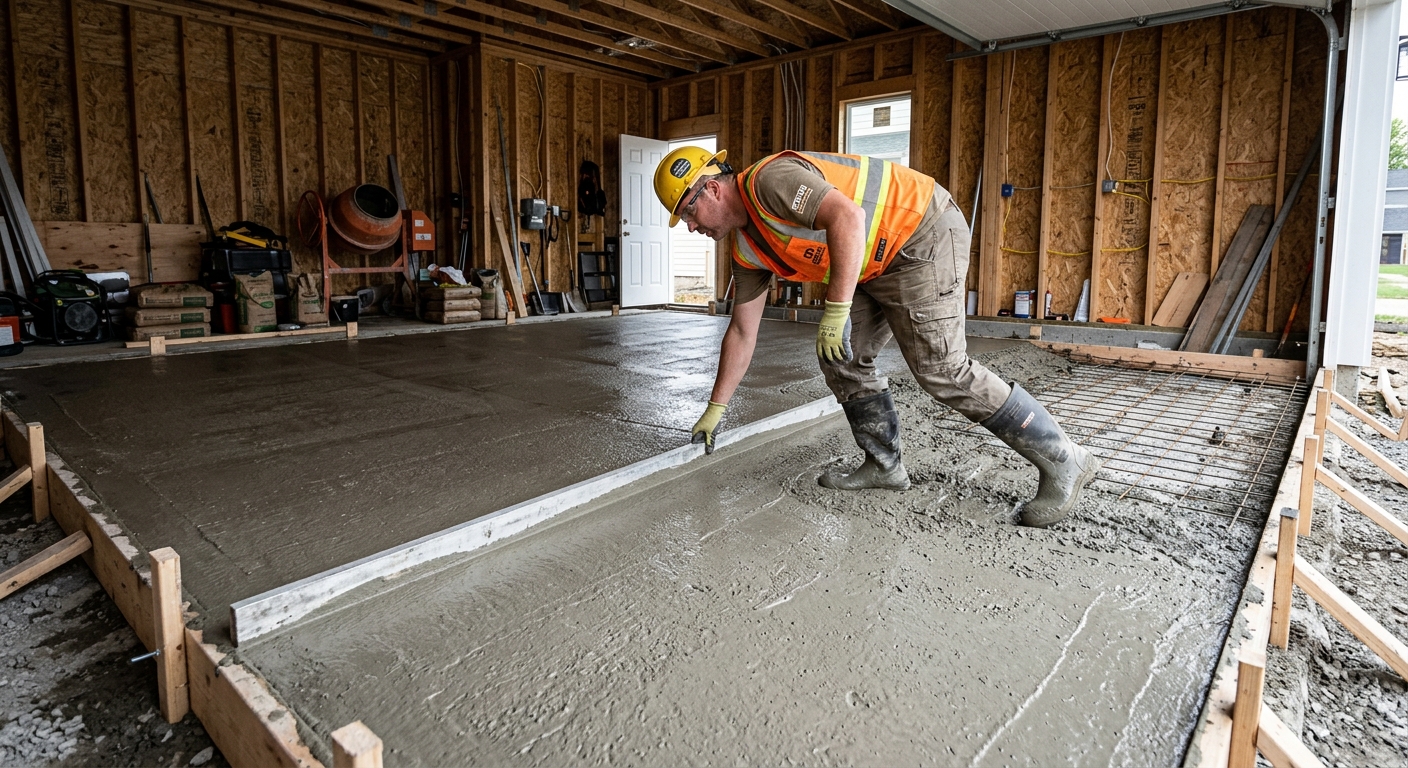
Concrete work options and costs in Meadowlark Park
Meadowlark Park, Alberta is home to a steady stream of homeowners planning upgrades—especially in a community that’s shaped by Calgary’s cold continental conditions. With a 2021 population of 2,602 (Statistics Canada, 2021 Census), the local housing mix tends to favour practical exterior upgrades like driveways, patios and walkways. In most Meadowlark Park neighbourhoods, concrete flatwork gets attention because it’s durable, low-maintenance, and offers a clean, uniform surface. Calgary’s housing market is also heavily influenced by single-detached ownership patterns, which drives demand for driveway replacements and back-yard flatwork when finishes wear out.
In Calgary and nearby areas, concrete pricing is engineered around frost and freeze–thaw. Local practice assumes a design frost depth of about 1.2 m (roughly 4 ft), meaning exterior footings and any structural support must sit below that depth on undisturbed soil to limit frost heave and seasonal movement. Frequent freeze–thaw cycles also require air-entrained concrete mixes and well-spaced control joints to reduce cracking and surface scaling over time. The practical pour season can be shorter, and if you’re near late fall or early spring, cold-weather placement (insulated blankets or temporary heat) may be needed to get proper curing.
Trade demand is particularly high around established residential pockets where driveways and rear walkways are regularly upgraded for accessibility and drainage—often in the Meadowlark Park area near local shopping and school routes, where high use accelerates wear and where timing matters for keeping access safe.
Below are the typical options and cost bands homeowners in Meadowlark Park most often compare before we move into a scope-specific quote.
| Application |
Typical Size |
Key Spec |
Finish Option |
Price Range |
| Concrete driveway (standard broom finish) |
24 ft x 10 ft (240 sq ft) |
Air-entrained exterior mix; compacted granular base |
Broom finish + control joints |
$12,000–$18,000 |
| Exposed aggregate driveway |
24 ft x 10 ft (240 sq ft) |
Air-entrained exterior mix; proper surface retard timing |
Exposed aggregate with sealer |
$15,000–$21,000 |
| Stamped concrete driveway or patio |
20 ft x 12 ft (240 sq ft) |
Air-entrained mix; coloured hardener/release |
Stamped pattern + topcoat sealer |
$15,000–$26,000 |
| Plain concrete patio or walkway |
12 ft x 16 ft (192 sq ft) |
Air-entrained mix; compacted granular base |
Float + broom or light broom finish |
$5,000–$9,000 |
| Garage floor (interior slab) |
24 ft x 22 ft (528 sq ft) |
Minimum 32 MPa; vapour barrier as applicable |
Light broom (typically) |
$10,000–$18,000 |
| Foundation footings (structural, below frost) |
Typical 2–storey footing system |
Structural concrete; excavation to design frost depth |
Engineer-designed rebar cages |
$28,000–$45,000 |
Prices are estimates only and vary by project scope, site access and material selection.
What affects the price of concrete work in Meadowlark Park
Homeowners often see wide differences—sometimes 30–50%—for what looks like the same concrete project across Calgary and the broader Alberta market. The biggest drivers are engineered excavation depth, base preparation requirements, and the cold-weather steps needed to protect curing quality. Two quotes can land far apart when one contractor designs for frost and freeze–thaw conservatively (deeper excavation, thicker granular base, air-entrained mixes, and better joint layout) while another prioritizes speed or assumes milder site conditions.
In Meadowlark Park, the design frost depth of about 1.2 m (roughly 4 ft) influences everything from footing locations to how we build exterior slab support. Because freeze–thaw cycles are frequent, exterior slabs and driveways need air-entrained concrete and a properly compacted granular base to limit voids and water movement. If you pour late in the season, the pour window narrows; winter-grade placement and curing precautions (insulated blankets and sometimes temporary heat) increase labour and equipment time. On top of that, de-icing salts can accelerate surface spalling when mix and finishing aren’t right, so sealing becomes a value-added item for long-term durability.
Practical examples from local projects: (1) A driveway demo in heavier frost-affected soils can require extra excavation and re-grading before any concrete goes in—pushing you toward the higher end of driveway pricing in the $12,000–$18,000 band. (2) A stamped patio can cost more than a broom-finish slab, and the difference is justified when coloured hardener, release agents, and careful curing/finishing are included—often placing you nearer the $15,000–$26,000 range for stamped work. (3) If an existing driveway has drainage issues, fixing slope and swales often adds cost upfront, but it reduces future settlement and repairs that can be far more expensive.
Finally, the local reality is that many older homes and long-lived driveways were built to standards that don’t always match today’s air and joint performance expectations—so bringing an upgrade up to current freeze–thaw durability standards can show up as a measurable line-item cost.
| Price Factor |
Why It Matters |
Cost Impact |
| Frost line depth — determines footing depth and form height |
Footings must bear below design frost to reduce frost heave and movement |
Higher excavation/formwork can move foundation costs toward the top end |
| Site preparation — excavation, grading, compacted granular base |
Proper base prevents settlement and limits water retention |
Can add significant labour and aggregate haul costs on difficult sites |
| Reinforcement — rebar or wire mesh requirement |
Controls cracking where movement is likely (especially slabs on grade) |
Material + labour for rebar placement can raise total price |
| Mix design — air-entrainment and compressive strength spec |
Air-entrainment helps concrete survive freeze–thaw cycles; strength affects durability |
More engineered mixes generally cost more but reduce long-term failures |
| Finish type — broom vs. stamped vs. exposed aggregate |
Finish complexity changes labour time and material handling |
Stamped/exposed finishes typically increase price more than plain finishes |
| Pour size and concrete truck access to site |
Large pours require planning; poor access may increase pumping or cartage time |
Access constraints can add truck/machinery costs |
| Cold-weather curing precautions — heating and blankets |
Ensures hydration and protects surface/edge integrity when it’s cold |
Temp controls can add labour, rentals and material |
| Control joint pattern and sealing cost |
Joints manage shrinkage cracks; sealing repels salts and moisture |
Skipping or simplifying increases maintenance risk and early surface wear |
Permits & regulations in Alberta
In Alberta, permit requirements for concrete depend on how structural the work is and whether it changes grading or drainage. Structural concrete work—such as footings, foundation walls, grade beams, and any load-bearing foundation elements—typically requires a building permit and often engineered drawings that the municipality reviews. That’s the category where frost depth and structural design govern everything, so plan review is common.
Concrete flatwork (driveways, patios, and walkways) usually does not require a permit by default. However, permits can become necessary if the work affects lot grading, ties into drainage changes, impacts impervious surface considerations, or is near municipal right-of-way constraints. Meadowlark Park homeowners should always confirm with the local authority before breaking ground, especially if the project changes how water sheds around the house.
No matter which concrete category you’re working in, verify three things before the first pour: (1) the contractor carries liability insurance, (2) they have proper WSIB/WCB coverage for workers, and (3) they provide references on similar-scale projects in Calgary’s freeze–thaw conditions. Step-by-step, here’s a practical verification flow: search the contractor’s licensing/registration details through the appropriate provincial registry or credential listing they provide; request an up-to-date certificate of insurance showing your address as an additional insured (when offered); and ask for proof of WSIB/WCB clearance or coverage documentation. If anything can’t be provided, that’s a “pause and verify” moment—because good concrete work is about protecting the cure and the long-term performance, not just pouring on time.
Getting concrete right in Meadowlark Park's freeze-thaw climate
Concrete fails in Meadowlark Park most often because water gets into weak or improperly prepared areas, then expands during freeze–thaw. When it repeats season after season, you see surface scaling, spalling at edges, and random cracking that turns into maintenance. The correct spec starts with base preparation: use a compacted granular sub-base to the right depth for the local soil and frost expectations, so the slab doesn’t pump water upward. Next is the mix design. Exterior flatwork should use air-entrained concrete—commonly targeted around 5–7% air content—paired with at least 32 MPa compressive strength so it’s durable in cold exposure.
Control joints matter in the Calgary market because shrinkage cracks will occur; the goal is to control where they open. Joint spacing should be set to limit random cracking and to keep cracks aligned with a plan. Curing is where many cost-saving shortcuts backfire: plan for at least 7 days of proper curing conditions, and in cold snaps be ready for cold-weather measures (insulated blankets/temporary heat). Finally, sealing is a practical defence. Apply a penetrating sealer after the cure—commonly at 28 days post-pour—so de-icing salts and meltwater have less opportunity to attack the surface.
Here’s a concrete cost example that helps decision-making: if you’re choosing between a plain broom-finish walkway and a stamped option, the stamped job typically costs more (often landing in the broader $15,000–$26,000 band depending on size and detailing). That price is justified when the contractor includes engineered mix specs, careful finishing, and curing protection—because those steps reduce failure risk. But if you’re tempted to cut base prep or skip air-entrainment to “save money,” that’s where Meadowlark Park’s freeze–thaw climate can make the lower bid expensive later.
To avoid spalling caused by inadequate air-entrainment, ask your contractor to confirm mix air content targets, show how they’ll manage curing in cold weather, and explain the control joint layout before any concrete truck arrives.
| Spec |
Why It Matters in Meadowlark Park |
What to Ask For |
Impact if Skipped |
| Compacted granular base (depth?) |
Limits settlement and water movement that fuels freeze–thaw damage |
Granular base depth and compaction method (e.g., lift thickness + roller specs) |
Uneven support, cracking, pumping fines, and shortened slab life |
| Air-entrained concrete mix (target air %?) |
Air bubbles provide freeze–thaw resistance in Alberta winters |
Target air content (commonly 5–7% for exterior flatwork) and mix confirmation |
Spalling and scaling, especially at edges and near downspouts |
| Compressive strength (MPa rating) |
Affects long-term durability under traffic and freeze–thaw stresses |
Minimum 32 MPa rating for the slab/flatwork scope |
Higher risk of surface wear, scaling, and premature repair cycles |
| Control joints (spacing per ACI guidelines) |
Manages shrinkage cracking where it can’t be avoided |
Planned joint spacing and sawcut timing |
Random cracks and difficult, unsightly patch repairs |
| Minimum 7-day curing period |
Proper hydration is critical before the slab is exposed to cold cycles |
How they’ll protect curing during cold weather (blankets/heat) |
Weak surface, dusting, scaling, and early deterioration |
| Penetrating sealer (when applied after cure) |
Repels moisture and reduces damage from de-icing salts |
Sealer plan after cure—often after 28 days—plus product type |
Faster salt-related surface breakdown and higher maintenance cost |
How to choose a concrete work contractor in Meadowlark Park
Choosing a contractor in Meadowlark Park starts with verification, because concrete performance depends on workmanship details and curing discipline. In Alberta, confirm the contractor’s licensing/registration credentials where applicable, then check liability insurance by requesting a current certificate of insurance that includes adequate coverage limits for the type of work. Next, verify WSIB/WCB coverage: ask for proof of clearance or active coverage and keep it on file with your contract paperwork. If a contractor can’t provide documentation quickly, treat that as a risk signal—especially with frost-sensitive exterior work.
Get 2–3 itemised written quotes, not lump sums. You want separate pricing for labour and materials so you can compare apples-to-apples: concrete supply/mix, rebar or mesh, granular base, forms, sawcut joints, edging, sealing (if included), and disposal. Also ask what’s excluded—common exclusions are permit handling, sawcutting for existing slabs, curb/sidewalk tie-ins, or hauling away unsuitable soil. If a permit is required for structural elements, clarify whether permit pull and plan requirements are included or billed separately.
Warranty matters in Calgary’s climate. Ask for workmanship warranty length and whether any product/manufacturer warranty is transferable to the homeowner. For payment schedules, a safe approach is never paying more than 10–15% upfront; use a holdback until the job is fully complete and defects are addressed. Finally, demand a start date and completion estimate in writing—concrete crews plan around weather and curing windows, and a realistic schedule protects the slab.
- Ask for proof of liability insurance before signing.
- Confirm WSIB/WCB coverage (or clearance) for their workers.
- Require itemised labour + materials in the quote (not one total).
- Confirm air-entrainment is included for exterior slabs.
- Ask for granular base depth and compaction method.
- Confirm reinforcement specs (rebar/mesh) if the scope needs it.
- Verify control joint layout and sawcut timing.
- Ask how they protect curing in cold weather (blankets/heat).
- Clarify sealing inclusion and timing (commonly after cure).
- Ask about disposal/haul-away for demo material and excess soil.
- Get warranty terms in writing (workmanship vs product warranty).
- Use a payment holdback until final grading and finishing are accepted.
Concrete red flags in Meadowlark Park include: (1) no discussion of frost depth/base prep, (2) vague mix specs like “standard concrete” without air-entrainment confirmation, (3) skipping or underestimating curing protection in cold weather, (4) refusing to provide insurance/WSIB proof, and (5) quoting only by square footage without joint layout, drainage notes, or an itemised scope.
Frequently asked questions — concrete work in Meadowlark Park
How long does concrete take to cure?
In Meadowlark Park, concrete is typically “walkable” sooner than it is fully cured, but durability depends on proper curing time and conditions. Many slabs reach initial set quickly, yet for structural integrity and freeze–thaw resistance you should plan for at least 7 days of proper curing before treating the slab as fully ready. Full strength continues to develop beyond that; that’s one reason why exterior performance in Calgary improves when the contractor protects curing during cold snaps (insulated blankets/heat when needed). If you’re also sealing, don’t rush it—penetrating sealer is commonly applied after cure, often around 28 days post-pour. A good crew will explain both the curing steps and the schedule so you don’t end up with surface scaling or early joint deterioration.
Do I need a permit for concrete work in Alberta?
In Alberta, permits are commonly required for structural concrete like footings, foundation walls, and grade beams, because those elements are load-bearing and tied to engineered design. For concrete flatwork—driveways, patios, and walkways—permits are often not required by default, but they can become necessary if the work affects lot grading, drainage patterns, impervious surface considerations, or areas near municipal right-of-way constraints. For Meadowlark Park homeowners, the safest approach is to ask before demolition or formwork. Also, confirm the contractor’s role on documentation: ask whether they include permit handling for structural portions and whether engineering drawings are needed. Even if a permit isn’t required for your slab, you should still insist on proper insurance and WSIB/WCB coverage.
Concrete vs pavers for a patio in Meadowlark Park?
Both concrete and pavers can work well in Meadowlark Park, but the climate changes the decision. Concrete—when poured with air-entrained mix, proper base prep, control joints, and curing protection—tends to hold up well against freeze–thaw and de-icing salt exposure. Pavers offer easier localized repair if a single section shifts, but you still need excellent drainage and a properly compacted base to prevent rocking and movement. Cost-wise, a plain concrete patio often falls in the $5,000–$9,000 range depending on size and site access, while stamped or decorative concrete can be higher (up to the $15,000–$26,000 band). If you want a low-maintenance, uniform look that’s engineered for Calgary winters, concrete is usually the simpler, longer-life choice—assuming the contractor doesn’t cut corners on base and mix specs.
How long does a concrete driveway last?
With good specs and Edmonton-area-style curing discipline (in Calgary’s case), a properly built concrete driveway can last decades. The typical lifespan is strongly tied to freeze–thaw durability: air-entrained concrete, adequate granular base, correct slope/drainage, and well-planned control joints. Sealing also helps protect against de-icing salts that can accelerate surface breakdown in Alberta winters. A common reason driveways underperform is rushed curing or inadequate air-entrainment, leading to surface scaling and early spalling at edges. If your current driveway is older and you’re considering replacement, you’ll often see new-driveway pricing in the $12,000–$18,000 range for standard broom-finish installations. The right contractor will explain how they’ll protect curing and joint layout so the driveway earns that long service life.
What is air-entrained concrete and why does it matter here?
Air-entrained concrete is mixed to include microscopic air bubbles that give water room to expand during freeze–thaw cycles. In Meadowlark Park and the Calgary region, that matters because repeated winter temperature swings can otherwise break down the concrete surface. Without adequate air entrainment, water that gets into the paste freezes and causes internal damage, leading to scaling and spalling—especially where de-icing salts concentrate and at slab edges. Because Calgary’s freeze–thaw cycles are frequent and the frost depth is deeper (around 1.2 m for design assumptions), local concrete specifications are engineered accordingly: air-entrainment for exterior flatwork and control joints to manage cracking. A good quote should specify that the exterior mix is air-entrained and explain how they’ll achieve and protect that performance during cold-weather placement.
How do I prepare the base for a concrete slab?
Base preparation is where concrete projects are won or lost in Alberta. For Meadowlark Park, it starts with excavation to the right depth for frost considerations and then installing a properly graded, compacted granular sub-base. The goal is to achieve stable support and limit water movement under the slab, which reduces settlement and the freeze–thaw “pumping” effect. Ask your contractor for granular base depth, the type of granular material used, and how they compact (roller type/coverage and lift thickness). The base should be graded for drainage away from the house, and any unsuitable soils should be removed and replaced. A slab that’s priced at the low end of the driveway or patio range (for example, $5,000–$9,000 for many plain patios) can still perform well—if the base prep and mix design are done properly. If those items aren’t clear in the scope, request clarification before you sign.