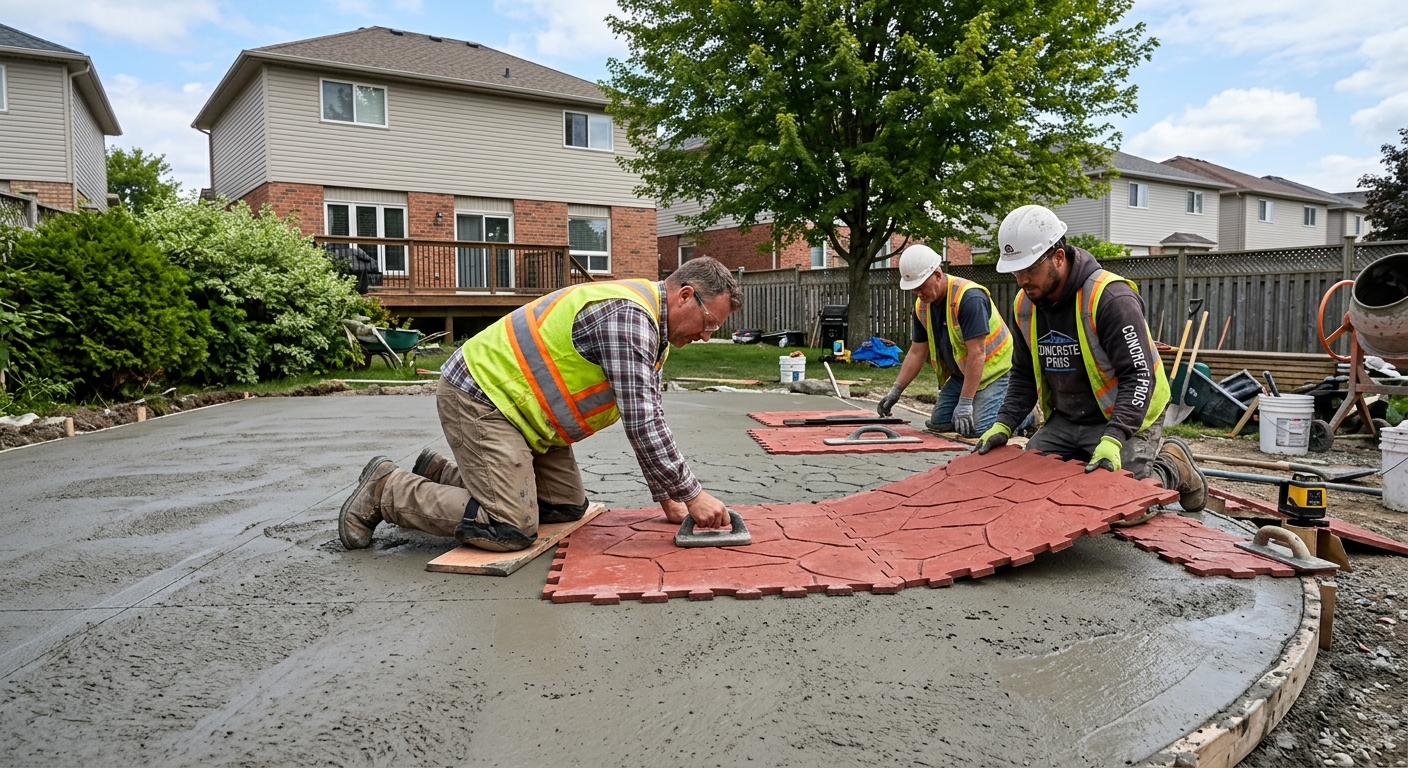
Concrete work options and costs in Saddle Ridge
Saddle Ridge is where a lot of homeowners want durable, low-maintenance outdoor concrete—driveways, patios and walkways that look good after Alberta winters. With a population of 24,365 in the Calgary economic region (Statistics Canada, 2021 Census), demand for concrete flatwork stays steady, especially in established residential pockets along the edges of major commuting routes and service corridors. In Saddle Ridge specifically, many households are in the “new build to move-up” cycle, so you’ll see frequent projects tied to home additions, garages and landscaping refreshes rather than one-off commercial work.
Concrete pricing here often reflects two realities. First, Calgary’s cold continental climate brings repeated freeze–thaw cycles, so local engineers and contractors design for frost and movement—not just appearance. That means footings must bear on undisturbed soil below the regional design frost depth, and exterior slabs need air-entrained mixes plus a sensible joint and sealing plan. Second, the practical pour season for exterior slabs is shorter, and cold-weather concrete placement requires winter-grade curing precautions (insulated blankets, sometimes temporary heat), which adds labour and supervision time.
You’ll typically notice the trade is most active in demand around the older developed residential stretches of Saddle Ridge and the busy infill/renovation zones where driveways and garage approaches are commonly redone to improve drainage and curb appeal. From there, homeowners usually compare options side-by-side—so the table below summarizes typical sizes, specs and realistic price bands for common concrete applications.
| Application |
Typical Size |
Key Spec |
Finish Option |
Price Range |
| Concrete driveway (standard broom finish) |
10 m x 3 m (30 m²), typical double-wide approach |
Air-entrained mix, compacted granular base, control joints |
Broom finish + optional light sealer |
$12,000–$18,000 |
| Exposed aggregate driveway |
10 m x 3 m (30 m²) |
Air-entrained mix, consistent stone exposure, proper base & drainage |
Exposed aggregate (bush-hammer or water-retard method) |
$14,000–$20,500 |
| Stamped concrete driveway or patio |
45 m² patio or 30 m² driveway (averages vary) |
Air-entrained mix, integral colour, base prep and joints |
Stamp patterns (slate/stone) + release agent |
$15,000–$26,000 |
| Plain concrete patio or walkway |
12 m²–25 m² (small patio to medium walkway runs) |
Air-entrained mix, compacted base, edges and control joints |
Broom or smooth trowel (slip-resistant preference) |
$5,000–$9,000 |
| Garage floor (interior slab) |
24 m² (e.g., 20 ft x 12 ft equivalent) |
Vapour retarder if required, adequate base, flatness finishing |
Broom or lightly trowelled/smooth finish with joints |
$7,500–$12,500 |
| Foundation footings (structural, below frost) |
Perimeter + piers (project-specific) |
Engineered reinforcement, below-design frost depth bearing |
Structural concrete formwork as designed |
$28,000–$45,000 |
Prices are estimates only and vary by project scope, site access and material selection.
What affects the price of concrete work in Saddle Ridge
In Saddle Ridge and the wider Calgary area, it’s not unusual to see quotes for the “same” concrete work come back 30–50% apart. The reasons are practical: contractors may be estimating different excavation depths, different base thicknesses, different reinforcement assumptions, and different curing approaches for Alberta’s freeze–thaw reality. Even when the finish looks similar from the street, the real cost drivers are underneath the surface.
Frost and freeze–thaw cycles dictate the specs. Exterior footings and structural elements must extend below the design frost depth to prevent frost heave and seasonal movement; in Alberta, that’s typically up to about 2.4 m depending on conditions and engineering requirements. For driveways, patios and walkways, the concrete mix must be engineered with air-entrainment so it survives repeated cycles without scaling and spalling. Also, Calgary’s pour season is shorter—cold-weather placement often requires winter-grade mixes, insulated blankets, and more time on-site to achieve proper curing. Finally, de-icing salt accelerates surface deterioration, so sealing (done correctly, after cure) becomes a value-add rather than an optional extra.
Here are examples that commonly swing costs in Saddle Ridge. A driveway with poor drainage or soft subgrade may require deeper excavation and more granular base—pushing a standard broom driveway toward the upper end of the $12,000–$18,000 band. A stamped or exposed-aggregate finish often lands in the $15,000–$26,000 range because of additional labour for forming, colouring, stamping or exposure methods. If your project involves a full removal and haul-away, disposal and trucking can also add meaningful dollars. As for housing age, older lots and established fill areas can behave differently under excavation, and that’s one reason foundation/footing scope can climb into the $28,000–$45,000 band even when the footprint looks modest on paper.
| Price Factor |
Why It Matters |
Cost Impact |
| Frost line depth |
Determines footing depth and form height to bear below freezing soil |
Can raise excavation and concrete volume for foundations/footings substantially |
| Site preparation |
Excavation, grading, and compacted granular base control settlement and cracking |
Extra haul-away, deeper demo, and thicker base add labour and material cost |
| Reinforcement |
Rebar or wire mesh limits shrinkage and movement-related cracking |
Material + placement time; may be required for thicker slabs or structural work |
| Mix design |
Air-entrainment and compressive strength targets reduce freeze–thaw damage |
Higher-spec mix and stricter placement requirements increase total cost |
| Finish type |
Broom vs. stamped vs. exposed aggregate affects labour, materials and curing care |
Stamped/exposed finishes typically cost more than plain broom work |
| Pour size and concrete truck access to site |
Access affects how many loads, placement speed and whether pumping is needed |
Poor access can increase labour hours and add pumping/mobilization fees |
| Cold-weather curing precautions |
Insulated blankets/heating help achieve proper strength gain before the first freeze |
Seasonal premiums in late fall/early spring; higher supervision and materials |
| Control joint pattern and sealing cost |
Joint spacing manages cracking; sealing repels salt and reduces surface scaling |
Sealing adds material and labour; joint layout affects cutting time and layout |
Permits & regulations in Alberta
In Alberta, structural concrete work generally requires a building permit and often engineered drawings. That includes foundation elements like footings, foundation walls, and grade beams—work that ties into the structure’s load path and must be reviewed for compliance. Concrete flatwork such as patios, walkways and driveways usually does not require a permit on its own; however, a permit can become relevant if the project affects lot grading, changes drainage patterns, or relates to impervious surface coverage or municipal right-of-way requirements. In Saddle Ridge, the key is to confirm with the local authority before you break ground, especially if you’re changing slopes, adding a new approach, or tying into existing drainage features.
Step-by-step, here’s how a homeowner can verify a contractor in Alberta:
- Check licensing/registration where applicable using the contractor’s business information through provincial/municipal guidance.
- Ask for a Certificate of Insurance showing general liability coverage—ensure it’s current and names your address/contract as applicable.
- Confirm WSIB/WCB coverage (or applicable clearance) and request documentation before work starts.
- Request references for similar-scale concrete jobs (driveways, stamped patios, or footings) completed in the last 1–2 years.
- Get the permit plan for structural scope (if required) and confirm who pulls the permit—many reputable contractors will clarify this in writing.
Don’t start until you have these items and the scope is clear—concrete rework in Calgary’s winter is expensive, and it’s best avoided through proper compliance and documentation.
Getting concrete right in Saddle Ridge's freeze-thaw climate
Concrete failures in Saddle Ridge usually come back to a few predictable issues: inadequate base preparation, wrong mix design for freeze–thaw, poorly planned joints, rushed curing, or no sealer when de-icing salts are in play. In a cold continental climate with frequent freeze–thaw cycles, the goal isn’t just “a pour that looks good today”—it’s a slab designed to tolerate seasonal expansion and contraction.
To spec the job correctly, focus on five items. (1) Base preparation: build a compacted granular sub-base to the required depth for the local soil and frost considerations. A weak or uneven base telegraphs movement into the concrete and increases cracking. (2) Mix design: specify air-entrained concrete for exterior flatwork—commonly 5–7% air content—plus a minimum 32 MPa compressive strength (or whatever the engineer/standard calls for). (3) Control joints: set a joint pattern that limits random cracking and helps you manage where the slab relieves stress. (4) Curing: plan for at least 7 days of curing under proper conditions. In late fall or early spring, curing may require insulated blankets or temporary heat to keep the concrete on track. (5) Sealing: apply a penetrating sealer after the cure window (typically after 28 days) to repel de-icing salt and reduce surface scaling.
Ask these questions directly, because inadequate air-entrainment is one of the most common reasons slabs spall in Calgary winters. As a dollar example, a plain broom patio typically fits the $5,000–$9,000 band, but if your contractor offers the same price while cutting corners on base depth or air content, you’re buying a shorter service life. Spending near the upper end is often justified when the quote includes proper granular base, correct mix, a clear joint plan, and curing protection—exactly the ingredients that prevent early deterioration.
| Spec |
Why It Matters in Saddle Ridge |
What to Ask For |
Impact if Skipped |
| Compacted granular base (depth?) |
Provides stable support so the slab doesn’t move under freeze–thaw |
Base thickness in the quote (mm), soil handling and compaction method |
Settlement and cracking; increased risk of trip hazards and spalling |
| Air-entrained concrete mix (target air %?) |
Helps concrete resist freeze–thaw damage from trapped water |
Confirm exterior air content target (commonly 5–7%) and mix standard |
Scaling and spalling become much more likely over winters |
| Compressive strength (MPa rating) |
Ensures durability and strength gain for load and seasonal movement |
Minimum 32 MPa (or higher if engineered), plus strength gain plan |
Surface wear, weaker durability, and higher cracking risk |
| Control joints (spacing per ACI guidelines) |
Governs where cracking happens and reduces random breakage |
Joint layout drawing and spacing based on slab dimensions |
Random cracking; more water intrusion and freeze-related deterioration |
| Minimum 7-day curing period |
Proper curing improves strength and surface integrity |
How curing will be maintained in cold weather (blankets/heating if needed) |
Low strength, surface scaling, and durability loss |
| Penetrating sealer (when applied after cure) |
Repels de-icing salts that accelerate surface breakdown |
Sealer type and application timing (typically after 28 days) |
Faster spalling and roughening of the surface after salts |
How to choose a concrete work contractor in Saddle Ridge
Choosing the right concrete contractor in Saddle Ridge comes down to verification, clarity, and experience with Alberta’s freeze–thaw conditions. Start by confirming Alberta requirements: ask for their Certificate of Insurance (general liability) and proof of WSIB/WCB coverage or a clearance letter where applicable. Then verify licensing/registration documentation where relevant for the type of work being quoted. A reputable contractor won’t hesitate to share these items before signing a contract—especially for structural scope like footings or foundation walls.
Next, request 2–3 itemised written quotes. You want labour and materials broken down, not just a lump sum, so you can compare base depth, reinforcement assumptions, mix type, and finish scope. Look closely for exclusions: is removal included? Is disposal/haul-away included? Are forms, joint cutting, and sealer included (and when)? For structural work, confirm who pulls the permit and how engineered drawings are incorporated.
Warranty also matters. Ask for the workmanship warranty length, what it covers (cracking vs. spalling vs. settlement), and whether there’s a separate product/manufacturer warranty for coloured systems like stamped concrete. Make sure it’s transferable if you sell the home. For payment, never pay more than about 10–15% upfront; keep a holdback until completion and final cleanup. Finally, get a start date and an estimated completion timeline in writing—winter curing precautions can affect schedules, and you want that captured.
- Proof of insurance and WSIB/WCB coverage before work starts
- Recent references for similar Alberta concrete scope (driveways, patios, or foundation footings)
- Itemised breakdown: demo/removal, excavation, granular base, reinforcement, concrete supply, finishing and curing
- Clear mix specification including air-entrainment for exterior work
- Joint plan: spacing and where joints will be cut
- Stated curing method in cold weather (blankets/heating plan if needed)
- Finish specifics: broom style, exposure method, stamp pattern and colour inclusions
- Sealer inclusion details (penetrating vs. film-forming) and application timing
- Disposal/trucking included or stated as an extra
- Concrete truck access assumptions and load count
- Payment schedule with a holdback until final inspection/clean-up
- Written start date and realistic completion estimate
Concrete red flags in Saddle Ridge include contractors who: refuse to show insurance/WSIB documentation, quote exterior work without mentioning air-entrained mix or control joints, minimize excavation/base prep depth, suggest sealing “whenever” instead of after proper cure (and typically after 28 days), or pressure you to pay the full amount upfront before forms are removed and the final finish/joint layout is complete.
Frequently asked questions — concrete work in Saddle Ridge
Can concrete be poured in cold weather in Saddle Ridge?
Yes, concrete can be placed in cold weather in Saddle Ridge and across Alberta, but the contractor has to plan for it. In Calgary’s freeze–thaw conditions, the main risk is improper curing and strength gain if the concrete freezes too early. A good crew uses cold-weather practices such as winter-grade admixtures, insulating blankets and/or temporary heat, plus temperature monitoring to keep curing on track for durability. This is one reason exterior slab projects may cost more when scheduled in late fall or early spring: you’re paying for extra labour, materials and supervision to protect the pour.
If you’re budgeting, compare quotes that include winter curing precautions, not just “we’ll pour and hope.” For example, a plain patio in the $5,000–$9,000 range can move upward if proper curing protection is included, while a driveway in the $12,000–$18,000 band may require extra planning for placement speed and insulation.
How do I maintain concrete in Saddle Ridge's freeze-thaw climate?
Maintenance in Saddle Ridge is mostly about keeping water and salts from breaking down the surface. Start with a penetrating sealer applied after the concrete has cured—commonly at about 28 days—because de-icing salt accelerates surface scaling when concrete isn’t protected. During winter, avoid letting thick ice-salt slurry sit on the slab; use de-icer in a controlled way and focus on clearing early to reduce repeated salt exposure. Sweep off debris so it doesn’t hold moisture in joints and edges.
Check expansion/control joints periodically and don’t ignore small openings—water getting into cracks can expand during freeze cycles. For broom-finished driveways and patios, keep surfaces free of oil stains (as those can interfere with sealer and cleaning). With good mix design (air-entrainment) and correct joints, concrete should last much longer, but regular seasonal care helps prevent cosmetic roughening from turning into surface deterioration.
What causes concrete to spall in Saddle Ridge winters?
Spalling is the flaking or scaling you can see after winters, and in Saddle Ridge it’s most often tied to freeze–thaw stress plus salts. When concrete isn’t properly air-entrained for Alberta’s cycles, water that enters the surface and pores can freeze and expand, causing damage. Another common cause is insufficient curing protection—if the slab doesn’t reach adequate strength before colder temperatures, the surface can be more vulnerable. Base issues can also contribute by allowing movement, which opens microcracks and lets water in.
De-icing salts make the problem worse by increasing chemical attack at the surface. That’s why reputable contractors build exterior slabs with air-entrained mixes and control joints, and they often recommend penetrating sealer after cure. If a quote seems too low—like offering driveway work without discussing mix air content, joints, or sealer—ask questions before accepting it, especially when you’re targeting durable results in a $12,000–$18,000 driveway budget.
What is rebar and when is it required in Alberta?
Rebar (reinforcing steel) is embedded in concrete to improve tensile strength—concrete is strong in compression but weak in tension. In Alberta, whether rebar is required depends on the engineered design, slab thickness, soil conditions, and the structural role of the concrete. For structural elements like foundation footings and foundation walls, reinforcement is typically part of engineered drawings and is expected. For flatwork like driveways and patios, reinforcement may be used or not depending on thickness, reinforcement placement strategy, and local practice; many contractors use mesh or rebar where loads or spans justify it.
In Saddle Ridge’s climate, the bigger durability story is freeze–thaw resistance from air-entrainment and good base prep—but reinforcement helps control cracking patterns and movement. For foundation scope, plan for engineered involvement and permits. When reviewing quotes, ask whether they’re using rebar, wire mesh, or both—and where it’s located (mid-depth versus near the surface), since placement matters.
How long does a concrete project take in Saddle Ridge?
Timeline varies by scope, access and weather, but you can think in phases: site prep, forming (if needed), pour day, and curing. For interior garage slabs, the pour and finishing can typically happen in 1 day once the base is ready, with curing continuing afterward. For exterior patios and walkways, many jobs are staged so the main concrete pour is done quickly—often within a day—while curing and weather conditions determine when you can safely use the area.
Exterior driveways and stamped work can take longer because of removal, base build-up, forms, reinforcement setup, and extra finishing steps. In cold weather, expect added time for insulated blankets/heating and stricter curing requirements. So if you’re comparing budgets like a driveway in the $12,000–$18,000 band or a patio in the $5,000–$9,000 band, use that comparison to discuss schedule impacts from temperature—because crews may delay if curing protection can’t be maintained.
What is a concrete overlay and is it suited to Saddle Ridge?
A concrete overlay is a new concrete layer placed on top of an existing slab, usually to correct surface deterioration or improve appearance without full removal. Overlays can be suited to Saddle Ridge when the existing concrete is structurally sound—meaning it isn’t actively failing (no major spalling depth, lifting, or widespread settlement) and the surface can be properly prepared for bonding. In freeze–thaw climates, preparation quality is everything: if the bond is weak or if water is still migrating through old cracks, the overlay can fail early.
In many Calgary-area situations, overlays can be cost-effective versus full replacement, but they’re not a one-size fix. If the old slab is already rough, scaling badly, or has significant cracking, full removal and re-pour may provide better long-term durability. When you ask for options, request the contractor’s plan for surface grinding, bonding (where specified), joint treatment and drainage. This is especially important in exterior work where de-icing salts and moisture exposure are daily realities.