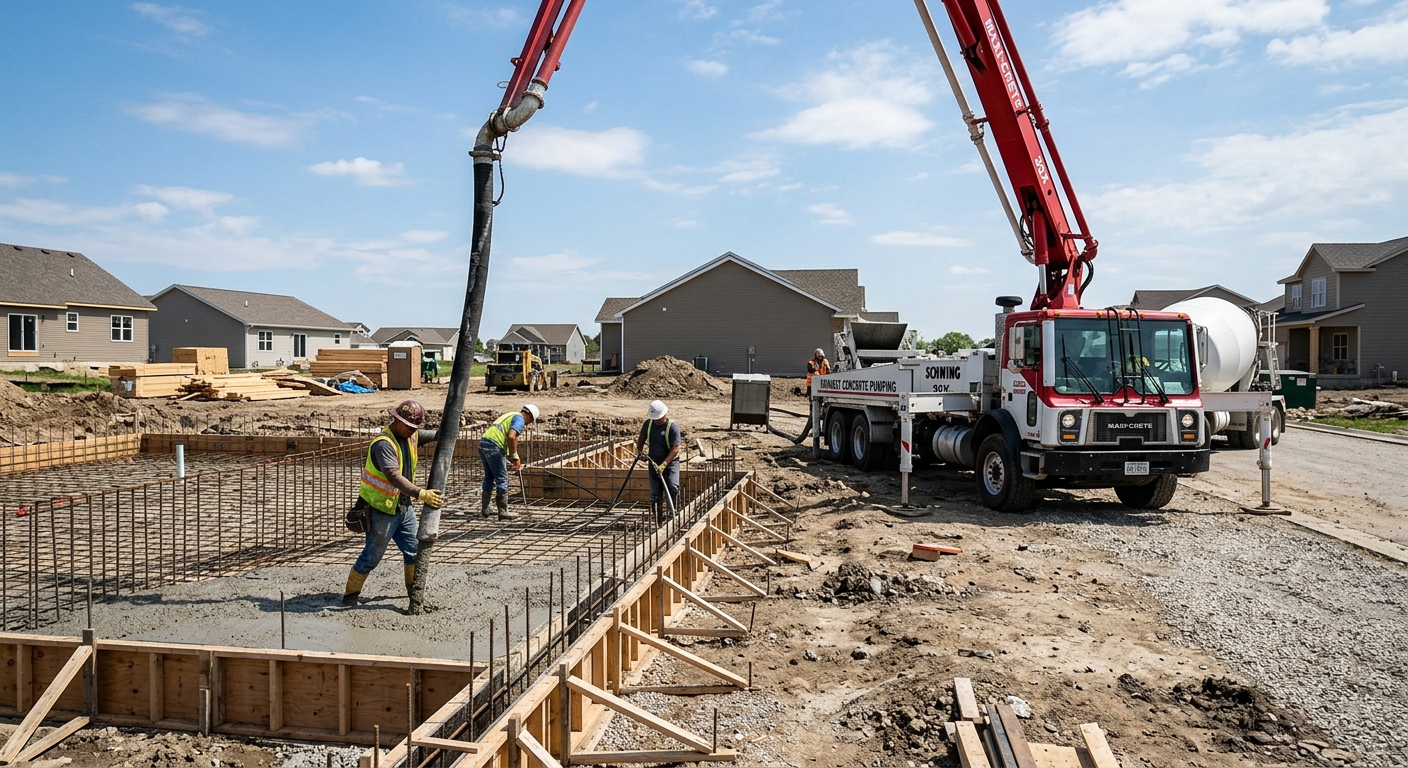
Concrete work options and costs in Drayton Valley
Concrete work in Drayton Valley is a big part of everyday property maintenance and upgrades—especially for the many homeowners who want durable, low-maintenance flatwork. Drayton Valley has 63.0% of dwellings as single-detached houses, which typically drives demand for driveways, patios and walkways, as well as garage slabs. With 2,065 homeowner households (71.3% of households own) (Statistics Canada, 2021 Census), you’ll often see repeat projects when families renovate kitchens, expand garages, or improve curb appeal.
In the Edmonton economic region, pricing and scheduling are strongly influenced by the cold continental climate. Frost depths are commonly engineered around 1.5 m or more, so exterior projects often require deeper excavation, properly graded sub-base, and backfill that’s compacted in lifts. Freeze–thaw cycles in late fall through spring are also relentless, which means exterior slabs (driveways, patios and walkways) need well-compacted granular bases, good drainage, air-entrained mixes, and a control joint pattern that prevents random cracking. Because the effective “pour season” window for flatwork is shorter, crews may charge scheduling premiums during busy late spring to early fall periods. Cold-weather curing precautions (insulated blankets or heated enclosures) can also add material and labour costs when pours run behind schedule.
One area where concrete work is frequently in demand is around the newer residential pockets off the main arterial routes into town—properties there often need driveway ties-in, approach slabs, and minor grading before landscaping. Below are practical budget ranges to help you compare options before you request a detailed quote.
| Application |
Typical Size |
Key Spec |
Finish Option |
Price Range |
| Concrete driveway (standard broom finish) |
24’ x 12’ (288 sq. ft.) |
Air-entrained exterior mix, reinforced with wire mesh |
Broom finish, saw-cut control joints |
$9,000–$18,000 |
| Exposed aggregate driveway |
24’ x 12’ (288 sq. ft.) |
Air-entrained mix, proper base and drainage slope |
Exposed aggregate with consistent wash timing |
$12,000–$21,000 |
| Stamped concrete driveway or patio |
20’ x 14’ (280 sq. ft.) |
Air-entrained mix, trowel timing, sealed exterior system |
Stamped pattern with release and color |
$12,000–$26,000 |
| Plain concrete patio or walkway |
12’ x 10’ (120 sq. ft.) |
Air-entrained exterior mix, granular base |
Smooth/screed with light broom |
$3,500–$9,000 |
| Garage floor (interior slab) |
22’ x 22’ (484 sq. ft.) |
Vapour barrier, reinforced slab (typical) |
Steel trowel or broom finish |
$10,000–$20,000 |
| Foundation footings (structural, below frost) |
Typical 1- to 2-storey footing system |
Designed depth below frost, reinforced per drawings |
Monolithic with concrete foundation elements |
$25,000–$60,000 |
Prices are estimates only and vary by project scope, site access and material selection.
What affects the price of concrete work in Drayton Valley
In Drayton Valley (and across the Edmonton region), it’s common to see quotes for the “same-looking” concrete job vary by 30–50%. The differences usually come down to how deep the excavation is, how thick and how well-compacted the granular base is, what reinforcement is included, and whether the mix design is properly specified for our freeze–thaw environment. Even when the finish is similar, Edmonton-area contractors may build different layers underneath the surface, and that’s where many cost swings come from.
Frost line depth is the first big driver. Exterior work must be set below the local design frost depth—commonly around 2.4 m in Alberta for many residential designs—so the contractor can prevent frost heave and keep the slab stable. Next, freeze–thaw cycles dictate air-entrained concrete mixes for exterior slabs. A properly air-entrained exterior mix also helps reduce scaling and spalling as surfaces see repeated thawing and refreezing.
Third, the colder climate shortens the practical flatwork window. If crews need heated enclosures or insulated blankets to protect curing concrete, material and labour add cost. Finally, de-icing salt accelerates surface deterioration if a slab isn’t sealed. That sealing step may look optional, but it can be a cost-effective way to extend service life.
Two real examples from typical Drayton Valley scopes: (1) A driveway with poor access or deeper excavation can push the project toward the higher end of concrete driveway budgets—closer to the $9,000–$18,000 band—because truck time, forming, and base prep increase. (2) A stamped patio can legitimately cost more within the $12,000–$26,000 decorative band when colour hardeners, pattern tools, and sealing are included; skipping those steps often leads to early wear and patchy staining.
| Price Factor |
Why It Matters | |
Cost Impact |
| Frost line depth |
Determines footing depth and form height |
Deeper frost requirements increase excavation volume, backfill, and rebar labour |
| Site preparation |
Excavation, grading, compacted granular base |
Extra removal, haul-off, and compacting lifts can add significant charges |
| Reinforcement |
Rebar or wire mesh requirement |
Correct reinforcement placement reduces cracking risk but adds material and labour |
| Mix design |
Air-entrainment and compressive strength spec |
Exterior air-entrained mixes and higher strength targets increase material cost |
| Finish type |
Broom vs. stamped vs. exposed aggregate |
Stamped and exposed work increases labour time and tooling/colour materials |
| Pour size and concrete truck access to site |
Impacts number of loads and placement time |
Long carries, limited access, and extra loads raise labour and ready-mix handling fees |
| Cold-weather curing precautions |
Heating and blankets |
Insulation materials and power/heating time can add several hundred to over a thousand dollars on cold pours |
| Control joint pattern and sealing cost |
Limits random cracking and improves salt resistance |
Sealing add-ons cost extra, but can reduce early surface breakdown |
Permits & regulations in Alberta
In Alberta, the rule of thumb is that structural concrete work needs more oversight than decorative flatwork. In Drayton Valley, concrete work that forms part of the structural system—such as foundation footings, foundation walls, grade beams, and other structural load-bearing elements—typically requires a building permit, and engineered drawings are often reviewed by the municipality. For concrete flatwork like patios, walkways, and driveways, a permit is usually not required unless the work affects lot grading, impervious surface coverage limits, or the municipal right-of-way. If you’re unsure, confirm with the local authority before excavation begins.
For your contractor, always verify they carry liability insurance and have proper worker coverage (WSIB/WCB). Then, ask for references on similar-size concrete pours completed recently in similar ground conditions—particularly where frost depth and exterior freeze–thaw exposure are considered.
Step-by-step verification you can do:
- Ask the contractor for their current certificate of insurance and confirm the policy includes general liability for construction work.
- Request proof of WSIB/WCB clearance (or account details showing active coverage, where applicable).
- Use Alberta’s public online resources/registries to confirm the contractor is properly registered and in good standing.
- Get the permit responsibility clarified in writing: who pulls it, what’s included, and what you must provide to the municipality.
- Check that the quote references any engineering requirements for structural footings where applicable.
Getting concrete right in Drayton Valley's freeze-thaw climate
Concrete fails in Drayton Valley most often due to a mismatch between what the slab sees and how the slab was built. Our Edmonton-area freeze–thaw cycles work like a pump: water infiltrates, freezes, expands, and then repeats—leading to heaving, cracking, and surface spalling. The fix is to spec the job so water can’t get trapped and the mix can resist freeze damage.
Start with base preparation. Exterior slabs should sit on a compacted granular sub-base sized for local soils and set to the correct elevation for frost protection. Next, mix design matters: exterior concrete should be air-entrained (commonly in the 5%–7% air range for freeze-resistant performance) and meet a minimum compressive strength—typically 32 MPa for many residential exterior applications. Third, control joints aren’t optional; they direct cracking to predictable lines. In colder climates, proper joint spacing helps prevent random cracking that becomes an entry point for water.
Curing is where corners get cut. For best results, concrete needs at least 7 days of proper curing under suitable conditions—longer if it’s cold. If pours happen near shoulder seasons, you may need insulated blankets or heated enclosures to prevent weak early strength. Finally, sealing is a practical protection step: a penetrating sealer applied after cure (often at 28 days post-pour) helps repel de-icing salts and slows surface breakdown.
Here’s a dollar example: if a driveway quote looks cheaper by roughly 10% but excludes air-entrainment, mesh, or proper base compaction, you may pay less on day one yet face early scaling. In Edmonton-area pricing, that “cheap” approach can shift a job toward the lower end of the $9,000–$18,000 driveway band, but it often results in premature repairs that cost more than the original difference.
| Spec |
Why It Matters in Drayton Valley |
What to Ask For |
Impact if Skipped |
| Compacted granular base (depth?) |
Stabilizes the slab and supports drainage through freeze–thaw cycles |
Confirm base thickness, lift compaction method, and drainage slope to daylight |
Settlement, heaving, and cracking from voids or water retention |
| Air-entrained concrete mix (target air %?) |
Reduces freeze damage and scaling/spalling risk |
Target air content stated on the mix ticket (typically 5%–7% for exterior) |
Spalling and surface scaling during winter cycles |
| Compressive strength (MPa rating) |
Ensures enough early and long-term strength for exterior exposure |
Minimum 32 MPa specified and verified through mix design |
Lower durability, higher risk of surface breakdown |
| Control joints (spacing per ACI guidelines) |
Keeps cracking controlled as temperatures cycle |
Joint spacing plan and saw-cut timing on the pour schedule |
Random cracking that becomes water entry points |
| Minimum 7-day curing period |
Cold weather can slow strength gain and increase early failure |
Minimum curing time, protection plan if temperatures drop |
Weak surface, premature wear and scaling |
| Penetrating sealer (when applied after cure) |
Helps repel de-icing salts and reduces moisture ingress |
Sealer type and timing (often after cure, commonly 28 days post-pour) |
Accelerated deterioration and more frequent patching |
How to choose a concrete work contractor in Drayton Valley
Choosing the right contractor matters just as much as the concrete itself—especially in Drayton Valley where frost depth and freeze–thaw cycles punish sloppy prep. Start with licensing/registration and proof of coverage. In Alberta, verify the contractor’s registration through Alberta’s online registry resources (the exact portal depends on the contractor type and municipality requirements). Then request two documents: (1) a current certificate of insurance showing general liability suitable for construction work, and (2) WSIB/WCB clearance or account proof confirming workers coverage. If they can’t provide these quickly, that’s a red flag.
Next, insist on 2–3 itemised written quotes. You want a breakdown that separates labour, concrete supply, excavation/backfill, reinforcement (mesh or rebar), formwork, finishing, joints, and sealing—rather than one lump sum. Also ask what’s excluded: permit pull responsibility, disposal/haul-off, base rock type, replacement of unsuitable soil, and any tree/landscaping protection. A good quote spells out site access limits and how material is placed.
For warranty, confirm workmanship coverage (length and what it covers), product/manufacturer warranty terms, and whether it transfers to a new owner. Payment should be controlled: never pay more than 10–15% upfront, and use a holdback until the work is complete and cured properly. Finally, get a start date and realistic completion timeline in writing—particularly around late spring scheduling and any cold-weather curing requirements.
- Ask for mix details (air-entrainment and strength) and whether mix tickets are provided.
- Confirm frost-aware footing/base elevations and compaction method (in lifts).
- Ensure reinforcement placement is described (not just “mesh included”).
- Verify joint plan: spacing, saw-cut timing, and sealing sequence.
- Request a clear excavation and backfill scope, including disposal/haul-off.
- Check truck access plan (short carry vs. long pump/hand placement).
- Confirm cold-weather curing plan if air temperatures fall.
- Make sure sealing is included or excluded—timing matters (cure first).
- Review warranty terms in writing (workmanship and transferability).
- Set payment schedule with a holdback until final acceptance.
- Confirm who pulls permits (structural work usually needs one).
- Ask for photos of past jobs in Alberta with similar freeze-thaw exposure.
Concrete contractor red flags in Drayton Valley: they won’t discuss frost line/base prep in detail; they refuse to provide proof of liability insurance and WSIB/WCB coverage; the quote excludes air-entrainment for exterior slabs; they promise “no joints” or wide joint spacing to save time; or they want large deposits (beyond 10–15%) before any work starts.
Frequently asked questions — concrete work in Drayton Valley
What is a concrete overlay and is it suited to Drayton Valley?
A concrete overlay is a new concrete layer placed over existing concrete to restore appearance and extend service life. In Drayton Valley and the Edmonton region, overlays can be suitable when the base slab is still structurally sound—meaning it isn’t badly heaved, extensively cracked with vertical displacement, or failing due to drainage problems. Overlays rely on good surface preparation (grinding/cleaning, bonding measures, and often bonding agents) and correct thickness for load transfer. Because our freeze–thaw cycles and de-icing salt exposure are tough on exterior surfaces, an overlay must also include an exterior-grade, air-entrained mix and a plan for joints. For budgeting, overlays can land in a range similar to smaller driveway work, but if you’re already seeing significant deterioration, full removal can be the better long-term value than trying to fit within the $9,000–$18,000 driveway band.
How do I seal concrete to protect it in Drayton Valley?
In Alberta’s winter conditions, sealing helps reduce moisture and de-icing salt penetration, which can otherwise contribute to scaling and spalling over time. The key is timing: concrete should cure fully first, and penetrating sealers are typically applied after cure—often around 28 days post-pour—so moisture levels are ready for best absorption. For Drayton Valley, choose a penetrating sealer meant for exterior horizontal flatwork, and make sure the surface is clean and dry before application. Ask your contractor what sealer type they use (penetrating vs. film-forming) and whether they recommend reapplication intervals. If your driveway is near the high end of wear (heavy winter salting), you may see the most benefit when sealing is part of the original scope rather than an afterthought.
What is the difference between concrete and cement?
Concrete is the final building material made by mixing several components: Portland cement (the binder), water, aggregates (sand and gravel), and sometimes admixtures (like air-entrainment for freeze–thaw resistance). Cement is only one ingredient in concrete. In Drayton Valley, what matters for durability is the overall concrete mix design—especially for exterior slabs. The air-entrainment and compressive strength target are part of the concrete specification, not the cement alone. When contractors discuss “air-entrained concrete,” they’re talking about the full concrete mix proportions and admixtures that help it survive freeze–thaw cycles. That’s why two quotes may sound similar by “material cost,” yet differ significantly once you factor in correct mix design, base prep, and curing protection.
How much does concrete work cost in Drayton Valley?
Concrete costs in Drayton Valley generally depend on scope, excavation depth for frost-aware base prep, reinforcement, finish complexity, and scheduling around the shorter pour window. For practical budgeting, local tier price bands often place driveways around $9,000–$18,000 for standard broom-finished concrete, with higher costs when you add exposed aggregate or stamped finishes. Decorative stamped driveway or patio projects commonly fall in the $12,000–$26,000 band depending on square footage and colour/pattern complexity. Plain patios and walkways often land in the $3,500–$9,000 range. For structural foundation footings, budgeting typically moves into the $25,000–$60,000 band because excavation, reinforcement, and below-frost placement are labour-heavy. Always ask for itemised quotes so you can compare like-for-like.
How deep must footings be for Drayton Valley's frost line?
For Drayton Valley projects, footings must be placed below the design frost depth to prevent frost heave and loss of bearing. In the Edmonton economic region and Alberta residential practice, frost depth is commonly engineered around 1.5 m or more, and in many Alberta designs can reach about 2.4 m depending on soil conditions and building design. The exact required depth can vary by engineering drawings, soil conditions, and structural design requirements. For homeowners, the safe approach is to follow the approved structural/engineered footing design rather than guessing. If you’re building new or doing foundation work, ask your contractor to reference the drawings used for permit review and confirm the excavation depth and rebar spacing match the plan.
Why does concrete crack in Drayton Valley and how is it prevented?
Concrete cracks in Drayton Valley mainly because temperature changes cause contraction/expansion, and because water management is challenged by Alberta freeze–thaw cycles. If the slab base isn’t well-prepared and compacted, or if water can collect, the slab can move slightly—then cracking follows. Exterior flatwork is also affected by salt and moisture movement, which worsens micro-cracking if the mix isn’t designed for freeze resistance. Prevention starts with air-entrained concrete for exterior slabs, a compacted granular base to the correct depth, and proper reinforcement. Most importantly, a control joint pattern helps direct where cracking occurs (instead of letting it happen randomly). A contractor should also manage curing and specify saw-cut timing. If joints and mix design are skipped, the slab can crack and start scaling even within the first winters.