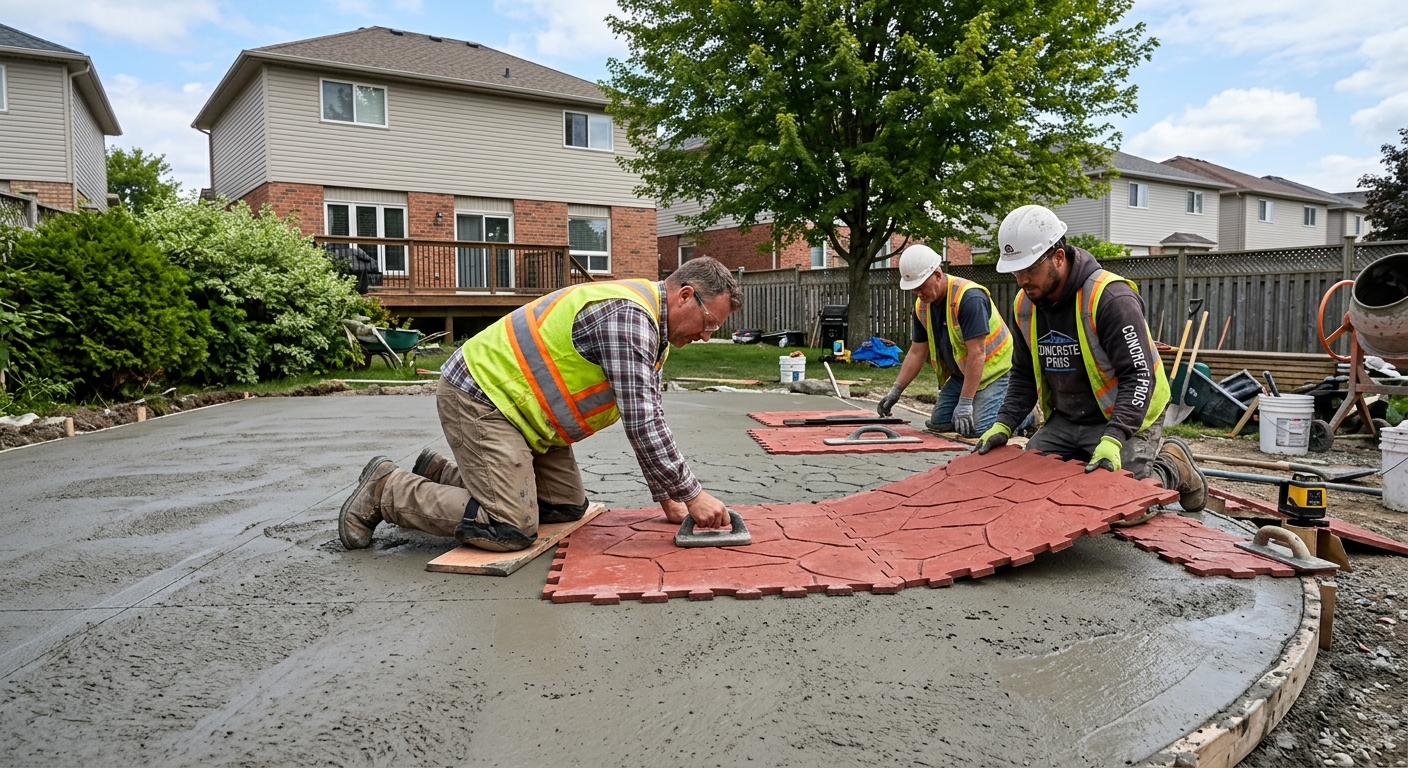
Concrete work options and costs in University Downs
In University Downs, concrete is one of the most common exterior upgrades homeowners do—especially around driveways, patios, and walkways where clean drainage and frost protection matter. The area is a small community (4,036 people in 2021, Statistics Canada, 2021 Census), and the surrounding Toronto market is dominated by single-detached and townhouse neighbourhoods that typically need regular driveway and flatwork maintenance. Because many lots are established and soils vary, the “same” project can still price differently from one street to the next.
Toronto-area concrete work is shaped by frost depth and frequent freeze–thaw cycles. That combination means most exterior concrete requires well-compacted granular base, proper slope/drainage away from the foundation, and air-entrained concrete to reduce freeze damage. Ontario’s weather also compresses the usable pour season—crews often schedule exterior flatwork for warmer windows and add cold-weather protection when temperatures drop toward 10 °C or below during the edges of the season. Labour and truck scheduling can tighten during peak months, and that’s part of why costs in the Toronto economic region can run higher than milder areas.
In University Downs, trades are particularly busy in and around the older residential corridors where driveways are frequently replaced rather than resurfaced—think of the typical “wear and regrade” jobs along neighbourhood collector roads. If you’re comparing options, use the table below as a practical starting point for budgeting across finishes and structural needs.
| Application |
Typical Size |
Key Spec |
Finish Option |
Price Range |
| Concrete driveway (standard broom finish) |
400–600 sq. ft. |
Air-entrained mix, reinforced base, control joints |
Broom finish, standard edging |
$7,200–$14,800 |
| Exposed aggregate driveway |
400–600 sq. ft. |
Proper grading, retarder/exposure plan, curing and sealing |
Exposed stone aggregate finish |
$10,000–$18,800 |
| Stamped concrete driveway or patio |
300–600 sq. ft. |
Air-entrained mix, thicker slab where required, release agent |
Stamped patterns, color release |
$10,800–$23,900 |
| Plain concrete patio or walkway |
150–300 sq. ft. |
Well-compacted granular base, slope for drainage |
Broom or smooth trowel finish with joints |
$2,400–$7,800 |
| Garage floor (interior slab) |
240–500 sq. ft. |
Vapour barrier (if needed), minimum slab thickness, joints |
Light broom finish |
$4,500–$13,500 |
| Foundation footings (structural, below frost) |
Varies by home layout |
Engineered rebar, excavation to frost depth, structural pour |
Formwork and structural concrete |
$18,000–$60,000 |
Prices are estimates only and vary by project scope, site access and material selection.
What affects the price of concrete work in University Downs
In University Downs and across the Toronto economic region, you can easily see concrete quotes swing by 30–50% for the “same” surface—mainly because concrete pricing is driven by how deep you have to dig, what the local subgrade is like, and what specs the job needs for freeze–thaw durability. Even when two contractors quote the same driveway size, one may include proper granular base, reinforcement, and air-entrained concrete while another assumes a simpler build-up or skips items like disposal, thicker pour requirements, or cold-weather protection. That’s why comparing apples-to-apples scope (not just a lump sum) is so important.
Frost line depth and freeze–thaw cycles dictate the critical structure. In Ontario, structural footings generally need to extend to at least 1.2 m below grade (about 4 ft), which pushes excavation/formwork height and increases labour. Exterior slabs also require air-entrained mixes to withstand repeated freezing and thawing. Cold weather adds another cost layer: when temperatures drop toward 10 °C or below, contractors may need insulated blankets, slower curing protection, and scheduling changes to maintain strength gain. Finally, GTA winters bring de-icing salt; that accelerates surface wear and can contribute to spalling when the mix isn’t properly air-entrained or when sealing is neglected.
Two local examples in University Downs: (1) If your driveway base is soft or saturated after spring rains, contractors often need extra excavation and compacted granular replacement—this can push a standard broom driveway toward the upper end of the typical $18–$28 per sq. ft. band. (2) If you choose stamped concrete (often $24–$40 per sq. ft.), the extra cost can be worth it—provided the contractor still installs the same freeze-ready specs (air entrainment, thickness, and joints). Cost goes up when premium finishes are paired with premium preparation; it only feels “expensive” when preparation is cut.
| Price Factor |
Why It Matters |
Cost Impact |
| Frost line depth — determines footing depth and form height |
Footings must be below design frost to prevent heave and differential movement. |
Higher excavation and formwork can add significant labour/material cost. |
| Site preparation — excavation, grading, compacted granular base |
Bad base leads to settlement and early cracking. |
Extra removal and re-compaction raises unit costs and truck time. |
| Reinforcement — rebar or wire mesh requirement |
Controls cracking and improves load capacity. |
Material and labour installation increases price, especially for driveways. |
| Mix design — air-entrainment and compressive strength spec |
Air entrainment is critical for freeze–thaw durability. |
Specified mix and testing add cost versus basic mixes. |
| Finish type — broom vs. stamped vs. exposed aggregate |
Finish complexity impacts labour time and materials (forms, release, exposure tools). |
Stamped/exposed typically costs more per sq. ft. than broom/plain. |
| Pour size and concrete truck access to site |
Long chutes, multiple loads, or difficult access increases placement time. |
Added pump/extra trips can noticeably raise the labour portion. |
| Cold-weather curing precautions — heating and blankets |
Ensures strength gain when temperatures fall during shoulder seasons. |
Blankets/heating and schedule adjustments add day-to-day cost. |
| Control joint pattern and sealing cost |
Joints limit random cracking; sealing helps manage salt and moisture exposure. |
Materials and added labour for sealing after cure can add to total. |
Permits & regulations in Ontario
In Ontario, structural concrete work generally requires a building permit. This includes footings, foundation walls, grade beams, and any structural elements tied to how the building carries load. In many cases, municipalities expect engineered drawings reviewed through the permit process—especially where the work changes load paths or affects drainage and foundation stability. For concrete flatwork (patios, walkways, driveways), a permit is often not required by default, but it can be required if the project affects lot grading, impervious surface coverage limits, ties into municipal right-of-way rules, or alters how stormwater is directed. Because bylaws and permit thresholds can vary by municipality, the safe approach is to confirm with the local authority before you break ground.
For homeowners in University Downs, verify the contractor can legally perform the work and is properly insured. Start by asking for:
- Liability insurance certificate showing adequate coverage for your project scope
- WSIB/WCB clearance (or proof of coverage, depending on the contractor’s status)
- References from similar-sized Ontario concrete jobs
Step-by-step, you can verify Ontario compliance by: (1) searching the contractor’s business details through official online registry resources; (2) reviewing the certificate of insurance for policy dates and named insured; and (3) requesting current WSIB/WCB clearance information in writing, not verbal confirmation. Then confirm whether a permit is required for your exact scope (especially any foundation/footing repair or drainage-related grading changes).
Getting concrete right in University Downs's freeze-thaw climate
Concrete failures in University Downs usually come down to moisture movement and freeze–thaw stress. The most common issues homeowners see are surface spalling, scaling around the edges, and random cracking that widens after winter. To prevent this, you need the job specified for the local conditions: compacted base that drains well, a mix engineered for freeze resistance, and a joint/curing/sealing plan that matches Ontario’s seasonal swings.
Base preparation matters first. The slab or driveway must sit on a well-compacted granular sub-base to the right depth for your soil and frost conditions; this reduces pumping and settlement. Next is the mix design: for exterior flatwork, specify an air-entrained concrete mix with about 5–7% air content and a minimum 32 MPa compressive strength so the concrete can tolerate repeated freezing. Control joints should be spaced to limit cracking to planned lines, not random breaks across your finish. Curing is where many shortcuts happen—plan on at least 7 days of proper curing conditions, and use protection if the pour happens near cold nights. Finally, sealing should be done after the slab fully cures (typically 28 days) with a penetrating sealer to repel moisture and reduce salt-related wear.
When you ask technical questions, focus on spalling prevention. If a contractor can’t explain air-entrainment and joint layout, that’s a warning sign. A dollar example: a plain broom patio might be around the $16–$26 per sq. ft. band, but stamped concrete often lands in the $24–$40 range. The extra cost can be justified for curb appeal—if the contractor still installs the same freeze-ready base, specifies air entrainment, and maintains proper curing. A “cheap” mix under a premium finish will fail sooner.
| Spec |
Why It Matters in University Downs |
What to Ask For |
Impact if Skipped |
| Compacted granular base (depth?) |
Stable support reduces settlement and movement during freeze–thaw. |
Granular base depth and compaction target for your soil conditions. |
Settlement cracks, uneven slabs, and accelerated surface deterioration. |
| Air-entrained concrete mix (target air %?) |
Air entrainment improves freeze–thaw durability against scaling/spalling. |
Target air content around 5–7% for exterior flatwork. |
Higher risk of spalling and scaling during Ontario winters. |
| Compressive strength (MPa rating) |
Ensures the slab reaches sufficient strength for loads and weather exposure. |
Minimum 32 MPa compressive strength for the pour. |
Reduced performance, faster cracking, and durability issues. |
| Control joints (spacing per ACI guidelines) |
Limits random cracking to planned lines. |
Joint spacing details and saw-cut timing plan. |
Uncontrolled cracking that can ruin finish appearance and drainage. |
| Minimum 7-day curing period |
Strength gain is temperature-dependent during Toronto-area weather swings. |
Confirmation of cure protection plan, especially near cold nights. |
Surface weakness, scaling, and deeper freeze damage over time. |
| Penetrating sealer (when applied after cure) |
Helps repel moisture and reduce salt impact on the surface. |
Penetrating sealer applied after cure (often around 28 days). |
Faster surface wear, mottling, and reduced long-term appearance. |
How to choose a concrete work contractor in University Downs
Choosing the right concrete contractor in University Downs starts with verifying credentials and then tightening your scope so you’re comparing the same job. First, verify the contractor’s Ontario licensing where applicable for concrete/associated trades, then confirm liability insurance and WSIB/WCB coverage. How to check each: ask for a current certificate of insurance (review the policy dates, limits, and named insured), request WSIB clearance/coverage documentation in writing, and confirm dates before work begins. Avoid contractors who only provide documents after you sign.
Next, get 2–3 itemised written quotes. You want a breakdown that shows labour and materials (and line items for excavation, disposal, base prep, reinforcement, concrete supply, forming, finishing, joints, and sealing). A quote that only shows “$X total” makes it hard to spot exclusions like disposal of old concrete, permit handling (if required for your foundation/drainage scope), or whether the price includes truck access allowances. Make sure the quote specifies the air-entrained mix and curing approach—especially for exterior pours scheduled around shoulder seasons.
On warranty, ask for two things: the workmanship warranty length and the product/manufacturer warranty on any sealers or specialty materials, plus whether warranties are transferable to you. For payment, never pay more than 10–15% upfront; hold back a portion until the job is complete and cleaned up. Finally, require a start date and estimated completion timeline in writing.
- Uses air-entrained concrete for exterior flatwork and explains why
- Documents granular base depth and compaction approach
- Shows joint layout plan (location and spacing)
- Provides curing and cold-weather protection plan when temperatures drop
- Includes disposal of demolished concrete (or clearly states it’s excluded)
- Clarifies whether reinforcement is included and what type (mesh vs rebar)
- Specifies slab thickness and whether it matches local driveway/load needs
- Explains sealing timing (typically after cure) and which sealer is used
- Includes surface protection and final cleanup in scope
- Lists truck access method (no-chute limits, staging, or pump allowance)
- Provides references for similar Toronto-area freeze–thaw projects
- States warranty terms in writing, including what triggers coverage
Concrete red flags to watch in University Downs: (1) no mention of air entrainment for an exterior pour, (2) promises of “no need for thicker base” when the soil looks saturated, (3) vague curing language (“we pour and you’re fine”) without protection for cool nights, (4) quotes that don’t break out disposal, reinforcement, or joint cutting, and (5) requests for full payment up front or refusal to provide insurance/WSIB proof.
Frequently asked questions — concrete work in University Downs
How long does concrete take to cure?
In Ontario, curing timelines depend on temperature and whether you used cold-weather protection, but a typical rule is that concrete reaches usable strength in days while full durability comes with longer curing. For most exterior flatwork in University Downs, contractors plan for at least 7 days of proper curing conditions before expecting normal use, and they don’t fully treat the slab as “complete” until it has cured long enough for durability—often closer to 28 days for sealing. If you’re pouring when nighttime temperatures drift toward the cooler end of the season, crews may use insulated blankets or heating to maintain strength gain. This matters because Ontario’s freeze–thaw cycles can magnify early-age weaknesses.
Do I need a permit for concrete work in Ontario?
It depends on the scope. In University Downs and Ontario generally, structural concrete such as footings, foundation walls, and grade beams typically requires a building permit and often engineered drawings reviewed through the municipal process. Concrete flatwork—like a driveway replacement, patio, or walkway—usually does not require a permit unless it changes lot grading, affects stormwater direction, or interacts with impervious surface/rights-of-way rules. Before you break ground, confirm with the local authority and ask your contractor to tell you whether permits apply to your specific project. A good contractor will also include this in the written quote so you don’t get surprises mid-job.
Concrete vs pavers for a patio in University Downs?
Concrete and pavers can both look great, but they fail differently in Ontario’s freeze–thaw climate. Concrete (especially with air entrainment and control joints) is often the better option for a low-maintenance patio if you want clean, solid flatwork and consistent slope/drainage. Pavers can be more forgiving if sections need partial replacement, but they still require deep, compacted base and proper edging to prevent shifting and weed growth. Cost-wise, plain concrete patios typically land in the $16–$26 per sq. ft. range, while decorative options rise when you add stamp or special finishes. If you’re sealing salt-exposed concrete properly, concrete can be very durable in the GTA.
How long does a concrete driveway last?
With proper base prep, air-entrained mix, correct thickness, and a sensible joint/sealing plan, many concrete driveways can last decades in Ontario. In University Downs, freeze–thaw cycles and de-icing salt are the big stressors, so what you did underneath matters as much as the surface. Driveways that were poured without enough air content or without adequate granular base often show early scaling and cracking, sometimes within just a few winters. A well-installed driveway with control joints and sealing around the right schedule typically ages better through Toronto-area winters. If you’re budgeting, note that finish upgrades can change cost—standard broom driveway pricing often sits around $18–$28 per sq. ft., and that preparation is what helps you get longevity.
What is air-entrained concrete and why does it matter here?
Air-entrained concrete has microscopic air bubbles intentionally included in the mix. Those bubbles give freezing water a place to expand, which reduces scaling and spalling—major problems in Ontario’s freeze–thaw winters. For exterior flatwork in University Downs, you should expect an air-entrained mix with roughly 5–7% air content as a target, plus adequate thickness and control joints. This is why quotes can vary: a contractor who specifies the freeze-ready mix design will often cost more than one who uses a basic mix. The extra cost is usually small compared to repairs. If you’re offered an exterior pour without a clear air-entrainment plan, that’s a red flag in the Toronto area.
How do I prepare the base for a concrete slab?
Base preparation is where durable concrete is won or lost. In University Downs, you want excavation to stable subgrade, removal of soft/saturated material, and installation of a properly graded and compacted granular base to the right depth for your soil and frost protection needs. The goal is to prevent settlement and keep water from pooling under the slab, which is critical with Ontario spring/fall moisture swings. Your contractor should also ensure correct slope away from buildings and verify that there’s no topsoil or organic material in the base. Ask for details about granular depth, compaction approach, and whether reinforcement is included. If the base is skipped or under-built, even a premium finish can crack early.