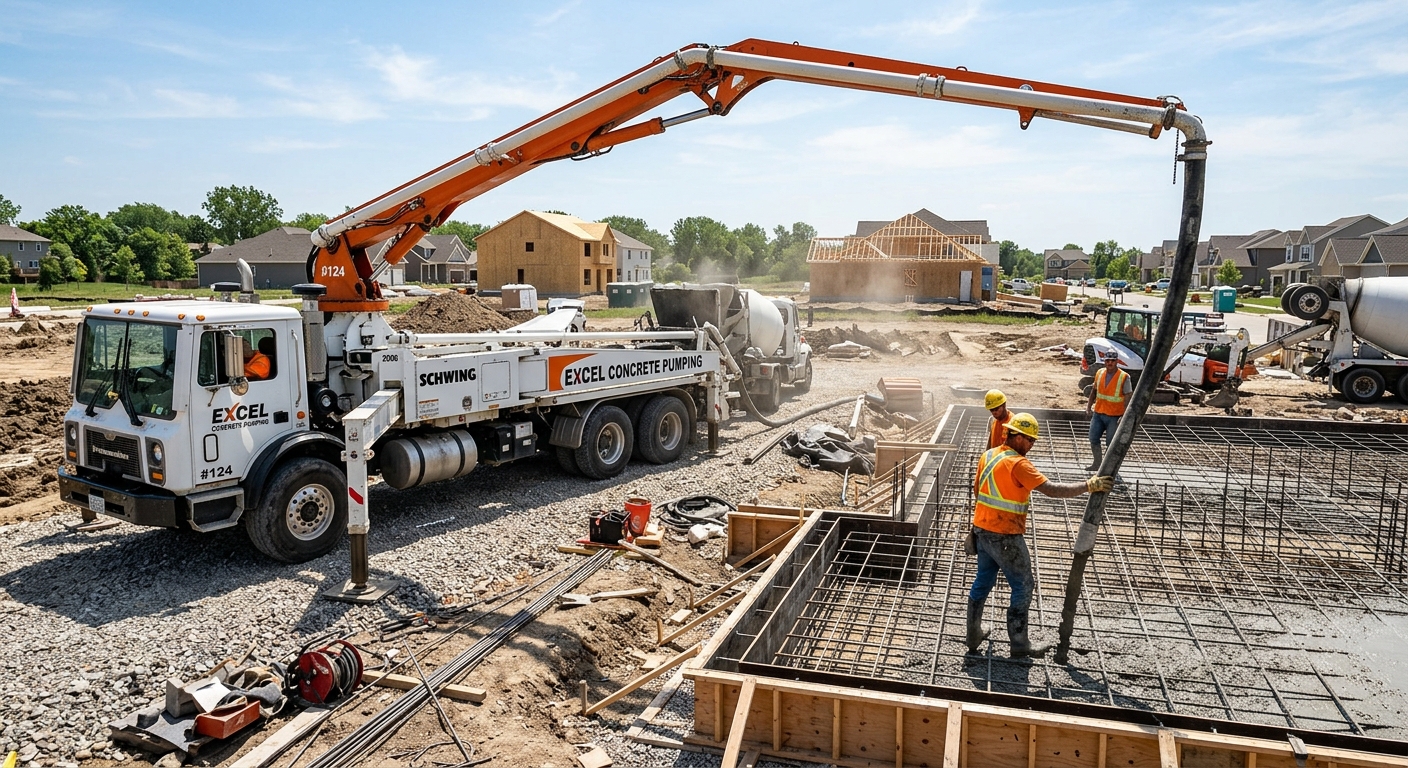
Concrete work options and costs in Roncesvalles
Roncesvalles is a great neighbourhood for concrete work, but it’s also one of those Toronto areas where driveways and walkways take a beating from our humid winters, wet springs, and the freeze–thaw cycle that starts crack growth. With Roncesvalles sitting in a Toronto economic region of 14,974 people (Statistics Canada, 2021 Census), you’ll often see older homes and lane-and-garage access patterns that affect how easily a crew can bring in forms, pumps, and trucks. That matters because flatwork pricing isn’t just about “the pour”—it’s about base prep, reinforcement decisions, and the finishing schedule.
In this part of Toronto, most customers want practical improvements: a long-lasting driveway, a porch or walkway that doesn’t heave, and garage slabs that can handle daily use. GTA frost depth and local building expectations push structural footings down at least about 1.2 m below grade, and exterior slabs need air-entrained mixes plus proper control joints to manage cracking. Contractors also tend to concentrate pours in the warmer months so curing can reach strength reliably; when temperatures drop near 10 °C or below, cold-weather protection adds labour and material cost.
You’ll notice especially high demand around Roncesvalles Village and the side streets close to the TTC corridor—many properties have modest front yards, tight access, and want upgrades that look clean without constant maintenance. Below is a realistic comparison of common options you’ll see quoted in Roncesvalles, including finish choices and the price bands contractors typically work within.
| Application |
Typical Size |
Key Spec |
Finish Option |
Price Range |
| Concrete driveway (standard broom finish) |
300–520 sq. ft. |
Air-entrained mix; compacted granular base; joints |
Broom finish, typical edges |
$18,000 – $28,000 |
| Exposed aggregate driveway |
300–520 sq. ft. |
Air-entrained mix; proper finishing and wash timing |
Exposed stone look, slip-resistant |
$22,000 – $33,000 |
| Stamped concrete driveway or patio |
250–500 sq. ft. |
Air-entrained mix; thicker sections for durability |
Stamp patterns and release powder |
$24,000 – $40,000 |
| Plain concrete patio or walkway |
150–350 sq. ft. |
Compacted base; air-entrained mix; control joints |
Plain trowel or light broom finish |
$16,000 – $26,000 |
| Garage floor (interior slab) |
400–650 sq. ft. |
Vapour barrier (when specified); proper thickness |
Broom finish, light trowel |
$19,000 – $30,000 |
| Foundation footings (structural, below frost) |
Per linear foot / small footing sets |
Structural concrete; rebar per engineer; below-frost depth |
Formed footing concrete |
$180 – $300 |
Prices are estimates only and vary by project scope, site access and material selection.
What affects the price of concrete work in Roncesvalles
In the Toronto area, it’s common to see quotes for the “same” concrete job differ by 30–50%. The reason is that exterior concrete performance depends on details—especially base prep, air-entrained mix design, reinforcement, and how crews protect curing when temperatures swing. Two contractors can both say “driveway” but one might price a lighter base or skip certain joint/sealing steps, while another budgets for deeper, well-compacted granular work and more robust mix specs that survive Roncesvalles winters.
Frost depth and freeze–thaw cycles dictate the specs. Structural footings must be set below the design frost depth (Ontario commonly requires at least about 1.2 m, which helps prevent frost heave and differential movement). For exterior slabs—driveways, patios, and walkways—air-entrained concrete is essential to manage freeze–thaw expansion. When conditions cool toward 10 °C or below, crews need cold-weather curing precautions (insulating blankets, heated enclosures when applicable), and that can add cost. Finally, de-icing salt accelerates surface spalling, so sealing is often recommended for long-term appearance and reduced scaling.
Locally, cost can rise when access is tight near the Roncesvalles Village area (more labour to manage forms and footings around landscaping), when soil is saturated or soft and needs extra excavation and backfill, or when you want decorative upgrades. For example, upgrading from a plain broom-finished driveway in the $18–$28 per concrete driveway/slab band to an exposed aggregate look commonly adds labour and product coordination—so the extra spend is justified if you want a more slip-resistant surface and a finish that hides minor wear. Conversely, if your sub-base is already solid and well-drained, you may not need the highest-end decorative option; a plain patio/walkway in the $16–$26 band can meet your durability goal without paying for stamping.
| Price Factor |
Why It Matters |
Cost Impact |
| Frost line depth |
Determines footing depth and form height |
Deeper excavation increases labour and concrete volume |
| Site preparation |
Excavation, grading, compacted granular base |
Bad base drives up disposal, regrading, and base material |
| Reinforcement |
Rebar or wire mesh requirement |
Extra steel, chairs/ties, and install time |
| Mix design |
Air-entrainment and compressive strength spec |
Higher spec mixes cost more and may require longer curing care |
| Finish type |
Broom vs. stamped vs. exposed aggregate |
Decorative steps add materials, templates, and crew time |
| Pour size and concrete truck access to site |
Impacts pump/boom use and scheduling |
Tight access can increase labour and equipment charges |
| Cold-weather curing precautions |
Heating and blankets |
Shorter pour season can raise demand and add protection labour |
| Control joint pattern and sealing cost |
Controls cracking and reduces salt scaling |
Additional cutting labour and sealer material/application time |
Permits & regulations in Ontario
In Ontario, structural concrete work typically needs a building permit and often engineered drawings reviewed by the municipality. That includes concrete foundation walls, grade beams, footings, underpinning-related concrete, and structural slabs tied to the structural system. If your project involves supporting or altering the foundation, expect permits and inspections as part of the process.
Concrete flatwork like patios, walkways, and most driveways usually does not require a permit on its own. However, a permit or approval may be triggered if the work affects lot grading, stormwater drainage, or impervious surface requirements—or if the work is close to a municipal right-of-way and needs encroachment approval. Because every Roncesvalles lot layout is different (especially with older neighbourhood grading and drainage patterns), it’s smart to confirm requirements before breaking ground.
To verify a contractor in Roncesvalles step-by-step, start with their licence and business details through Ontario’s contractor licensing/registry resources (where applicable) and ask for their WSIB clearance letter if they employ workers. Next, request a current certificate of insurance showing general liability coverage that matches the scope of work (driveways and foundations are treated differently than small landscape pads). Finally, ask for the exact project references—similar-scale pours, not just small backyard patios—and confirm they carry liability coverage and workers’ coverage before work begins.
Getting concrete right in Roncesvalles's freeze-thaw climate
Concrete fails in Roncesvalles mainly when water gets into the wrong places and freezes, or when the slab hasn’t cured properly before temperatures drop. The most common homeowner complaint is spalling—pitting or flaking on the surface—often linked to inadequate air-entrainment or finishing too aggressively while water is still bleeding. In a Toronto freeze–thaw pattern, air-entrained concrete is the defence system. Base preparation is the next: if the granular sub-base isn’t compacted to the right depth and level, the slab can settle and crack along stress points, then water follows those cracks every winter.
Spec the job with five essentials. First, base prep: compacted granular sub-base sized for local soil conditions and frost performance, with drainage that avoids standing water. Second, mix design: air-entrainment typically targeted around 5–7% for exterior flatwork, plus a minimum 32 MPa compressive strength so the mix develops reliable strength. Third, control joints: install and follow a sensible spacing pattern to limit random cracking. Fourth, curing: allow a minimum of 7 days under proper conditions, and use cold-weather protection when nighttime temperatures approach cold thresholds. Fifth, sealing: apply a penetrating sealer around 28 days after the pour (after curing) to help repel salt and water.
A practical way to see value: a decorative stamped patio costs more than a plain broom-finish option in the $16–$26 band for typical patio/walkway work. But paying for proper air-entrainment, correct base, and correct jointing is what actually protects both the plain and the decorative finish. If a quote under-specifies those items to hit a lower price, you may end up paying again for repairs—often well before the finish looks good.
| Spec |
Why It Matters in Roncesvalles |
What to Ask For |
Impact if Skipped |
| Compacted granular base (depth?) |
Prevents pumping/settlement under freeze–thaw |
Granular base depth and compaction method to suit soil and frost performance |
Cracks widen, uneven settling, water infiltration |
| Air-entrained concrete mix (target air %?) |
Protects against freeze–thaw scaling and spalling |
Air content target for exterior flatwork (commonly 5–7%) |
Spalling and surface deterioration within a few winters |
| Compressive strength (MPa rating) |
Supports durability and load performance in a wet/icy cycle |
Minimum 32 MPa rating at specified age |
Lower strength leads to faster cracking and abrasion wear |
| Control joints (spacing per ACI guidelines) |
Manages shrinkage cracks and limits random cracking |
Joint layout plan and saw-cut timing |
Random cracks; water enters and accelerates freeze–thaw damage |
| Minimum 7-day curing period |
Ensures strength gain before cold weather stresses the slab |
Curing plan, including cold-weather precautions when needed |
Surface damage, reduced strength, early scaling |
| Penetrating sealer (when applied after cure) |
Helps repel de-icing salt and water in winter |
Penetrating sealer applied after cure (commonly around 28 days) |
More salt intrusion and higher risk of spalling |
How to choose a concrete work contractor in Roncesvalles
Start by verifying the basics that protect you in Ontario: general liability insurance, and workers’ coverage through WSIB/WCB for contractors who employ workers. For the homeowner, the practical checks are simple—ask for a certificate of insurance that matches the project scope (driveways/patios versus foundation work), and request the current WSIB clearance letter before the first day on site. If you’re dealing with a contractor who can’t provide these documents, that’s a major red flag.
Next, get 2–3 itemised written quotes. You want a breakdown that separates labour and materials (excavation, granular base, forms, reinforcement, concrete, finish labour, saw-cutting, sealing, and any hauling/disposal). A true quote should also state whether a permit pull is included when required, who handles traffic/sidewalk protection if applicable, and what is excluded (for example, removing old concrete, tree/root removal, or repair of failing drainage). If it’s lump-sum only, you can’t easily compare apples to apples.
For warranty, insist on two things: the workmanship warranty length and what it covers (cracking, scaling, joint performance), plus any product/manufacturer warranty tied to the mix design or sealer. Confirm whether it’s transferable if you sell. On payment schedule, keep it safe—never pay more than 10–15% upfront, and hold back a portion until the work is fully complete and cleaned up. Finally, get a start date and completion estimate in writing so the crew isn’t constantly re-scheduling around Toronto weather.
- Confirm insurance certificate and WSIB/WCB clearance letter before work starts.
- Use itemised quotes: excavation/base, concrete supply, reinforcement, finishing, joints, sealing, disposal.
- Ask for the exact air-entrainment and compressive strength spec for exterior concrete.
- Require a joint layout plan (spacing and timing of saw cuts).
- Ask how they handle curing if nights drop toward cold weather.
- Confirm granular base depth and compaction standard (and how they protect sub-base during rain).
- Check whether rebar or wire mesh is included where you need it (and why).
- Ensure they describe protection for adjacent landscaping, eavestrough downspouts, and walkways.
- Verify whether sealing is included or an optional line item (and when it’s applied after cure).
- Clarify traffic/footpath protection if any work is near access routes.
- Keep your payment schedule conservative (10–15% upfront maximum) and use a holdback.
- Ask for photo references of similar Roncesvalles conditions: older lots, tight access, and exterior flatwork.
In Roncesvalles, watch for these red flags: quotes that don’t mention air-entrained concrete for exterior slabs, “cheap” pricing that skips granular base prep, no clear joint plan (or no mention of saw-cut timing), crews that finish too fast without a curing/protection plan in cooler weather, and contracts that lack written scope and warranty details.
Frequently asked questions — concrete work in Roncesvalles
How do I maintain concrete in Roncesvalles's freeze-thaw climate?
In Roncesvalles, maintenance is mostly about keeping water and salt away from the concrete surface. Start with routine sweeping to remove grit and sand that abrade the finish, then use de-icing salts carefully—overuse increases scaling. If you have exterior flatwork, consider a penetrating sealer applied after full cure (commonly around 28 days) to help repel salt and water. Keep drainage working: downspouts shouldn’t dump onto the slab, and landscaping should slope water away so the concrete doesn’t stay saturated. If you notice small chips early, get them repaired sooner rather than waiting for freeze–thaw to expand the damage.
What causes concrete to spall in Roncesvilles winters?
Spalling in Roncesvilles winters is typically caused by water getting into the concrete and freezing, combined with inadequate freeze–thaw durability. The big culprit is often insufficient air-entrainment for exterior exposure—without the right air void system, freeze–thaw pressure breaks the surface and flakes it off. Cold-weather curing problems can also contribute if the concrete hasn’t developed strength before temperatures drop, and poor base preparation can cause hairline cracking that lets water travel deeper. In practice, this is why Roncesvalles exterior work should be priced with durability specs; for example, standard broom driveway work in the $18–$28 band tends to include the right mix and base steps, while overly low bids sometimes cut those details.
What is rebar and when is it required in Ontario?
Rebar is reinforcement steel bars used to strengthen concrete against cracking and structural loads. In Ontario, whether rebar is required depends on the engineered design for the specific application. For structural concrete—like foundation footings, grade beams, and foundation walls—engineered drawings typically specify rebar size, spacing, cover depth, and lap lengths, and a permit/inspection process usually follows. For exterior flatwork like patios and driveways, some projects use wire mesh or rebar mats depending on thickness, soil conditions, and intended loads (like vehicle weight). The safest approach is to ask your contractor to justify the reinforcement plan in writing, referencing the thickness and load rating they’re proposing.
How long does a concrete project take in Roncesvalles?
Most concrete work in Roncesvalles is fast on pour day, but the full timeline depends on prep, weather, and curing. Excavation and base prep can take 1–3 days for a typical driveway or patio, especially with older lots where grading and drainage need care. The actual placement and finishing is usually within a single day once materials are staged. Curing then sets the real pace: even though crews may move forms and protect the surface quickly, concrete should cure properly for strength gain, and many exterior tasks rely on at least 7 days of proper curing conditions before you load or treat it aggressively. If temperatures drop toward cold weather, cold-weather curing precautions may extend the protected period.
What is a concrete overlay and is it suited to Roncesvalles?
A concrete overlay is a new concrete layer poured over an existing slab after surface preparation, and sometimes a patch-and-level process. It can be suited to Roncesvalles when the original slab is structurally sound—meaning it’s not extensively cracked, heaving, or failing at the base. The overlay can address cosmetic wear and minor surface irregularities, but it won’t “fix” a problem slab if water has been getting underneath. You also need good drainage, proper bonding methods, and control joints in the overlay to manage future cracking. If your current driveway or walkway is deteriorated, the better long-term approach is often removal and full replacement, even if the cost is closer to the $18–$28 driveway/slab band.
How do I seal concrete to protect it in Roncesvalles?
Sealing in Roncesvalles is about timing and the right product. First, ensure the concrete has fully cured—commonly you shouldn’t apply sealer until about 28 days after a typical pour, and only when the surface is dry and clean. Use a penetrating sealer designed to repel water and reduce salt intrusion; this is especially helpful because de-icing salts accelerate surface spalling over time. Prep matters: broom-clean the surface, remove any curing compounds or contaminants, and let the contractor confirm moisture conditions before sealing. If you’re sealing a driveway or patio, ask whether sealing is included in the quote or offered as an add-on line item, and confirm the expected appearance (natural versus darker look).