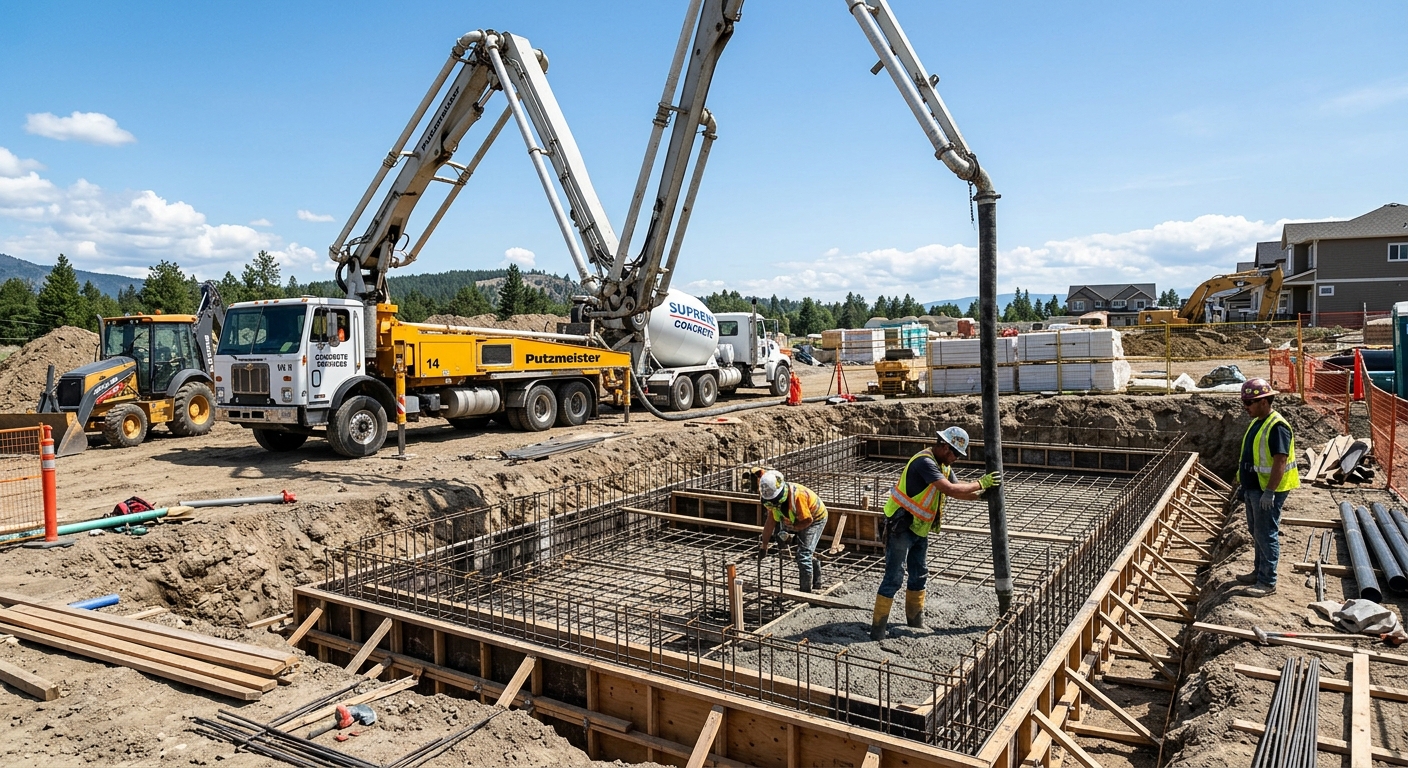
Concrete work options and costs in Vickers Park
In Vickers Park, concrete work is one of those home-improvement projects you feel every winter—especially when freeze–thaw cycles start flexing the soil under driveways, patios and walkways. With a 2021 population of 4,317 in Vickers Park (Statistics Canada, 2021 Census), demand stays steady, and most homeowners are improving single-family properties with exterior flatwork and, often, aging foundations. That mix matters because the Toronto area’s frost depth and repeated thawing dictate how deep footings must go and how carefully contractors prepare the base before they place concrete.
In the Toronto economic region, the Ontario Building Code generally drives structural footings to extend at least 1.2 m below grade (to help prevent frost heave and differential movement). For exterior slabs, contractors typically use air-entrained concrete and plan control joints to manage cracking over time. Costs also reflect the short, weather-sensitive pour season: exterior work is often concentrated in warmer months so concrete cures reliably. If temperatures drop toward 10 °C or below, contractors may need extra protection, which can add labour and material costs.
Where this trade is especially active around Vickers Park, you’ll notice it most in established residential pockets along major local corridors where driveways and front steps are frequently due for replacement. If you’re comparing bids, the fastest way is to start with realistic baseline pricing—then adjust for site access, soil conditions, reinforcement, and finishing choices—so the next step is the comparison table.
| Application |
Typical Size |
Key Spec |
Finish Option |
Price Range |
| Concrete driveway (standard broom finish) |
400–600 sq. ft. (typical) |
Air-entrained exterior mix; compacted granular base; control joints |
Broom finish, light edging |
$7,200 – $13,900 |
| Exposed aggregate driveway |
400–600 sq. ft. (typical) |
Air-entrained mix; proper base + drainage to prevent saturation |
Exposed aggregate with uniform seeding |
$9,600 – $18,700 |
| Stamped concrete driveway or patio |
300–500 sq. ft. (typical) |
Air-entrained exterior mix; reinforced slab depending on load |
Stamped pattern + release agent |
$9,000 – $20,000 |
| Plain concrete patio or walkway |
200–400 sq. ft. (typical) |
Compacted base; proper slope + drainage |
Float + broom or light trowel texture |
$3,200 – $10,400 |
| Garage floor (interior slab) |
400–700 sq. ft. (typical) |
Vapour barrier + sub-base; control joints |
Standard smooth/float finish |
$7,200 – $17,500 |
| Foundation footings (structural, below frost) |
Varies (per linear footing length) |
Engineered structural concrete; forms and excavation to frost depth |
Structural finish only (not decorative) |
$180 – $300 |
Prices are estimates only and vary by project scope, site access and material selection.
What affects the price of concrete work in Vickers Park
Even when two contractors see the same driveway measurements in Vickers Park, Toronto quotes can differ by 30–50% because the “same job” often isn’t the same spec. One crew may include only the concrete, while another includes excavation, granular base to the right depth, drainage upgrades, reinforcement, and proper curing protection for cold nights. In a market where labour availability fluctuates through the season, scheduling and crew size also move the final number.
For this region, frost depth and freeze–thaw cycles dictate almost every line item. Structural footings generally need to extend below the design frost depth so soil doesn’t expand and contract and push against the concrete. Exterior slabs require air-entrained mixes to survive repeated freezing and thawing. When colder weather starts earlier in the shoulder seasons, the pour season gets tighter; contractors often add heating, insulated blankets, or longer protection periods to keep strength gain on track. De-icing salt in winter accelerates spalling if the mix isn’t right or if the surface can’t shed water—so sealing and good surface detailing become part of durability.
Two real examples from Vickers Park: a driveway over older, poorly drained clay often needs extra excavation and a thicker granular base, which can push you toward the upper end of exterior flatwork pricing (for instance, stamped options commonly sit above the $24 – $40 per sq. ft. band when labour-intensive forms and pattern work are required). A simple patio on firm, accessible ground can come in closer to the lower $16 – $26 per sq. ft. patio/walkway band because the contractor spends less time on base remediation and logistics. Housing stock and age matter too—older properties may require more prep for re-grading and tie-ins, adding hundreds to thousands depending on the excavation footprint.
| Price Factor |
Why It Matters |
Cost Impact |
| Frost line depth — determines footing depth and form height |
Footings must extend below design frost depth to reduce frost heave and differential settlement |
Higher excavation and forming can add substantial cost on foundation work |
| Site preparation — excavation, grading, compacted granular base |
Concrete lasts when the base is stable and drainage prevents saturation |
Unstable soils or poor drainage can increase labour and granular supply |
| Reinforcement — rebar or wire mesh requirement |
Controls cracking and supports structural load where required |
Material + placement labour adds cost, especially for larger slabs |
| Mix design — air-entrainment and compressive strength spec |
Air entrainment helps manage freeze–thaw damage; strength targets affect durability |
Upgraded mix and testing/coordination can raise concrete unit costs |
| Finish type — broom vs. stamped vs. exposed aggregate |
Complex finishes require more steps, labour, and curing/finishing control |
Stamped and exposed work typically sits at the top of exterior price bands |
| Pour size and concrete truck access to site |
Smaller access issues can force pump use or more labour for placement |
Pump charges, extra labour, and scheduling can meaningfully increase totals |
| Cold-weather curing precautions — heating and blankets |
Concrete strength gain slows when temperatures drop; protection helps prevent defects |
Heaters/blankets and longer protection periods add labour and materials |
| Control joint pattern and sealing cost |
Joints guide cracking; sealing helps reduce chloride/brine impact from de-icing salts |
Higher if joints are cut/finished carefully and if sealer is included in scope |
Permits & regulations in Ontario
In Ontario, structural concrete work typically requires a building permit and, in many cases, engineered drawings reviewed through the municipal process. That means concrete used for footings, foundation walls, grade beams, and similar structural elements usually falls under permit requirements. Concrete flatwork like patios, walkways and driveways often does not require a permit on its own, as long as it doesn’t materially alter lot grading, violate impervious surface coverage rules, or affect municipal right-of-way requirements. In Vickers Park, the practical takeaway is simple: the structural scope needs more oversight; decorative or replacement flatwork usually needs confirmation rather than a full permit by default.
Before breaking ground, homeowners should verify three things. First, confirm the contractor carries liability insurance and provides a current certificate of insurance (COI) naming you/your property appropriately when required. Second, verify WSIB/WCB coverage so you’re not exposed if a worker is injured on-site. Third, ask whether the contractor is pulling permits (if required) and whether the permit is included in the quoted price.
Step-by-step, you can verify: (1) request the contractor’s Ontario licence/business information and check it via the appropriate online business/licence registry channel the contractor provides; (2) request the COI and ensure it’s current and matches the correct legal business name; (3) ask for a WSIB/WCB clearance letter or proof of registration and coverage. Also ask for references on similar-scale projects completed in the GTA, because Vickers Park’s freeze–thaw conditions punish shortcuts quickly.
Getting concrete right in Vickers Park's freeze-thaw climate
Concrete fails in Vickers Park when water and ice get to the wrong places—usually because the base isn’t compacted properly, the mix isn’t air-entrained enough, or the slab isn’t detailed with joints, curing, and drainage. The most common winter problem I see is spalling from inadequate air-entrainment: when freeze–thaw cycles repeat, water trapped in the surface expands and chips away the top layer.
To spec the job correctly, start with base preparation. Exterior slabs need a properly compacted granular sub-base to the depth that matches local soil conditions and frost considerations; if the ground is saturated, it expands and contracts against the concrete every winter. Next is mix design: for exterior flatwork, ask for air-entrainment (commonly in the 5–7% target range for exposed exterior slabs) and a minimum compressive strength that aligns with durability requirements (commonly 32 MPa for many exterior applications). Then control joints: they create predetermined cracking so the concrete doesn’t fracture randomly as it contracts and expands.
Curing is where homeowners often get surprised. A minimum of 7 days curing under proper conditions is critical, and in cooler periods contractors may need to protect the pour with blankets or heaters to maintain strength gain. After curing—typically 28 days—penetrating sealer helps repel chloride-bearing meltwater from de-icing salts.
Where the money is actually worth it: if you’re choosing between a standard broom-finished driveway and stamped decorative work, the added cost is justified when base prep and joints are already correct. For example, stamped concrete frequently lands in the $24 – $40 per sq. ft. band; if a contractor tries to upsell stamping but is cutting corners on air-entrainment or base, you’ll pay twice when spalling begins. Get the “structural” basics right first, then pick the finish.
| Spec |
Why It Matters in Vickers Park |
What to Ask For |
Impact if Skipped |
| Compacted granular base (depth?) |
Stable base reduces pumping and movement during freeze–thaw |
Granular sub-base depth based on soil conditions, plus compaction method proof |
Early settlement, cracking, and voids that allow water intrusion |
| Air-entrained concrete mix (target air %?) |
Air voids give freezing water room to expand safely |
Air content target (commonly 5–7% for exterior flatwork) and exterior-rated mix |
Spalling and scaling during winter freeze–thaw cycles |
| Compressive strength (MPa rating) |
Strength development supports long-term durability and wear resistance |
Minimum 32 MPa compressive strength spec for the exposure conditions |
Soft or low-durability concrete that chips and deteriorates sooner |
| Control joints (spacing per ACI guidelines) |
Joints guide cracks so shrinkage doesn’t create random fractures |
Joint layout and spacing plan before the pour; include saw-cut timing |
Random cracking, uneven patching, and accelerated water entry |
| Minimum 7-day curing period |
Proper curing ensures strength gain before the slab sees harsh winter conditions |
How curing will be protected, especially when temps drop near 10 °C or below |
Surface weakness, increased scaling, and reduced long-term performance |
| Penetrating sealer (when applied after cure) |
Sealer reduces water and chloride penetration from de-icing salts |
Penetrating sealer applied after cure (commonly around 28 days) |
Faster deterioration and spalling risk, especially on driveways |
How to choose a concrete work contractor in Vickers Park
Choosing the right concrete contractor in Vickers Park comes down to verification and clarity. Start with Ontario licensing/business information for the contractor, then confirm liability insurance: ask for a current certificate of insurance (COI) before work begins. Next, verify WSIB/WCB coverage. Don’t accept verbal confirmation—ask for a WSIB/WCB clearance letter or proof of registration and coverage so you’re protected if a worker is injured on-site.
For pricing, get 2–3 itemised written quotes rather than a single lump sum. A real concrete quote should break down labour and materials (excavation and disposal, granular base, reinforcement, concrete supply, finishing steps, and sealing). Make sure the scope clarifies what’s excluded: is old concrete removal included, is disposal included, and is site re-grading included to achieve proper slope and drainage?
Warranty matters too. Ask for workmanship warranty length and whether product/manufacturer warranties apply to the sealers, admixtures, or specialty mixes used. Also ask if warranties are transferable if you sell the home.
Payment schedule: never pay more than 10–15% upfront. Use a holdback until the job is complete and you’ve verified finishes, joints, and clean-up. Finally, demand a timeline in writing: requested start date, concrete pour date, curing/protection period expectations, and completion estimate.
- Request COIs and proof of WSIB/WCB coverage before signing.
- Verify the contractor’s Ontario business/licensing details match the invoice and contract.
- Insist on an itemised quote (labour, materials, equipment, disposal, sealing).
- Confirm whether base prep and compaction are included and what depth is proposed.
- Ask for the concrete mix spec: air-entrainment and minimum strength target.
- Get the joint plan in writing (spacing and where control joints will be located).
- Confirm whether rebar or mesh is included where required by the scope.
- Ask how curing is handled if temperatures drop toward 10 °C or below.
- Clarify finishing steps (broom texture, stamped pattern set-up, exposed aggregate method).
- Check whether sealing is included (and when it will be applied after curing).
- Review protections for landscaping, driveway edges, and neighbour properties.
- Require a written schedule and a defined “substantial completion” checklist.
Concrete contractor red flags in Vickers Park: they won’t provide COI or WSIB/WCB proof; they refuse to explain air-entrainment and joint spacing; they quote the same driveway size without discussing base depth or drainage; they want a large deposit beyond 10–15% upfront; or they won’t commit to curing/protection plans for cold nights in late season.
Frequently asked questions — concrete work in Vickers Park
How do I maintain concrete in Vickers Park's freeze-thaw climate?
For concrete in Vickers Park and across Ontario, maintenance is mostly about controlling water and protecting the surface from de-icing chemicals. Start by keeping joints clean—remove debris so water doesn’t get trapped at edges. Use the right de-icer: avoid high-chloride products when possible, and try not to scrape aggressively at the surface. If your slab is exterior flatwork, ask your contractor whether a penetrating sealer was applied after full curing (often around 28 days), because sealing helps slow chloride/brine penetration. For most driveways priced around the $18 – $28 per sq. ft. band, adding sealing can be a sensible durability upgrade rather than a cosmetic one. In winter, keep an eye out for early scaling at corners and near downspouts—that’s usually a drainage or water-migration issue.
What causes concrete to spall in Vickers Park winters?
Spalling typically comes from freeze–thaw damage combined with water and de-icing salt getting into the concrete surface. The biggest technical cause in Ontario is inadequate air-entrainment: if the mix doesn’t have the right air void system, freezing water expands inside the paste and chips off the top layer. Second, spalling is more likely when the base is saturated or slopes push water toward the slab, so the concrete stays wet longer. Third, poor curing—especially if temperatures drop during the first week—can reduce durability and make the surface more vulnerable. If your existing driveway shows scaling that gets worse each winter, it’s often linked to the original mix and base prep, not just “normal wear.” Exterior work in the GTA is priced with durability in mind; that’s why air-entrained mixes and control joints are standard, even when finish options are plain.
What is rebar and when is it required in Ontario?
Rebar (reinforcing steel bars) is used to help concrete handle tensile stresses and to control cracking, especially where loads or movements are higher. In Ontario, whether rebar is required depends on the structural design (for footings and foundation elements, it’s often specified by engineered drawings) and the exposure/load requirements for your slab. For typical driveways and patios, contractors often use wire mesh or rebar depending on slab thickness, soil conditions, and how the slab will be loaded. A foundation/footing scope—priced in the $180 – $300 band per unit basis—nearly always involves engineered structural reinforcement. For exterior flatwork, reinforcement may be required for areas that see heavy vehicle loads or where the slab design needs additional crack control. The key is to match reinforcement to the design spec and not to guess.
How long does a concrete project take in Vickers Park?
Project duration in Vickers Park depends on site prep, concrete access, and weather. Excavation and base grading can take a day or two, while reinforcement placement and form setup may add time—especially on driveways with tight edges or steps. The actual concrete pour is usually a single day, but completion depends on curing and finishing. Most exterior flatwork requires at least a 7-day curing period before you treat it as durable for normal use, and contractors will often protect it longer in colder conditions. If temperatures are dropping toward 10 °C or below, curing protection (blankets/heating) can extend the timeline. If you choose decorative work like stamped concrete, there are additional finishing steps compared with a plain broom-finish patio. As a general homeowner planning guide, simple patios or walkways can feel “done” in about a week, while driveway replacements and stamped work may take longer because curing and surface finishing steps must be handled carefully.
What is a concrete overlay and is it suited to Vickers Park?
A concrete overlay is a new concrete layer placed over an existing slab—usually after assessment and prep, like grinding, patching, and bonding measures. Overlays can be a good option when the existing concrete is generally sound but has surface deterioration, minor cracking, or staining. However, in Ontario’s freeze–thaw climate, overlays are not a cure-all if water is already migrating through or if the original slab is failing structurally. If the old slab is heavily spalled, has widespread settlement, or has poor drainage, the overlay can fail prematurely because the new layer still suffers from the same moisture pathways. In Vickers Park winters, slopes and de-icing salt exposure matter a lot. If you’re comparing costs, overlays can sometimes be priced lower than full replacement, but the value depends on the condition of the existing base. A contractor should inspect for depth of cracking, lifting, and drainage issues before recommending overlay versus replacement.
How do I seal concrete to protect it in Vickers Park?
Sealing is about repelling water and reducing chloride/brine penetration from de-icing salts, which helps slow spalling and scaling in Ontario winters. The timing is critical: most penetrating sealers are applied after the concrete has fully cured—commonly around 28 days—so the concrete can dry appropriately and the sealer can bond and perform. Before sealing, the surface must be cleaned of dust, debris, and any curing compounds, and it should be dry enough for the sealer to penetrate. For driveways and exterior flatwork, sealing works best when the slab already has correct drainage slope and control joint detailing, because sealed concrete still can’t stop movement if water is pooling under edges. If your project is in the $18 – $28 per sq. ft. driveway band, ask whether sealing is included and whether it’s a penetrating type rather than a film-forming topical coating. For older slabs, sealing may slow further damage, but it won’t reverse structural issues.