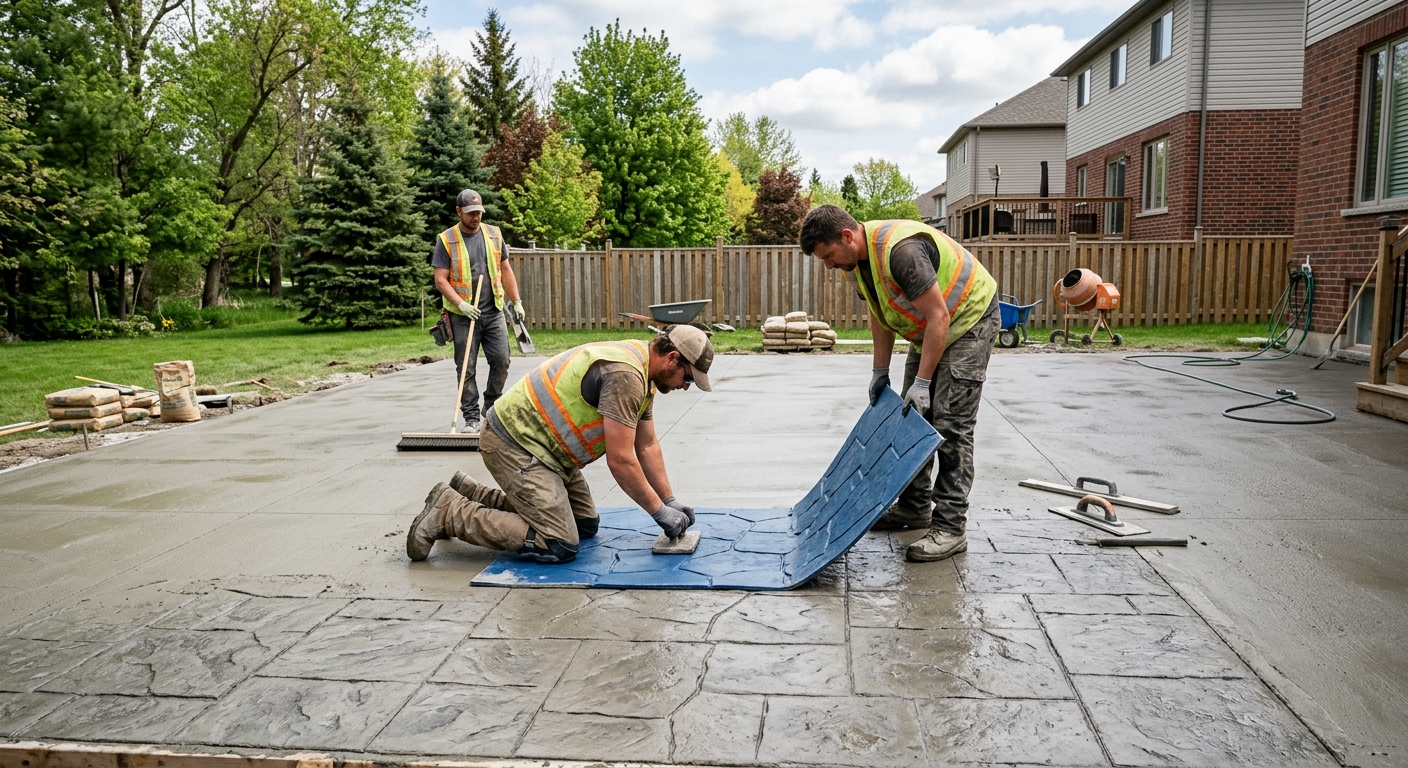
Concrete work options and costs in Playter Estates-Danforth
Playter Estates-Danforth is the kind of neighbourhood where homeowners notice concrete quality quickly—because driveways, stoops, patios and walkways get real daily wear and, every winter, they go through Toronto-area freeze–thaw cycles. With a 2021 population of 7,804 residents in the community profile (Statistics Canada, 2021 Census), you’ll see steady demand for small-to-mid sized flatwork upgrades from local families and long-term homeowners. That matters because concrete crews tend to stay busy here, and booking lead times can be tighter than in quieter parts of the city.
In the Toronto economic region, concrete pricing is driven by frost depth and how often temperatures swing above and below freezing. Ontario building practice generally requires structural footings to extend at least 1.2 m below grade to limit frost heave and differential movement. For exterior flatwork like driveways and patios, contractors also plan for freeze–thaw durability using air-entrained mixes, adequate thickness, and control joints. Wet fall and spring weather adds another layer of scheduling pressure—if the site can’t be protected for curing, costs rise due to extra labour, coverings and careful timing.
One area where we often see concrete work come up is around the bustling Greektown-to-Danforth corridor, where lots are frequently improved for curb appeal and safer walkway access. If you’re comparing options, the table below summarizes the most common concrete choices and realistic price bands—then we’ll break down what changes those numbers in your quote.
| Application |
Typical Size |
Key Spec |
Finish Option |
Price Range |
| Concrete driveway (standard broom finish) |
12 m x 3 m (36 m²) |
Air-entrained mix, compacted granular base, control joints |
Broom finish + standard curing |
$18,000 – $28,000 |
| Exposed aggregate driveway |
12 m x 3 m (36 m²) |
Air-entrained mix, consistent surface retarder timing |
Exposed aggregate wash |
$22,000 – $34,000 |
| Stamped concrete driveway or patio |
30 m² patio or 36 m² driveway |
Air-entrained mix, thicker section for durability |
Stamp + release + color integral or acid stain accents |
$24,000 – $48,000 |
| Plain concrete patio or walkway |
25 m² patio / 10 m x 1.2 m walkway (12 m²) |
Well-compacted base, air-entrained mix, joints |
Float + light broom |
$4,000 – $26,000 |
| Garage floor (interior slab) |
6 m x 6 m (36 m²) |
Vapour barrier (if required), reinforcement to spec |
Steel-trowel or broom-finish |
$6,000 – $18,000 |
| Foundation footings (structural, below frost) |
Per building footprint (varies) |
Excavation, formwork, rebar, concrete pour below 1.2 m minimum |
Structural concrete (no decorative finish) |
$180,000 – $300,000 |
Prices are estimates only and vary by project scope, site access and material selection.
What affects the price of concrete work in Playter Estates-Danforth
Even when two neighbours ask for “the same” concrete job in Playter Estates-Danforth, quotes across Toronto can swing by 30–50% because the hidden drivers aren’t the concrete itself—they’re the preparation, reinforcement, access, and curing conditions. A driveway that looks simple can require heavier excavation, deeper base, additional rebar, or schedule protection to manage curing when temperatures drop toward 10 °C or below. In practice, labour availability also affects pricing: when crews are booked up for exterior flatwork season, mobilization and scheduling premiums show up fast.
In this region, frost depth and freeze–thaw cycles dictate nearly every spec. Footings generally must extend below the design frost depth (Ontario commonly lands around 1.5–2.4 m depending on local conditions) to prevent frost heave and differential settlement. Exterior slabs and walkways need air-entrained concrete mixes to survive repeated freeze–thaw. When a pour happens late in the season or the weather turns, cold-weather curing precautions (heating, insulating blankets and longer protection) add cost. And because GTA roads and driveways are regularly treated with de-icing salt, sealing becomes part of the durability plan; skipping it can accelerate surface wear and spalling.
Here are a few real examples from our Toronto-area experience. First, a driveway on clay-heavy soils often needs deeper granular base and more drainage work—this can push the job toward the upper end of the $18–$28 per m² driveway range. Second, a stamped patio may cost more than a plain slab, but the price jump is justified when the substrate is properly built; otherwise the stamp looks good at first and fails prematurely. Third, a larger pour with limited truck access (narrow lanes, tight turns, overhead wires) can increase labour and cleanup time, affecting overall cost even if the square footage stays the same.
| Price Factor |
Why It Matters |
Cost Impact |
| Frost line depth — determines footing depth and form height |
Deeper excavation + more concrete for structural stability |
Can add 10–25% on foundation/footing scope |
| Site preparation — excavation, grading, compacted granular base |
Proper base prevents settlement and surface cracking |
Often the #1 swing factor; +$2,000 to +$15,000 |
| Reinforcement — rebar or wire mesh requirement |
Controls cracking and improves load performance |
+$500 to +$6,000 depending on spec |
| Mix design — air-entrainment and compressive strength spec |
Air-entrainment helps manage freeze–thaw damage |
Usually +3–8% versus basic mixes |
| Finish type — broom vs. stamped vs. exposed aggregate |
Extra labour, materials, and surface timing |
Stamped/exposed can add 25–60% vs plain |
| Pour size and concrete truck access to site |
Smaller pours or difficult access increase labour time |
+$1,000 to +$8,000 for mobilization/handling |
| Cold-weather curing precautions — heating and blankets |
Protects strength gain when temperatures fall |
+$500 to +$5,000 depending on timing |
| Control joint pattern and sealing cost |
Reduces random cracking and protects from salts |
+$300 to +$2,000 depending on size |
Permits & regulations in Ontario
In Ontario, structural concrete work generally requires a building permit and often engineered drawings reviewed by the municipality. That includes footings, foundation walls, grade beams and other foundation elements that support the structure. Concrete flatwork such as patios, walkways and most driveways typically does not require a permit by default, unless the work affects lot grading, impacts municipal impervious surface coverage limits, or involves the municipal right-of-way (for example, ties into a boulevard/curb area). Always confirm with your local authority before the crew breaks ground.
Before you sign a contract for any concrete work in Playter Estates-Danforth, verify the contractor is properly insured. Ask for proof of liability insurance, and confirm they have WSIB coverage (or WCB coverage where applicable). Then request references on similar-scale projects—exterior flatwork in this area is all about base prep, air-entrained concrete, and controlling crack risk through joints and curing.
Step-by-step for homeowners: (1) search for the contractor’s business name on the Ontario public registry for licence/permit status if applicable to their trade classification; (2) request a certificate of insurance and ensure it lists you as “additional insured” if your contract requires it; (3) ask for a current WSIB/WCB clearance letter; (4) confirm the quote includes site protection and concrete waste/disposal handling; and (5) compare the schedule and curing plan, not just the price.
Getting concrete right in Playter Estates-Danforth's freeze-thaw climate
Concrete fails in Playter Estates-Danforth mostly because water and expansion find weak spots. Freeze–thaw cycles lift and strain concrete, and if the base isn’t built to handle moisture—or if the mix isn’t properly designed—surface scaling and spalling can show up within a few winters. The key is to specify the job like it lives outdoors year-round (because it does).
First, base preparation: use a compacted granular sub-base at the right depth for your soil and drainage. We see many premature problems when topsoil and organics get left in place or when base is under-compacted. Second, mix design: exterior flatwork should use air-entrained concrete with a target air content of about 5–7% for freeze–thaw resistance, paired with a minimum 32 MPa compressive strength spec. Third, control joints: place joints to limit random cracking—spacings should be planned to match slab thickness and expected movement. Fourth, curing: plan for at least 7 days of proper curing conditions. When temperatures drift toward 10 °C or below, curing protection (insulating blankets/heaters where needed) becomes a cost driver, but it’s cheaper than repairs. Fifth, sealing: apply a penetrating sealer after cure—commonly 28 days post-pour—to repel water and de-icing salts.
Here’s where the dollar difference is worth it. A plain broom-finished patio might be in the $16–$26 band, but spending on correct base, joints, and air-entrainment is what makes it last. If you jump to decorative stamped concrete (often $24–$40), the premium is only justified when the substrate is engineered right; otherwise you pay more for the same structural weaknesses.
| Spec |
Why It Matters in Playter Estates-Danforth |
What to Ask For |
Impact if Skipped |
| Compacted granular base (depth?) |
Reduces settlement and water pumping under slabs during thawing |
Requested base depth + compaction method documented |
Cracking, rocking edges, shortened lifespan |
| Air-entrained concrete mix (target air %?) |
Helps concrete resist freeze–thaw scaling and surface spalling |
Air content target stated (typically 5–7%) |
Increased spalling risk within a few winters |
| Compressive strength (MPa rating) |
Supports strength gain and load durability in cold seasons |
Minimum 32 MPa specified on your scope |
Surface wear, raveling, premature deterioration |
| Control joints (spacing per ACI guidelines) |
Controls where cracks happen instead of random tearing |
Joint spacing + saw-cut timing included |
Random cracking and water infiltration |
| Minimum 7-day curing period |
Strength development is critical before exposure to outdoor freeze–thaw |
Protection plan for cool/wet weather |
Lower strength gain, higher early-age failure risk |
| Penetrating sealer (when applied after cure) |
Repels moisture and de-icing salt attack |
Application at/after cure—commonly around 28 days post-pour |
Faster scaling, staining, and surface breakdown |
How to choose a concrete work contractor in Playter Estates-Danforth
Choosing a concrete contractor in Playter Estates-Danforth is mostly about verifying the boring details that prevent expensive failures later. Start with insurance and coverage: ask for proof of liability insurance and confirm WSIB/WCB coverage. If they’re working under a trades framework that requires licensing or registration, verify their Ontario standing through the appropriate online registry. Next, demand itemized quotes—labour and materials broken out separately—so you can compare apples to apples. A good quote will show concrete mix/type, base prep scope, reinforcement allowance (if any), finish work, curing protection, and disposal.
Read the scope carefully. Confirm what’s included: permit pull (if required), excavation limits, disposal of excess material, protection of landscaping, and whether sealing is part of the price. Ask about warranty terms: workmanship warranty length, what product/manufacturer warranties apply, and whether the warranty is transferable to a future owner. For payment, avoid large deposits—generally, keep upfront payment to no more than 10–15% and use a holdback until the job is complete and deficiencies are corrected. Finally, get the schedule in writing: start date, concrete pour date (if weather-dependent), and completion estimate.
- Ask for a written, itemized quote (not just a lump sum).
- Confirm air-entrainment and minimum 32 MPa are explicitly listed.
- Verify base preparation depth and compaction requirements.
- Request reinforcement details (mesh vs rebar, and placement).
- Confirm control joint timing and spacing plan.
- Ask how they protect curing during cold snaps.
- Get disposal/disruption scope in writing (what’s removed and where it goes).
- Check liability insurance and WSIB/WCB clearance before work starts.
- Ensure the contract includes clean-up and finishing details.
- Request a workmanship warranty and clarify who receives it.
- Set a payment schedule with a holdback until acceptance.
- Document site measurements (square footage, thickness notes, elevations).
Concrete red flags we often see around Playter Estates-Danforth include: quotes that don’t specify air-entrained mix or minimum strength, skipping or “estimating” granular base depth, no written curing plan for cool weather, thin slabs with no reinforcement/joints plan, and contractors asking for large deposits upfront without a clear scope and timeline.
Frequently asked questions — concrete work in Playter Estates-Danforth
How long does concrete take to cure?
In Ontario, concrete is typically “set” enough to walk on sooner than it’s fully cured. For most exterior flatwork in Playter Estates-Danforth, crews plan for at least 7 days of curing under proper conditions before exposing it to normal traffic, with longer protection if nights are cold. Full strength development continues well beyond that, and that’s why many projects treat sealing and durability recommendations around the 28-day mark. If you pour when temperatures dip toward 10 °C or below, curing protection (blankets and/or temporary heat) becomes critical, and timelines can shift. For budgeting, the curing and protection part is often why bids differ even when the finished concrete looks similar.
Do I need a permit for concrete work in Ontario?
In Ontario, structural concrete work like footings, foundation walls and grade beams generally requires a building permit, often along with engineered drawings reviewed by the municipality. For concrete flatwork (patios, walkways and most driveways), a permit is often not required unless the work affects lot grading, ties into municipal right-of-way, or triggers municipal rules around impervious surface/servicing. For Playter Estates-Danforth homeowners, the safest approach is to ask your contractor to confirm whether a permit is expected for your specific site conditions—then verify with the local authority before the pour. Also make sure the contractor’s scope clearly states whether permit-related paperwork is included, and don’t pay for work that starts before permits are in place if they’re required.
Concrete vs pavers for a patio in Playter Estates-Danforth?
Concrete and pavers both work well in the Toronto freeze–thaw climate, but they fail differently. A properly installed concrete patio—air-entrained mix, compacted base, and planned control joints—handles moisture cycles well, and it typically falls into the $16–$26 pricing band depending on thickness and finish. Pavers can look great and are modular, but they depend heavily on base drainage and restraint edges; if water migrates under pavers, you can get movement or weed growth over time. If your patio needs a crisp slope or frequent access adjustments, pavers can be easier to modify later. If your goal is a clean, low-maintenance surface, concrete is often the straightforward choice. Ask your contractor which option better matches your drainage plan and joint/edge detailing.
How long does a concrete driveway last?
With correct base preparation, air-entrained concrete, and proper joints, a driveway in Playter Estates-Danforth can last many years—often well beyond the typical short “wear” period homeowners notice—because the biggest threat here is repeated freeze–thaw plus de-icing salt. The durability comes down to whether water can drain away, whether the base stays stable, and whether the concrete was cured properly before it was exposed to winter conditions. Sealing after the cure (often around 28 days) helps repel moisture and salt, which reduces surface deterioration and scaling. If you compare bids, don’t just look at whether you’re near the $18–$28 driveway band—confirm the specs: thickness, granular base depth, air-entrainment and joint pattern are what drive longevity, not the broom finish name alone.
What is air-entrained concrete and why does it matter here?
Air-entrained concrete includes tiny, evenly distributed air bubbles in the mix. In Ontario’s freeze–thaw climate, those micro-bubbles give water a place to expand when temperatures drop and ice forms, which greatly reduces freeze-related damage such as scaling and spalling. In Playter Estates-Danforth, this is a core specification for exterior slabs because winters are tough on any flatwork that absorbs water. That’s why reputable Toronto-area contractors explicitly include air-entrainment and plan control joints, rather than using a basic mix. If a quote doesn’t mention air content and curing/protection in cooler weather, it’s a major question to ask—because the cost difference between “standard” and freeze–thaw-ready concrete is usually small compared to the cost of repairs.
How do I prepare the base for a concrete slab?
Base prep is where concrete success is decided, especially in Toronto-area conditions where wet soils and freeze–thaw cycles work together to move slabs. The contractor should excavate unsuitable material (like topsoil/organics), then grade for drainage, install compactable granular base, and compact it in lifts to the required depth. The depth depends on local soil and the slab’s use, but the key is that the base stays stable and drains so water doesn’t sit under the slab. For exterior flatwork, proper base prep is what keeps you from paying again after cracking or edge settlement. When you request a quote, ask for the planned base depth, compaction method, and drainage approach—then confirm the concrete mix is air-entrained and joints are included to handle inevitable movement.