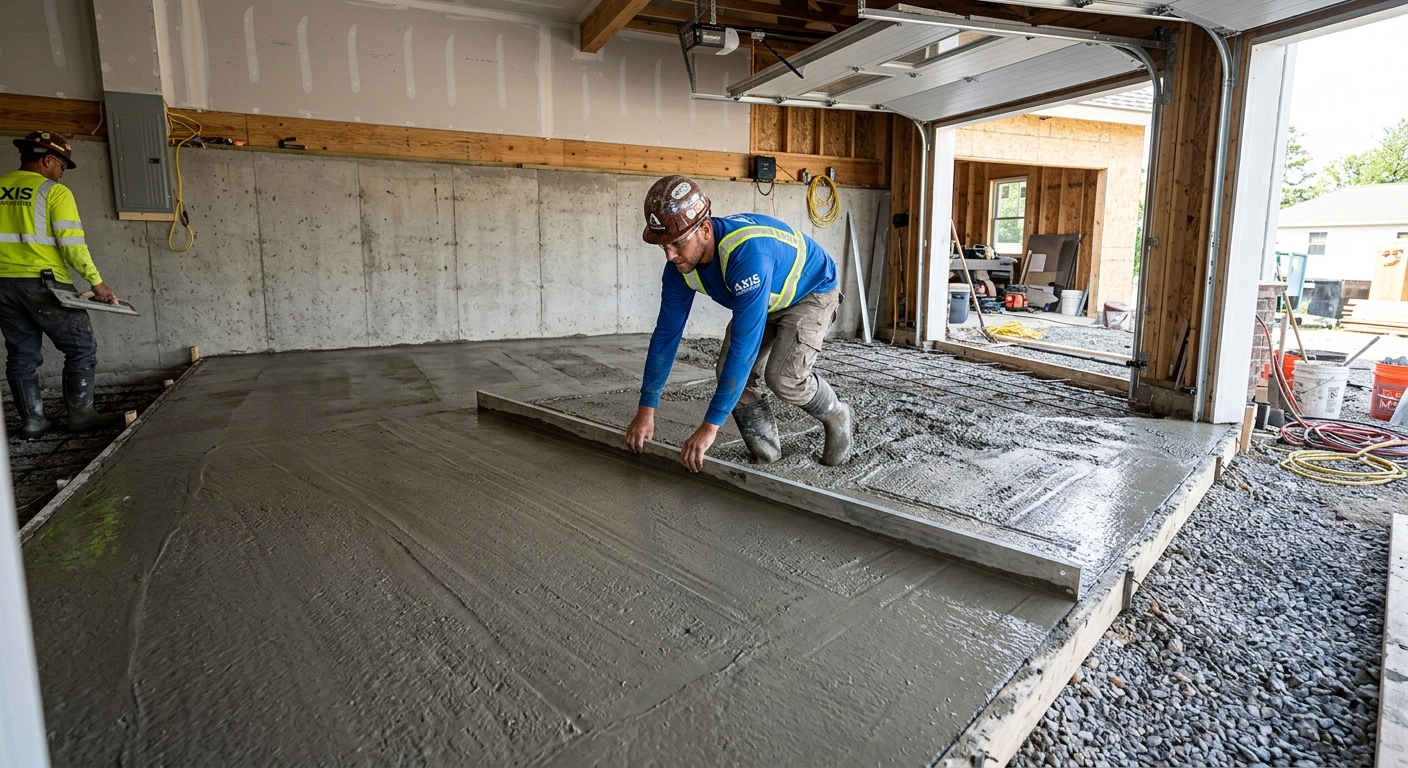
Concrete work options and costs in Paisley
Paisley, Ontario is a small community with a big need for durable outdoor concrete—driveways, patios and walkways see real wear from winter salt, wet springs and repeated freeze–thaw. With a population of 1,045 (Statistics Canada, 2021 Census), local homeowners still rely on contractors from the broader Toronto economic region when they need flatwork done right. Most of the concrete demand is tied to the housing stock in the area, where practical, long-lasting surfaces are a priority for getting in and out year-round. That means careful base prep, proper drainage, and the right mix design aren’t optional add-ons; they’re the difference between a surface that survives five to ten winters and one that starts spalling or heaving early.
In the Toronto economic region, concrete pricing is shaped by frost depth and freeze–thaw cycles. Ontario building practice requires structural footings to extend at least about 1.2 m below grade, and exterior slabs need air-entrained concrete plus well-planned control joints. Costs can also swing because the reliable pour season is shorter when temperatures routinely drop toward 10 °C or below, and crews often charge more when they have to protect fresh concrete with blankets or heating. If you’re having work done near the downtown core, or any property with limited truck access, labour time and extra material handling can add to the total. With that in mind, the table below compares the most common concrete options you’ll likely be offered in Paisley, along with typical specs and price bands.
| Application |
Typical Size |
Key Spec |
Finish Option |
Price Range |
| Concrete driveway (standard broom finish) |
400–600 sq. ft. |
Air-entrained mix, compacted granular base, control joints |
Broomed surface |
$7,200–$16,800 |
| Exposed aggregate driveway |
400–600 sq. ft. |
Air-entrained mix, proper curing, aggregate selection |
Exposed aggregate finish |
$9,000–$21,000 |
| Stamped concrete driveway or patio |
300–500 sq. ft. |
Air-entrained mix, integral colour (where specified), sealer |
Stamped pattern with release and finishing texture |
$10,800–$20,000 |
| Plain concrete patio or walkway |
200–350 sq. ft. |
Compacted base, edge forms, control joints |
Broom or light trowel finish |
$3,200–$9,100 |
| Garage floor (interior slab) |
350–520 sq. ft. |
Vapour barrier (as required), fibre or mesh, 4 in. typical thickness |
Broomed interior finish |
$6,300–$14,600 |
| Foundation footings (structural, below frost) |
Per linear foot varies by design |
Below frost depth, reinforcement per engineer, formwork and concrete pour |
Structural concrete (not decorative) |
$180–$300 |
Prices are estimates only and vary by project scope, site access and material selection.
What affects the price of concrete work in Paisley
Even when you’re comparing two quotes for the “same” concrete job, it’s common to see a 30–50% difference across the Toronto region and Ontario. The gap usually isn’t the finished look—it’s what’s underneath and how the crew has to manage timing. Toronto-area concrete contractors often build in allowances for deeper frost protection, freeze–thaw durability (air-entrainment), and the labour required for proper base preparation. Where some estimates assume straightforward access or standard soil conditions, others have to account for extra excavation, disposal, regrading, and more compacted granular base thickness. That’s why a driveway that sounds simple can drift from the $18–$28 per sq. ft. range into higher totals once forms, reinforcement, and truck time are priced in.
Frost line depth and freeze–thaw cycles dictate nearly every spec in the Toronto economic region: exterior slabs need air-entrained concrete mixes, and structural footings must extend below the design frost depth to prevent frost heave and differential movement. Colder conditions also reduce the reliable pour season, so crews may need cold-weather curing precautions—heating, insulated blankets, or protective covers—especially when temperatures trend down toward 10 °C or below. Also, de-icing salt accelerates surface wear, so sealing becomes more valuable on driveways and patios.
In Paisley, two real-world examples often move the needle. First, if your soil is more saturated in spring or poorly draining, contractors usually increase base prep and add under-slab drainage considerations—this can push a plain patio closer to the higher end of the $16–$26 per sq. ft. band. Second, if you want stamped or exposed finishes, labour time goes up (forms, texture work, curing and sealing), so price differences can be justified; however, if your base prep is rushed to save money, you’ll pay later in repairs rather than enjoying the aesthetic.
| Price Factor |
Why It Matters |
Cost Impact |
| Frost line depth |
Determines footing depth and form height |
Higher excavation and concrete volume; can add significant labour and material cost |
| Site preparation |
Excavation, grading, compacted granular base |
More hours for hauling, base material, compaction, and rework if soil is unstable |
| Reinforcement |
Rebar or wire mesh requirement |
Additional material + labour; may be required for driveways, garage slabs and structural work |
| Mix design |
Air-entrainment and compressive strength spec |
Air-entrained exterior mixes and higher spec strength can cost more but improve freeze–thaw durability |
| Finish type |
Broom vs. stamped vs. exposed aggregate |
Labour-intensive finishes add time for texture, timing, and finishing products |
| Pour size and concrete truck access to site |
Distance, number of truckloads, and line-up time |
Poor access can increase pumping/handwork and truck waiting time |
| Cold-weather curing precautions |
Heating and blankets |
Protective labour and equipment rentals can raise costs when temps fall |
| Control joint pattern and sealing cost |
Controls cracking and helps resist salt scaling |
Joints add layout labour; sealing adds a material and application line item |
Permits & regulations in Ontario
In Ontario, the rule of thumb is: if it’s structural (or tied to grading/major drainage changes), it usually triggers permitting. Concrete flatwork like patios, walkways and typical driveways often does not require a building permit by default, unless the work affects lot grading, impervious surface coverage limits, or the municipal right-of-way requirements. Structural concrete work—footings, foundation walls, grade beams, and other components that support a structure—does require a building permit and often engineered drawings reviewed by the municipality. Before any digging, confirm with the local authority that your specific scope doesn’t require a permit.
For compliance and risk management, don’t rely on verbal reassurance. Here’s how a Paisley homeowner can verify a contractor in Ontario, step-by-step: (1) ask for their certificate of insurance for liability and confirm it’s active for the job address; (2) verify workers’ compensation coverage (WSIB/WCB) by requesting their clearance or proof of coverage and checking the document details match the contractor; (3) for licensing/credentials, ask for the applicable business information they carry for contracting work and confirm it using the relevant online registry your contractor references; (4) request references on similar scale—driveways and exterior slabs in freeze–thaw climates—so you can judge workmanship, cracking control and finishing quality; and (5) keep a written scope that clarifies whether disposal, permit-related paperwork (if required), and protection of existing landscaping are included.
Getting concrete right in Paisley's freeze-thaw climate
Concrete problems in Paisley usually start long before you see cracks. In freeze–thaw conditions, water that gets under or into the slab freezes and expands, stressing the concrete and sub-base. If the base isn’t compacted to the correct depth, if drainage is poor, or if the mix isn’t air-entrained, the result is a higher chance of scaling and spalling on exterior flatwork. That’s why correct specification matters in the Toronto market: exterior slabs should use air-entrained concrete (commonly 5–7% air content for exterior flatwork) and include control joints placed to limit random cracking. Proper curing is the other make-or-break step—cold snaps in shoulder seasons can interrupt early strength gain, so contractors often need to protect the pour when temperatures drop toward 10 °C or below.
To spec the job correctly, focus on five items. First is base preparation: a compacted granular sub-base to suit local soils and frost conditions, with drainage that prevents standing water. Second is mix design: air-entrainment plus a minimum 32 MPa compressive strength for typical structural-requirement slabs and as stated in the scope. Third is control joints: a consistent spacing plan to create predictable crack lines. Fourth is curing: at least 7 days under suitable conditions. Fifth is sealing: a penetrating sealer applied after the concrete has fully cured, typically around 28 days, to help repel de-icing salts.
For a dollar example, homeowners sometimes choose a cheaper “plain” patio and skip sealer. If your patio is otherwise spec’d correctly, that might save a few hundred dollars in the short term, but in an Ontario freeze–thaw season the likely wear pattern returns quickly—especially where salts or de-icing come into contact. Paying for air-entrainment, control joints and curing protection is where the bigger durability payoff actually happens, not just the surface finish.
| Spec |
Why It Matters in Paisley |
What to Ask For |
Impact if Skipped |
| Compacted granular base (depth?) |
Prevents pumping and frost-related movement in saturated soils |
Base thickness plan, compaction method/spec, and drainage details |
Uneven settlement, cracking, and shortened service life |
| Air-entrained concrete mix (target air %?) |
Protects against freeze–thaw scaling and spalling |
Air content target (commonly 5–7% for exterior flatwork) and mix design confirmation |
More surface deterioration and early spalling |
| Compressive strength (MPa rating) |
Ensures strength gain and abrasion resistance |
Minimum 32 MPa (or as specified in your project scope) and slump/workability statement |
Surface wear and reduced ability to handle freeze–thaw stresses |
| Control joints (spacing per ACI guidelines) |
Manages where cracks occur during seasonal movement |
Planned joint spacing, saw-cut timing, and joint sealing plan |
Random cracking through finished surfaces |
| Minimum 7-day curing period |
Strength development supports durability through winter cycles |
Curing method (covers/blankets if needed) and weather protection plan |
Reduced durability, increased cracking risk |
| Penetrating sealer (when applied after cure) |
Helps repel de-icing salts and reduces moisture absorption |
Application timing (often around 28 days) and product type (penetrating) |
Faster salt-related scaling and colour/finish deterioration |
How to choose a concrete work contractor in Paisley
Start with verification. In Ontario, ask for (1) liability insurance—a current certificate of insurance naming the job address/project; (2) WSIB/WCB coverage proof—ask for clearance or documentation showing the account is active for workers on your project; and (3) the contractor’s business details so you can confirm they are operating properly and matching the quoted scope to your property. If they won’t provide documents promptly, that’s a red flag. Also request references from similar exterior work in freeze–thaw conditions—driveways and patios that have held up through winter are the best proof.
Next, get 2–3 itemised written quotes, not one lump number. You want a breakdown that shows labour and materials clearly: excavation/base, forms, reinforcement, concrete supply, finish labour, joints, sealing, and disposal. Read exclusions carefully—especially whether they include site restoration, snow/ice protection during cure, permit pulling (if structural work is involved), and hauling away waste. For warranty, confirm the workmanship warranty length and what it covers (cracking control, spalling, joint rework), and whether any manufacturer product warranty transfers to you. Finally, agree on a payment schedule: never pay more than about 10–15% upfront, and hold back a portion until the work passes final review and the site is cleaned up.
In writing, get the start date and completion estimate too—concrete success depends on scheduling around temperature and cure conditions. In Paisley’s seasons, delays can push pours into colder windows, so your contract should state what happens if weather forces a change.
- Ask for liability insurance and confirm it’s current for your address.
- Ask for WSIB/WCB proof (clearance or active coverage document).
- Request 2–3 recent references for driveways/patios done for Ontario freeze–thaw.
- Insist on an itemised quote: excavation/base, reinforcement, concrete, finishing, joints, sealing.
- Clarify thickness: typical exterior slabs and interior slabs should be stated in inches/mm.
- Confirm whether air-entrainment is included for exterior work.
- Confirm control joint spacing and timing (including saw-cut schedule).
- Ask how they handle cold-weather protection and curing when temps fall toward 10 °C.
- Confirm disposal/hauling is included (or priced separately) in the scope.
- Verify truck access/pumping plan and whether waiting time is billed.
- Check warranty terms: workmanship duration, exclusions, and whether it’s transferable.
- Set a payment schedule with a holdback until final inspection and cleanup.
Concrete red flags I see in Paisley: skipping air-entrainment for “regular” mix on exterior slabs; vague wording like “we’ll do the base” without thickness or compaction; no mention of control joints or sealing; quoting the finish first while treating base prep and curing as optional; and requesting full payment upfront or refusing to put weather-protection steps into the written scope.
Frequently asked questions — concrete work in Paisley
When is the best time to pour concrete in Paisley?
In Paisley and across Ontario, the best time to pour concrete is during the warmer part of the season when curing conditions are reliable. Contractors typically plan exterior pours for late spring through summer because concrete needs stable conditions to develop early strength. When temperatures drop toward 10 °C or below, finishing and curing become harder and crews may need heating, insulating blankets, and extra protection—those steps can add cost and can affect scheduling. For homeowners, the practical move is to book earlier rather than waiting for the first dry week. If you’re comparing quotes for something like a patio or walkway (often $16–$26 per sq. ft. depending on finish), try to align your schedule with the contractor’s weather plan so the pour isn’t rushed into a marginal curing window.
How long does concrete take to cure?
Concrete curing happens in stages. You’ll often hear about “set” time, but for durability in Ontario’s freeze–thaw climate, the more important timeline is strength gain under proper conditions. Most specs call for at least 7 days of curing under suitable temperature and protection, and full performance is commonly discussed around 28 days. In cold or damp conditions, contractors may extend protection time or use blankets/heating to keep the surface from freezing before adequate strength develops. If your project includes a penetrating sealer for exterior flatwork, contractors typically apply it after the concrete has cured—commonly around the 28-day mark—so it can actually repel moisture and de-icing salts. Skipping proper curing is one reason you’ll see early scaling and spalling on driveways and patios.
Do I need a permit for concrete work in Ontario?
It depends on what you’re building and how it affects your property. In Ontario, structural concrete work such as footings, foundation walls, and grade beams generally requires a building permit and often engineered drawings reviewed by the municipality. Typical concrete flatwork—patios, walkways and standard driveways—usually doesn’t require a permit unless it changes lot grading, impacts impervious surface coverage limits, or relates to municipal right-of-way requirements. For Paisley homeowners, the best approach is to confirm in advance with the local authority or the municipality handling permits before the first excavation. Also verify the contractor carries liability insurance and WSIB/WCB coverage, and ask for references on similar projects so you know the permit process (if needed) is handled correctly.
Concrete vs pavers for a patio in Paisley?
Both can work well in Ontario freeze–thaw, but they fail differently. Concrete is typically cheaper for larger continuous surfaces and provides a monolithic base when properly installed; with air-entrained mix where required, good drainage, control joints, and curing, it can handle wet-to-freeze cycles. Pavers offer flexibility and easier spot repairs, but they rely on correct base compaction, consistent slope, and joint sand maintenance—otherwise weeds, settling, and drainage issues show up. If you want a stamped or textured look, concrete can match that style; stamped concrete driveways or patios usually land in higher bands (often $24–$40 per sq. ft. depending on complexity), while plain concrete patio or walkway typically falls around $16–$26 per sq. ft. Your best choice is the one that matches your site drainage and how much maintenance you’re comfortable with.
How long does a concrete driveway last?
With good installation and freeze–thaw durability measures, a concrete driveway can last many years—often well beyond the first 5–10 winters—without major surface failure. The big drivers are base preparation, proper slope and drainage, air-entrained mix for exterior exposure, and control joint design to manage cracking. In Ontario, de-icing salts can accelerate surface scaling if the concrete surface stays porous, which is why sealing is important once the concrete has cured (often around 28 days). Many homeowners in Paisley are comparing options in the $18–$28 per sq. ft. driveway band; the higher end usually reflects better base work, reinforcement, and finishing/sealing details, not just a higher “brand” of concrete. If you see cracks and spalling early, it usually points to skipped air content, inadequate base compaction, or rushed curing.
What is air-entrained concrete and why does it matter here?
Air-entrained concrete is designed to include tiny, evenly distributed air bubbles within the mix. Those microscopic air voids give space for water to expand when it freezes, reducing internal pressure and protecting the surface from freeze–thaw scaling and spalling. In Paisley, Ontario’s winter conditions and the Toronto economic region’s freeze–thaw cycles make air-entrainment a major durability requirement for exterior flatwork like driveways, patios and walkways. It’s not just a “nice-to-have”: skipping it or using a non-air-entrained mix is one of the most common causes of early surface deterioration. When you’re reviewing quotes, confirm air-entrainment is included and ask about the target air content (commonly 5–7% for exterior flatwork) along with curing and jointing details.