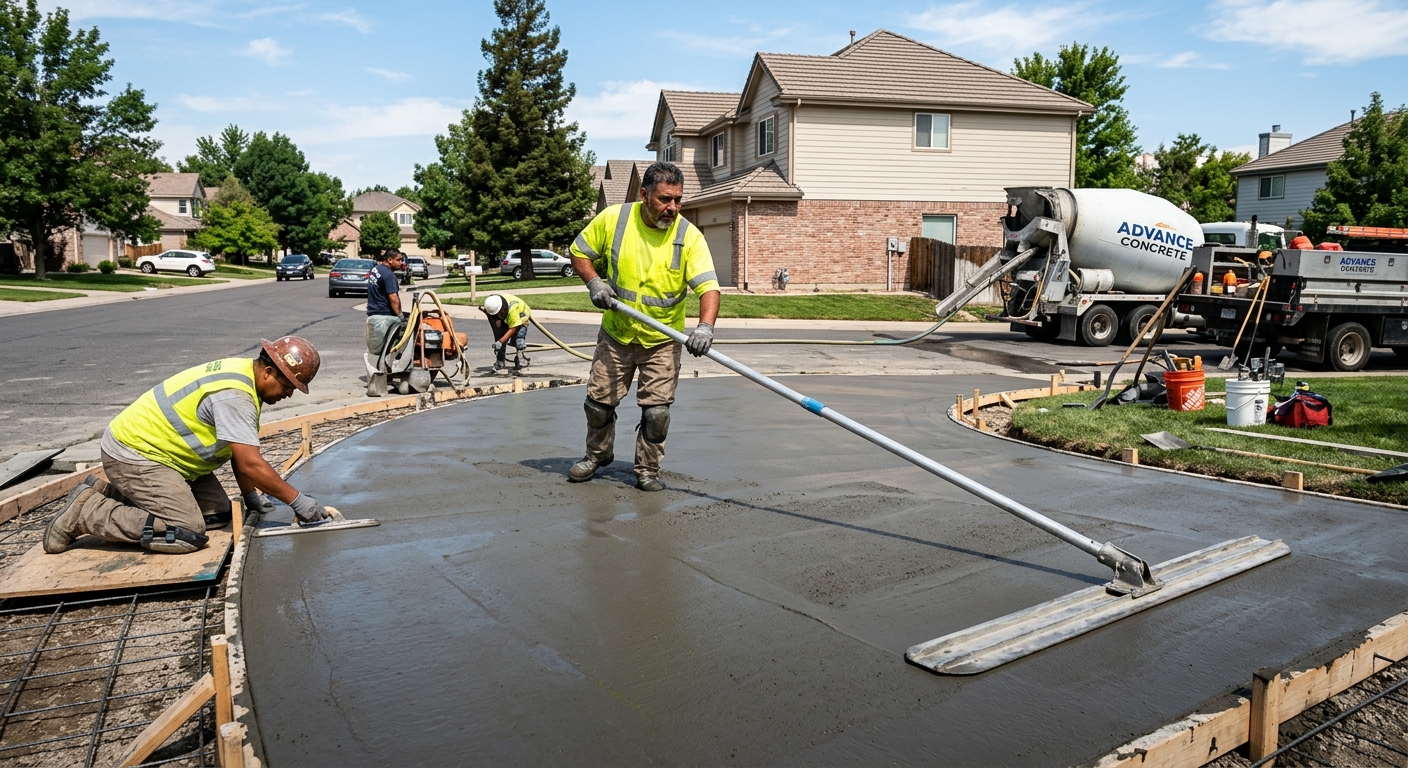
Concrete work options and costs in Constance Bay
Constance Bay is a small community, but the concrete needs are consistent—especially around driveways, patios and walkways that see winter salt, wet springs, and repeated freeze–thaw. With a population of 2,314 (Statistics Canada, 2021 Census), the housing mix is typically centred on single-family homes, which is exactly where concrete flatwork demand comes from. In this part of the Ottawa area, homeowners often keep older properties and larger lots, and that can mean more time spent on excavation, drainage fixes, and re-grading before any new concrete can be poured.
In the Toronto economic region, pricing is shaped by frost depth and contractor scheduling around curing. Most structural footings are built to extend at least 1.2 m (about 4 ft) below grade to control frost heave and differential movement, and exterior flatwork is commonly specified with air-entrained concrete plus proper thickness, base prep, and control joints to manage cracking through the winter. Because cold snaps can slow curing, many exterior pours are concentrated in the warmer months, which can raise labour pressure and minimum project pricing during peak season.
Locally, demand is especially strong in the Constance Bay village and lakeside access lanes, where driveways and walkways connect to the road and where surface drainage matters. Below is a practical price comparison homeowners use to budget—then you can line up your scope with a contractor’s site measurements and material selections.
| Application |
Typical Size |
Key Spec |
Finish Option |
Price Range |
| Concrete driveway (standard broom finish) |
400–500 sq. ft. |
6"–7" slab, air-entrained mix, granular base + compacted sub-grade |
Broom finish with control joints |
$18,000–$28,000 |
| Exposed aggregate driveway |
400–500 sq. ft. |
6"–7" slab, air-entrained mix, appropriate curing and wash |
Exposed aggregate (2-step process) |
$22,000–$34,000 |
| Stamped concrete driveway or patio |
300–450 sq. ft. |
4"–6" slab (scope dependent), air-entrained mix, proper release + curing |
Stamp pattern + colour release |
$24,000–$40,000 |
| Plain concrete patio or walkway |
200–350 sq. ft. |
4"–5" slab, air-entrained mix, drainage-aware base |
Float + broom or light broom |
$16,000–$26,000 |
| Garage floor (interior slab) |
400–600 sq. ft. |
4"–5" slab, vapour considerations, mesh or rebar based on design |
Standard trowel/finish |
$14,000–$25,000 |
| Foundation footings (structural, below frost) |
Varies by house |
Minimum 1.2 m below grade, engineered reinforcement layout |
Standard concrete placement (forms + finish to spec) |
$180,000–$300,000 |
Prices are estimates only and vary by project scope, site access and material selection.
What affects the price of concrete work in Constance Bay
In Toronto and the wider Ontario market, it’s common to see quotes for the same concrete job swing by 30–50%. The main reason isn’t “better concrete” every time—it’s that two contractors can price different realities: how much excavation is needed, whether drainage is corrected, what base depth is specified, and how reinforcement and mix design are handled. In Constance Bay, that variability tends to be amplified on older lots because grading, settlement, or water management issues often get discovered once surface asphalt or soil is removed.
For structural work, frost depth rules everything. Footings must extend below the design frost depth to prevent frost heave and differential movement; locally, the practical takeaway is that exterior structure commonly needs at least 1.2 m (about 4 ft) below grade for structural footings. For exterior slabs—driveways, patios and walkways—freeze–thaw is why contractors specify air-entrained concrete and careful thickness and control joints. When temperatures drop toward 10 °C or below, curing slows and contractors often add cold-weather protections (insulating blankets, heating, extended cure windows). That translates into labour time and scheduling costs. Also, Ontario’s use of de-icing salt can accelerate surface spalling if the mix and finishing aren’t right—so sealing becomes a smart durability step.
Two local examples that move the price quickly: (1) if a driveway needs a thicker base or improved drainage to handle wet soil, the project can move from a basic “slab replacement” to a larger rebuild; (2) if there’s limited truck access down a narrow lane, you can pay more for extra labour to manage placement. On typical budgets, standard broom-finish driveways often land in the $18,000–$28,000 range, while decorative options like stamped or exposed aggregate may land closer to $24,000–$40,000 once the extra prep, materials, and labour are included. Even a few centimetres of base difference and joint planning can account for hundreds to thousands in outcomes—especially as Constance Bay’s winter freeze–thaw stresses the surface.
| Price Factor |
Why It Matters |
Cost Impact |
| Frost line depth — determines footing depth and form height |
Deeper, properly formed footings reduce frost heave and movement |
Major increase; dictates excavation volume and rebar/formwork labour |
| Site preparation — excavation, grading, compacted granular base |
Concrete only performs well when the base supports and drains |
Moderate to major swing depending on soil type and water issues |
| Reinforcement — rebar or wire mesh requirement |
Controls cracking and supports load transfer where specified |
Moderate; materials + labour to place and hold steel |
| Mix design — air-entrainment and compressive strength spec |
Air-entrainment improves freeze–thaw durability; strength supports design loads |
Moderate; correct mix reduces early spalling risk |
| Finish type — broom vs. stamped vs. exposed aggregate |
Decorative finishes add processes and curing discipline |
Moderate to major; higher labour and material steps |
| Pour size and concrete truck access to site |
Placement efficiency affects labour time and consolidation quality |
Moderate; limited access can add labour hours and equipment |
| Cold-weather curing precautions — heating and blankets |
Maintains workable cure rates when temperatures drop toward 10 °C or below |
Moderate; can add daily set-up and longer timelines |
| Control joint pattern and sealing cost |
Joints manage cracking; sealing helps repel de-icing salts |
Low to moderate individually; major impact on long-term durability |
Permits & regulations in Ontario
In Ontario, structural concrete work generally needs a building permit. That includes footings, foundation walls, grade beams, and engineered structural concrete. For many projects, municipalities expect engineered drawings reviewed as part of the permit process—especially where reinforcement layouts, loads, and drainage details are involved. For concrete flatwork—driveways, patios, walkways and garage slabs—a permit is usually not required by default, but it can become necessary if the work affects lot grading, impervious surface coverage limits, municipal right-of-way requirements, or drainage and runoff to a neighbouring area. In Constance Bay, where surface water management matters, it’s worth confirming before you demo any existing walk or regrade a slope.
Step-by-step, here’s how a homeowner can verify contractor compliance in Ontario:
- Confirm the contractor’s licence/registration using the appropriate provincial tool for the trade category they claim (ask them what classification applies).
- Request a Certificate of Insurance showing general liability limits and the correct project address.
- Verify workers’ coverage (WSIB/WCB) by asking for proof directly—don’t rely on verbal reassurance.
- Check references for similar-scale concrete jobs (flatwork and/or foundation work depending on your scope).
- Make sure permits are clearly stated in the contract—who pulls them, what triggers them, and the expected timelines.
- Ask for engineered stamped drawings where structural work is involved.
Always confirm with the local authority before breaking ground—especially if your driveway impacts grading or if you’re dealing with existing drainage patterns.
Getting concrete right in Constance Bay's freeze-thaw climate
Concrete failures in Constance Bay aren’t mysterious—they’re usually predictable. The most common problems come from freeze–thaw stress paired with weak or poorly prepared base conditions and a mix that isn’t truly air-entrained for exterior exposure. If the base isn’t compacted to a stable depth and water can sit under a slab, it freezes, expands, and pushes the concrete up or cracks it. If the concrete mix lacks proper air content, the water inside the paste expands during freezing and can spall off the surface—often within a few seasons.
To spec the job correctly for the Toronto-region climate behavior (and the Ontario reality of winter salt and damp spring/fall), focus on five things. First, base preparation: use compacted granular sub-base to the right depth for local soil and frost protection, with drainage that won’t trap water. Second, mix design: air-entrainment is critical—commonly 5–7% air for exterior flatwork—and minimum 32 MPa compressive strength where required by your design. Third, control joints: plan spacing to give the concrete a place to crack cleanly instead of randomly. Fourth, curing: plan for at least 7 days of proper curing conditions, and use cold-weather protection when temperatures are low to avoid weak early strength. Fifth, sealing: apply a penetrating sealer after the cure window (often 28 days post-pour) to repel de-icing salts and reduce surface deterioration.
Ask the right technical question: “What air-entrained mix are you using and what’s the target air content?” That’s where you avoid the spalling issue caused by inadequate air-entrainment. On cost justification: if stamped concrete is priced closer to the $24,000–$40,000 range instead of a plain patio at $16,000–$26,000, it’s justified only if the contractor still does the base, joints and curing discipline correctly. Decoration doesn’t fix durability problems—spec and workmanship do.
| Spec |
Why It Matters in Constance Bay |
What to Ask For |
Impact if Skipped |
| Compacted granular base (depth?) |
Stable support prevents slab rocking during freeze–thaw |
Granular type + target depth (engineered to your soil/site), and compaction test/verification method |
Settlement, cracking, and shortened lifespan |
| Air-entrained concrete mix (target air %?) |
Air voids help the paste resist freezing expansion |
Target air content (typically 5–7% for exterior flatwork) and proof of mix design |
Spalling and surface scaling in winter |
| Compressive strength (MPa rating) |
Strength supports loads and improves long-term durability |
Minimum 32 MPa rating (or project-specific spec) and mix documentation |
Premature wear, raveling, and cracking |
| Control joints (spacing per ACI guidelines) |
Controls where cracking occurs under thermal stress |
Planned joint layout and spacing for your slab dimensions |
Random cracking and uneven surface repairs |
| Minimum 7-day curing period |
Cold or damp conditions require time to reach adequate early strength |
How curing will be protected and monitored during the first week |
Weak surface, scaling, and joint failure |
| Penetrating sealer (when applied after cure) |
Repels salt and moisture that trigger surface breakdown |
Confirm sealer type and that it’s applied after cure (often after 28 days) |
Faster surface deterioration and staining |
How to choose a concrete work contractor in Constance Bay
Choosing the right concrete contractor in Constance Bay starts with proof, not promises. For Ontario work, verify licensing/registration for the trade they claim, then request current Certificate of Insurance showing general liability for the project address. Next, ask for WSIB/WCB coverage proof—you should be able to see it in documentation before work begins. If they won’t provide either insurance or workers’ coverage, treat that as a major warning sign.
Then get 2–3 itemised written quotes rather than a lump sum. Look for a breakdown separating labour, concrete supply, excavation/base prep, reinforcement, forms, finishing, jointing, and any sealing. A good quote should also state what’s excluded: topsoil replacement, disposal of excess material, sawcutting, removal of existing concrete, and whether any permits are included (if your scope triggers them). For warranties, ask for the workmanship warranty length and whether it covers cracking, spalling, and settlement defects. Also ask about product/manufacturer warranty coverage on concrete additives or sealers—some are time-limited and not always fully transferable.
Payment scheduling matters. Avoid paying more than 10–15% upfront; hold back a portion until the job is complete and the surface work (including curing/finishing steps) is done. Finally, insist on a written start date and an estimated completion window—Toronto-area concrete projects can run behind in the cold season due to curing requirements.
- Confirm concrete mix design is air-entrained for exterior flatwork.
- Ask for base depth and compaction method, not just “we’ll prep the soil.”
- Verify reinforcement plan (mesh/rebar) matches the load and slab design.
- Check that control joint layout is shown on the quote or drawings.
- Ask how curing will be protected in cool weather (blankets/heating if needed).
- Clarify disposal: included or extra for haul-away and landfill fees.
- Confirm finishing details: broom, light broom, stamped system steps, or aggregate process.
- Require a written timeline and weather protection plan.
- Ask whether sealing is included and who supplies the sealer and application date.
- Review warranty terms in plain language (what’s covered, timelines, exclusions).
- Keep the contract to a clear scope: removals, replacements, and grading responsibility.
- Don’t sign until you’ve seen insurance and WSIB/WCB proof.
Concrete red flags in Constance Bay include: vague quotes that don’t separate base prep or reinforcement, refusing to confirm air-entrainment for exterior work, skipping documented curing protection in cool weeks, no written joint pattern plan, and “we’ll be there when we can” scheduling without a start/completion estimate.
Frequently asked questions — concrete work in Constance Bay
How do I maintain concrete in Constance Bay's freeze-thaw climate?
In Constance Bay, maintenance is about reducing moisture and protecting the surface from de-icing salt impacts. Start with drainage: make sure water can shed away from the slab or walkway so it doesn’t sit and freeze underneath. Clean the surface regularly, and avoid harsh scrubbing that damages the top paste. Use the right de-icing approach—use salt carefully and consider sand/traction mixes instead of heavy salt loads whenever practical. If your slab is new, sealing helps: a penetrating sealer applied after full cure (commonly around 28 days post-pour) can repel salts and slow surface deterioration. For exterior flatwork, follow the contractor’s joint and crack monitoring plan; small joint gaps are normal, but growing gaps or rocking suggests base or drainage issues.
What causes concrete to spall in Constance Bay winters?
Spalling is usually the result of water getting into the concrete and freezing, combined with a mix that isn’t properly air-entrained for exterior exposure. In Ontario winters, repeated freeze–thaw plus de-icing salt accelerates surface scaling when the top layer can’t handle expansion pressure. Another frequent contributor is poor surface finishing or rushing the job so curing is inadequate—early strength development matters. Base problems can make it worse too: if a slab rocks or if water pools under it, the stress is concentrated at the surface. If you’re budgeting, don’t assume the cheapest option is best; for instance, a plain patio at around $16,000–$26,000 can be durable only when air entrainment, thickness, joints, and curing are done correctly—saving there by cutting mix or curing can lead to spalling sooner.
What is rebar and when is it required in Ontario?
Rebar (reinforcing steel) is used to add tensile capacity and control cracking in structural concrete. In Ontario, whether you need rebar for a particular concrete element depends on the design loads and the structural scope, not the contractor’s preference. For structural work such as footings, foundation walls, and grade beams, reinforcement is commonly required and typically specified by engineers and reflected in permit drawings. For flatwork like driveways and garage floors, you might see wire mesh or rebar depending on slab thickness, soil conditions, and expected loads. Your contractor should explain what reinforcement is being placed and why—especially if they’re dealing with a load-bearing driveway area or uneven sub-grade. Ask for the design basis and confirm it matches what was permitted (when permits apply for your scope) and the local frost expectations.
How long does a concrete project take in Constance Bay?
Project duration depends on scope, access, and—most importantly for Ontario—weather and curing time. For simple exterior flatwork like a patio or walkway, removal, base prep, forming (if needed), placement, finishing, and curing typically mean the concrete pour happens on a specific day, followed by protection during the cure period. While you may not “need to stay off it” immediately, contractors usually plan at least 7 days before normal heavy use, with sealing typically after full cure (often 28 days). Driveways can take longer because of excavation, base work, and possible drainage corrections. Stamped or exposed aggregate finishes add extra steps and timing. If you’re comparing options, remember that a standard driveway in the $18,000–$28,000 band may still take multiple days of prep and curing protection; decorative work in the $24,000–$40,000 range usually adds process time. Always get your start and completion estimate in writing to avoid surprise weather delays.
What is a concrete overlay and is it suited to Constance Bay?
A concrete overlay is a new concrete layer poured over an existing slab (or sometimes over prepared surfaces) to restore appearance and function without fully removing the original concrete. Overlays can be a fit when the existing slab is still structurally sound—meaning it isn’t badly heaved, extensively broken, or failing at the sub-grade level. In Constance Bay’s freeze–thaw environment, overlays can succeed, but only if water management is addressed and the existing concrete is properly prepared (often including removal of weak surface material and correct bonding methods). If the original slab is already rocking or draining poorly, an overlay can hide the symptoms instead of fixing the root cause. Pricing varies widely, but if you’re comparing overlay ideas against full replacement driveways in the $18,000–$28,000 range, ask for a documented condition assessment first: crack pattern, differential movement, and drainage issues determine whether overlay is smart or a gamble.
How do I seal concrete to protect it in Constance Bay?
Sealing is mainly about adding a protective layer that helps repel moisture and de-icing salts, which reduces salt-driven surface deterioration. For best results in Ontario, seal after the concrete has fully cured—commonly around 28 days post-pour—so you’re not trapping moisture beneath the sealer. Use a penetrating sealer designed for exterior concrete; surface film-forming products can behave differently with Ontario’s freeze–thaw. Before sealing, the surface should be clean, dry, and free of dust or curing compounds that interfere with penetration. Many homeowners ask about timing: if you seal too early, you can reduce performance. In your quote, request whether sealing is included and which product is being applied, plus the application date. When sealing is paired with correct air-entrained mix, base prep, and control joints, it significantly improves the odds your driveway or patio lasts through the winters.