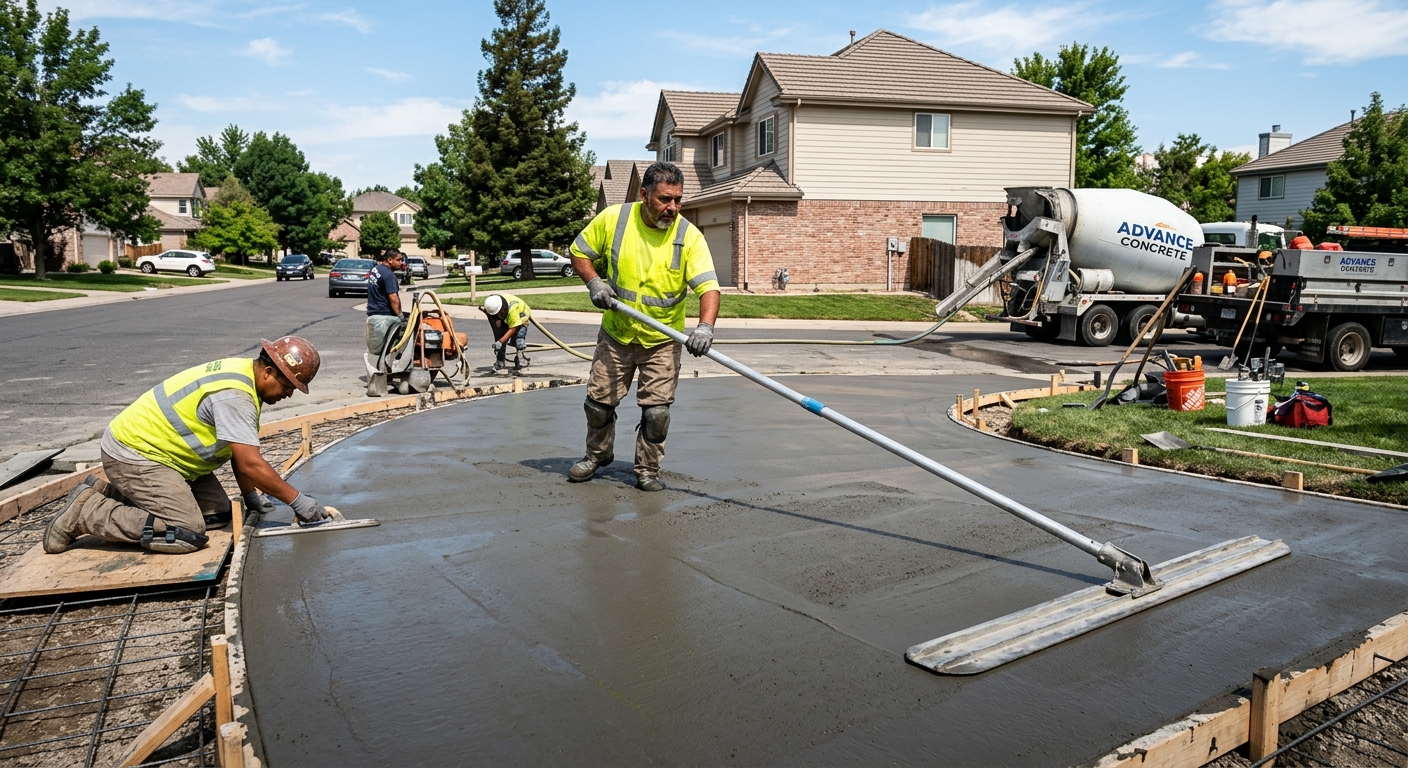
Concrete work options and costs in Cambridge
Concrete work is a common need for homeowners in Cambridge, especially as many properties are single-detached homes—56.8% of dwellings—where residents often upgrade driveways, patios, and walkways. In Cambridge’s housing mix, a large portion of the stock was built before 1981 (48.4% of homes), and older lots frequently have drainage issues, settled bases, or deteriorated slabs that need replacement rather than patching. With 35,315 homeowner households (68.9% of households own) in the city (Statistics Canada, 2021 Census), there’s steady demand for exterior concrete in neighbourhoods like Hespeler Village and the West Galt area, where infill and ongoing renovations keep concrete contractors busy.
In the Kitchener–Waterloo–Barrie economic region, the freeze-thaw climate is the big driver of cost and specifications. Frost depth commonly sits around 1.0–1.2 m, so footings must be set below frost line to reduce heave and cracking. Exterior flatwork also needs air-entrained concrete and a properly compacted granular sub-base, plus well-planned control joints to limit random cracking during repeated winter cycles. Labour and equipment costs can run higher here because excavation often takes longer and the effective pour season is shorter, particularly when nighttime temperatures drop.
As a result, two bids for the “same-looking” driveway can differ—often because one contractor includes more base prep, drainage, reinforcement, curing protection, and proper jointing. Use the table below as a starting point for what typical Cambridge projects cost, then we’ll break down what moves the price up or down in Ontario’s climate.
| Application |
Typical Size |
Key Spec |
Finish Option |
Price Range |
| Concrete driveway (standard broom finish) |
350 sq. ft. |
Air-entrained mix, compacted granular base, control joints |
Broomed surface |
$15,000–$25,000 |
| Exposed aggregate driveway |
350 sq. ft. |
Air-entrained mix, proper cure, aggregate exposure |
Exposed aggregate (bush-hammer or retarder) |
$18,000–$30,000 |
| Stamped concrete driveway or patio |
300 sq. ft. |
Air-entrained mix, integral colour, proper jointing plan |
Stamps + colour hardener/sealer |
$22,000–$35,000 |
| Plain concrete patio or walkway |
250 sq. ft. |
Air-entrained mix, slope + drainage, control joints |
Light broom / trowel-finish edge |
$14,000–$22,000 |
| Garage floor (interior slab) |
400 sq. ft. |
Vapour barrier, compacted base, reinforcement as required |
Float + light broom, joints to spec |
$16,000–$28,000 |
| Foundation footings (structural, below frost) |
Approx. 120 linear ft. |
Excavation to frost line, reinforced concrete, drainage considerations |
Structural finish (not decorative) |
$14,500–$26,400 |
Prices are estimates only and vary by project scope, site access and material selection.
What affects the price of concrete work in Cambridge
In Cambridge (and the wider Kitchener–Waterloo–Barrie region), the same driveway or patio can swing by 30–50% between quotes because the scope “hidden inside the spec” is rarely identical. One contractor may include the granular base depth, air-entrained mix, reinforcement, drainage detailing, curing protection, and control joint layout that a durable cold-climate slab needs—while another may price the concrete itself and leave key site work as an allowance. In a cold, high freeze-thaw climate with frost depth commonly around 1.0–1.2 m, the foundation and slab details can’t be an afterthought.
Frost line depth dictates every part of a structural pour: footings must extend below the design frost depth to prevent frost heave and cracking (Ontario’s design depths can be roughly 1.5–2.4 m depending on location and conditions). Exterior slabs also require air-entrained concrete to survive freeze-thaw cycles—air content and mix design directly impact durability. Colder regions typically have a shorter pour season, so cold-weather curing precautions (insulating blankets, heating, and protected curing time) add cost. Finally, de-icing salt accelerates surface spalling on poorly sealed surfaces, so sealing is a smart cost add if you want the slab to last through winter.
Two common Cambridge examples show where money is gained. First, adding proper compacted granular sub-base and thickness can reduce random cracking; it’s often the difference between a “cheap” driveway and one that looks good five winters later. Second, switching from plain concrete to a stamped finish isn’t just decorative—integral colour, stamp labour, and sealing can raise the project, which is justified when you compare typical concrete patio/walkway pricing (around the $14–$22 range) against stamped & decorative work (around $22–$35).
Housing age matters, too. For homes built before 1981, lots were often graded differently and may have older drainage paths, which can require more excavation and regrading—sometimes adding thousands to the final cost.
| Price Factor |
Why It Matters |
Cost Impact |
| Frost line depth — determines footing depth and form height |
Footings must be placed below frost to prevent heave and cracking |
Higher excavation and concrete volume can materially increase labour and materials |
| Site preparation — excavation, grading, compacted granular base |
Durable slabs need stable, well-drained, compacted support |
More removal/haul-away and granular import increases cost |
| Reinforcement — rebar or wire mesh requirement |
Controls cracking in larger slabs and heavier-use areas |
Additional material + labour for placement and support chairs |
| Mix design — air-entrainment and compressive strength spec |
Air-entrainment improves freeze-thaw durability |
Better materials cost more but reduce early failure risk |
| Finish type — broom vs. stamped vs. exposed aggregate |
Finish affects labour complexity, materials (colour/sealer), and tooling |
Stamped/exposed finishes typically add significant labour and products |
| Pour size and concrete truck access to site |
Access affects pump vs. chute, setup time, and schedule constraints |
Pumping, longer carries, or multiple loads increases labour/equipment |
| Cold-weather curing precautions — heating and blankets |
Protects early strength gain and prevents freeze-related surface issues |
Temporary heat, blankets, and longer protection can add several thousand dollars |
| Control joint pattern and sealing cost |
Joints limit random cracking; sealing helps resist salt-related spalling |
Proper jointing and sealing add line-item cost but extend service life |
Permits & regulations in Ontario
In Ontario, structural concrete work generally requires a building permit, especially for concrete foundations and support elements like footings, foundation walls, and grade beams. For many projects, municipalities also expect engineered drawings for structural details, since the frost-protection requirements and load design have to match the building’s specifics. For concrete flatwork—driveways, patios, and walkways—permits are often not required as long as the work doesn’t change lot drainage, alter required grading, or affect impervious surface limits, and it stays clear of municipal right-of-way rules. That said, exemptions aren’t universal: if your project involves re-grading near the foundation, adding drainage changes, or modifying access/curbs, you should confirm requirements before excavation.
Before you sign a contract in Cambridge, verify three things: (1) the contractor’s licensing/registration for the work they’re doing, (2) liability insurance, and (3) WSIB/WCB coverage (as applicable). Step-by-step, start by asking for a current certificate of insurance and a clearance letter. Then check the contractor’s business profile using provincial online resources for registration/standing where available, and ensure coverage dates align with your job start and finish dates. Finally, request references from similar-scale Cambridge projects (driveways/patios in freeze-thaw conditions) and ask who is responsible for disposal and site restoration—those details often show whether the bid is truly complete.
Getting concrete right in Cambridge's freeze-thaw climate
Concrete fails in Cambridge winter cycles mostly when water gets in, freezes, and expands—or when the slab moves because the base wasn’t built for frost. The most common symptom homeowners notice is surface spalling (scaling) and random cracking in exterior slabs. To prevent this, specify the full system: base preparation, correct mix design, control joints, proper curing, and sealing.
First is base prep. You want a compacted granular sub-base sized for local soil conditions and drainage so water doesn’t sit under the slab. Second is mix design: for exterior flatwork, require air-entrainment (typically 5–7% target air content) and minimum 32 MPa compressive strength. In a high freeze-thaw climate with frost commonly around 1.0–1.2 m, air bubbles relieve internal pressure when water freezes, which is the key protection against spalling.
Third is control joints. They create predictable weak points so cracking happens where you designed it, not randomly through the driveway or patio. Spacing should follow recognized guidance (and match slab thickness and expected movement). Fourth is curing. Even though a slab may feel “set,” it needs protection and curing—minimum 7 days under proper conditions, and additional measures (blankets or heat) if the weather turns cold. Fifth is sealing. Apply a penetrating sealer after the slab has cured—often around 28 days post-pour—so de-icing salts and moisture don’t attack the surface.
If you’re comparing options on price, remember durability isn’t optional in Cambridge. For example, a plain patio/walkway in the ~$14–$22 range can be a smart value if you keep joints and curing right. A stamped driveway (often in the ~$22–$35 range) can be worth it, but only if the contractor still builds the correct base and uses the right air-entrained mix—decorations don’t fix freeze-thaw failure.
| Spec | Why It Matters in Cambridge | What to Ask For | Impact if Skipped |
|
|
| Compacted granular base (depth?) |
Stable support and drainage reduce settlement and frost-related movement |
Confirm base depth for your soil and frost considerations; request compaction method/percent if available |
Higher risk of uneven settling, cracks, and joint failure |
| Air-entrained concrete mix (target air %?) |
Relieves freeze-thaw pressure and helps prevent spalling in winter |
Ask for target air content (commonly 5–7% for exterior flatwork) |
Surface scaling/spalling and premature deterioration |
| Compressive strength (MPa rating) |
Supports durability and resistance to wear in freeze-thaw exposure |
Minimum 32 MPa for typical exterior structural flatwork per spec expectations |
Lower strength gain can lead to surface damage during early winter conditions |
| Control joints (spacing per ACI guidelines) |
Controls where cracks form as the slab expands/contracts |
Request joint layout, spacing, and saw-cut/timing plan |
Random cracking and wider repairs after the first harsh winters |
| Minimum 7-day curing period |
Critical early strength development; cold weather makes it even more important |
Confirm curing method and any cold-weather protection (blankets/heating if needed) |
Weak surface layer, scaling risk, and reduced long-term performance |
| Penetrating sealer (when applied after cure) |
Repels water and salt exposure that drive spalling |
Ask for application timing (often around 28 days post-pour after full cure) |
More moisture and salt intrusion; faster surface wear |
How to choose a concrete work contractor in Cambridge
Choosing the right concrete contractor in Cambridge is less about flashy pictures and more about verifying coverage and details. Start with Ontario licensing/registration for the work they perform, then confirm liability insurance and WSIB/WCB coverage. To check each item, request: (1) a current certificate of insurance (make sure it lists your project address or at least includes your work period), (2) WSIB/WCB clearance or proof of coverage for workers, and (3) their business registration and references. If a contractor can’t provide documents quickly, that’s usually a sign their bids aren’t backed by consistent workmanship and safety compliance.
Next, ask for 2–3 itemised written quotes with a labour and materials breakdown (not just one lump sum). Confirm what’s included: excavation and disposal, base supply and compacting, reinforcement, formwork, saw-cut joints, curing protection, and sealing (if specified). Also clarify permit pull responsibilities if the job involves structural components like footings or foundation walls. Read exclusions carefully—many “low” bids exclude things that matter most in freeze-thaw weather, like proper curing or base thickness.
Warranty matters: ask for workmanship warranty length, whether product/manufacturer warranties apply, and whether those warranties are transferable. On payment, never pay more than 10–15% upfront. Hold back part of the payment until the final finishing and clean-up are complete. Finally, get the start date and completion estimate in writing, especially because Cambridge winter conditions can impact curing windows.
- Request proof of liability insurance with coverage dates matching your schedule.
- Ask for WSIB/WCB clearance or proof of coverage before work begins.
- Confirm the contractor’s registration/licensing for the type of concrete work being quoted.
- Get an itemised quote (labour + materials + equipment) rather than a single number.
- Verify base preparation details: excavation depth, granular type, and compaction approach.
- Confirm air-entrained mix and minimum compressive strength in writing.
- Require a joint plan: spacing, location, and saw-cut timing.
- Ask how they handle cold weather curing (blankets/heating) if temperatures drop.
- Confirm reinforcement requirements (rebar/wire mesh) and how it will be supported off the base.
- Check whether sealing is included and the required cure time (around 28 days post-pour).
- Clarify disposal, haul-away, and site restoration in the scope.
- Set payment milestones: small deposit only, with a holdback until completion.
Concrete red flags in Cambridge include quotes that don’t mention air-entrainment for exterior work, no written joint layout (or jointing “as needed”), missing details on base depth/compaction, vague curing plans during cold snaps, and warranties that cover only materials—not the workmanship.
Frequently asked questions — concrete work in Cambridge
What is air-entrained concrete and why does it matter here?
Air-entrained concrete contains microscopic air bubbles that help relieve pressure as water in the concrete freezes and expands. In Cambridge and the Kitchener–Waterloo–Barrie region, freeze-thaw cycles are frequent, so exterior slabs without adequate air content are much more likely to spall (scale) on the surface. That’s why many exterior flatwork specifications target roughly 5–7% air for driveway and patio exposure. If you’re comparing bids, ask the contractor to confirm the mix design includes air-entrainment and the minimum compressive strength. This is a big reason durable driveway pricing isn’t “just cement”—it protects your investment, whether you’re in a standard broom-finish range or stepping up to stamped work (Statistics Canada, 2021 Census).
How do I prepare the base for a concrete slab?
Base prep is where concrete quality is made or lost in Ontario’s climate. For a slab in Cambridge, you generally need proper excavation, removal of unsuitable material, and placement of a compacted granular sub-base to the correct depth for your soil and drainage conditions. The goal is to create stable support and prevent water from collecting under the slab during wet periods that later freeze. Ask your contractor how they’ll grade the base for drainage, what granular material they’ll use, and how they’ll compact it. If you’re pricing a patio/walkway that often falls in the ~$14–$22 band, base prep must be included—otherwise you risk settlement and cracking that will cost more than the initial “savings.”
How do I compare concrete quotes?
To compare quotes fairly in Cambridge, break them down into scope, materials, and curing—don’t compare only the total. Look for confirmation of air-entrained mix, minimum compressive strength, and whether reinforcement is included where needed. For exterior work, compare base preparation details (excavation depth and granular compaction), control joint spacing, and saw-cut timing. Also check whether curing protection is included for cold snaps and whether sealing is offered (often applied after cure, commonly around 28 days post-pour). It’s normal for one bid to be higher; for example, stamped & decorative concrete typically lands around the ~$22–$35 range versus plain patio/walkway work around ~$14–$22. The right question is whether the higher quote includes the same survival specs for our freeze-thaw winters.
Can concrete be poured in cold weather in Cambridge?
Yes, concrete can be poured in cold weather in Cambridge, but it requires cold-weather controls so the concrete gains strength properly before freezing. The contractor may use insulating blankets, tenting, heaters, and careful temperature monitoring to protect the slab during early curing. The risk is not only freezing at the surface—it’s inadequate strength gain that can lead to later scaling or weaker performance. Ask for their cold-weather curing plan in writing (how they monitor temperatures, how long protection will be maintained, and what measures they use). Avoid early de-icing salt use and heavy loading until the concrete has reached adequate strength. If the quote doesn’t mention curing protection, that’s a common reason bids diverge by 30–50% in the Kitchener–Waterloo–Barrie region.
How do I maintain concrete in Cambridge's freeze-thaw climate?
Maintenance is mostly about keeping water and salts away from the surface and addressing small issues early. For most exterior slabs, start with a penetrating sealer applied after curing—often around 28 days post-pour—so moisture and de-icing salts don’t penetrate and drive spalling. Sweep debris regularly; it keeps the surface dry and reduces stain and damage. Use de-icers carefully: excessive salt and scraping with metal tools can speed up surface scaling in our winters. Repair hairline cracks quickly with an appropriate concrete crack sealant to limit water entry. If your concrete is in a high-traffic driveway area, schedule an inspection after the first winter cycle; early repairs are far cheaper than replacing a failed slab. Cambridge’s older housing stock means many lots have drainage improvements worth doing alongside concrete maintenance.
What causes concrete to spall in Cambridge winters?
Spalling in Cambridge winters is usually caused by moisture entering the concrete and freezing repeatedly, combined with insufficient air-entrainment or inadequate curing. When water freezes, it expands; without enough microscopic air voids, the internal pressure can break down the surface paste. De-icing salts then amplify the problem by drawing moisture to the surface and accelerating deterioration of the outer layer. Cold-weather placement without proper curing blankets or heating also increases risk because the surface can freeze before the concrete reaches adequate early strength. If you’re dealing with spalling, don’t just patch cosmetically—ask what mix design and curing approach was used originally. For new work, specify air-entrained concrete and consider sealing for better winter performance. This is one of the biggest reasons exterior driveway and patio bids can differ even when the appearance looks similar.