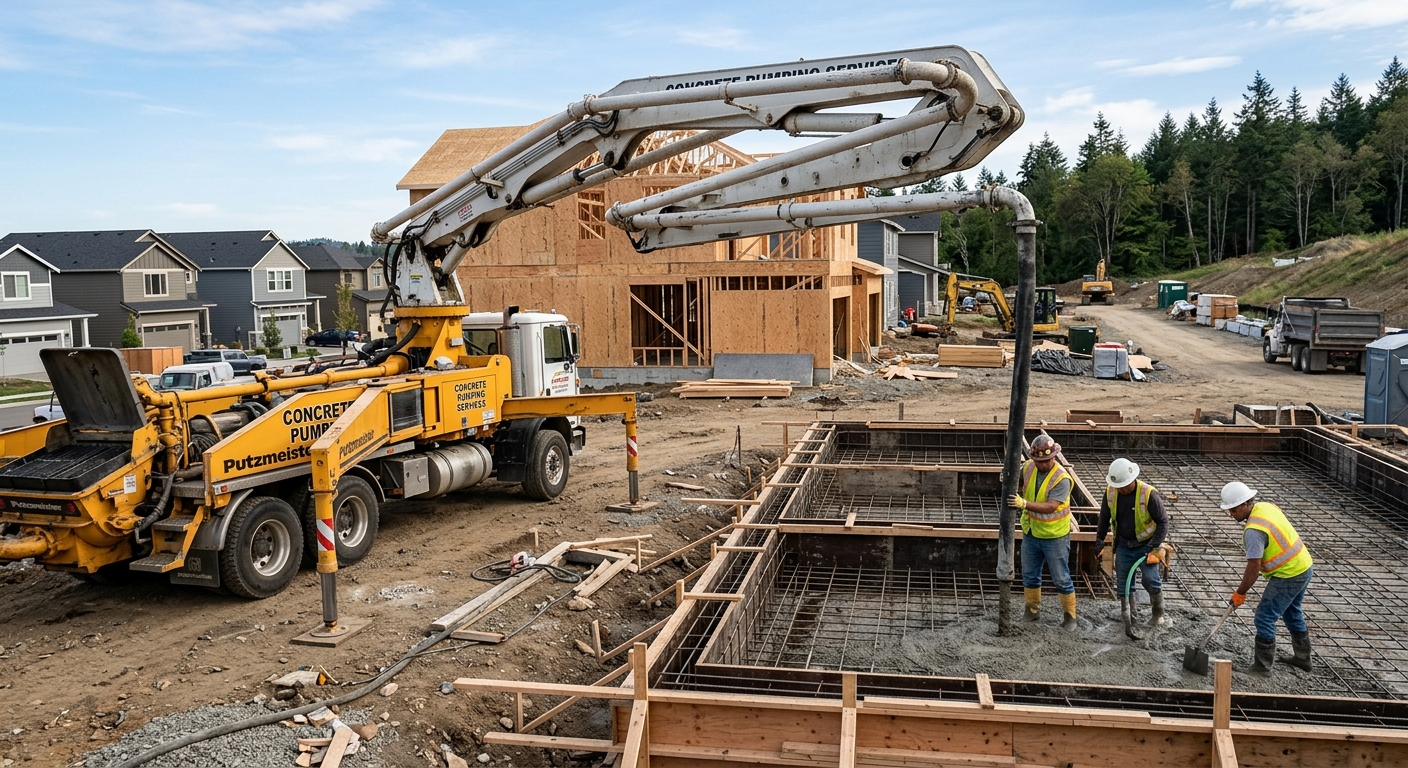
Concrete work options and costs in UDistrict
Concrete work in UDistrict, British Columbia is shaped by the neighbourhood’s coastal-wet weather and a shallow design frost line—yet the freeze–thaw cycles still demand careful foundation and slab specs. UDistrict is a compact community within the Lower Mainland–Southwest, and the housing stock supports steady demand for driveways, patios, and entry walkways for homeowners and rental properties. With a population of 3,775 (Statistics Canada, 2021 Census), projects are often concentrated around established residential streets where site access, scheduling around rain, and neighbourhood coordination affect turnaround times.
In this region, local practice typically assumes a frost depth around 450 mm / 18". That means footings, piers, and thickened edges are placed below that depth to reduce frost heave risk. Even with milder winters, alternating wet-cold periods can saturate subgrades, and poor drainage or non-air-entrained mixes can lead to scaling or spalling. Labour availability is also a practical factor: when rain limits prep and finishing windows, crews may book further out, which can narrow the schedule and influence unit pricing.
In UDistrict, areas like the University Endowment Lands/near the university boundary are especially active, because high foot traffic and frequent renovations drive more flatwork upgrades (walkways, ramps, and exterior entry slabs). Once you’ve decided what you need, the next step is comparing finish levels and scope—use the ranges below as a practical starting point for your budgeting.
| Application |
Typical Size |
Key Spec |
Finish Option |
Price Range |
| Concrete driveway (standard broom finish) |
300–500 sq. ft. |
Reinforced slab with compacted granular base |
Broom finish, control joints |
$18,000–$28,000 |
| Exposed aggregate driveway |
300–500 sq. ft. |
Air-entrained mix + base drainage attention |
Exposed aggregate with sealer |
$22,000–$36,000 |
| Stamped concrete driveway or patio |
250–450 sq. ft. |
Reinforced slab, air-entrained, proper joints |
Stamped pattern with colour hardener |
$20,000–$40,000 |
| Plain concrete patio or walkway |
200–350 sq. ft. |
Reinforced or welded wire depending on span |
Broom finish, minimal slope to drain |
$16,000–$26,000 |
| Garage floor (interior slab) |
400–600 sq. ft. |
Vapour barrier (as required), reinforced slab |
Power trowel or broom finish |
$14,000–$24,000 |
| Foundation footings (structural, below frost) |
Varies by house layout |
Excavate to below design frost depth, form & rebar |
Structural concrete |
$200–$350 |
Prices are estimates only and vary by project scope, site access and material selection.
What affects the price of concrete work in UDistrict
In UDistrict and across the Lower Mainland–Southwest, it’s common to see quote spreads of 30–50% for the “same” concrete job. That difference usually comes down to specs, base prep, and the practical realities of pour days in a coastal-wet climate. In colder parts of British Columbia, or on tight sites, contractors may need more labour time for excavation, forming, curing protection, and logistics—so unit costs don’t stay uniform even within the same general region.
Two big cost drivers are frost performance and freeze–thaw durability. Even with a frost depth around 450 mm / 18" in coastal BC practice, footings and thickened edges still must extend below design frost depth to help prevent frost heave. Exterior slabs also require air-entrained concrete to handle repeated freeze–thaw cycles and wetting during heavy rainfall. When temperatures drop, crews may use curing blankets or insulated protection to keep concrete developing strength—this reduces schedule risk but adds labour and material cost. Finally, de-icing salt can accelerate surface deterioration, so sealing is often recommended for driveways and entry slabs.
Here are a few realistic UDistrict examples. A broom-finished patio might land near the $16–$26 band, but if your subgrade is soft and needs deeper compacted granular and improved drainage, the prep scope can push pricing toward the top end. Similarly, a stamped driveway may feel “only a finish upgrade,” but it can require more tight scheduling for timing, extra reinforcement detailing, and more labour—so it can justify the higher $22–$36 per-band budget when done correctly.
| Price Factor |
Why It Matters |
Cost Impact |
| Frost line depth |
Footings must be placed below the design frost depth to prevent heave |
Higher excavation and forming height increases cost |
| Site preparation |
Excavation, grading, and compacted granular base determine slab performance |
More labour and granular material on soft or wet soils |
| Reinforcement |
Rebar or wire mesh helps control cracking and supports load paths |
Additional steel, chairs, and labour for placement |
| Mix design |
Air-entrainment and compressive strength specs improve freeze–thaw durability |
Specialty mix and quality control can increase material costs |
| Finish type |
Broom finishes are simpler; exposed aggregate and stamping require more labour |
More steps (stains, texture, wash timing) drive price up |
| Pour size and concrete truck access to site |
Narrow driveways or distance to discharge affect labour and pumping needs |
Extra time, smaller batches, or pump add-on charges |
| Cold-weather curing precautions |
Cold nights and humidity slow strength gain and increase cure-protection time |
Heating/blankets add labour and equipment rental |
| Control joint pattern and sealing cost |
Joints control random cracking; sealing helps repel salt and water |
More layout labour + sealer material and application |
Permits & regulations in British Columbia
In British Columbia, structural concrete work—such as footings, foundation walls, and grade beams—typically requires a building permit, and engineered drawings are often reviewed by the municipality. Concrete flatwork like driveways, patios, and walkways usually does not require a permit by default, unless it affects lot grading, stormwater drainage, impervious surface coverage limits, or ties into municipal right-of-way works. Because rules can vary based on site conditions and scope, confirm with your local authority before breaking ground.
For UDistrict homeowners, verifying contractor eligibility should be step-by-step. First, ask for their liability insurance certificate of insurance (COI) that lists you as an additional insured where appropriate; the COI should include coverage limits relevant to your project size. Second, confirm workers’ coverage: in BC this is typically managed through WCB; request proof of active coverage or the contractor’s WCB clearance/documentation where available. Third, verify licensing: check the appropriate online registry for your contractor’s business name and class of work (then ensure the name on the contract matches the registry entry).
Also ask for references on similar-scale projects in the Lower Mainland–Southwest and request photos showing completed base prep and joint detailing. Strong documentation and clear scope notes usually signal a contractor who understands freeze–thaw durability, not just finishing.
Getting concrete right in UDistrict's freeze-thaw climate
Concrete in UDistrict commonly fails for a few predictable reasons: poor base prep, inadequate drainage, missing or incorrect air-entrainment, poorly planned control joints, and curing that doesn’t achieve required strength before cold or wet weather hits. In the Lower Mainland–Southwest, the climate is “mild” compared with interior BC, but you still get freeze–thaw cycles and long damp periods. If water sits under or on top of concrete, it can drive scaling and spalling—especially when the mix doesn’t include proper air entrainment.
To spec the job correctly, focus on five items. (1) Base preparation: use compacted granular sub-base to the right depth for local soil and frost performance, then protect it with good drainage and slope. (2) Mix design: for exterior flatwork, use air-entrained concrete (commonly 5–7% air) and a minimum 32 MPa compressive strength target. (3) Control joints: plan joint spacing to limit random cracking, and don’t “hide” cracks with finish. (4) Curing: allow a minimum 7-day curing period under suitable conditions; in cool, humid weather you may need curing blankets or seal-off strategies to reach strength. (5) Sealing: apply a penetrating sealer about 28 days post-pour to repel de-icing salts and improve surface durability.
Where does the price difference make sense? For example, a broom-finish patio may price near the $16–$26 band, while stamped work may approach the $22–$36 band. If the higher-cost option includes correct mix and joint/sealing details—not shortcuts—then the upgrade is justified. If both options have the same base and air-entrainment, most of the cost difference should be in finish labour and materials, not structural compromises.
| Spec |
Why It Matters in UDistrict |
What to Ask For |
Impact if Skipped |
| Compacted granular base (depth?) |
Helps prevent pumping, settlement, and frost-related movement in saturated soils |
Base depth to engineer/spec + compaction method and testing notes |
Settling, uneven surface, premature cracking |
| Air-entrained concrete mix (target air %?) |
Reduces freeze–thaw scaling/spalling risk during wet-cold cycles |
Target air content (commonly 5–7%) and mix design sheet |
Surface scaling, pop-outs, reduced service life |
| Compressive strength (MPa rating) |
Ensures durability and load capacity in damp coastal conditions |
Minimum 32 MPa specified for exterior work |
Low strength, increased cracking and wear |
| Control joints (spacing per ACI guidelines) |
Controls where cracks form so they don’t become random fractures |
Joint layout plan and saw-cut timing schedule |
Random cracking and water infiltration paths |
| Minimum 7-day curing period |
Cold nights and humidity slow strength gain in the Lower Mainland |
How curing will be maintained when it’s cool or rainy |
Weak concrete, dusting, reduced durability |
| Penetrating sealer (when applied after cure) |
Helps repel de-icing salt and water, improving resistance to scaling |
Sealer type and application around 28 days post-pour |
Faster surface breakdown and staining |
How to choose a concrete work contractor in UDistrict
Choosing a contractor in UDistrict means verifying three things up front: licensing/authorization to do the type of work, liability insurance, and workers’ coverage. In British Columbia, you can check licensing and business status through the appropriate online registry for the contractor’s legal name. For insurance, request a certificate of insurance showing current general liability coverage; your project should be covered for the scope you’re hiring. For workers’ coverage, ask for proof of active WSIB/WCB-equivalent coverage (and any clearance documentation where applicable).
Next, get 2–3 itemised written quotes. Don’t accept a single lump sum without line items—ask for a breakdown that separates excavation/site prep, base material, reinforcement, concrete supply/mix, labour, finishing, saw cuts/joints, and sealing (if included). Also read exclusions carefully: disposal of excess soil, truck/boom or pump costs, any permit-related work, and delays due to rain should be clear in writing.
Warranty matters. Ask for the workmanship warranty length and what it covers (cracking vs. spalling vs. surface wear). Confirm whether the warranty is transferable if you sell your home.
Payment schedule should be conservative: never pay more than 10–15% upfront, and hold back the balance until the job is complete and accepted. Finally, get a start date and completion estimate in writing, plus what conditions allow the schedule to shift during rainy or cold stretches.
- Ask for proof of insurance (COI) before signing.
- Confirm workers’ coverage is current for the jobsite.
- Verify the contractor’s business name on the contract matches the registry entry.
- Require an itemised quote (base, reinforcement, concrete supply, labour, finish).
- Ask if air-entrainment and mix strength are explicitly specified.
- Request joint layout details and when saw cuts will happen.
- Ask how they handle curing in cool/rainy weather (blankets/curing plan).
- Confirm whether sealing is included and when it will be applied (around 28 days).
- Clarify disposal/hauling and whether setbacks or neighbours affect logistics.
- Confirm truck access method (direct discharge vs. pumping vs. chute) for your site.
- Get the warranty in writing and ask what “serviceable” defects mean.
- Keep payment staged: small deposit, progress payments, final payment after walkthrough.
Concrete red flags in UDistrict: contractors who won’t show mix specs or air-entrainment details, vague quotes that lump “concrete and finish” without base depth or reinforcement, no written curing plan for cool/wet weather, pressure to pay large upfront deposits, and promises of a quick pour with no mention of drainage, joints, or sealing.
Frequently asked questions — concrete work in UDistrict
How deep must footings be for UDistrict's frost line?
In UDistrict and coastal BC practice, the design frost depth is typically around 450 mm / 18". Footings and thickened edges still need to be placed below that frost line to reduce frost heave risk, especially where soils hold moisture from frequent coastal rainfall. The exact depth for your home depends on the engineered foundation design, soil conditions, and the structural engineer’s specification. Because you’re in the Lower Mainland–Southwest (and near the coastal-wet zone), contractors plan excavation to meet the design requirement rather than relying on a one-size number. Ask your contractor for the footing elevation and a copy of the engineered foundation spec or drawings, and confirm excavation depth before forming.
Why does concrete crack in UDistrict and how is it prevented?
Concrete can crack in UDistrict due to normal shrinkage, temperature movement, and—most critically in exterior work—restrained movement combined with weak base support or poor joint planning. The wet-cold cycle can worsen the situation if water gets into cracks or if drainage is inadequate. Prevention is about detailing: properly compacted granular base, reinforcement where required, correct air-entrained mix for exterior durability, and a control joint pattern designed to “tell” the concrete where to crack. Sealing adds extra protection against water and de-icing salt impacts after cure. A contractor who prices only on finish without discussing base depth, reinforcement, air content, and joint spacing is usually the contractor who misses the main causes of cracking.
Stamped vs broom-finish concrete — cost difference?
Stamped concrete costs more than broom-finish because the work requires additional materials (often colour hardener/release systems) and more labour for patterning and finishing timing. In UDistrict budgeting, it’s common to see broom-finished driveways/flatwork fall around the concrete driveway band (roughly $18–$28), while stamped driveways or patios can trend higher (often aligned with the stamped/decorative band around $22–$36, depending on size and site access). The best value decision is to compare what’s included: ask whether both options use air-entrained mix, reinforcement, the same base prep, correct joint spacing, and sealing plans. If the “cheaper” option cuts durability specs, the apparent savings usually disappears after a wet winter.
When is the best time to pour concrete in UDistrict?
The best time to pour concrete in UDistrict is typically during the drier stretch of the year—when temperatures support normal curing and the risk of rain during finishing is lower. While winters are milder in the Lower Mainland–Southwest, cool nights and prolonged humidity still slow strength gain, so cold-weather curing precautions may be needed. Contractors generally schedule for predictable windows and may use curing blankets or protective measures if temperatures drop. The practical rule: you want enough time for proper base prep, a controlled pour, and curing protection so the concrete reaches design strength before repeated wet-cold exposure. Your contractor should explain their plan for rain management and finishing logistics on your specific site.
How long does concrete take to cure?
For most exterior slabs and driveways in British Columbia, you should plan around at least a 7-day curing period under suitable conditions (temperature, moisture, protection from rain or rapid drying). Concrete continues gaining strength beyond that, but the early period is when curing quality most affects durability and cracking risk. In UDistrict’s coastal-wet conditions, curing can be slower if it’s cool or humid, and contractors may use blankets or other protection methods. If you’re sealing (recommended for driveways where de-icing salt is used), penetrating sealer is typically applied about 28 days post-pour, after the concrete has cured sufficiently. Ask your contractor what curing method they’ll use if it’s rainy or cool during the first week.
Do I need a permit for concrete work in British Columbia?
In British Columbia, structural concrete work—like footings, foundation walls, and grade beams—normally requires a building permit and often engineered drawings for municipal review. For concrete flatwork (patios, walkways, driveways), a permit is frequently not required unless your project changes lot grading, affects stormwater/drainage, impacts impervious surface requirements, or involves municipal right-of-way considerations. The safe approach for UDistrict homeowners is to confirm with the local authority before work begins. Also make sure your contractor can provide the documentation they’re responsible for (and clearly states whether permit pulling is included). A properly insured contractor with a written scope reduces the risk of delays from compliance issues.