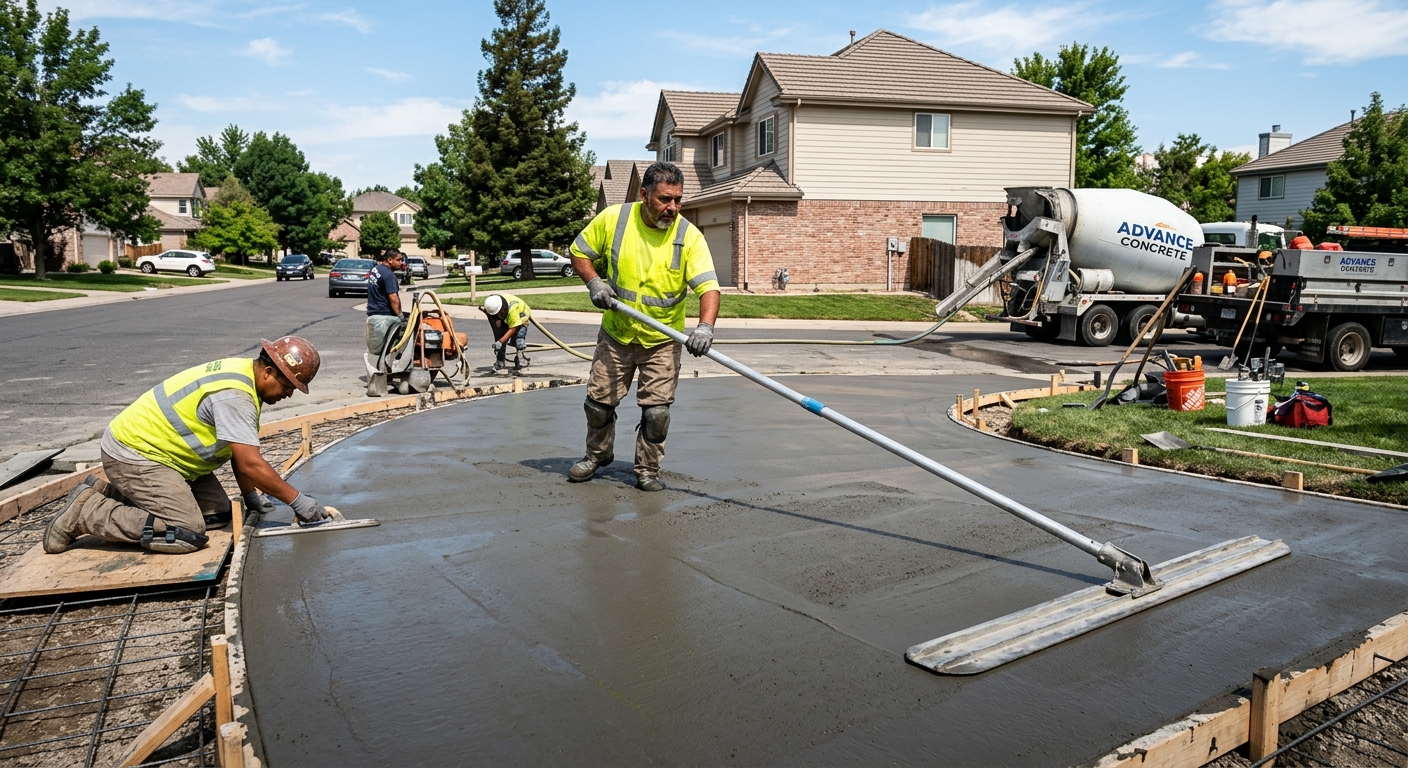
Concrete work options and costs in Denman Island
Concrete work in Denman Island is shaped by a small island community with a real demand for durable flatwork—particularly in neighbourhoods like the North Denman Island area, where driveways and walkways see steady use. With a population of 1,020 (Statistics Canada, 2021 Census), contractor availability is limited, so scheduling can affect pricing when crews are booked around weather windows. You’ll also see a wide mix of older homes and newer builds, and that matters because excavation, drainage improvements, and base prep are where a lot of the cost difference lives.
In the Lower Mainland–Southwest, mild winters and a shallow frost line help keep some concrete work comparable to Vancouver pricing, but Denman Island still gets frequent freeze–thaw cycles and heavy coastal rainfall. That means exterior slabs and patios typically need air-entrained mixes, well-compacted granular base, and correctly placed control joints to manage cracking and surface scaling. Even with a frost depth assumption around 450 mm / 18", footings and thickened edges are commonly placed below that design depth to avoid frost heave.
In practice, the biggest price swings come from site conditions (how much excavation and disposal you need), reinforcement requirements, finish selection (broom vs. exposed aggregate vs. stamped), and how long your job has to wait through rain and cool nights to reach proper curing. For homeowners comparing quotes, it helps to map your priorities to a realistic range first—then tighten the spec in writing before work starts.
Below are typical options and the price band you should expect before final measurement and engineering details.
| Application |
Typical Size |
Key Spec |
Finish Option |
Price Range |
| Concrete driveway (standard broom finish) |
350–500 sq ft |
4"–5" slab, compacted granular base, control joints |
Broomed with straight edges |
$18,000–$28,000 |
| Exposed aggregate driveway |
350–500 sq ft |
4"–5" slab, enhanced base and finishing control |
Exposed aggregate (wash-off finish) |
$22,000–$34,000 |
| Stamped concrete driveway or patio |
300–600 sq ft |
Air-entrained exterior mix, integral colour, base prep |
Stamps with colour hardener/sealer |
$24,000–$42,000 |
| Plain concrete patio or walkway |
200–400 sq ft |
4" slab, compacted granular base, joints |
Float/trowel with light broom or broom finish |
$16,000–$26,000 |
| Garage floor (interior slab) |
400–650 sq ft |
Slab thickness per use, vapour considerations if needed |
Plain trowel finish |
$19,000–$32,000 |
| Foundation footings (structural, below frost) |
Varies by foundation plan |
Engineered footing size, below design frost depth |
Structural concrete (no decorative finish) |
$18,000–$35,000 |
Prices are estimates only and vary by project scope, site access and material selection.
What affects the price of concrete work in Denman Island
In Denman Island and across the Lower Mainland–Southwest region, the same basic concrete job can land 30–50% apart between quotes, mainly because contractors price the invisible work: excavation, drainage corrections, reinforcement, and how they manage curing during wet, cool weather. British Columbia pricing can swing when weather tightens schedules (fewer pour days), when materials or pump/crew time are impacted, or when a site needs more engineered base preparation than first appears.
Every spec ties back to freeze–thaw and the shallow-but-real frost depth. Exterior footings and thickened edges must extend below the design frost depth to reduce the risk of frost heave. In this coastal-wet climate, saturated soils and cycling temperatures increase the chance of cracking and scaling if the mix and base aren’t right—so exterior work typically uses air-entrained concrete and requires proper control joint placement. Colder regions in BC and elsewhere also have shorter pour seasons and more cold-weather curing precautions (heating, insulated blankets), which is why you’ll often see higher costs up north; on Denman Island we’re not as severe as the interior, but cool nights and rain still raise costs through longer curing windows and added labour to protect fresh concrete.
Two quick examples of how conditions change cost on North Denman Island: (1) a driveway where the subgrade is soft or waterlogged may need thicker compacted granular base and better drainage, pushing the job toward the upper end of the concrete driveway band—closer to $18–$28 per sq ft market pricing; (2) if you choose stamped concrete, you’re paying for colour, stamps, and careful finishing, which is usually justified when you want curb appeal and a consistent surface—often in the $22–$36 per sq ft range for stamped & decorative concrete. Conversely, a plain walkway with good drainage can stay nearer the lower end.
Housing stock also plays a role. Older properties may have buried footings, old drain tiles, or non-standard grading that forces additional excavation and disposal. Those “extras” can easily add thousands because concrete work is heavy, and truck time plus haul-off isn’t free.
| Price Factor |
Why It Matters |
Cost Impact |
| Frost line depth — determines footing depth and form height |
Footings must be placed below design frost depth to prevent heave. |
Higher excavation and forming can add thousands on structural work. |
| Site preparation — excavation, grading, compacted granular base |
Proper base reduces settlement and keeps slabs supported through wet winters. |
Soft soils or poor drainage increase labour and materials. |
| Reinforcement — rebar or wire mesh requirement |
Helps control cracking where loads or shrinkage risk are higher. |
Rebar adds material and tie/wire labour, especially on drives and slabs. |
| Mix design — air-entrainment and compressive strength spec |
Air entrainment improves freeze–thaw durability of exterior surfaces. |
Correct mix often costs slightly more but prevents costly failures. |
| Finish type — broom vs. stamped vs. exposed aggregate |
Surface texture and appearance require different labour and materials. |
Stamped/exposed typically raises the per-sq-ft range materially. |
| Pour size and concrete truck access to site |
Narrow access or limited staging increases pump/placement complexity. |
Pumping and extra crew time can add significant cost. |
| Cold-weather curing precautions — heating and blankets |
Protects strength gain when nights stay cool or weather delays pours. |
Extra protection materials and labour extend schedules and budgets. |
| Control joint pattern and sealing cost |
Joints guide cracking; sealing helps repel water and de-icing salts. |
More layout and materials for long-term surface durability. |
Permits & regulations in British Columbia
In British Columbia, the key question is whether your concrete work is considered part of the structure. Structural concrete work—such as footings, foundation walls, and grade beams—typically requires a building permit and often engineered drawings reviewed through the municipality. In contrast, concrete flatwork like driveways, patios, and walkways usually does not require a permit by default. That said, you can still need approvals if the job changes lot grading, affects impervious surface coverage, or involves work near the municipal right-of-way (for example, driveway connections and drainage).
For a Denman Island homeowner, a safe step-by-step approach is: (1) confirm with the local authority whether a permit is required before breaking ground; (2) request the contractor’s certificate of insurance showing general liability limits; (3) ask for WCB coverage documentation (or the appropriate provincial clearance the contractor uses for their workforce); and (4) verify the contractor’s legitimacy through their business registration and any applicable trade credentials they hold.
Then, ask for references on similar-scale projects (same size and exterior exposure), because drainage and frost-depth specs aren’t “one size fits all” on the island.
Getting concrete right in Denman Island's freeze-thaw climate
Concrete failures in Denman Island are usually predictable: water gets in, the concrete freezes, and freeze–thaw cycles widen micro-cracks. If the mix isn’t air-entrained correctly or if the base is poorly compacted, you’ll see early scaling, spalling, and surface deterioration—especially on exterior flatwork that’s exposed to coastal rain and cold nights.
To spec the job correctly, start with three fundamentals: (1) base preparation—a compacted granular sub-base to the right depth for local soil conditions and the slab thickness; (2) mix design—for exterior flatwork, use air-entrainment (commonly in the 5–7% range) and a minimum 32 MPa compressive strength so durability matches the coastal-wet freeze–thaw environment; (3) control joints—spacing designed to limit random cracking as the slab shrinks and moves.
Don’t ignore curing and sealing. While many people think curing is “passive,” on the island it’s actively managed: give the concrete a minimum 7-day curing period under proper conditions, and protect pours during cool weather with curing blankets or other cold-weather precautions when needed. Then apply a penetrating sealer after the concrete has cured (often around 28 days post-pour) to help repel moisture and reduce scaling risk.
Ask technical questions to avoid the most expensive mistake: inadequate air entrainment. If a contractor can’t clearly explain the air-entrainment target and joint plan, that’s a red flag for spalling later. For example, if a broom-finished patio near the lower band ($16–$26 per sq ft market reference) is priced close to a stamped option, you should verify what mix and curing measures are included—stamped work may justify the premium, but “pretty finish” won’t compensate for a weak or non-durable exterior mix.
| Spec |
Why It Matters in Denman Island |
What to Ask For |
Impact if Skipped |
| Compacted granular base (depth?) |
Reduces settlement and limits water movement under the slab. |
“What granular base thickness and compaction test method will you use?” |
Uneven settling and cracked or scaling surface. |
| Air-entrained concrete mix (target air %?) |
Air voids help concrete survive freeze–thaw cycling in wet coastal exposure. |
“What air content will you target for exterior flatwork (5–7%)?” |
High risk of spalling and surface deterioration. |
| Compressive strength (MPa rating) |
Strength gain supports durability and resistance to wear and freeze effects. |
“What minimum compressive strength (32 MPa) are you delivering?” |
Surface damage, dusting, and faster failure. |
| Control joints (spacing per ACI guidelines) |
Controls where cracks occur as the slab shrinks and expands. |
“What joint spacing are you using and how will you cut/place them?” |
Random cracking and water infiltration at uncontrolled cracks. |
| Minimum 7-day curing period |
Ensures proper strength development before exposure to moisture/freezing. |
“How will you protect the slab during cool nights and rain?” |
Reduced strength and increased cracking/scaling risk. |
| Penetrating sealer (when applied after cure) |
Improves water repellence and helps limit moisture-driven scaling. |
“Will you apply penetrating sealer around 28 days after pour?” |
Faster surface wear and reduced protection against salts and moisture. |
How to choose a concrete work contractor in Denman Island
Start by confirming the contractor is operating correctly in British Columbia and can legally and safely build your project. Ask for three things in writing: (1) licensing/registration details relevant to their business and trade scope (you can typically verify through public business and trade directories); (2) liability insurance—request the certificate of insurance and confirm the policy is active for the project dates; and (3) WCB/workers’ compensation coverage for their workforce. If they hand you paperwork that’s outdated or doesn’t match the job location, that’s an immediate stop sign.
Next, get 2–3 itemised written quotes instead of lump sums. You want the quote to break down labour and materials, including excavation/disposal, base materials, reinforcement, concrete supply, forming, finishing, joints, curing method, and sealing (if included). Also confirm what’s excluded: permit pulling, pump costs, temp protection during rain/cold nights, and traffic control or property restoration.
Look for a clear warranty on workmanship and whether the product/manufacturer warranty applies to sealers, admixtures, or special mixes. For payment, avoid paying more than about 10–15% upfront—hold back the remainder until the job is complete and corrected if any finishing issues appear. Finally, require a start date and completion estimate in writing, especially on Denman Island where weather windows can affect pour scheduling.
- Quote includes excavation depth, disposal haul, and final grading plan.
- Exterior work specifies air-entrained concrete and a target air content.
- Reinforcement plan is clear (mesh vs rebar, spacing, supports/tie-wire).
- Control joint layout and timing are described (when joints are cut/formed).
- Cold-weather curing plan is included if pours land near cool nights.
- Finishing method matches your goal (broom, stamped, exposed aggregate).
- Sealer scope is explicit: product type and whether it’s penetrating.
- Concrete truck access and staging plan is addressed (pump if needed).
- Site protection during curing is explained (blankets, signage, barricades).
- Itemised line items for finishing labour—no “mystery allowances.”
- Insurance certificate and WCB coverage provided before signing.
- Warranty terms include how repairs are handled and the response timeline.
Concrete red flags on Denman Island: (1) no discussion of frost-depth placement or base preparation; (2) refusal to specify air entrainment for exterior slabs; (3) vague promises like “we always do it the same way” without joint spacing details; (4) payment terms asking for large upfront deposits; and (5) quotes that don’t address curing and weather protection despite coastal rain and cool nights.
Frequently asked questions — concrete work in Denman Island
What causes concrete to spall in Denman Island winters?
Spalling in Denman Island typically comes from a moisture-and-freeze cycle that damages the surface over time. When exterior concrete isn’t air-entrained correctly, freeze–thaw cycling creates internal pressure as water turns to ice, and the surface flakes off—often starting as scaling, then progressing to spalls. Another common contributor is inadequate base prep and poor drainage, which allows water to sit beneath the slab and saturate the concrete at the bottom. Control joints that are missing or cut too late can also let random cracking form, giving water a pathway in. In coastal BC conditions, prolonged rain and cool nights increase how often the slab cycles. If your contractor priced the job near the lower end of the plain patio/walkway band (for example, around $16–$26 per sq ft equivalent market reference), confirm the air-entrainment target and curing plan were included—those details are what prevent spalling, not the finish alone. (Denman Island/B.C. climate factor)
What is rebar and when is it required in British Columbia?
Rebar (reinforcing bar) is steel reinforcement embedded in concrete to help control cracking and provide structural capacity, especially in areas that experience tension, loads, or movement. Whether you need rebar depends on what you’re building and how it’s engineered—e.g., foundation footings, beams, and many structurally loaded slabs are typically reinforced based on drawings. In British Columbia, structural elements like footings, foundation walls, and grade beams are generally governed by permits and engineering requirements. For concrete flatwork like driveways and patios, rebar or mesh may be recommended depending on slab thickness, subgrade conditions, and intended loads (such as heavy vehicles in a driveway). On the island, saturated soils and drainage issues can increase differential movement, so contractors often specify reinforcement plus a well-compacted granular base to prevent early cracking. If a quote for a driveway or garage slab won’t clearly state the reinforcement type and placement, ask directly—especially because savings on materials can lead to expensive repairs later.
How long does a concrete project take in Denman Island?
Timelines in Denman Island depend on weather windows, curing needs, and how complex the forming and finishing are. Typical durations for concrete flatwork often look like: 1–3 days for site prep (excavation, grading, compacting), 1 day for forming and reinforcement placement, 1 day for the pour and initial finishing, then additional days to cure properly before you can use the surface. Even if the slab is poured in a single day, you shouldn’t rush the project end date—minimum curing (commonly at least 7 days under good conditions) affects durability, particularly in coastal BC’s cool, wet periods. For finishing upgrades like stamped or exposed aggregate, labour can extend the completion timeline by adding texture/colour work and extra protection during drying. If you’re comparing quotes, a contractor promising a “quick turn” without a clear curing and weather protection plan should be questioned. As a pricing reference, driveways priced in the broader $18–$28 per sq ft market band often involve more base and logistics time than a simpler walkway; the schedule should reflect that prep, not just the day of the pour.
What is a concrete overlay and is it suited to Denman Island?
A concrete overlay is a new layer of concrete placed over an existing slab—usually after surface preparation, repair of cracks/spalls, and bonding measures. It can be suited to Denman Island when the existing concrete has good structural integrity but needs a facelift for wear and appearance. However, it’s not a magic fix: if the old slab is actively moving, severely spalled, or has widespread drainage problems, an overlay can fail quickly because the new layer will be subjected to the same freeze–thaw cycling and movement. In coastal BC, water management is crucial, so the overlay must include proper crack repairs, bonding technique, and ideally improvements to drainage away from the slab. For homeowners looking for a decorative change, overlays can be finished with broom or even stamped looks, but sealing and curing become even more important because moisture pathways through joints and cracks can accelerate deterioration. If you’re considering a driveway refresh, ask your contractor whether they’ll do a condition assessment and how they’ll handle joints—then compare the overlay quote to full replacement pricing (especially when the project is in the same budget zone as the $18–$28 driveway band).
How do I seal concrete to protect it in Denman Island?
Sealing helps protect concrete by reducing water penetration and improving resistance to surface deterioration from moisture and freeze–thaw cycles. For Denman Island, the most practical approach for exterior slabs is typically a penetrating sealer applied after the concrete has fully cured—commonly around 28 days post-pour (depending on the product instructions and weather conditions). Before sealing, the surface should be clean, dry, and free of dust, curing compounds, or contaminants that can prevent proper absorption. Avoid sealing too early; trapped moisture can lead to poor performance. After sealing, maintain it according to the sealer manufacturer’s recoat guidance, since coastal humidity and rainfall can shorten intervals. If your quote includes sealing, confirm the sealer type and whether it’s penetrating or film-forming, and ask how they’ll protect landscaping during application. A properly sealed broom-finished patio or walkway can last longer, especially where winter wetting and cooling are frequent. If you’re budgeting, sealing is part of long-term protection—don’t skip it just to hit the lowest price in the $16–$26 walkway range.
What is the difference between concrete and cement?
Cement and concrete are related but not the same. Cement is a component—a fine powder (commonly Portland cement) that reacts with water to form paste and bind materials together. Concrete is the finished product you build with: cement plus water plus coarse aggregate (like stone), fine aggregate (sand), and often admixtures (including air-entrainment for freeze–thaw durability). That’s why, in British Columbia’s exterior work, the “cement choice” matters, but the overall concrete mix design matters more—especially air-entrainment levels and the compressive strength target. For Denman Island’s freeze–thaw climate, the concrete mix’s durability is what affects spalling, scaling, and long-term surface quality. You might hear contractors talk about “cement content,” but a homeowner should focus on the mix spec: target air % for exterior flatwork (commonly 5–7%), minimum strength (often 32 MPa), and the curing and sealing plan. If a quote doesn’t mention mix durability details, it’s not enough to compare only appearance or finish cost bands.