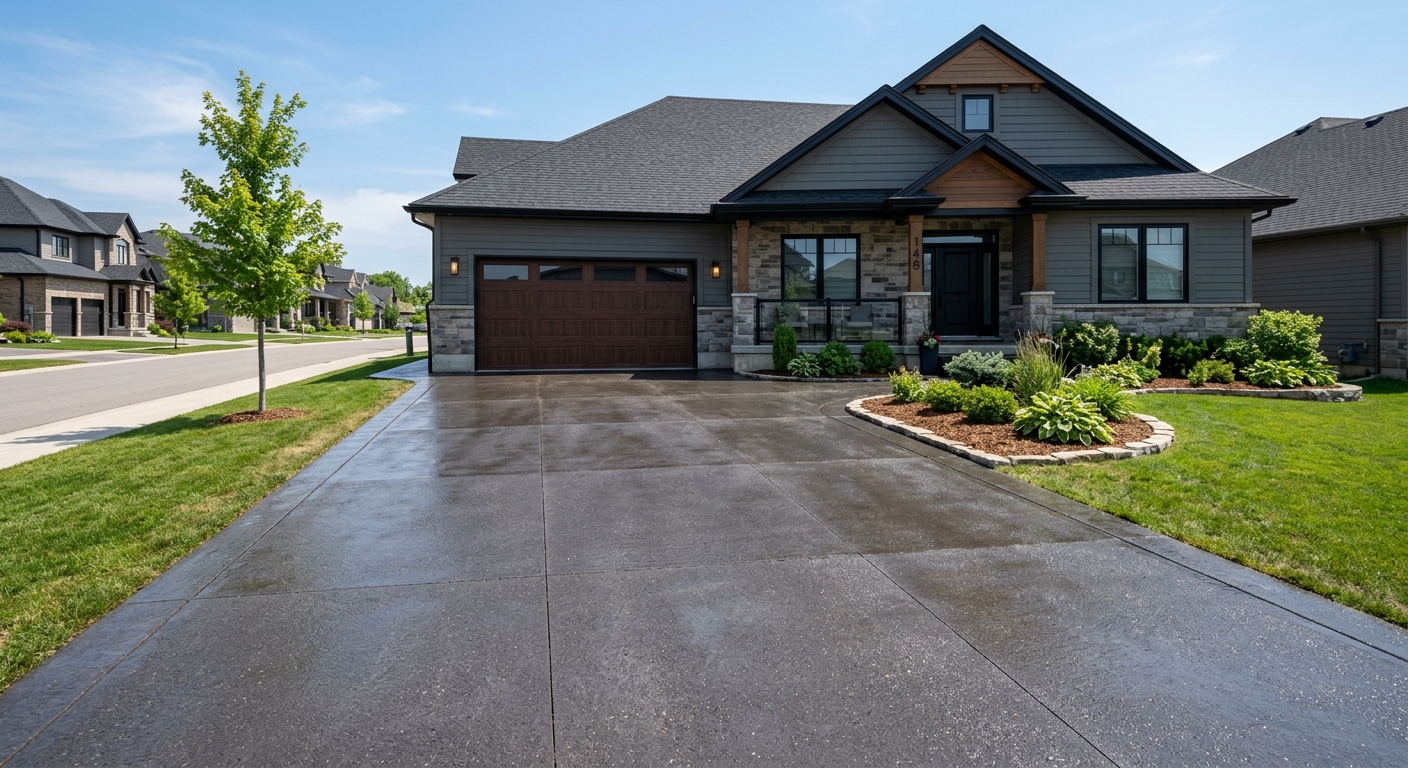
Concrete work options and costs in Deep Cove
In Deep Cove, concrete work is a practical choice for driveways, patios, walkways, and foundation elements—especially in a neighbourhood where lots are mature, slopes are common, and rain can sit in low spots after coastal storms. Deep Cove has a population of 2,251 (Statistics Canada, 2021 Census), and that scale means many homeowners end up using the same local crews during peak season, so booking lead times can move quickly when the weather clears. The type of housing people renovate most often tends to be single-family homes, which drives steady demand for flatwork and entry pads in areas around Deep Cove Village and the surrounding North Shore residential streets.
Lower Mainland–Southwest concrete pricing is shaped by mild winters but a shallow frost depth requirement—local practice often assumes about 450 mm (18")—and that still means exterior concrete must be detailed to resist freeze–thaw cycles. Saturated soils, heavy coastal rainfall, and frequent temperature swings increase the importance of proper drainage, compacted granular base, and air-entrained mixes. Schedules also matter: cool nights and high humidity can slow curing, which is why contractors plan around prolonged rain and may use curing blankets, sealers, and longer cure times to protect durability on driveways and patios.
Below is a homeowner-friendly comparison of typical applications and the key specs that drive cost, so you can read quotes with confidence and decide which option fits your budget.
| Application |
Typical Size |
Key Spec |
Finish Option |
Price Range |
| Concrete driveway (standard broom finish) |
300 sq. ft. (approx. 10 ft x 30 ft) |
Air-entrained concrete, compacted granular base, control joints |
Broom finish |
$10,000–$14,000 |
| Exposed aggregate driveway |
300 sq. ft. (approx. 10 ft x 30 ft) |
Air-entrained concrete, base prep for drainage, sealer-ready surface |
Exposed aggregate finish |
$12,000–$18,000 |
| Stamped concrete driveway or patio |
200 sq. ft. (approx. 10 ft x 20 ft) |
Air-entrained concrete, joint pattern matched to stamp layout |
Stamped pattern + colour hardener |
$6,000–$10,000 |
| Plain concrete patio or walkway |
150 sq. ft. (approx. 10 ft x 15 ft) |
Air-entrained mix, compacted base, edging, joints as needed |
Float and broom/steel-trowel depending on use |
$2,400–$4,500 |
| Garage floor (interior slab) |
360 sq. ft. (approx. 20 ft x 18 ft) |
Vapour barrier (as required), fibre or mesh per design, jointing |
Standard broom/level finish |
$6,500–$11,000 |
| Foundation footings (structural, below frost) |
Varies by home size and engineered plan |
Excavation below design frost, rebar, properly formed pour |
Structural concrete placement |
$14,000–$25,000 |
Prices are estimates only and vary by project scope, site access and material selection.
What affects the price of concrete work in Deep Cove
It’s common to see quotes for the same “slab” differ by 30–50% across the Lower Mainland–Southwest compared with other parts of BC, and even within the Lower Mainland when access or soil conditions change. Concrete itself is only part of the equation—labour, base preparation, reinforcement, and the time required to cure properly in our coastal-wet conditions can swing the total. In a humid coastal climate, contractors often need to manage rain risk, cool temperatures, and surface protection, which can affect both scheduling and how quickly forms can be stripped safely.
For exterior work in Deep Cove, every spec is influenced by frost depth and freeze–thaw cycles. Footings and thickened edges must be placed below the local design frost depth (often around 450 mm / 18" in practice here), to reduce frost heave risk. Exterior slabs also need air-entrained concrete mixes to survive repeated wetting and temperature swings. When work is done in colder spells, curing precautions—like insulating blankets and careful temperature control—add cost. De-icing salts used on driveways can accelerate spalling if the surface isn’t properly built and later sealed.
Two practical examples you’ll feel in your pocket in Deep Cove: (1) a driveway over saturated soil may require deeper excavation and more granular base plus improved drainage; that can shift a standard driveway closer to the higher end of the $18,000–$28,000 per typical driveway band. (2) Switching from plain broom concrete to stamped or exposed finishes is not “just decorative”—it adds labour, materials (colour hardener/release agents), and tighter joint planning, so it can move you toward the $22–$36 per sq. ft. stamped/decorative range depending on the pattern and access.
| Price Factor |
Why It Matters |
Cost Impact |
| Frost line depth — determines footing depth and form height |
Exterior structural elements must sit below the design frost depth to reduce heave |
More excavation and taller forms; higher labour and disposal |
| Site preparation — excavation, grading, compacted granular base |
Drainage and compaction determine long-term settlement and cracking risk |
Can add significant hours, granular supply, and hauling |
| Reinforcement — rebar or wire mesh requirement |
Controls cracking and improves load performance depending on design |
Material and labour to place properly (including chairs/spacers) |
| Mix design — air-entrainment and compressive strength spec |
Exterior freeze–thaw durability depends on air-entrainment and strength |
Cost increase vs. non-air mixes; may require tighter batching/QA |
| Finish type — broom vs. stamped vs. exposed aggregate |
Higher-end finishes require more steps and more skilled labour |
Stamped colour hardener/release agents and longer finishing time |
| Pour size and concrete truck access to site |
Small access constraints can increase labour for placement and vibration |
Extra equipment/mobilization time; sometimes pumping required |
| Cold-weather curing precautions — heating and blankets |
Concrete needs proper early-age temperatures to reach strength |
Blanket rentals/thermal protection and additional supervision |
| Control joint pattern and sealing cost |
Jointing limits random cracking; sealing helps repel salts and moisture |
More layout time and a separate sealer line item |
Permits & regulations in British Columbia
In British Columbia, the boundary between “permit-required structural concrete” and “typically low-permit flatwork” usually comes down to whether the work affects structural elements, drainage/grade compliance, or municipal right-of-way requirements. Structural concrete work—such as footings, foundation walls, and grade beams—normally requires a building permit and often engineered drawings that the municipality reviews. Concrete flatwork (like patios, walkways, and most driveways) usually does not require a permit by default, unless it affects lot grading, interferes with required drainage, or triggers municipal impervious surface coverage limits, or it’s within a municipal boulevard/right-of-way area.
To verify a contractor in Deep Cove before concrete work starts, follow a simple step-by-step checklist:
1) Confirm they’re licensed for the type of work they’re doing (and not just “general contracting” if structural concrete is involved). 2) Request a current certificate of liability insurance showing adequate coverage and the correct project address. 3) Ask for proof of coverage for WSIB/WCB (or the equivalent coverage proof used for their workforce) and verify the term is active. 4) Get references from similar projects in the North Shore/Lower Mainland area—especially work involving exterior slabs and drainage. 5) Before you sign, ask how they handle engineering/permits if your scope touches foundation elements, and confirm it’s included or clearly excluded in writing.
Getting concrete right in Deep Cove's freeze-thaw climate
Concrete problems in Deep Cove are usually moisture- and temperature-driven: water saturates the surface and pores, then freeze–thaw cycles expand ice and can lead to scaling and spalling. The best defence is to build the right base, use the right mix, and follow a curing and sealing plan that matches our coastal-wet reality. Start with base preparation: excavate to the proper depth for local soils and frost considerations, then place and compact a granular sub-base so water doesn’t pump up into the slab. Next, spec the mix correctly: exterior flatwork should use air-entrained concrete (commonly targeted around 5% to 7% air content) and a minimum compressive strength of 32 MPa to achieve durability. Third, control joints are essential—spacing them appropriately helps limit random cracking and keeps cracks from wandering into visible lines.
Curing is where many homeowners see the “why does it cost more?” question. Concrete needs at least 7 days of curing under conditions that allow strength gain; in cool, humid weather, contractors may need curing blankets and careful temperature management. After the concrete cures, apply a penetrating sealer about 28 days after the pour to repel de-icing salts and reduce moisture uptake.
If you’re comparing options, the price difference is sometimes justified: for example, moving from plain broom concrete toward stamped or exposed aggregate may add cost, but you’ll only get the durability benefit if air-entrainment, proper drainage, and curing are not compromised. In Deep Cove, skipping air-entrainment is the shortcut that most often shows up later as spalling—especially in driveways where salty meltwater concentrates.
| Spec |
Why It Matters in Deep Cove |
What to Ask For |
Impact if Skipped |
| Compacted granular base (depth?) |
Prevents settlement and reduces moisture movement under the slab in wet coastal conditions |
Confirm excavation depth, granular type, and compaction requirements |
Soft spots, cracking, and accelerated surface deterioration |
| Air-entrained concrete mix (target air %?) |
Protects against freeze–thaw scaling and spalling during temperature swings |
Request target air content (commonly 5% to 7% for exterior flatwork) |
Higher risk of scaling and pop-outs on exterior surfaces |
| Compressive strength (MPa rating) |
Helps concrete reach durable performance despite cool/wet curing windows |
Confirm minimum 32 MPa and whether fibre/mesh is included when needed |
Lower strength gain and reduced wear resistance |
| Control joints (spacing per ACI guidelines) |
Limits uncontrolled cracking that can widen and capture water |
Ask for joint layout plan tied to slab dimensions and finish |
Random cracks, water intrusion, and faster deterioration |
| Minimum 7-day curing period |
Strength development depends on proper early-age conditions in cool coastal weather |
Ask how curing will be protected during rain/cold nights |
Surface weakness, dusting, and poor long-term durability |
| Penetrating sealer (when applied after cure) |
Reduces moisture and salt penetration that contribute to surface scaling |
Confirm application about 28 days post-pour (after cure requirements are met) |
Faster staining, salt damage, and increased maintenance needs |
How to choose a concrete work contractor in Deep Cove
Choosing the right concrete contractor in Deep Cove is mostly about verifying coverage, reading scopes carefully, and matching the bid to the details that protect your slab or foundation. In British Columbia, start by verifying the contractor’s licence/registration for the work type they’re claiming. Next, request a certificate of liability insurance and confirm it covers the full project period and is active for the correct address. For workplace protection, ask for proof of WSIB/WCB coverage for their workers and verify the term is current. If they can’t provide these documents quickly, that’s a red flag.
Then get 2 to 3 itemised, written quotes—not just lump sums. You want a breakdown that shows labour, concrete supply, base prep, reinforcement, forms, finishing, sealing (if included), and disposal. Carefully note what’s excluded: old concrete removal, haul-away, any required geotextile, drainage improvements, and whether permits (if structural elements are involved) are included. Ask about warranty terms for workmanship and whether any product/manufacturer warranty is transferable to you when you own the property.
Payment schedule matters: never pay more than about 10% to 15% upfront for small to mid-sized flatwork, and hold back until forms are removed and the final finish is inspected. Get a clear timeline with a start date and a completion estimate in writing—especially important around rain windows, curing time, and cold nights.
- Ask for an itemised quote (labour + materials) with line-by-line totals.
- Confirm air-entrained mix for exterior flatwork and the target air content.
- Ask what base prep depth and compaction method is included.
- Verify reinforcement details (mesh vs. rebar, chairs/spacers, coverage).
- Check the joint layout plan and spacing logic for your slab size.
- Ask how they protect curing during prolonged rain or cool nights.
- Confirm sealing inclusion and the planned wait time (commonly ~28 days post-pour).
- Ensure concrete truck access/pour method is stated (and whether pumping is needed).
- Clarify disposal and hauling of excavated material and broken concrete.
- Review warranty length in writing and what workmanship defects are covered.
- Confirm a realistic schedule for drying/curing before you drive or place loads.
- Get proof of liability insurance and WSIB/WCB coverage before work begins.
Deep Cove-specific red flags include: promises to “pour anytime” without cold-weather curing precautions, quotes that omit drainage/base compaction details, no mention of air-entrainment for exterior slabs, vague jointing plans (or none at all), and contractors asking for full payment before any curing/inspection milestones.
Frequently asked questions — concrete work in Deep Cove
How long does a concrete driveway last?
In Deep Cove, a well-built concrete driveway commonly lasts for decades because our frost depth is relatively shallow in the Lower Mainland–Southwest, but durability still depends on resisting freeze–thaw moisture cycling. If the contractor uses proper drainage and a compacted granular base, pours with air-entrained concrete, and includes correctly spaced control joints, you’ll typically see much better performance than with “cement-only” approaches. Surface protection also matters: a penetrating sealer applied after the slab cures (often around 28 days post-pour) helps repel de-icing salts and reduces moisture uptake.
When comparing options, remember that driveway pricing here usually sits in the $18–$28 per sq. ft. type band for standard work, and better finishes or additional prep can push totals higher. The extra cost is worth it only if the durability specs—especially air-entrainment, base prep, and curing—are present in the quote. (Statistics Canada, 2021 Census)
What is air-entrained concrete and why does it matter here?
Air-entrained concrete is a mix designed to hold microscopic air bubbles that act like “pressure relief” when water in the cement paste freezes. In British Columbia—especially in coastal areas like Deep Cove—freeze–thaw cycles combined with frequent wetting can damage concrete surfaces through scaling and spalling if the mix doesn’t include air. That’s why reputable contractors treat air-entrainment as a durability requirement for exterior slabs, not an optional add-on.
In practice, your contractor should specify an exterior mix target air content (commonly about 5% to 7%) and the minimum strength they’re placing. If a quote doesn’t mention air-entrainment for a driveway or patio, you should ask directly. Skipping this spec is one of the quickest ways to turn a good-looking slab into a maintenance problem.
How do I prepare the base for a concrete slab?
Base preparation is where long-term performance is won or lost in Deep Cove’s wet, frost-affected conditions. The contractor should excavate to the required depth for your slab thickness and local frost considerations, then install compacted granular material to create stable support and reduce water movement. The key is not just “adding gravel,” but compaction to the right density and making sure the base is graded so water can drain away from the slab.
Ask what depth of compacted granular base is included, what granular type they use, and whether they include drainage improvements for saturated soils or low spots. A driveway that’s under-supported can settle unevenly, leading to cracking and joint issues. If the quote references air-entrained concrete but is vague on base prep, treat it as incomplete.
How do I compare concrete quotes?
To compare quotes fairly in Deep Cove, don’t just compare the bottom-line number. Ask for itemised breakdowns so you can verify labour and materials: base prep and excavation depth, granular supply and compaction, reinforcement type (mesh vs. rebar), concrete mix spec (including air-entrainment for exterior), and finishing details like broom versus stamped or exposed aggregate. Confirm joint layout plans and whether sealing is included.
Also check exclusions: is old concrete removal included? Is disposal and hauling included? Are permits included if your work affects structural concrete like footings/foundation walls? In Lower Mainland–Southwest pricing, these line items often explain the differences between “similar” quotes. A standard broom driveway might align with the $18–$28 per sq. ft. band, while stamped/decorative work often moves into the higher decorative range because it requires additional materials and labour.
Can concrete be poured in cold weather in Deep Cove?
Yes, concrete can be poured in cold weather in Deep Cove, but it must be managed correctly. In the Lower Mainland–Southwest, we still see cool nights and short windows when curing can slow down, and prolonged rain can complicate scheduling. Contractors should use cold-weather curing precautions—like insulating blankets and, when needed, heating methods—so the concrete reaches early-age strength without freezing or getting too cold too soon.
What you don’t want is a contractor promising an “easy pour” without discussing temperature protection, curing time extensions, and how they handle rain exposure during finishing. Ask how they’ll monitor conditions, what curing protection they’ll use, and when you can safely drive on the slab. If they can’t answer those questions, that’s a concern for durability.
How do I maintain concrete in Deep Cove's freeze-thaw climate?
Maintenance in Deep Cove is mainly about limiting moisture and salt impact. After your slab cures and the sealer is applied (commonly around 28 days post-pour), keep the surface clean and avoid letting de-icing salts sit. Shovel safely to prevent gouging, and repair small chips or cracks early—before water can enter and expand during freeze–thaw cycles. Even with proper air-entrainment and joints, concrete relies on good upkeep to protect the surface.
Seasonally, focus on drainage: if water pools near the slab edges, address grading or drainage improvements rather than only sealing over the problem. If you’re comparing options, remember that decorative finishes like stamped or exposed aggregate may look great, but they still need correct curing and sealing to resist salt and saturation. Done right, the money you spend—often within the $18–$28 driveway and $16–$26 patio-type bands—translates to fewer repairs over time.