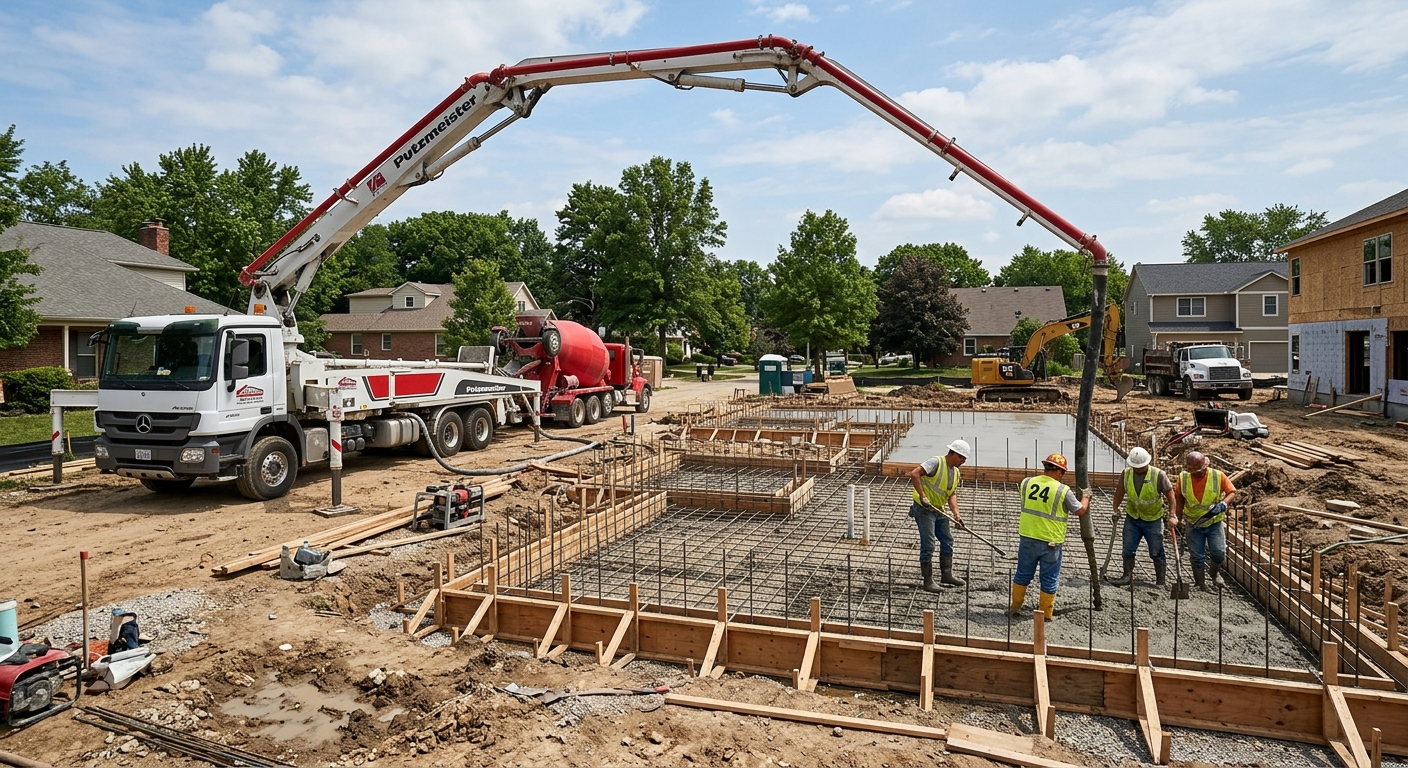
Concrete work options and costs in Peace River
Concrete work in Peace River is a practical fit for homeowners who want long-lasting, low-maintenance surfaces—especially in a town where many homes are built for tough winters. Peace River has a large share of single-detached houses (61.8% of dwellings), so driveways, patios, and walkways are some of the most common concrete projects we see. With 1,530 homeowner households in the area (59.1% of households own), there’s steady demand for upgrades on older properties too—52.9% of homes were built before 1981, and a lot of original walk/drive approaches need replacement or major repairs.
In the Athabasca–Grande Prairie–Peace River region, pricing isn’t only about cement cost. Frost lines run deep and freeze–thaw cycles are relentless, so exterior slabs and footings need proper excavation, drainage, air-entrained mixes, and enough curing time to reach design strength. That typically increases labour hours and concrete volume compared with milder climates. We also work within a shorter reliable pour season for flatwork in northern conditions, so when crews and equipment are in demand locally (and when sites are farther out), scheduling pressure can push costs toward the top of the price bands. In Peace River, concrete crews are especially busy in and around the downtown/riverfront blocks and neighbourhoods like West Hill, where many properties are close together and access can still be tight for trucks and forms.
Below are realistic cost ranges you can use as a starting point for comparing quotes. For exact pricing, your contractor should measure your geometry, confirm frost depth and base requirements, and review drainage and access for the specific lot.
| Application |
Typical Size |
Key Spec |
Finish Option |
Price Range |
| Concrete driveway (standard broom finish) |
10 m x 3 m (30 m²) |
Air-entrained mix, compacted granular base, control joints |
Broom finish |
$14,000–$20,000 |
| Exposed aggregate driveway |
10 m x 3.5 m (35 m²) |
Air-entrained mix, base prep, water-repellent curing practices |
Exposed aggregate (seeded/scrubbed) |
$18,000–$26,000 |
| Stamped concrete driveway or patio |
25 m² |
Air-entrained mix, correct curing for stamping timing |
Stamped pattern with color release |
$22,000–$35,000 |
| Plain concrete patio or walkway |
12 m x 1.5 m (18 m²) |
Air-entrained mix, compacted base, joints to suit shrinkage |
Float and broom or light trowel texture |
$12,000–$18,000 |
| Garage floor (interior slab) |
6 m x 7 m (42 m²) |
Vapour barrier (as needed), reinforced slab |
Power-float finish |
$16,000–$25,000 |
| Foundation footings (structural, below frost) |
Per linear metre (typical 10–25 m total) |
Below frost, engineered reinforcement, concrete to spec |
Structural/covered (no decorative finish) |
$45,000–$70,000 |
Prices are estimates only and vary by project scope, site access and material selection.
What affects the price of concrete work in Peace River
In the Athabasca–Grande Prairie–Peace River region, quotes for the same “looking” job can vary by 30–50% because the real drivers are below the surface: how deep we must go for frost protection, how much base and drainage is required, and what it takes to cure concrete properly during cold snaps. Two contractors can both propose a 30 m² driveway, for example, but if one designs for deeper frost and robust drainage while the other only “matches existing grades,” you’ll see differences quickly in material volume, forming labour, and supervision.
Frost line depth and freeze–thaw cycles dictate the specifications every time. Exterior slabs and sidewalks need air-entrained concrete to survive repeated expansion and contraction; improper air entrainment is a fast path to scaling and surface damage. In Alberta winters, colder conditions also compress the reliable pour season, and curing in cold-weather often requires insulated blankets and sometimes heated enclosures for the first critical period. That adds labour and handling time—but it’s what prevents weak, under-cured concrete. De-icing salts then compound the risk of spalling, which is why sealing is recommended after cure for many homeowners.
Local conditions can raise or lower costs quickly. A driveway with poor drainage or an uphill/downhill grade often needs extra excavation and granular regrading, which can add to the foundation-like site work. Conversely, a flat backyard with easy truck access can keep a plain patio closer to the $12,000–$18,000 band, while a stamped job that needs careful base control and longer finishing time will realistically move toward the $22,000–$35,000 range. If your house is from before 1981 (many are in Peace River), buried drainage issues or older settlement patterns can also mean more demo and rework before concrete ever gets poured.
| Price Factor |
Why It Matters |
Cost Impact |
| Frost line depth — determines footing depth and form height |
Deeper frost requirements increase excavation and concrete volume |
Higher labour + more concrete; often moves the job up by 10–25% |
| Site preparation — excavation, grading, compacted granular base |
Stability and drainage prevent settlement and voids under slabs |
Can add or remove several thousand dollars depending on soil and access |
| Reinforcement — rebar or wire mesh requirement |
Reduces cracking and improves slab performance under loads |
May add material/labour; commonly shifts 5–15% |
| Mix design — air-entrainment and compressive strength spec |
Targets freeze–thaw durability and long-term strength |
Quality mix costs more but reduces premature scaling; typically +2–8% |
| Finish type — broom vs. stamped vs. exposed aggregate |
Finishing steps and labour time differ significantly |
Stamped/exposed is usually the biggest upswing (+25–60% vs plain) |
| Pour size and concrete truck access to site |
Small, awkward sites can force wheelbarrowing or multiple smaller pours |
Restricted access can add labour and truck surcharges |
| Cold-weather curing precautions — heating and blankets |
Ensures adequate strength gain despite temperature drops |
Often +10–20% for projects poured near cold thresholds |
| Control joint pattern and sealing cost |
Controls shrinkage cracking and protects against salt exposure |
Cost increase is modest but can prevent expensive early repairs |
Permits & regulations in Alberta
In Alberta, the permit and approval path depends on what concrete work you’re doing. Structural concrete work—think foundation walls, grade beams, and footings designed to carry loads—usually requires a building permit, and the municipality may require engineered drawings and inspections. For concrete flatwork (patios, walkways, and driveways), permits are often not required unless the work affects lot grading, drainage, or impervious surface/landscaping requirements, or it ties into municipal right-of-way concerns. The safe approach in Peace River is to confirm with your local authority before excavation starts, especially if you’re changing elevations near sidewalks, culverts, or drainage swales.
Before any contractor starts, verify they’re properly insured. Step-by-step: (1) confirm the contractor’s Alberta licence/registration information using the appropriate online resources for your trade (your contractor should provide their details upfront); (2) ask for a Certificate of Insurance showing liability coverage with your property address or project named; (3) request proof of WSIB/WCB coverage (or an equivalent clearance letter where applicable) and check the coverage is active and not expired; and (4) ask for references on similar concrete scopes in Alberta—driveways and footings are common, but the key is local winter durability work.
When you ask for these items, you’re not being difficult—you’re preventing delays, liability gaps, and jobsite rework caused by missing documentation.
Getting concrete right in Peace River's freeze-thaw climate
Concrete in Peace River has one job: stay dense, stable, and properly cured through repeated freeze–thaw cycles. The most common failure we see here isn’t “bad concrete” in general—it’s specs or workmanship that don’t match local conditions. If the base isn’t excavated and compacted correctly, water collects and the slab or walkway can settle or lift. If the mix isn’t air-entrained to the right level for exterior exposure, freeze–thaw will pull it apart at the surface, leading to scaling and spalling. If curing is rushed in cold weather, the concrete may never reach the strength it needs, even if it looks solid after the pour.
To spec the job correctly, ask for: (1) base preparation with a compacted granular sub-base to the depth recommended for your soil and design grade, plus good drainage so water can’t sit under edges; (2) an air-entrained exterior mix with 5–7% air content and a minimum 32 MPa compressive strength; (3) control joints placed to manage shrinkage cracking (not random cracking across visible panels); (4) minimum 7-day curing under proper conditions, including blankets/heating when temperatures require cold-weather procedures; and (5) penetrating sealer applied about 28 days after the pour (when the concrete has cured) to repel de-icing salts and reduce surface damage.
Here’s where cost differences make sense. A plain patio might land near the $12,000–$18,000 band, but moving to a higher-control prep package (better base and joint pattern) can protect that investment. Stamped concrete is more expensive—often $22,000–$35,000—yet the premium is justified when the contractor schedules stamping steps correctly and maintains curing so the surface performs, not just looks good on day one.
| Spec |
Why It Matters in Peace River |
What to Ask For |
Impact if Skipped |
| Compacted granular base (depth?) |
Controls settlement and water movement through frost cycles |
Specify granular base type and engineered/typical depth for your soil and slab thickness |
Uneven settling, voids, and accelerated cracking |
| Air-entrained concrete mix (target air %?) |
Prevents freeze–thaw surface breakdown in Alberta winters |
Confirm air content target: 5–7% for exterior flatwork |
Scaling/spalling risk rises sharply |
| Compressive strength (MPa rating) |
Ensures durability after curing under cold conditions |
Minimum 32 MPa at specified age/requirements |
Low strength can lead to early deterioration |
| Control joints (spacing per ACI guidelines) |
Controls shrinkage cracking locations during seasonal movement |
Ask for joint spacing plan and saw-cut timing |
Random cracking and more frequent repairs |
| Minimum 7-day curing period |
Cold nights can slow strength gain and weaken early performance |
Confirm curing method and cold-weather protections if needed |
Surface damage and reduced long-term durability |
| Penetrating sealer (when applied after cure) |
Reduces salt penetration that drives spalling |
Apply penetrating sealer about 28 days after pour (or as conditions allow) |
Faster surface wear and scaling in winter |
How to choose a concrete work contractor in Peace River
Choosing the right contractor matters in Peace River because winter durability depends on details: base prep, mix design, curing, and joint layout. Start with Alberta verification. Ask the contractor for (1) their Alberta business/contractor information (as applicable for their trade), (2) a Certificate of Insurance with liability coverage clearly stated, and (3) WSIB/WCB proof of coverage (or a current clearance letter). Then confirm the documents are active for the timeframe your project will run. A reputable crew won’t hesitate to provide these items before you sign.
Next, request 2–3 written quotes that are itemised—labour and materials separated, not a single lump sum. Make sure each quote specifies the mix (air-entrained), reinforcement approach, base depth and type, finishing method, and whether joints and sealing are included. Read what’s excluded: disposal of old concrete, site protection, permit pull (if required), and any need for drainage corrections. For warranty, ask for workmanship warranty length in writing and confirm whether product/manufacturer warranties apply to sealer, admixtures, or specialty items and whether they’re transferable to you as the homeowner.
Payment schedule should be controlled. Keep upfront deposits to about 10–15% maximum, and hold back the final amount until the job is complete and you’ve confirmed cleanup, sealing, and curing protections. Get a written timeline with a start date window and completion estimate, because northern weather can affect pour scheduling and curing.
- Ask which mix design they use for exterior Alberta exposure and confirm air entrainment.
- Confirm base prep specs: excavation depth, granular type, and compaction.
- Verify whether reinforcement is included where required by design/loads.
- Check whether control joints are in the scope and their spacing plan.
- Ask about cold-weather curing equipment (blankets/heating) if temperatures drop.
- Confirm sealing is included (and when it’s applied after cure).
- Request disposal included vs separate haul cost for demo concrete.
- Clarify truck access limits and whether wheelbarrowing distance affects price.
- Ensure quotes state saw-cut timing and finishing steps for durability.
- Check warranty terms for workmanship and what triggers a claim.
- Keep deposits low (10–15%) and hold back until inspection/cleanup is done.
- Get everything in writing: scope, exclusions, timeline, and materials list.
Red flags we see in Peace River include contractors who won’t discuss air-entrainment targets, quotes that omit base depth/compaction details, pressure for large upfront payments, “one-day” timelines with no cold-weather curing plan, and guarantees that don’t specify workmanship warranty terms or what happens if the slab cracks prematurely.
Frequently asked questions — concrete work in Peace River
How do I maintain concrete in Peace River's freeze-thaw climate?
In Peace River and across Alberta, maintenance is mainly about keeping water and de-icing salts from attacking the surface. For exterior driveways and walkways, sweep off debris (sand and grit act like abrasives), and avoid using excessive salt blends that are harsh on concrete surfaces. If you had a new pour, wait until it’s fully cured before sealing; many homeowners opt for penetrating sealer applied around 28 days after the pour to help repel salt. Also, keep an eye on drainage: if edges start collecting water, that’s a sign the base or grading may need attention. For reference, a plain patio is often in the $12,000–$18,000 band, and preventative maintenance is usually far cheaper than resurfacing after spalling begins.
What causes concrete to spall in Peace River winters?
Spalling is usually triggered by moisture getting into the concrete and then expanding as it freezes. In northern Alberta conditions like Peace River, the biggest preventable cause is inadequate air-entrainment or poor freeze–thaw durability from the mix. When the concrete doesn’t have the right air content, freeze–thaw cycles break down the surface, and repeated impacts from plough blades and foot traffic can finish the job. De-icing salts then accelerate deterioration by increasing the rate of scaling and freeze action at the surface. Other contributors include weak curing, insufficient base drainage, and control joints that aren’t cut/scheduled properly. If you’re comparing quotes, pay attention to whether the scope explicitly calls for air-entrained exterior concrete and cold-weather curing precautions—not just “concrete will be poured.”
What is rebar and when is it required in Alberta?
Rebar is steel reinforcement placed inside concrete to control cracking and increase load capacity. In Alberta, when reinforcement is required depends on the structural design and the intended loads—especially for foundation footings, foundation walls, grade beams, garage slabs under heavier use, and any slab that needs engineering. Flatwork like some patios and smaller walkways may be built with wire mesh or fibre-reinforcement depending on design and thickness, but structural elements are typically engineered and specify rebar sizes and spacing. Because Peace River projects often involve deeper frost considerations and more robust exterior prep, reinforcement decisions should align with the design documents or the contractor’s documented engineering approach. If you’re installing footings below frost, that’s a structural scope where permits and engineered details are commonly involved.
How long does a concrete project take in Peace River?
Timing in Peace River depends on the type of work and the temperature window for placing and curing. Flatwork projects like patios and driveways often take several days on-site: demolition/prep day(s), forming and base work, the pour day, then curing and saw-cut timing. Cold weather can extend the schedule because crews may need blankets and heating to keep early curing on track, and that can add handling time. Stamped concrete or exposed aggregate can also add time because finishing steps are more controlled. Even after the pour, sealing is usually done after full cure—often about 28 days—so the “ready for full use” date and the “sealed and protected” date are not the same. If you’re planning a driveway in the $14,000–$20,000 range, ask your contractor for a written schedule tied to real temperature forecasts, not just a calendar estimate.
What is a concrete overlay and is it suited to Peace River?
A concrete overlay is a new concrete layer placed over an existing slab, typically after surface preparation (usually scarifying and patching). It can be a cost-effective way to renew appearance and correct minor surface issues, but it’s only suited when the original slab has stable base conditions and the problems are mostly cosmetic or surface-level. In Peace River’s freeze–thaw climate, if the existing slab is already heaving, draining poorly, or suffering from widespread voids or structural movement, an overlay can fail because the movement continues below the new layer. A contractor should evaluate cracking patterns, drainage, and whether the slab is still sound. If the existing concrete is failing structurally, replacing is often the better long-term solution, even if it costs more upfront—especially if the age of the home means older drainage practices are involved.
How do I seal concrete to protect it in Peace River?
Sealing in Peace River is about protecting the surface from salt and water penetration. Typically, you want to apply a penetrating sealer after the concrete has cured—often around 28 days post-pour—so the slab is dry enough for the product to soak in properly. Before sealing, the surface should be clean and free of curing compounds, dust, and debris. The contractor should also check that the concrete isn’t still releasing moisture and that temperatures are within the sealer manufacturer’s requirements for application. For exterior work, sealing is especially helpful for driveways and walkways where de-icing salts are common. If you’re working within a budget band (for example, stamped driveways often sit around $22,000–$35,000), sealing is a practical step to maintain the finish and reduce scaling risk.