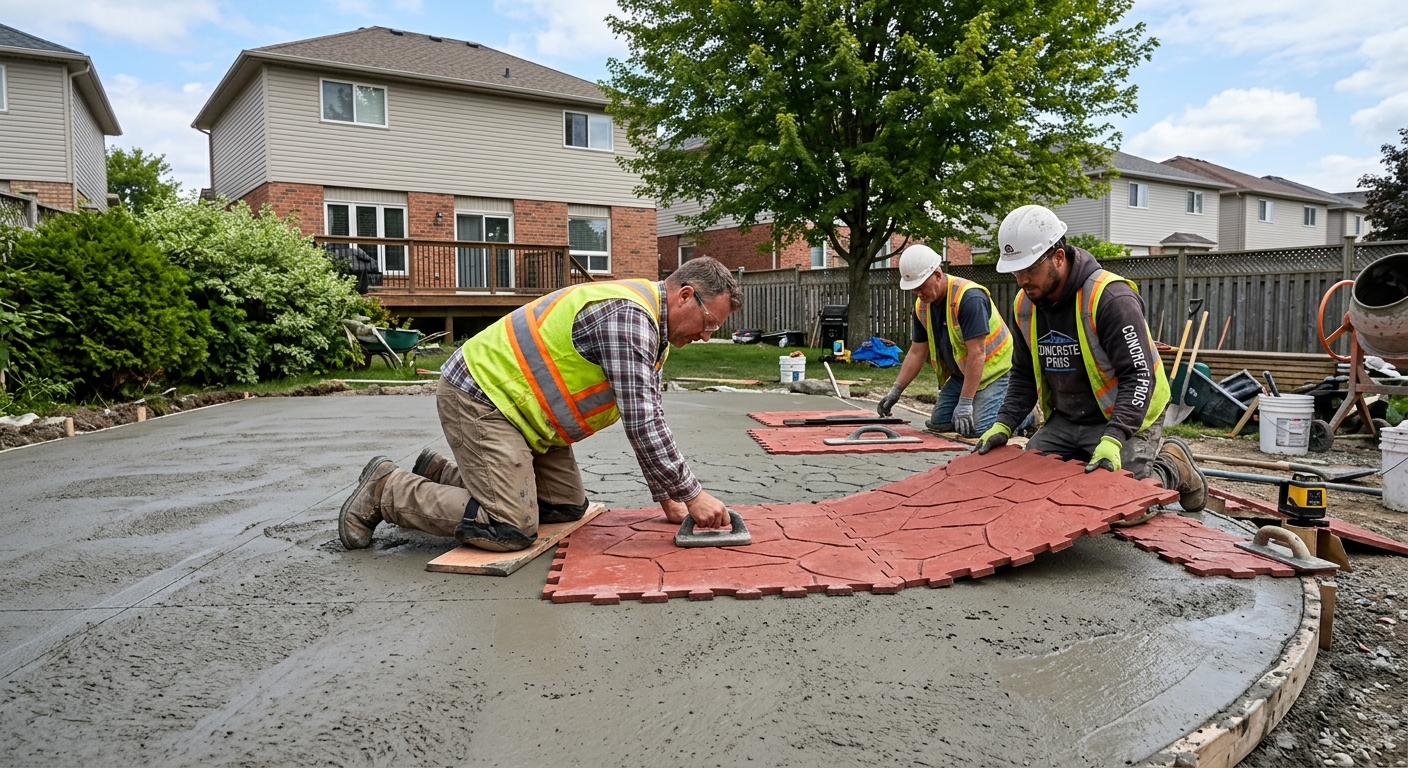
Concrete work options and costs in McKernan
McKernan, Alberta is a small community (population 2,815 in 2021, Statistics Canada, 2021 Census) where concrete flatwork and foundation work show up on almost every block—because most homeowners rely on driveways, patios, walkways and garages that hold up through long cold winters. In Calgary’s housing mix, many properties are single-detached homes, so demand is especially strong for driveway and back-porch improvements in established pockets around the community where lots are mature and access is tight. In McKernan and the wider Calgary area, the climate is the biggest driver of cost: freeze–thaw cycles plus a deeper design frost depth mean excavation is more intensive, footings typically need to bear on undisturbed soil below the design frost, and exterior slabs must use air-entrained mixes engineered for durability. Local crews also schedule pours around a shorter practical season, and late-fall or early-spring placements may require insulated blankets or temporary heat to protect curing. That curing discipline is one reason you’ll see contractors price the same scope differently—someone who budgets for proper granular base prep, air content, and cold-weather precautions is usually more expensive upfront but far cheaper to maintain later.
Below are typical McKernan-area price ranges to help you compare options before you request itemized quotes for your specific site and finish selections.
| Application |
Typical Size |
Key Spec |
Finish Option |
Price Range |
| Concrete driveway (standard broom finish) |
400–600 sq. ft. (typical 20’x20’ to 20’x30’) |
Air-entrained exterior mix, compacted granular base, wire mesh or rebar as required |
Broom finish, control joints, sealed after cure |
$12,000–$18,000 |
| Exposed aggregate driveway |
400–600 sq. ft. |
Air-entrained mix, proper curing and surface timing to expose stone evenly |
Exposed aggregate finish with consistent texture |
$15,500–$22,500 |
| Stamped concrete driveway or patio |
300–500 sq. ft. (driveway apron or extended patio) |
Air-entrained exterior mix, integral colour/antiquing as selected |
Stamped pattern, release agent, sealer |
$15,000–$26,000 |
| Plain concrete patio or walkway |
200–400 sq. ft. |
Air-entrained mix, compacted base, reinforcing as needed |
Broom or light trowel finish, control joints |
$5,000–$9,000 |
| Garage floor (interior slab) |
300–500 sq. ft. |
Typical interior mix, vapour considerations if specified, reinforcement as required |
Light broom finish or smooth float |
$7,500–$14,500 |
| Foundation footings (structural, below frost) |
Varies by foundation plan |
Engineered depth and size, below design frost bearing, reinforcing per engineer |
Structural concrete only (formwork/finishing minimal) |
$28,000–$45,000 |
Prices are estimates only and vary by project scope, site access and material selection.
What affects the price of concrete work in McKernan
In McKernan and across Calgary, it’s common to see quotes for what sounds like “the same” concrete job come in 30–50% apart. The reason isn’t usually the concrete itself—it’s the engineered details around it: how deep they excavate, what base they install, how they reinforce, the air content in the mix, how they protect curing in cold weather, and whether they include sealing and site cleanup. In a cold continental climate with frequent freeze–thaw cycles, local codes and engineering practice favour deeper, more conservative footing support—so foundation and footing scopes carry a larger volume of excavation and concrete than many homeowners expect. That’s one reason foundation/footings commonly land in the $28,000–$45,000 band, while driveway work in the $12,000–$18,000 band can swing higher when finish and access are harder.
Frost line depth dictates everything: exterior footings must typically extend to undisturbed soil below the design frost depth (about 1.2 m, roughly 4 ft, in this region). If a contractor assumes “shallow is fine,” you often pay later through settlement or heave-related movement. All exterior slabs also require air-entrained concrete to survive repeated freeze–thaw cycles, and colder pour seasons require cold-weather curing precautions—insulated blankets, heating, and scheduling discipline—which add labour and equipment time. De-icing salt is another Calgary reality: it accelerates surface wear and spalling risk, so sealing is a cost-effective protection step.
Two practical examples from McKernan: (1) A backyard patio on soft, previously disturbed soil usually needs extra granular base and potentially deeper prep, pushing cost up even if the square footage is modest. (2) A stamped driveway may look “only decorative,” but it often requires more careful forming, higher material specifications and additional crew time, so the upgrade is justified when you want texture and curb appeal that stays sharp after winters.
| Price Factor |
Why It Matters |
Cost Impact |
| Frost line depth — determines footing depth and form height |
Footings must bear below design frost to limit frost heave and seasonal movement |
Higher excavation and concrete volume can move structural pricing sharply |
| Site preparation — excavation, grading, compacted granular base |
Proper base prevents settlement and reduces cracking through freeze–thaw cycles |
Extra haul-off, grading and compaction time raises costs quickly |
| Reinforcement — rebar or wire mesh requirement |
Controls cracking and improves slab durability under traffic and temperature swings |
Material + placement labour can add meaningful line-item cost |
| Mix design — air-entrainment and compressive strength spec |
Air entrainment is key to resisting freeze–thaw damage; strength affects performance |
Higher-spec mix and QA can add cost versus “minimum” concrete |
| Finish type — broom vs. stamped vs. exposed aggregate |
Finish impacts labour time, curing discipline, and surface protection steps |
Stamped/exposed aggregate typically costs more than broom finish |
| Pour size and concrete truck access to site |
Long pump distances or difficult access increases labour and equipment time |
Smaller sites can cost more per square foot due to staging constraints |
| Cold-weather curing precautions — heating and blankets |
Protects strength gain and reduces scaling risk in short McKernan pour windows |
Temporary heat/blankets can add a noticeable premium in late season |
| Control joint pattern and sealing cost |
Joints manage cracking locations; sealing helps repel de-icing salts |
Often small relative to repairs, but included specs matter |
Permits & regulations in Alberta
In Alberta, structural concrete work is typically not a “permit-free” DIY category. For most projects in McKernan, a building permit is required for structural elements such as foundation footings, foundation walls, grade beams and other load-bearing concrete. Municipalities usually expect engineered drawings for structural scopes, and they may review the drawings before concrete is placed. On the other hand, concrete flatwork like patios, walkways and driveways usually does not require a permit by itself unless it changes lot grading, affects stormwater flow, or creates an issue with impervious surface coverage or municipal right-of-way requirements. Even when a permit isn’t usually required for a driveway slab, it’s smart to confirm the plan with the local authority before you break ground—especially if you’re tying into existing grades or adjusting drainage around your foundation.
To verify a contractor is compliant in Alberta, do it step-by-step: (1) Ask for their certificate of insurance (liability) and check that the coverage is current and includes your project type; (2) confirm they carry the appropriate workplace coverage (WSIB/WCB clearance or documentation for the trade); and (3) verify their licensing/registration status through the relevant provincial registry for their business type. Then validate real-world experience: request references for similar driveway or footing work near the same timeframe. If they can’t provide insurance documents or recent comparable project details, that’s a major red flag before you compare concrete prices.
Getting concrete right in McKernan's freeze-thaw climate
Concrete can fail in McKernan mainly because water moves, freezes, and expands during freeze–thaw cycles—especially when base prep and the concrete mix aren’t engineered for Alberta winters. To spec the job correctly, start with base preparation: excavate to the required depth for local soil conditions and frost considerations, then install and compact a granular sub-base so the slab isn’t sitting on loose material. Next, mix design matters more than many homeowners realize: for exterior flatwork, air-entrainment (commonly in the 5–7% range) is what helps concrete resist freeze–thaw damage. Pair that with a minimum 32 MPa compressive strength to meet typical durability expectations for residential work. Control joints are also essential: they create planned crack locations so random cracking is minimized. Finally, curing is make-or-break in Calgary-area schedules—cold weather means protecting strength gain for at least 7 days under proper conditions, sometimes using insulated blankets or temporary heat. After the cure, a penetrating sealer applied about 28 days post-pour helps repel de-icing salts, reducing surface scaling and spalling risk.
If you’re comparing options, the “extra” cost is often justified. For example, moving from a plain patio/walkway in the $5,000–$9,000 band to a stamped driveway or patio in the $15,000–$26,000 band is usually warranted when you want decorative texture and colour—but only if the contractor also budgets for the correct air-entrained mix, disciplined curing and joint/sealing details that keep the decorative surface intact through winter.
Use these technical questions to avoid the most common failure: spalling caused by inadequate air-entrainment or rushed curing. In Alberta, looks only matter after durability is engineered.
| Spec |
Why It Matters in McKernan |
What to Ask For |
Impact if Skipped |
| Compacted granular base (depth?) |
Correct thickness and compaction prevent settlement and limit moisture under slabs |
Granular base depth and compaction method, plus what soil conditions were assumed |
Uneven support leads to cracking and spalling, especially after freeze–thaw |
| Air-entrained concrete mix (target air %?) |
Air entrainment reduces freeze–thaw deterioration in exterior McKernan conditions |
Target air content (commonly 5–7% for exterior flatwork) and mix design sheet |
Higher freeze–thaw damage risk and surface scaling/spalling over winters |
| Compressive strength (MPa rating) |
Adequate strength supports durability and performance in traffic and temperature cycling |
Minimum 32 MPa (or higher if engineered), and placement/cure documentation |
Premature wear, increased cracking and reduced long-term durability |
| Control joints (spacing per ACI guidelines) |
Joints manage where shrinkage and thermal movement cracks will occur |
Joint spacing plan, sawcut timing, and alignment with expected traffic patterns |
Random cracking locations and accelerated water intrusion |
| Minimum 7-day curing period |
Strength gain must occur before exposure to cold snaps and freeze–thaw cycles |
How they protect curing at low temperatures (blankets/heating) if needed |
Scaling, weak surface zone and possible long-term durability issues |
| Penetrating sealer (when applied after cure) |
Sealer helps repel de-icing salts that can attack concrete surfaces in Alberta winters |
Sealer type and timing (typically ~28 days post-pour after cure) |
Faster surface wear, scaling and higher maintenance costs |
How to choose a concrete work contractor in McKernan
Choosing the right concrete contractor in McKernan starts with proof, not promises. First, verify Alberta compliance: request their current liability insurance certificate, and make sure they can provide WSIB/WCB documentation or a clearance letter showing coverage where required. Don’t rely on verbal assurances—look at the certificate dates and confirm the insured business name matches the contractor you’re hiring. Then ask about licensing/registration relevant to their trade category and confirm it before signing.
Next, get 2–3 quotes that are itemized—not just a lump sum. You want a labour and materials breakdown so you can compare excavation, granular base depth, reinforcement (mesh vs. rebar), mix design/air-entrainment, pump or truck access costs, cold-weather curing precautions, and sealing. Read the scope carefully for exclusions: Is permit pull included (when required for structural work)? Is topsoil removal and disposal included? What happens if they uncover unsuitable soil or unexpected subgrade conditions? A reputable contractor will describe how they handle these changes.
Warranty should be specific. Ask for the workmanship warranty length and what it covers (cracking, spalling, joint performance, settlement). Also ask whether the product/manufacturer warranty is transferable to you. For payment, never agree to more than 10–15% upfront—hold back the remainder until the work is complete and verified. Finally, timelines should be in writing: confirm your start date, pour date expectations and a completion estimate.
- Confirm insurance certificate is current and project-appropriate (liability).
- Verify WSIB/WCB clearance or documentation where applicable.
- Request references for similar driveway/patio finishes in the Calgary area.
- Get itemized quotes: excavation, base, reinforcement, concrete supply, finishing and sealing.
- Ask for mix design details including air-entrainment for exterior work.
- Confirm whether cold-weather curing precautions are included (blankets/heating) when temperatures drop.
- Check what reinforcement is included (mesh vs. rebar and where it’s placed).
- Ask about control joint layout and sawcut timing.
- Confirm sealing type and application timing (typically after cure).
- Understand disposal and any regrading/landscaping restoration included.
- Use a written contract with scope, exclusions, schedule and warranty details.
- Set a payment schedule with a small deposit and a holdback until completion.
Concrete contractor red flags in McKernan include: refusing to show mix specs or air-entrainment details, quoting “one mix for everything” without exterior freeze–thaw considerations, skipping cold-weather curing precautions during shoulder season, providing only lump-sum estimates without itemized base/reinforcement/sealer scopes, and asking for a large deposit before any excavation or formwork begins.
Frequently asked questions — concrete work in McKernan
What is a concrete overlay and is it suited to McKernan?
A concrete overlay is a thin bonded layer (often a resurfacing system) placed over an existing concrete slab to improve appearance and smooth out minor deterioration. In McKernan and the broader Calgary climate, overlays can be suited to the right situation—typically when the existing slab is structurally sound, not extensively cracked, and properly prepared (mechanically profiled and cleaned for bonding). The biggest risk in freeze–thaw areas is trapping moisture or covering problems that already exist, so the contractor should assess spalling, delamination, and joint failure first. If your driveway is already failing from inadequate air entrainment or base settlement, an overlay can mask symptoms without fixing the cause. For reference, if you’re budgeting a driveway rebuild, many projects fall into the $12,000–$18,000 band; an overlay may be cheaper upfront, but it’s only a smart move when the substrate is genuinely stable. Ask for surface prep and bond-test details before proceeding in Alberta.
How do I seal concrete to protect it in McKernan?
Sealing in McKernan is mainly about protecting against moisture and de-icing salt. In cold continental winters, salts can accelerate surface scaling and spalling if the surface stays porous and repeatedly wet. A good practice is to wait until after the concrete has cured—commonly about 28 days post-pour—then apply a penetrating sealer designed for exterior concrete. Make sure the contractor confirms the slab is clean and dry before sealing; sealer applied over dust, curing compounds, or trapped moisture can reduce performance. Also, keep expectations realistic: sealing won’t replace good base prep, air-entrained concrete, or control joints. It complements those choices. If you’re planning an upgrade like broom-finished exterior flatwork versus decorative finishes, sealing still matters for longevity, even if you’re in the $5,000–$9,000 patio/walkway band. Ask what sealer product is used, the coverage rate, and whether they include application as part of the scope.
What is the difference between concrete and cement?
Concrete is the full building material you install: cement plus water plus aggregates (sand and gravel), along with optional admixtures like air-entrainment for exterior durability. Cement is only one component inside the concrete mix. In Alberta’s freeze–thaw conditions, the important part for performance is the overall concrete design—especially air-entrainment for exterior slabs and the target compressive strength. That’s why you’ll hear contractors talk about “air content” and “mix design,” not just cement. Homeowners can sometimes assume cement strength alone controls durability, but in real placements the admixtures, water-to-cement ratio, curing discipline, and base prep all work together. When you’re comparing quotes for McKernan flatwork, ask specifically what mix design they’re using (air-entrained, minimum strength) and what curing precautions they’re including, because these details explain why two driveway quotes can differ significantly in the $12,000–$18,000 range.
How much does concrete work cost in McKernan?
Concrete pricing in McKernan is driven by scope, access, finish, and the cold-weather engineering details needed for durability. For flatwork, driveway and slab projects commonly land around $12,000–$18,000 for a standard broom-finished driveway, while patios and walkways often fall near $5,000–$9,000 depending on square footage and site conditions. Decorative options like stamped concrete are typically higher, often around $15,000–$26,000 because they require additional labour, integral colour/finishing steps, and more careful curing timing. Foundation footings and structural below-frost scopes are a different category and frequently come in around $28,000–$45,000 depending on foundation plan and excavation depth. Because Alberta’s frost considerations require deeper and more intensive prep, smaller “simple” jobs can still cost more per square foot than homeowners expect. Always compare itemized quotes for excavation depth, base, reinforcement, mix specs, curing precautions, and sealing included—those are what most affect the final number in Calgary-area winters.
How deep must footings be for McKernan's frost line?
In McKernan (Calgary region), footings must bear below the design frost depth to reduce the risk of frost heave and seasonal movement. Local engineering practice uses a design frost depth of about 1.2 m (roughly 4 ft) in this area. That means excavation and footing formation usually have to extend to undisturbed soil at or below that depth, plus any additional depth required for your specific soil conditions and the structural foundation plan. The exact footing size and depth are typically confirmed on engineered drawings for the foundation system (especially for structural elements like footings and foundation walls). If a contractor proposes a footing depth above the design frost bearing requirement, that’s a serious durability concern in Alberta’s freeze–thaw climate. When you compare quotes, ask what depth they assume for excavation and footings, and whether they’re following the engineered foundation plan for your house type. For reference, footing scopes often sit in the $28,000–$45,000 band because of the increased excavation and concrete volume required.
Why does concrete crack in McKernan and how is it prevented?
Concrete cracking in McKernan is usually expected to some degree—what you want is controlled cracking rather than random, uncontrolled failure. The main drivers in Alberta are thermal movement (expansion and contraction), shrinkage as concrete cures, and freeze–thaw cycles when water gets into vulnerable areas. Cracks often show up when there’s insufficient control joint planning, poor timing of sawcuts, inadequate base support, or incorrect mix design—especially if air-entrainment is not right for exterior exposure. Sealing helps reduce moisture and de-icing salt penetration, but it can’t fix a poor base or missing freeze–thaw durability specs. Prevention comes from a combination: a properly compacted granular base, air-entrained exterior mix (commonly 5–7% air content), correct reinforcement placement, and a control joint pattern that limits where cracks will occur. Curing is critical too—protecting strength gain for at least 7 days and using insulating blankets/heating when temperatures drop reduces surface scaling and weakens the crack-initiation zone. If you’re paying for a decorative driveway, correct joint and curing details protect the finish investment (often in the $15,000–$26,000 stamped band).