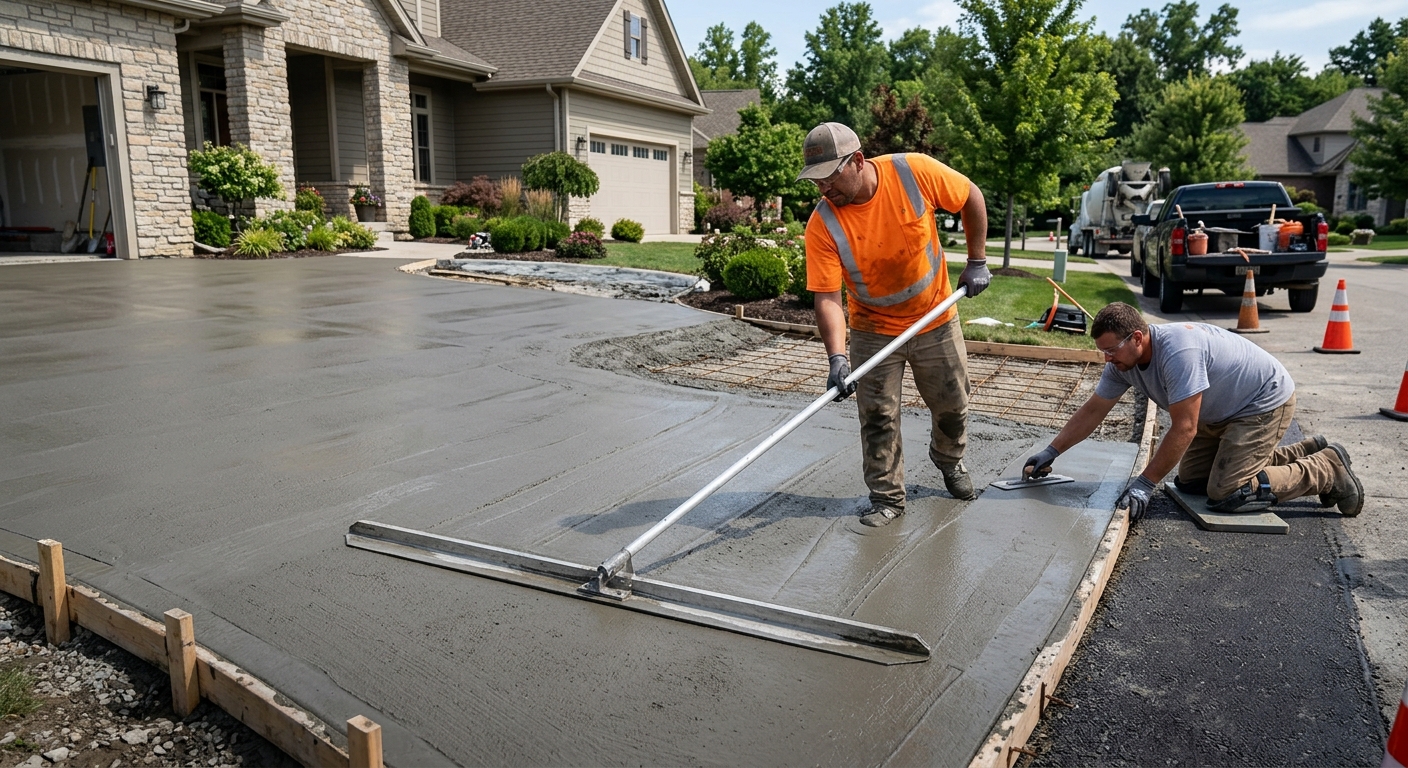
Concrete work options and costs in Killam
Killam, Alberta is a small community where concrete flatwork is used year-round, but it has to be built to handle cold winters, a frost-susceptible ground profile, and frequent freeze–thaw. The good news for homeowners is that most properties here are established residential lots—single-detached homes make up 83.8% of dwellings—and that typically means regular demand for driveways, patios and walkways. In 2021, owner households were 86.1% (Statistics Canada, 2021 Census), so many projects are planned around long-term durability rather than lowest first-cost.
In the Camrose–Drumheller economic region, contractors price concrete based on how far they must excavate and how much forming and concrete volume is required. Frost-related design pressure pushes structural footings below the local frost depth, and that affects everything: haul distance, labour hours, and the amount of rebar/formwork. Exterior slabs also need air-entrained concrete and drainage-minded base preparation to reduce scaling and cracking during freeze–thaw. The short pour season—from late spring into early fall—can raise unit costs, because winter work often requires heating, insulated blankets and slower finishing schedules to reach safe strength.
In Killam, we tend to see the most activity around the older, established residential areas near the town core where many homes were built before 1981 (70.9% of homes). That’s where driveway replacements, walkway renewals, and foundation-related repairs are especially common. Below is a practical cost comparison to help you budget before you talk to contractors.
| Application |
Typical Size |
Key Spec |
Finish Option |
Price Range |
| Concrete driveway (standard broom finish) |
320 sq. ft. (about 20 ft x 16 ft) |
Air-entrained mix for exterior exposure; control joints |
Broomed surface for traction |
$14,000–$22,000 |
| Exposed aggregate driveway |
320 sq. ft. |
Air-entrained concrete; proper curing before wash |
Exposed stone finish |
$18,000–$28,000 |
| Stamped concrete driveway or patio |
240 sq. ft. (about 20 ft x 12 ft) |
Air-entrained concrete; consistent release agent timing |
Stamped pattern with coloured accents |
$12,000–$21,000 |
| Plain concrete patio or walkway |
160 sq. ft. (about 20 ft x 8 ft) |
Drainage base; control joints where required |
Float and broom edge |
$2,500–$4,700 |
| Garage floor (interior slab) |
480 sq. ft. (about 24 ft x 20 ft) |
Standard mix; vapour control where appropriate |
Smooth/steel trowel with light broom lines |
$7,500–$13,000 |
| Foundation footings (structural, below frost) |
Varies by foundation type (typical 1–2 spans) |
Reinforced concrete; depth below design frost |
Structural finish only (no decorative finish) |
$180,000–$260,000 |
Prices are estimates only and vary by project scope, site access and material selection.
What affects the price of concrete work in Killam
In Killam and across the Camrose–Drumheller economic region, two quotes for what looks like the same concrete job can easily swing by 30–50%. The difference is usually not “contractor profit”—it’s the cost of meeting durability specs for a freeze–thaw climate. In cold continental regions, the frost line depth dictates the real excavation and forming volume. Footings and structural foundation elements must be placed below the design frost depth, and the closer you get to 2.4 m in Alberta conditions, the more labour and material you’re paying for.
Exterior flatwork is also priced around the requirement for air-entrained concrete mixes to survive repeated freezing and thawing. When crews pour later in the season, they can work more productively; when projects push earlier or later, cold-weather curing precautions (heating, insulated blankets and slower scheduling) raise costs. Another big driver is surface protection: de-icing salt can accelerate spalling, so contractors often recommend—and sometimes bundle—sealing and proper finishing to protect the surface.
In practical Killam terms, an older site or a driveway with poor drainage tends to cost more because the contractor must remove compromised base, re-grade for water flow, and rebuild compacted granular sub-base before any concrete goes down. If your area has a “settled” approach slab or you need thicker edges for water management, you’ll see that reflected in the quote. Conversely, a straightforward overlay on sound base—on a site with good drainage and easy truck access—can land you closer to the lower end of the local price bands for slabs and walkways (for example, plain patio/walkway work often aligns with $12–$20 per sq. ft. in this region).
| Price Factor |
Why It Matters |
Cost Impact |
| Frost line depth — determines footing depth and form height |
Deeper excavation/forming is required to prevent frost heave |
High; can add significant labour and concrete volume |
| Site preparation — excavation, grading, compacted granular base |
Poor base leads to voids, settlement and early cracking |
Medium to high; depends on soil condition and haul-off |
| Reinforcement — rebar or wire mesh requirement |
Controls cracking and improves load performance |
Medium; material + placement labour |
| Mix design — air-entrainment and compressive strength spec |
Improves freeze–thaw resistance and long-term durability |
Medium; specialty mix and testing requirements |
| Finish type — broom vs. stamped vs. exposed aggregate |
Finish complexity affects labour hours and curing steps |
Medium to high; decorative systems cost more |
| Pour size and concrete truck access to site |
Smaller pours and restricted access increase setup time |
Medium; may require additional logistics |
| Cold-weather curing precautions — heating and blankets |
Maintains strength gain when temperatures drop |
High if conditions force added protection |
| Control joint pattern and sealing cost |
Manages cracking and reduces surface deterioration from salts |
Low to medium; often prevents bigger repairs later |
Permits & regulations in Alberta
In Alberta, structural concrete work typically needs a building permit, especially when you’re changing a load-bearing system. That usually includes foundation walls, grade beams, footings, and any structural concrete elements tied to the building structure. In practice, municipalities often expect engineered drawings for structural concrete, so the permit package can include engineering sign-off depending on your foundation scope.
Concrete flatwork such as driveways, patios and walkways often does not require a permit by default. However, it can change if the work affects lot grading, drainage, impervious surface coverage limits, or the municipal right-of-way/approach requirements. Because requirements can vary based on how the project interfaces with the property and drainage, confirm with the local authority before breaking ground.
Before you sign with a contractor in Killam, verify three things: Alberta licensing/registration (as applicable to the work they’re doing), liability insurance, and WSIB/WCB coverage. Step-by-step: (1) ask for their certificate of insurance and make sure it names you as an additional insured if required by your contract; (2) request evidence of workers’ compensation clearance (or the appropriate coverage documentation); and (3) confirm the contractor’s standing using the online registries you’re given—then follow up by calling the number on the clearance letter/certificate if anything looks inconsistent. Also ask for references on similar Alberta-scale pours (exterior flatwork in freeze–thaw conditions or foundation work with comparable depth).
Getting concrete right in Killam's freeze-thaw climate
Concrete fails in Killam when the slab or foundation is built without respecting how water and temperature move through the structure. The biggest failures we see are spalling and scaling from inadequate air-entrainment and poor curing, plus random cracking from missing or poorly planned control joints. In a Camrose–Drumheller winter, water expands as it freezes, so your concrete must be designed to handle freeze–thaw while the sub-base and drainage are engineered to keep water from being trapped under the slab.
Start with base preparation: a compacted granular sub-base to the right depth and grading so surface water sheds away. Next is mix design—ask for air-entrainment (typically 5–7% air for exterior flatwork) and a minimum 32 MPa compressive strength spec. Then control joints: they’re not optional in exterior flatwork; they guide where cracking happens. For curing, plan on a minimum 7-day curing period under proper conditions—cold weather can slow strength gain, so protective measures (insulated blankets and sometimes heat) can be necessary. Finally, consider sealing: a penetrating sealer is generally applied after the cure (commonly around 28 days) to help repel de-icing salts and reduce surface damage.
When people compare options, the price difference can be justified when it buys durability. For example, moving from plain broom-finished patio/walkway work into stamped concrete often increases labour and finishing steps; in Killam, that decorative step may land you closer to the $20–$35 per sq. ft. decorative band, which is reasonable if you want the appearance and accept extra finishing/curing complexity. If you don’t need the look, plain flatwork in the lower band can be the better value—so long as the contractor still gets the air-entrainment, base, joints and curing right.
| Spec |
Why It Matters in Killam |
What to Ask For |
Impact if Skipped |
| Compacted granular base (depth?) |
Reduces water trapping and settlement through freeze–thaw cycles |
Granular sub-base type and compacted depth; grading and drainage plan |
Voids, rocking, cracking and premature failure |
| Air-entrained concrete mix (target air %?) |
Prevents freeze–thaw damage to the paste/aggregate bond |
5–7% air content for exterior flatwork |
Spalling and scaling within a few winters |
| Compressive strength (MPa rating) |
Strength gain supports long-term durability under thermal stress |
Minimum 32 MPa compressive strength spec |
Higher cracking risk and surface deterioration |
| Control joints (spacing per ACI guidelines) |
Manages cracking patterns from expansion/contraction |
Joint layout and spacing plan before the pour |
Random cracks and wider damage paths |
| Minimum 7-day curing period |
Cold temps slow strength gain and increase early damage risk |
How curing will be protected; curing duration in your dates |
Low early strength, surface defects, and weak long-term performance |
| Penetrating sealer (when applied after cure) |
Helps resist de-icing salt scaling in Alberta winters |
Confirm timing (commonly after full cure, around 28 days) and product type |
More salt damage, staining and faster surface wear |
How to choose a concrete work contractor in Killam
Choosing the right contractor in Killam is mostly about verifying proof, not promises. In Alberta, confirm the contractor is properly licensed/registered for the scope they’re performing (structural work versus flatwork), then check liability insurance and workers’ compensation coverage (WSIB/WCB). How to check: request a certificate of insurance (look for current dates and coverage amounts) and ask for workers’ compensation clearance or coverage documentation. If you can, verify the clearance letter/certificate details match the contractor name and address on the quote.
Next, ask for 2–3 itemised written quotes that break labour and materials apart rather than a single lump sum. A good quote will clearly show what’s included in concrete supply, base prep, forms, reinforcement, saw cutting/joints, finishing, curing protection, and disposal/haul-off. Read the exclusions: is a permit pull included (if needed for the scope), is sump or drainage work included, and who supplies traffic control or protection for the area during curing? Also confirm warranty terms—workmanship warranty length, product/manufacturer warranty coverage (if any), and whether warranties transfer if you sell your home.
Finally, use sensible payment structure. Never pay more than 10–15% upfront; hold back a portion until completion and acceptance. Get a start date and completion estimate in writing, and require weather-based triggers for cold snaps so you’re not surprised if blankets/heating are added for safe placement and curing.
- Ask for a written scope that lists excavation depth, base thickness, and compaction method.
- Confirm air-entrainment and target compressive strength in the quote or spec sheet.
- Verify reinforcement details (mesh vs rebar, chairs/binders to keep steel in place).
- Require a joint plan (layout and approximate spacing) before the pour.
- Ask how they protect concrete during cold weather curing in Alberta.
- Confirm disposal/haul-off is included if they remove existing base or concrete.
- Check whether sealing is included or offered as an add-on (often after cure).
- Ensure finishing steps are described (broom type, trowel vs broom edges).
- Get the concrete truck access plan and confirm pump/skip requirements.
- Verify insurance limits are adequate for your project scope.
- Confirm WSIB/WCB coverage is current and tied to the job crew.
- Request references for Killam-area exterior flatwork or similar freeze–thaw projects.
Concrete red flags we see in Killam include: no discussion of air-entrainment for exterior slabs, vague joint layout (“we’ll cut it after”), skipping granular base details, promises of a pour in cold temps without heating/blankets, and quotes that don’t address curing time or sealing for de-icing salt exposure.
Frequently asked questions — concrete work in Killam
How long does a concrete driveway last?
In Killam and across Alberta’s freeze–thaw climate, a properly built concrete driveway commonly lasts 25+ years, and often longer. The lifespan is driven by three things: whether the contractor used air-entrained concrete for exterior exposure, whether the base was prepared and compacted correctly, and whether control joints were planned to manage cracking. If drainage is poor or if salt and water get trapped against the slab, surface scaling can start earlier. For budget planning, it helps to compare options using the region’s typical driveway bands: standard broom-finished driveway work is often quoted around $14,000–$22,000 for a typical sized driveway. Choosing better base prep and correct exterior spec usually costs more upfront, but it’s what prevents early winter damage.
What is air-entrained concrete and why does it matter here?
Air-entrained concrete is designed to include tiny, evenly distributed air bubbles in the mix. In Killam’s Alberta winters, those microscopic voids give expanding water a place to go as temperatures drop—reducing freeze–thaw damage. Without sufficient air entrainment, the cement paste can break down and you’ll see spalling or scaling, especially where the surface is exposed to de-icing salts. That’s why exterior flatwork quotes in the Camrose–Drumheller region should explicitly reference air-entrainment and exterior durability. When you’re comparing contractor proposals, ask for the target air content (often 5–7% for exterior flatwork) and confirm that curing protection will be used if temperatures drop during placement. This single spec is one of the biggest determinants of whether your driveway looks good after several winters.
How do I prepare the base for a concrete slab?
Base prep is where projects in Killam make or break. A good contractor will excavate to the required depth, remove unsuitable material, then install a compacted granular sub-base and re-grade for proper drainage. They should specify the granular type and compacted depth (and how they verify compaction). In freeze–thaw conditions, trapped moisture under a slab can expand as it freezes, pushing on the concrete and leading to cracks or settlement. If there’s existing failing concrete, the contractor may need to remove more than you expect so they’re not burying soft base. In your quote, look for line items for excavation, granular base supply, grading, compacting, and disposal of excess material. If any of those are missing or described vaguely, ask questions before signing—because “cheap concrete” won’t compensate for a weak base.
How do I compare concrete quotes?
Start by comparing apples to apples. In Killam, the most consistent way to do that is to request itemised quotes that show what’s included: excavation and base prep, reinforcement type, air-entrained mix and strength, forms, finishing method, joint cutting plan, curing protection, and cleanup/disposal. Don’t compare only the total price—verify the specifications. Two bids can differ by 30–50% in the Camrose–Drumheller region because of deeper frost-related excavation, curing precautions, or labour hours for decorative finishes. For example, a plain patio/walkway project might line up more with the $12,000–$20,000 band for exterior work depending on size and scope, while stamped concrete work is typically higher. Ask contractors to confirm the exact mix spec and the joint/sealer approach so you’re not paying for appearance while risking long-term durability.
Can concrete be poured in cold weather in Killam?
Yes, concrete can be poured in cold weather in Killam, but it must be done with the right protection. The biggest issue isn’t just the temperature at the moment of placement; it’s the time the concrete takes to gain early strength safely. When conditions are cold enough, contractors typically use heating, insulated blankets, and controlled curing to prevent freezing during the early curing period. If a bid doesn’t mention cold-weather curing precautions, treat it as incomplete for Alberta winters. Also ask about how they’ll monitor and manage protection—curing isn’t a “set and forget” task. Your best safety measure is to request a weather plan in writing and to schedule so you can achieve the recommended cure period (often a minimum 7-day curing period under proper conditions). That’s what protects strength gain and durability in freeze–thaw cycles.
How do I maintain concrete in Killam's freeze-thaw climate?
Maintenance in Killam is about protecting the surface from water and de-icing salts. First, keep drainage functioning: don’t let snowmelt and runoff pond against the slab. Clear debris so water can shed and avoid repeated saturation. Second, seal the surface after it’s fully cured—penetrating sealers are commonly applied around 28 days post-pour—so salt and moisture have less ability to attack the surface. Third, use de-icing products responsibly: avoid over-salting, and focus on traction rather than heavy chemical loads. If you notice early scaling or small cracks, address them sooner—small repairs are cheaper than waiting for water to enlarge damage during freeze–thaw cycles. While a sealed, well-built driveway can last decades, sealing and drainage attention are what keep it looking good and slowing wear for the long haul in Alberta’s climate.