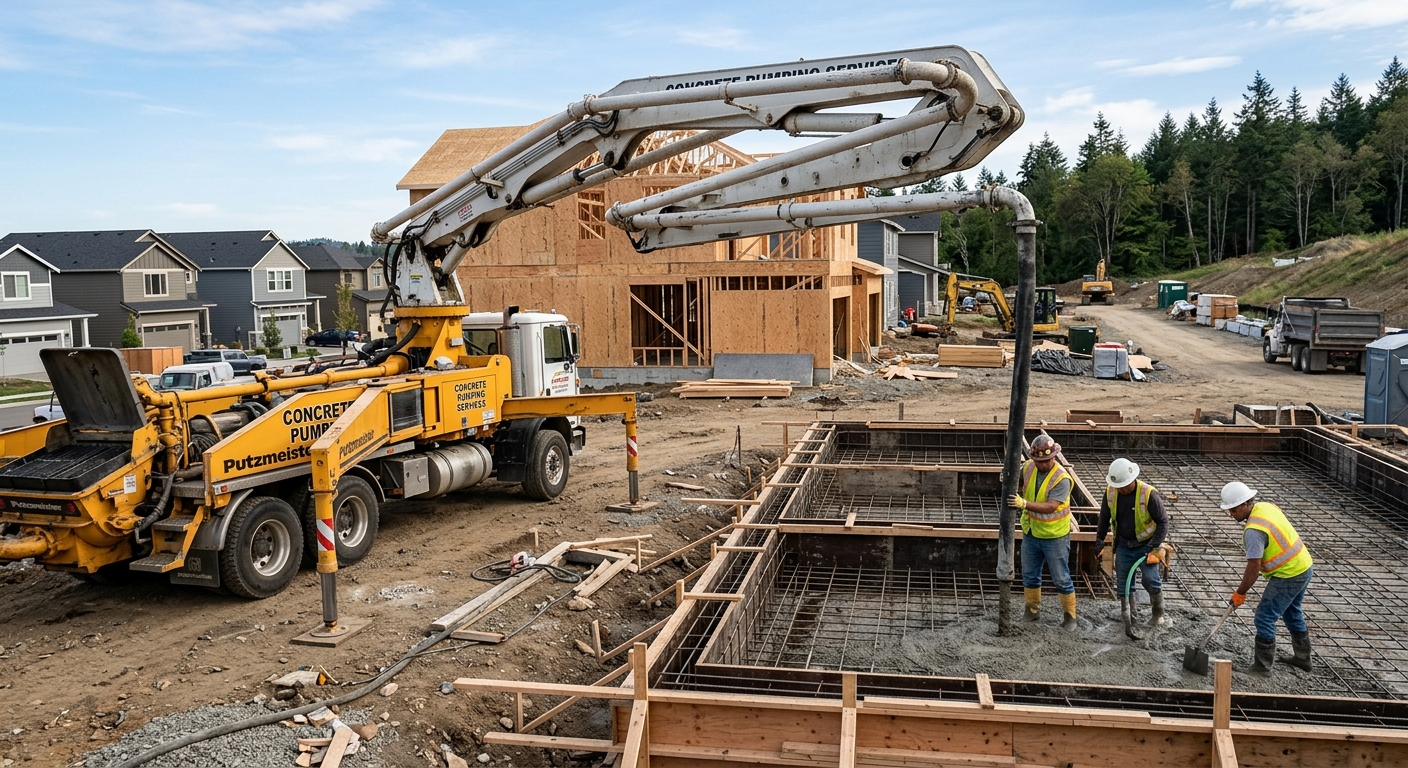
Concrete work options and costs in Forest Heights
Concrete work in Forest Heights is shaped by the way Calgary-area winters stress slabs—freeze–thaw cycles, deep frost, and quick seasonal changes in the work window. If you’re budgeting for flatwork (driveways, patios, and walkways), you’re typically in the same market as much of the community: Forest Heights sits within a growing Calgary region where many homeowners rely on single-detached housing, and the city’s 2021 population was 5,985 in the local profile area (Statistics Canada, 2021 Census). On top of that, contractor availability can tighten around the exterior pour season, so well-run crews that plan base prep and curing schedules tend to price more confidently.
Costs also reflect engineering choices common in this frost-depth climate. In the Calgary region, footings for houses, garages, decks, and retaining structures must generally bear on undisturbed soil below the design frost depth (about 1.2 m). That requirement increases excavation and footing volume versus warmer provinces. For exterior slabs, crews use air-entrained concrete and planned control joints to reduce cracking and spalling. Because late fall/early spring pours can require winter-grade concrete and curing support (insulated blankets and sometimes heat), pricing can shift even when the slab size stays the same. This is why you’ll see the driveway band land around $12,000–$18,000 for standard broom-finished work, while decorative options like stamping usually climb higher.
Below is a practical comparison of common options for Forest Heights, with typical sizes and what to specify before you compare quotes.
| Application |
Typical Size |
Key Spec |
Finish Option |
Price Range |
| Concrete driveway (standard broom finish) |
24 ft × 12 ft (288 sq. ft.) |
Air-entrained exterior mix; control joints; compacted granular base |
Broom finish |
$12,000–$18,000 |
| Exposed aggregate driveway |
24 ft × 12 ft (288 sq. ft.) |
Air-entrained exterior mix; proper curing and surface wash |
Exposed aggregate |
$14,500–$22,000 |
| Stamped concrete driveway or patio |
500 sq. ft. driveway/patio combined |
Air-entrained exterior mix; release agent and proper curing schedule |
Stamped pattern + sealer |
$15,000–$26,000 |
| Plain concrete patio or walkway |
12 ft × 12 ft (144 sq. ft.) |
Air-entrained exterior mix; compacted base; joints as needed |
Float + light broom (or trowel/steel where appropriate) |
$5,000–$9,000 |
| Garage floor (interior slab) |
22 ft × 20 ft (440 sq. ft.) |
Vapour barrier; minimum thickness; proper curing |
Steel trowel + minimal finish |
$6,500–$12,000 |
| Foundation footings (structural, below frost) |
Typical single-detached footprint |
Engineered reinforcement; excavation to design frost depth (~1.2 m); drainage as required |
Structural concrete forming + placement |
$28,000–$45,000 |
Prices are estimates only and vary by project scope, site access and material selection.
What affects the price of concrete work in Forest Heights
In Forest Heights, two bids for the “same” concrete job can vary by 30–50% across Calgary-area projects because the invisible work adds up: excavation to frost-depth targets, granular base prep, reinforcement detailing, mix design requirements, and winter curing logistics. Even if your driveway or patio dimensions match, one contractor may be building to a stricter frost-and-durability specification (air-entrainment levels, joint planning, cure method), while another may price faster placement assumptions to keep labour moving. In this region, the climate is the driver—design frost depth is about 1.2 m, so footings must sit on undisturbed soil below that depth. That increases excavation and concrete volume for foundations and retaining elements, pushing foundation/footings toward the typical $28,000–$45,000 range.
Exterior slabs also demand durability details because frequent freeze–thaw cycles cause scaling and spalling when the mix is not properly air-entrained and when curing is rushed. Calgary’s pour season can be shorter than homeowners expect, and cold-weather placement often means winter-grade mixes, insulated blankets, or temporary heat to protect curing. De-icing salt—common on driveways in a busy winter—accelerates surface wear, which is why sealing is a key part of long-term performance.
Here are a few concrete examples from Forest Heights that move the needle:
- If your site has poor drainage or soft topsoil, excavation may extend deeper and base prep costs rise, often adding thousands to slab work.
- If you want a stamped driveway, material and labour increase (forms, release agents, stamps, careful curing), which is why decorative work often climbs within the $15,000–$26,000 band.
- If you’re comparing a broom-finished driveway to exposed aggregate, the additional surface prep and longer, more controlled curing tend to raise unit cost.
When you see price differences in this market, assume they’re tied to engineering and durability—not just the finish.
| Price Factor |
Why It Matters |
Cost Impact |
| Frost line depth — determines footing depth and form height |
Footings must extend below design frost depth to prevent frost heave |
Higher excavation and concrete volume; can add major cost to foundations |
| Site preparation — excavation, grading, compacted granular base |
Proper base prevents settlement and cracking over freeze–thaw cycles |
Extra hauling/compaction can move the price up or down significantly |
| Reinforcement — rebar or wire mesh requirement |
Reinforcement controls cracking and improves load capacity |
Material + labour; also affects how slab thickness is designed |
| Mix design — air-entrainment and compressive strength spec |
Air-entrainment improves freeze–thaw resistance |
“Better spec” mix and QA costs more, but reduces long-term spalling risk |
| Finish type — broom vs. stamped vs. exposed aggregate |
Decorative finishes require additional labour steps and curing control |
Stamped/exposed usually adds cost versus plain broom-finish work |
| Pour size and concrete truck access to site |
Access affects pumping, staging, and schedule |
Hard access can add equipment and labour time |
| Cold-weather curing precautions — heating and blankets |
Protects early-age strength gain and reduces scaling risk |
Can add noticeable cost if seasonal timing is tight |
| Control joint pattern and sealing cost |
Joints manage shrinkage/cracking; sealer protects against salt abrasion |
Small line-items that materially affect longevity |
Permits & regulations in Alberta
In Alberta, structural concrete work generally needs a building permit and often engineered drawings that get reviewed as part of the municipal process. This typically includes foundation footings, foundation walls, grade beams, and other load-bearing structural elements. For concrete flatwork—driveways, patios, and walkways—permits usually are not required on their own, unless your project affects lot grading, stormwater/drainage management, impervious surface coverage limits, or the municipal right-of-way.
For a homeowner in Forest Heights, the safest approach is to verify two tracks before the first shovel hits the ground: (1) whether your scope is structural or impact-related grading, and (2) whether a permit is tied to drainage changes or utility work. Step-by-step, you can verify your contractor’s Alberta readiness like this:
- Ask what permit (if any) the project requires and who is responsible for applying.
- Confirm they carry liability insurance: request a current Certificate of Insurance naming you/your property as applicable (or confirm the project limits).
- Verify WSIB/WCB coverage: request proof of clearance or an active account under Alberta’s workers’ protection system.
- Request contractor references for similar-scale concrete work (especially exterior flatwork in freeze–thaw conditions).
- Check the contractor’s good-standing information via online registries used in Alberta and match the business name to what appears on the quote and invoices.
If anything is unclear—permit responsibility, insurance limits, or worker coverage—pause and get it in writing. It protects you when scheduling and inspections matter.
Getting concrete right in Forest Heights's freeze-thaw climate
Concrete failure in Forest Heights usually comes down to one of four things: weak base support, poor air-entrainment, incorrect jointing, or rushed curing. In Calgary’s cold continental climate, freeze–thaw cycling attacks the paste/aggregate interface. If air-entrainment is too low or finishing is done without respecting timing, water can expand inside the slab and cause pop-outs, spalling, and surface scaling—especially where de-icing salt is used.
To spec the job correctly, focus on five practical elements. First, base preparation: you want a compacted granular sub-base to the depth that matches local soil conditions and the frost-protection design intent. Second, mix design: for exterior flatwork, air-entrainment is typically targeted in the 5–7% air range, paired with a minimum 32 MPa compressive strength specification depending on the design and thickness. Third, control joints: they must be spaced to limit random cracking paths and to “tell” the concrete where to crack. Fourth, curing: aim for at least 7 days under proper conditions; in colder weather, crews may need blankets or heat to protect early-age strength gain. Fifth, sealing: a penetrating sealer is commonly applied after the slab has cured (often around 28 days) to improve salt and moisture resistance.
A quick pricing reality check: if your contractor is only $1,000–$2,000 cheaper but proposes skipping proper air-entrained mix spec or sealing, that “savings” can be expensive later. Sealing and correct mix/jointing are the cheaper long-term insurance items compared to repeating the work.
Use the table below as your checklist when comparing quotes—especially if the contractor tries to treat your driveway like a summer-only project.
| Spec |
Why It Matters in Forest Heights |
What to Ask For |
Impact if Skipped |
| Compacted granular base (depth?) |
Provides stable support through freeze–thaw cycles |
Base thickness to suit your soil and frost-protection plan; proof of compaction method |
Settlement and cracking; uneven slab movement in winter |
| Air-entrained concrete mix (target air %?) |
Improves freeze–thaw durability and reduces spalling risk |
Exterior air content target typically 5–7% and winter-appropriate mix selection |
Higher chance of surface scaling and pop-outs in salted areas |
| Compressive strength (MPa rating) |
Strength gain supports long-term load performance |
Minimum 32 MPa (or higher if specified for thickness/loads) |
Premature deterioration, reduced wear resistance |
| Control joints (spacing per ACI guidelines) |
Controls shrinkage cracking patterns |
Joint spacing and saw-cut timing aligned to ACI principles and slab geometry |
Random cracking that penetrates faster under freeze–thaw |
| Minimum 7-day curing period |
Early curing is where durability is won or lost |
Protection plan for cold weather (blankets/heating as needed) |
Weak surface scaling and reduced long-term strength |
| Penetrating sealer (when applied after cure) |
Helps repel moisture and reduces salt abrasion damage |
Penetrating sealer applied after cure (commonly around 28 days) |
Faster wear, higher risk of staining and spalling at the surface |
How to choose a concrete work contractor in Forest Heights
Choosing the right concrete contractor in Forest Heights comes down to verification, documentation, and clarity. In Alberta, you should verify (a) licensing/registration as applicable to the contractor’s business type, (b) liability insurance, and (c) workers’ protection coverage. How to check each: request the most recent certificate of insurance (and confirm project coverage limits), ask for proof of WSIB/WCB coverage (or a clearance letter where applicable), and cross-check the business name against the paperwork in the quote and invoices. If they can’t provide these quickly, that’s your first red flag.
Next, get 2–3 itemised written quotes—not a single lump-sum that hides the details. You want labour and materials broken out: excavation and disposal, granular base and compaction, reinforcement, concrete supply/mix spec, finishing, curing protection, joints, and sealing (where included). Read the scope carefully: what’s excluded (removal of old slab, regrading, forms, pump/tube access, saw cutting, permits, drainage adjustments)? Also ask whether permit pulls are included for any structural scope, and whether disposal and trucking are included.
For warranties, ask for two things: a workmanship warranty duration and the product/manufacturer warranty details. Confirm whether any manufacturer warranty is transferable to future owners. Keep the payment schedule conservative—never pay more than 10–15% upfront; hold back until completion and final cleanup. Also, request a start date and completion estimate in writing so you can plan around Calgary’s tighter exterior pour season.
- Request proof of liability insurance and WSIB/WCB coverage before signing.
- Get a clear mix spec: air-entrainment target and minimum MPa noted on the quote.
- Ask who is responsible for permits if structural work is involved.
- Confirm base preparation method and compaction expectations, not just “we’ll prep the base.”
- Ensure reinforcement details are written (mesh vs. rebar, sizes, and placement).
- Ask for joint plan: spacing, saw-cut timing, and how joints align with your slab size.
- Confirm curing plan for cold weather (blankets/heating if needed).
- Ask whether sealing is included and when it will be applied (after cure).
- Check whether removal/disposal of existing concrete is included or quoted separately.
- Clarify truck access: pumping/tubing costs if the driveway is tight.
- Verify warranty terms in writing, including what failures are covered.
- Use a payment schedule with a holdback until final inspection and cleanup.
Concrete red flags to watch in Forest Heights: vague mix language (“regular concrete”), skipping air-entrainment for exterior slabs, no written curing/heating plan when temps drop, quotes that exclude base prep or reinforcement without explanation, and pressure to take a large deposit before documentation is provided.
Frequently asked questions — concrete work in Forest Heights
What causes concrete to spall in Forest Heights winters?
Spalling in Forest Heights is usually driven by freeze–thaw damage plus salt exposure. When water gets into the concrete and the slab freezes, it expands and stresses the surface paste. If the concrete mix doesn’t have proper air-entrainment (or if the air content is too low), the freeze–thaw pressure concentrates and you can get pop-outs and surface scaling that gradually turns into spalling. Cold-weather curing problems also contribute—if curing is rushed, the top surface can be weaker and more vulnerable. Finally, poor base prep or missing control joints can allow micro-movement that creates pathways for moisture. For pricing, a standard broom driveway might start in the $12,000–$18,000 band, but spalling risk rises when cheaper bids cut durability specs or curing protection rather than the finish.
What is rebar and when is it required in Alberta?
Rebar (reinforcing bar) is steel used to control cracking and add tensile capacity in concrete. In Alberta, rebar requirements depend on the design loads and engineering details, not just climate alone. For example, structural work like foundation footings, foundation walls, and grade beams typically uses engineered reinforcement and requires specific placement, cover depth, and bar sizing. For exterior flatwork, some slabs may use wire mesh or rebar depending on thickness, soil conditions, and expected loads (like a vehicle driveway). In Forest Heights, the freeze–thaw environment makes proper reinforcement detailing more important when the slab is exposed to heavier loads and winter moisture movement. If a contractor can’t explain whether your slab needs rebar or mesh and where it goes, ask them to reference the design/tender spec in the quote.
How long does a concrete project take in Forest Heights?
Timing in Forest Heights depends on whether you’re doing exterior flatwork or structural concrete, and whether the schedule falls into colder weeks. For typical driveway or patio work, excavation and base prep can take a day or two, forming and reinforcing can take another day, and the pour day itself is usually quick—but curing and finishing sequencing matter. Even though concrete reaches handling strength early, you should plan around at least 7 days of proper curing for strength development, and you’ll often avoid heavy traffic longer depending on mix and weather. In cold snaps, crews may extend the timeline with insulated blankets or temporary heating to ensure durability. For foundations/footings, the schedule is more involved: excavation, inspection readiness (where applicable), reinforcement placement, and then placement and curing to design requirements. The key is to confirm the start date, completion estimate, and protection plan with your contractor in writing.
What is a concrete overlay and is it suited to Forest Heights?
A concrete overlay is a new surface layer installed over an existing slab to improve appearance or restore grade without fully removing the original concrete. In Forest Heights, overlays can be a fit when the existing concrete is still structurally sound and the failure is mostly cosmetic or surface-worn. However, overlays are not a cure-all—if the original slab has widespread cracking, settlement, or ongoing moisture issues, the new layer can fail sooner. Also, Calgary’s freeze–thaw cycles mean moisture management and bond prep are critical; the existing surface must be properly cleaned and prepared so the overlay can bond and resist movement. Because overlay work can be cheaper than full replacement in some cases, homeowners sometimes target the decorative or resurfacing approach to stay closer to lower flatwork budgets (like patio/walkway ranges), but the safest decision comes from an on-site inspection and a clear scope of prep and bonding method.
How do I seal concrete to protect it in Forest Heights?
Sealing helps protect concrete in Forest Heights by reducing moisture and salt penetration, which lowers the risk of surface wear and freeze–thaw-related deterioration. The usual approach is to apply a penetrating sealer after the slab has fully cured—commonly around 28 days—so you’re not trapping excess moisture. Before sealing, the surface should be clean and dry, and you’ll want to confirm the sealer is compatible with exterior air-entrained concrete and your expected winter exposure. Don’t seal too early, or you can compromise performance. Also, sealing isn’t a substitute for correct air-entrainment, joints, and base preparation; it’s one layer of protection. If you compare quotes, make sure sealing is included as a line item and ask who applies it and when—especially if your project is in the $15,000–$26,000 stamped range where appearance and durability both matter.
What is the difference between concrete and cement?
Concrete is the full building material: cement plus aggregates (sand and stone), water, and sometimes admixtures like air-entrainment and water reducers. Cement is only one ingredient inside concrete—it's the binder that reacts with water to form the paste that holds everything together. In practical terms for Forest Heights homeowners, the important part for durability is the concrete specification (especially for exterior work): air-entrainment levels for freeze–thaw resistance, minimum compressive strength (often at least 32 MPa for typical specs), and correct curing. When you hear “winter-grade concrete,” that refers to the overall concrete mix and curing-related additions, not cement alone. That’s why two quotes with similar “cement” wording can still perform very differently. Always request the mix spec details rather than focusing only on cement type.