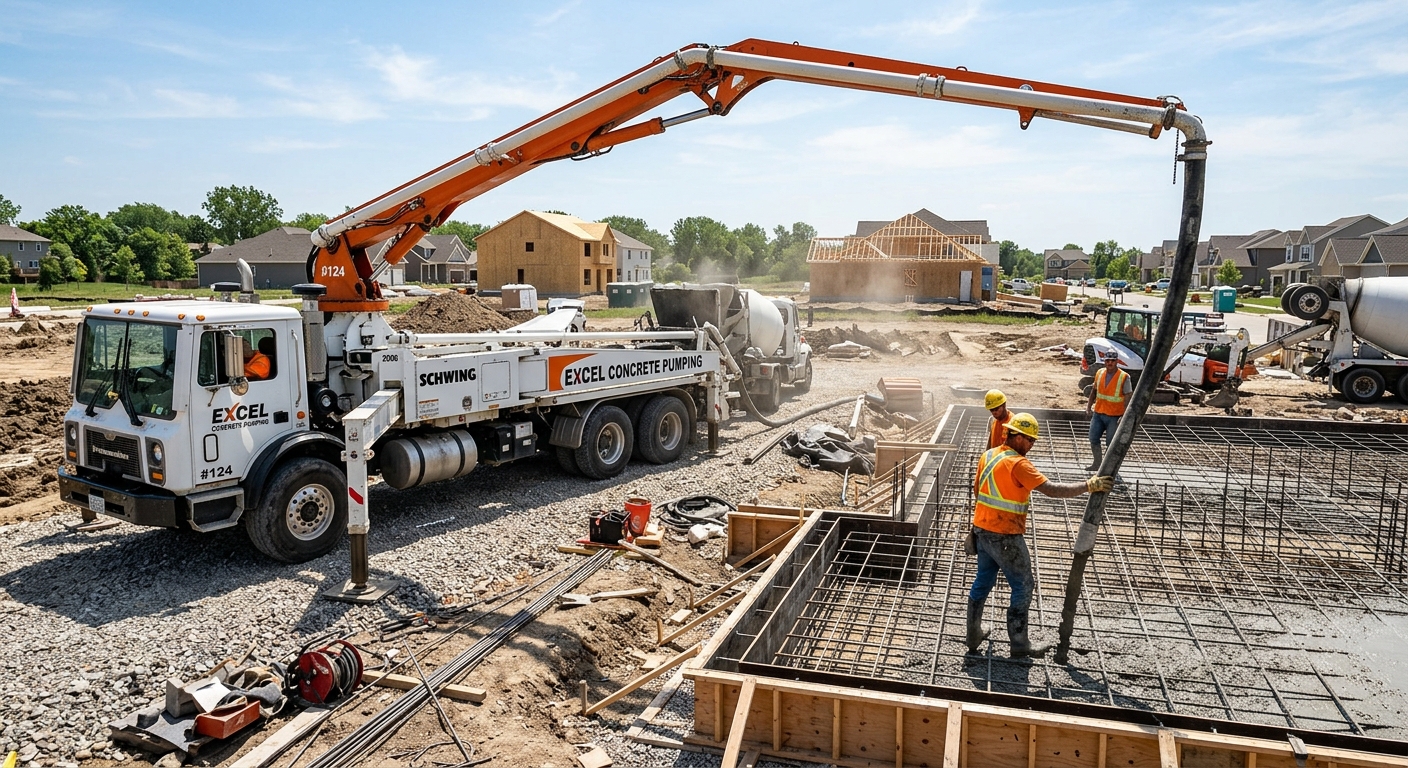
Concrete work options and costs in Clareview Town Centre
Concrete work options in Clareview Town Centre, Alberta start with one big reality: your home’s flatwork and foundation are built for Calgary’s freeze–thaw cycles, not a mild climate. In a community with a population of 3,226 (Statistics Canada, 2021 Census), concrete flatwork is especially in demand for single-detached homeowners who need practical driveways, patios, and walkway repairs that can handle winter loads and frequent temperature swings. The same job can price differently because Calgary’s design frost depth is about 1.2 m, and exterior concrete must be air-entrained and properly cured to resist spalling and surface scaling. On top of that, cold-weather placement can require winter-grade mix, insulated blankets, and sometimes temporary heat—details that change labour time and material usage.
In Clareview Town Centre, contractor availability and speed matter because the practical exterior pour season is shorter; scheduling late fall or early spring usually costs more to protect curing. Neighbourhoods around major corridors—where access for a concrete truck and waste removal can be tight—often see higher excavation and logistics charges. If you’re comparing options, use the ranges below as a baseline for typical residential scopes, then tighten the numbers with an itemised quote.
Use the table to compare common applications, finishes, and what drives the cost in this part of Calgary’s market, before you choose a contractor and finalize the specs.
| Application |
Typical Size |
Key Spec |
Finish Option |
Price Range |
| Concrete driveway (standard broom finish) |
400–600 sq. ft. |
4–5 in thickness, air-entrained mix, granular base |
Broom finish with control joints |
$12,000–$18,000 |
| Exposed aggregate driveway |
400–600 sq. ft. |
4–5 in thickness, proper curing + wash-off timing |
Exposed aggregate with sealer recommended |
$14,500–$21,500 |
| Stamped concrete driveway or patio |
300–600 sq. ft. |
Air-entrained base mix, release agent and stamping workflow |
Stamped pattern + border |
$15,000–$26,000 |
| Plain concrete patio or walkway |
200–450 sq. ft. |
4 in typical thickness, air-entrained exterior mix |
Steel trowel or broom/drag finish |
$5,000–$9,000 |
| Garage floor (interior slab) |
300–520 sq. ft. |
Typical 4 in slab, vapour barrier where required |
Plain broom-finish interior concrete |
$7,500–$14,500 |
| Foundation footings (structural, below frost) |
Whole foundation footprint (varies) |
Engineered rebar, excavation to below frost, frost-protected detail |
Reinforced structural concrete |
$28,000–$45,000 |
Prices are estimates only and vary by project scope, site access and material selection.
What affects the price of concrete work in Clareview Town Centre
If you get multiple quotes for the same driveway or patio in Clareview Town Centre, Alberta, it’s common to see differences of 30–50% across Calgary and the broader region. The reason isn’t “brand hype”—it’s engineering depth, site prep complexity, and the amount of labour needed to meet durability specs for cold climates. In this market, the design frost depth is about 1.2 m, so footings and frost-protected elements must bear on undisturbed soil below that depth to limit frost heave. That drives excavation volume and formwork height compared with milder provinces. Calgary also sees frequent freeze–thaw cycles, which means exterior work must use air-entrained concrete mixes and proper curing controls; rushing curing in late fall or early spring raises the risk of scaling and spalling, so contractors often build in winter protection labour and materials.
Local conditions can push your cost up or down quickly. For example, if your driveway needs full-depth replacement plus heavy regrading, you can fall closer to the higher end of the concrete driveway/slab range (often $12,000–$18,000 for typical scopes). If you choose stamped concrete, you may move into the wider stamped band because the workflow adds labour time and material handling—typically $15,000–$26,000 depending on square footage and pattern complexity. Housing age also matters: older lots may have older fill or drainage issues, which increases base remediation costs before the concrete can be placed correctly.
| Price Factor |
Why It Matters |
Cost Impact |
| Frost line depth — determines footing depth and form height |
Footings must extend below the design frost depth to prevent frost heave |
Higher excavation and concrete volume; can shift foundation pricing significantly within the band |
| Site preparation — excavation, grading, compacted granular base |
Freeze–thaw durability depends on stable, well-drained base and correct elevations |
Unseen utility conflicts and poor soil can add labour and granular supply |
| Reinforcement — rebar or wire mesh requirement |
Controls crack widths and improves structural capacity |
Material cost plus labour for tying/spacing increases total cost |
| Mix design — air-entrainment and compressive strength spec |
Air-entrainment helps concrete resist freeze–thaw damage and scaling |
Winter-grade mix and higher specs typically raise material costs |
| Finish type — broom vs. stamped vs. exposed aggregate |
Finish systems require different labour and careful curing/processing |
Stamped and aggregate finishes generally cost more per square foot |
| Pour size and concrete truck access to site |
Placement efficiency affects labour time and consolidation quality |
Limited access can trigger extra equipment, rebar lifting, or smaller pours |
| Cold-weather curing precautions — heating and blankets |
Cold slows strength gain and can cause surface damage if not protected |
Winter protection can materially increase short-notice project costs |
| Control joint pattern and sealing cost |
Proper joints reduce random cracking; sealer helps protect from de-icing salts |
More precise layout and additional sealing steps add cost but reduce long-term failures |
Permits & regulations in Alberta
In Alberta, structural concrete work like foundation footings, foundation walls, and grade beams typically requires a building permit, and engineered drawings are often part of the approval process reviewed through the municipality’s building permit stream. For concrete flatwork—driveways, patios, and walkways—permits are usually not required by default, but they can be triggered when the work affects lot grading, drainage, or impervious surface coverage rules, or if the project interacts with municipal right-of-way requirements (for example, works near sidewalks/curbs). Before any excavation, confirm the permit path with the local authority to avoid delays or forced rework.
For homeowners in Clareview Town Centre, a good verification routine is simple and practical:
- Ask the contractor for their proof of liability insurance—review the certificate for coverage and effective dates.
- Ask for WSIB/WCB clearance or coverage documentation (and confirm which entity is insured).
- Request references for similar-scale jobs (driveways and footings done with similar access and frost-depth excavation requirements).
- If the project includes structural concrete, ask whether permit drawings/engineering will be provided or handled by the right party.
- Verify the contractor’s Alberta registration/licensing details using the official online registry resources.
Step one is documentation; step two is matching it to your scope. If a quote is vague about whether permit work is included, that’s a red flag—clarify before you sign.
Getting concrete right in Clareview Town Centre's freeze-thaw climate
Concrete failure in Clareview Town Centre usually comes down to one of five things: inadequate base support, wrong mix for freeze–thaw exposure, poor reinforcement placement, insufficient curing, or no protection against de-icing salts. In Calgary’s cold continental climate, the design frost depth of about 1.2 m means exterior and structural elements must be engineered so they don’t move seasonally. For flatwork, the durable recipe is: (1) properly compacted granular base to the right depth and elevation for your local soil and drainage; (2) an air-entrained mix so the concrete can survive repeated freeze–thaw cycles; (3) a reliable control joint pattern to limit random cracking; (4) curing long enough to reach adequate early strength; and (5) sealing after cure to repel salt and water intrusion.
On the spec side, ask for clear numbers: air-entrainment typically targets about 5–7% for exterior flatwork, and you want at least a 32 MPa minimum compressive strength specified for durability. For curing, plan for a minimum 7-day curing period under proper conditions; when it’s cold, contractors often use insulated blankets and sometimes temporary heating to protect strength development. Sealing is usually most effective when applied 28 days after the pour (once cure is complete).
A common misconception is that you can “save money” by skipping the right mix or joint layout. For instance, dropping from a properly air-entrained exterior mix to a cheaper standard mix may look like a small material saving, but it increases the likelihood of spalling and surface scaling—problems you pay for again at repair time. In this market, spending extra to hit the right air content and curing plan is often the difference between an 8–10 year surface life and a much longer, more stable driveway experience.
| Spec |
Why It Matters in Clareview Town Centre |
What to Ask For |
Impact if Skipped |
| Compacted granular base (depth?) |
Freeze–thaw movement is minimized when the slab sits on stable, drained, compacted granular support |
Base thickness and compaction method; confirm drainage and elevation |
Settlement, rocking, and early cracking; slab can fail sooner in winter |
| Air-entrained concrete mix (target air %?) |
Air voids help concrete resist water expansion during freeze–thaw cycles |
Target air content (typically 5–7% for exterior flatwork) |
Higher risk of spalling and scaling from salt and freeze–thaw stress |
| Compressive strength (MPa rating) |
Strength gain supports long-term performance under snow loads and tire wear |
Minimum 32 MPa specified for the mix |
Weaker surface, increased abrasion and faster deterioration |
| Control joints (spacing per ACI guidelines) |
Joints control where cracks form instead of letting them wander randomly |
Joint spacing plan and saw-cut timing |
Random cracking pattern, wider cracks, and increased water infiltration |
| Minimum 7-day curing period |
Cold slows strength development; curing protects the surface and internal hydration |
Cold-weather curing plan: blankets/heating if needed |
Surface scaling and reduced durability in subsequent winters |
| Penetrating sealer (when applied after cure) |
Sealers reduce chloride and water penetration from de-icing salts |
Apply penetrating sealer after cure (commonly 28 days post-pour) |
Faster salt-driven deterioration and more frequent maintenance |
How to choose a concrete work contractor in Clareview Town Centre
Choosing the right contractor in Clareview Town Centre comes down to verification and clarity. First, verify Alberta compliance: ask for their Alberta licence/registration details (using the official online registry), confirm they carry current liability insurance, and request WSIB/WCB coverage documentation. Don’t accept “we’ll get it later” — certificates should match the dates of your project and the correct legal company name.
Next, get 2–3 itemised written quotes, not just a lump sum. A solid quote breaks down labour and materials: excavation and disposal, granular base supply, rebar/wire mesh, concrete mix type and air content, formwork, finishing, saw-cut joints, curing methods, and sealing (if included). Also ask what’s excluded: permit fees, engineering, tree removal, concrete trucking/placement limitations, patching tie-ins, and subgrade remediation.
For warranty, look for a workmanship warranty length (for example, coverage for premature spalling or excessive cracking beyond normal shrinkage). Product/manufacturer warranties should be separate and clearly explained. If you’re doing exterior flatwork, confirm whether the contractor’s warranty includes proper sealing guidance.
Payment schedule matters. Avoid large deposits: never pay more than 10–15% upfront, and hold back funds until the work is complete, cleaned, and any required follow-up tasks (like joint sealing or final sealing timing) are done. Finally, demand a written start date and completion estimate so your project doesn’t stall in Calgary’s shorter pour window.
- Ask for proof of liability insurance and confirm coverage limits on the certificate.
- Request WSIB/WCB clearance or coverage proof before work begins.
- Verify Alberta registration/licensing using the official online registry.
- Get 2–3 itemised quotes with a labour/material breakdown (not lump sum only).
- Confirm whether permit pull is required for your scope and whether it’s included.
- Ask about excavation scope: topsoil removal, disposal, and whether poor soil is removed/replaced.
- Confirm granular base type, depth, and compaction requirements.
- Require written specs for exterior mix: air-entrainment target and minimum 32 MPa strength.
- Ask about reinforcement: where rebar/wire mesh is installed and spacing/cover.
- Confirm joint plan: spacing, saw-cut timing, and whether joints will be sealed.
- Clarify cold-weather curing: blankets/heating plan if temperatures drop.
- Set payment milestones: 10–15% max deposit; holdback until final cleanup and completion.
Concrete red flags in Clareview Town Centre: vague mix details (no air-entrainment mention), refusal to provide insurance/WCB documentation, no written joint layout or curing plan, “cheap” quotes that skip granular base requirements, and contractors who want large upfront payments without a signed scope and schedule.
Frequently asked questions — concrete work in Clareview Town Centre
How much does concrete work cost in Clareview Town Centre?
In Clareview Town Centre, Alberta, typical homeowner pricing depends heavily on scope, access, and how much frost-depth excavation or base prep is needed. For a standard residential concrete driveway/slab, many projects land around $12,000–$18,000 for typical sizes once granular base, finishing, and proper exterior specifications are included. If you choose a higher-end finish like stamped concrete, the range commonly moves to $15,000–$26,000 depending on square footage and pattern complexity. Patios and walkways are often simpler: plan on about $5,000–$9,000 for typical homeowner scopes. Foundation footings for structural work are a different category and often come in around $28,000–$45,000, reflecting the labour and engineered excavation needed below the frost line. Always request itemised quotes so you can compare like-for-like specs.
How deep must footings be for Clareview Town Centre's frost line?
For Clareview Town Centre, contractors generally plan around Calgary’s design frost depth of about 1.2 m (roughly 4 ft). That depth drives how far excavations go before footings can be formed and poured on undisturbed soil. The exact footing depth and any frost-protected details should follow engineered drawings for your specific foundation design, because soil conditions and building layout can change the final specification. In practice, this means the excavation is more intensive than in milder climates and often increases foundation costs compared with regions that have a shallower frost penetration. If a quote doesn’t reference frost-depth excavation and engineered structural requirements for footings, ask for the engineered plan details before proceeding.
Why does concrete crack in Clareview Town Centre and how is it prevented?
In Clareview Town Centre, concrete cracking is usually tied to shrinkage, temperature movement, and the freeze–thaw environment. The biggest preventable driver for exterior work is not using the right mix or omitting a proper control joint plan. As temperatures drop and then rebound, slabs expand and contract; joints give the concrete a predictable place to crack rather than letting random cracks form. Freeze–thaw durability also depends on air-entrainment in exterior concrete—without it, you can get scaling and spalling that accelerate deterioration around cracks. Proper base prep and compaction matter too: if the slab isn’t supported uniformly, cracks become more frequent. Ask your contractor for a written joint spacing plan, confirmation of air-entrained mix for exterior slabs, and a curing approach suited to Calgary’s shorter pour season. Those steps reduce the cracking you’ll notice years later.
Stamped vs broom-finish concrete — cost difference?
Stamped concrete costs more than a simple broom-finished driveway because the installation is labour-intensive and requires careful workflow: release agents, stamping timing, finishing, and typically more attention to pattern layout and curing. In Clareview Town Centre, that typically shows up as higher pricing within the local driveway band. Standard broom-finish driveways often fall around $12,000–$18,000, while stamped concrete driveway or patio projects commonly land around $15,000–$26,000 depending on square footage and design complexity. You’re paying for additional labour steps and material handling, not just “a different look.” If you want the best value, match the finish to the most visible areas (like a main driveway section or front patio) and keep the rest broom-finished—this avoids paying stamped pricing across a full large slab.
When is the best time to pour concrete in Clareview Town Centre?
The best time to pour in Clareview Town Centre is when temperatures allow proper curing without excessive protection. Calgary’s cold continental climate means late fall and early spring often require winter-grade mixes, insulated blankets, and sometimes temporary heat to maintain curing temperatures. That doesn’t mean you can’t pour in shoulder seasons, but it usually increases cost and needs tighter scheduling to protect the concrete surface and strength gain. For exterior slabs, contractors also watch for freeze risk during the curing window; rushing curing is a common reason for surface scaling. If your project is flexible, aim for the warmer part of the year when curing can progress naturally. When cold weather is unavoidable, ask specifically what curing precautions the contractor will use and whether they’ll include heating/blankets in the quote.
How long does concrete take to cure?
Concrete curing is about strength gain, not just “drying.” For residential exterior work in Alberta, a good planning baseline is a minimum 7-day curing period under proper conditions, with the understanding that cold weather can slow strength development. During that week, the goal is to protect the concrete from freezing and to keep curing conditions stable—this is where insulating blankets or temporary heat may be required in Calgary’s climate. Full performance continues beyond the first week; that’s why sealing is typically scheduled later. Penetrating sealer is commonly applied around 28 days after the pour once cure is complete. If you’re budgeting, ask the contractor whether those curing and sealing steps are included in the scope—skipping them can lead to earlier salt-related deterioration, especially on driveways and walkways where de-icing is used.