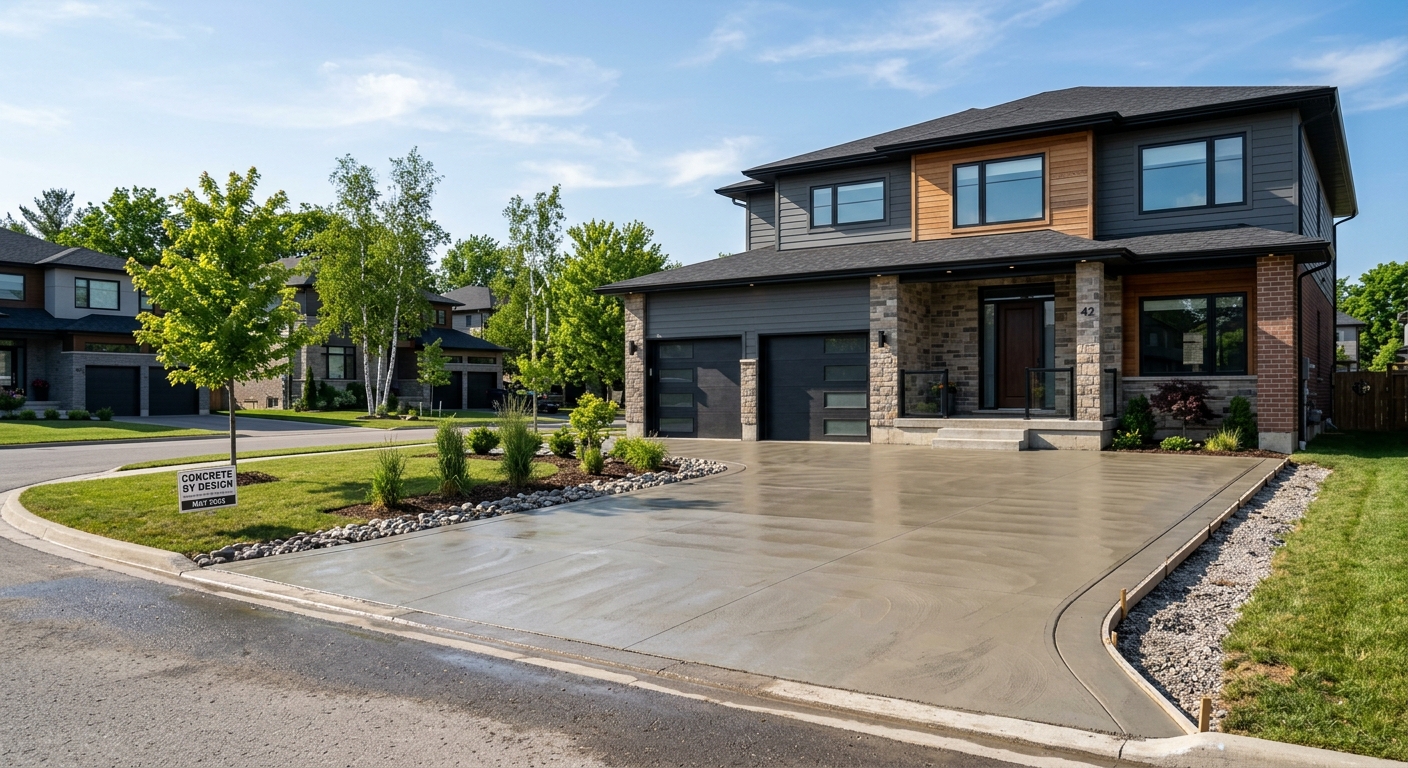
Concrete work options and costs in Bendale
Bendale, Ontario has a steady demand for concrete flatwork because it’s a large, family-oriented pocket of the Toronto area where homeowners invest in durable driveways, patios, and walkways. With a 2021 population of 29,960 (Statistics Canada, 2021 Census), the local housing base supports ongoing construction and replacement work. In this part of Toronto’s economic region, concrete prices often reflect the reality that exterior slabs have to survive humid winters, repeated freeze–thaw cycles, and de-icing salt use. That means contractors plan for deeper, well-prepared bases, air-entrained mixes, and more careful curing management than you might see in milder climates.
In Bendale, demand is especially strong around the Guildwood and Scarborough Village area—those neighbourhood edges tend to see frequent driveway and walkway resurfacing as homes age and as accessibility upgrades are added. Concrete driveway work is also competitively priced here compared to “specialty” decorative options, but all exterior pours are influenced by frost depth requirements and the limited reliable pour window when temperatures drop. In practice, GTA crews concentrate many exterior pours into warmer months to hit proper cure targets; when the forecast cools quickly, contractors may add labour time for protection (insulating blankets/heaters), which shows up in the quote.
Below is a practical comparison of common options you’ll see in Bendale, along with typical specs and realistic price ranges for a complete, homeowner-facing scope.
| Application |
Typical Size |
Key Spec |
Finish Option |
Price Range |
| Concrete driveway (standard broom finish) |
480 sq. ft. (approx. 16 ft × 30 ft) |
Air-entrained concrete; compacted granular base; control joints |
Broom finish |
$8,600 – $13,400 |
| Exposed aggregate driveway |
480 sq. ft. (approx. 16 ft × 30 ft) |
Air-entrained concrete; proper curing to prevent soft aggregate |
Exposed aggregate |
$10,200 – $15,400 |
| Stamped concrete driveway or patio |
360 sq. ft. (approx. 18 ft × 20 ft) |
Air-entrained concrete; stamped and sealed system |
Stamped (with sealer) |
$8,600 – $14,400 |
| Plain concrete patio or walkway |
200 sq. ft. (approx. 10 ft × 20 ft) |
Sloped grade; compacted base; air-entrained mix |
Tool/trowel + broom for traction |
$3,300 – $5,200 |
| Garage floor (interior slab) |
420 sq. ft. (approx. 20 ft × 21 ft) |
Vapour barrier; reinforcement per design; proper thickness |
Float finish (optionally sealed) |
$7,600 – $12,000 |
| Foundation footings (structural, below frost) |
Typical new/underpinning segment varies |
Engineered rebar cage; below frost depth; inspection-ready forms |
Structural concrete (not decorative) |
$180 – $300 |
Prices are estimates only and vary by project scope, site access and material selection.
What affects the price of concrete work in Bendale
If you compare quotes for the “same” driveway or patio in Toronto, it’s common to see swings of 30–50%. The difference isn’t usually the price of cement—it’s what each contractor includes for site prep, base depth, reinforcement, mix design, and the time required to protect and cure in our freeze–thaw winters. In Bendale, exterior work is particularly sensitive to frost and moisture movement. Footings must extend below the design frost depth to prevent frost heave and differential settlement, and GTA specs are built around air-entrained concrete for slabs that sit exposed to winter cycles. When temperatures trend down toward 10 °C or below, cold-weather curing precautions (insulating blankets/heating, longer handling time, and more labour planning) can increase labour cost and scheduling time.
De-icing salt use also changes the game: poor surface quality or missed sealing tends to accelerate spalling and scaling. That’s why “cheap” may look attractive at first, but the long-term cost often rises if the slab is under-built. For example, a standard broom-finished driveway is commonly priced around the $18–$28 per sq. ft. band, while stamped/decorative systems usually land higher—roughly $24–$40 per sq. ft.—because of added finishing labour and a tighter sealing schedule. Similarly, foundation/footing work is typically budgeted by the structural scope (often in the $180–$300 range), and that’s driven by excavation, reinforcement complexity, and engineered requirements rather than finish.
Two local cost examples I see frequently in Bendale: (1) sloped lots or poor drainage can require more base removal and re-grading, and (2) older properties with existing asphalt/concrete to demo can add disposal and hauling, which pushes total project pricing up even if the final slab size stays the same.
| Price Factor |
Why It Matters |
Cost Impact |
| Frost line depth |
Determines footing depth and form height to prevent frost heave |
Higher depth increases excavation, concrete volume, and labour |
| Site preparation |
Excavation, grading, and well-compacted granular base control settlement and cracking |
More prep and hauling can add significant cost |
| Reinforcement |
Rebar/wire mesh requirements manage shrinkage and load transfer |
Additional steel and tying increases labour and material cost |
| Mix design |
Air-entrainment and strength specs improve freeze–thaw durability |
Better mix and QA can raise material cost |
| Finish type |
Broom vs. stamped vs. exposed aggregate changes labour and sealing demands |
Decorative finishes typically cost more per sq. ft. |
| Pour size and concrete truck access |
Access affects pumping, staging, and scheduling |
Limited access can add pump/placement labour |
| Cold-weather curing precautions |
Heating/blankets protect early strength gain and surface quality |
Added labour and materials in cooler forecasts |
| Control joint pattern and sealing cost |
Joints guide cracking; sealing reduces salt-driven surface deterioration |
Better detailing and sealing increase value and cost certainty |
Permits & regulations in Ontario
In Ontario, structural concrete work generally requires a building permit, and it’s often tied to engineered drawings. The typical “permit-required” items include foundation footings, foundation walls, grade beams, and any concrete component that supports the building structure or affects structural integrity. By contrast, concrete flatwork like patios, walkways, and many driveways typically does not require a permit by itself, unless the work changes lot grading, impacts impervious surface coverage limits, alters drainage away from the building, or involves municipal right-of-way conditions.
For Bendale homeowners, the practical approach is to confirm scope early—before concrete is scheduled—because the permit process can influence lead times and inspection requirements. Step-by-step, verify the contractor: (1) ask for their certificate of insurance and ensure it lists liability coverage and appropriate limits for the work; (2) request proof of WSIB/WCB coverage (or an exemption where legally applicable); (3) check the contractor’s licensing/registration status through Ontario’s official business/contractor resources; and (4) ask for references for similar structural or exterior flatwork jobs in the Toronto region.
Where to look: use the contractor’s certificate of insurance (COI) for current coverage details, request a WSIB/WCB clearance letter, and verify the company’s standing through Ontario’s online resources. If the quote includes foundation work, ensure the permit and inspections are clearly assigned—don’t assume it’s “included” unless it’s written into the scope.
Getting concrete right in Bendale's freeze-thaw climate
In Bendale’s freeze–thaw climate, concrete usually fails for predictable reasons: poor drainage/base preparation, insufficient air-entrainment, and weak early curing that leaves the surface vulnerable to winter moisture and salt. The fix starts before the truck arrives. First, base preparation matters—use a compacted granular sub-base to the correct depth for local conditions so water can drain and the slab doesn’t flex on softened soil. Second, mix design must be built for exterior exposure: target air-entrainment around 5–7% for exterior flatwork and specify a minimum 32 MPa compressive strength for durability. Third, control joints should be cut/formed to manage where cracking occurs, not whether it happens.
Fourth, curing is critical. In the GTA, a minimum 7-day curing period is a common benchmark, but in cooler weather the contractor should protect the pour to maintain temperature and moisture for early strength gain. Finally, sealing is not just cosmetic—apply a penetrating sealer after the concrete has properly cured (often at/after the 28-day mark) to help repel de-icing salts.
To ask the right technical questions, focus on how the contractor will prevent spalling from inadequate air-entrainment. A strong standard broom driveway often fits the $18–$28 per sq. ft. band, but if you’re considering stamped concrete, that premium (commonly $24–$40 per sq. ft.) can be justified when paired with the same durability specs: air content, correct curing protection, joint planning, and a proper sealing schedule.
| Spec |
Why It Matters in Bendale |
What to Ask For |
Impact if Skipped |
| Compacted granular base (depth?) |
Prevents settlement and limits moisture movement through freeze–thaw cycles |
Base depth specified in writing and compaction testing/process described |
Cracking, uneven slab, and accelerated deterioration |
| Air-entrained concrete mix (target air %?) |
Creates resistance to freeze–thaw damage and reduces spalling |
Target 5–7% air content for exterior flatwork (project-specific) |
Surface scaling/spalling during winter cycles |
| Compressive strength (MPa rating) |
Ensures durability and adequate early and long-term performance |
Minimum 32 MPa compressive strength specified |
Lower resistance to wear, salt exposure, and cracking |
| Control joints (spacing per ACI guidelines) |
Controls where cracks form under thermal movement |
Joint spacing plan and joint type (saw-cut/formed) explained |
Random cracking and water infiltration at failure points |
| Minimum 7-day curing period |
Strength gain and surface stability in cool/wet Toronto seasons |
How curing will be protected if temps drop (blankets/heating) |
Weak surface, increased cracking, and faster freeze damage |
| Penetrating sealer (when applied after cure) |
Repels de-icing salts and helps reduce scaling/spalling |
Sealer type and timing—commonly after adequate cure (often after 28 days) |
Higher salt-related deterioration and shorter service life |
How to choose a concrete work contractor in Bendale
Picking the right concrete contractor in Bendale is mainly about verification plus clarity in the scope. Start with Ontario compliance: confirm the contractor carries liability insurance for concrete work and provide proof of WSIB/WCB coverage (or a proper exemption if applicable). Then check licensing/registration status using Ontario’s official business resources. You want current documentation—ask for the certificate of insurance (COI) and the WSIB/WCB clearance letter before work starts.
Next, get 2–3 itemised written quotes. Ideally, the quote breaks down labour and materials separately (concrete supply, excavation/granular base, reinforcement, forms, finishing, curing protection, sealing, and any cutting/jointing). Compare apples to apples: confirm what’s excluded—haul-away/disposal, permit handling (if needed), saw cutting and removal, replacement of curb stones, or waterproofing tie-ins for foundations. Foundation work is different from flatwork; if structural items like footings are included, clarify who is pulling permits and who attends inspections.
Warranty matters. Ask for the workmanship warranty length in writing, and separate it from product/manufacturer warranties. Check whether the warranty is transferable to future owners. For payment terms, a sensible schedule is typically no more than 10–15% upfront; hold back a portion until the job is complete and surfaces are accepted. Finally, insist on a start date and completion estimate in writing—Toronto scheduling can shift quickly when temperatures drop or when crews need to protect curing.
- COI current and specific to your project type (flatwork or structural), with liability limits
- WSIB/WCB clearance letter provided before mobilization
- Written itemised quote (labour, materials, excavation, base, reinforcement, finishing, sealing)
- Explicit mention of disposal/haul-away and whether dump fees are included
- Base depth and compaction approach stated (not just “proper base”)
- Air-entrained mix and exterior durability specs included in writing
- Thickness specified for driveway/patio/walkway, including reinforcement details
- Control joint plan (spacing and how/when joints will be done)
- Curing method and what happens if temperatures drop during the pour
- Sealing included (timing after cure) or clearly excluded with cost noted
- Concrete truck access plan (whether pumping/extra labour is required)
- Clear warranty terms for workmanship and any transferability
Concrete red flags in Bendale: quotes that don’t mention air-entrainment or joint spacing; “cheap” slabs with no base-depth details; scheduling that ignores curing protection when nights cool down; payment requests for large upfront deposits with no written scope; and no proof of WSIB/WCB or current liability coverage.
Frequently asked questions — concrete work in Bendale
What is air-entrained concrete and why does it matter here?
Air-entrained concrete is mixed to include tiny, evenly distributed air bubbles that act like “pressure relief valves” as water freezes and expands. In Ontario—especially around Bendale where we get repeated winter freeze–thaw—this dramatically reduces surface scaling and spalling compared with standard concrete. That’s why reputable GTA contractors specify air-entrainment for exterior flatwork like driveways, walkways, and patios. It also affects your durability more than many homeowners expect: you can have the right thickness and still see premature failure if the mix isn’t designed for freeze–thaw exposure. When you’re comparing quotes, ask for the air-entrainment requirement (target air content) and confirm it’s included for exterior pours, not just “regular concrete.”
How do I prepare the base for a concrete slab?
Base prep is the foundation of a long-lasting slab. For Bendale exterior pours, you want excavation to the right depth for your local soil condition, followed by grading and compacted granular sub-base. The granular layer needs to be level, well-drained, and compacted in lifts so it doesn’t settle and create cracking. Drainage matters because saturated soils expand and contract across winter cycles. A good contractor will specify base depth and describe compaction methods, not just say “proper base.” If there’s existing concrete/asphalt, confirm whether removal depth and sub-base replacement are included. If your quote lands near the lower end of the $18–$28 per sq. ft. driveway band, double-check that base depth and compaction are still meeting the durable spec—otherwise you may pay later in repairs.
How do I compare concrete quotes?
Compare quotes like a checklist, not like a single total. Ask each contractor to provide an itemised breakdown: excavation/removal, compacted granular base, reinforcement (wire mesh or rebar if applicable), concrete thickness, finishing method, joints, curing protection, and sealing (if exterior). Verify what’s excluded—haul-away/disposal, any changes due to hidden utilities/poor subgrade, and whether permit handling is included for structural work. In the Bendale/Toronto market, a quote can differ by 30–50% because one contractor includes better base preparation and durability specs while another uses simpler assumptions. Use the price bands as a sanity check: for example, a plain patio often sits in the $16–$26 range, while stamped concrete typically costs more (roughly $24–$40 per sq. ft.). If one quote is far below those bands, ask exactly what durability steps were reduced.
Can concrete be poured in cold weather in Bendale?
Yes, concrete can be poured in cold weather in Ontario, but it must be handled correctly. The risk isn’t only that “it’s cold”—it’s that early curing conditions can drop and freeze the surface or prevent adequate strength gain, which leads to weak/buggy finishes and long-term durability issues. A professional contractor will protect the pour with cold-weather curing measures like insulating blankets and/or controlled heating, maintain surface temperature, and manage protection timing and curing duration. Ask how they plan to protect the slab if temperatures fall toward 10 °C or below, especially at night. If the crew can’t explain curing protection and doesn’t adjust the schedule and materials, that’s a concern. When in doubt, confirm the expected start date, completion plan, and curing/protection steps in writing—this is where “lowest bid” often becomes expensive.
How do I maintain concrete in Bendale's freeze-thaw climate?
Maintenance in Bendale is mostly about controlling water and salt exposure. Start with sealing: a penetrating sealer applied after adequate cure (often at/after 28 days) helps repel de-icing salts and can reduce surface scaling. Use the right de-icing products when possible (and apply sparingly). Keep drainage flowing away from the slab; if downspouts or landscaping cause water to pond near the driveway or walkway, concrete will deteriorate faster. Also, inspect seasonally for issues like small spalls, joint breakdown, and hairline cracks—cracks are normal, but failing joints can allow water to infiltrate. For decorative or stamped concrete, resealing timelines can be more frequent depending on wear. If you notice recurring water pooling or joint gaps worsening each winter, ask a contractor about joint re-cutting/re-sealing rather than waiting until a patch fails.
What causes concrete to spall in Bendale winters?
Spalling in Bendale winters is usually driven by freeze–thaw damage combined with moisture and de-icing salts. The biggest preventable cause is inadequate air-entrainment, which means the concrete can’t accommodate freezing expansion inside the paste. When water penetrates the surface—often through poorly planned joints, cracked edges, or a slab that wasn’t sealed—freeze–thaw cycles build pressure and pop off the surface layer. Base drainage problems can worsen it by keeping the slab and edges wet. Poor curing is another contributor: if the slab didn’t cure properly (especially if cold weather protection was skipped), early strength may be insufficient. When comparing quotes, insist on durability details like 5–7% air for exterior flatwork, minimum 32 MPa strength specs, proper joint patterns, and sealing after cure. That’s the difference between a slab priced near the $18–$28 range that lasts, and one that starts scaling long before expected.