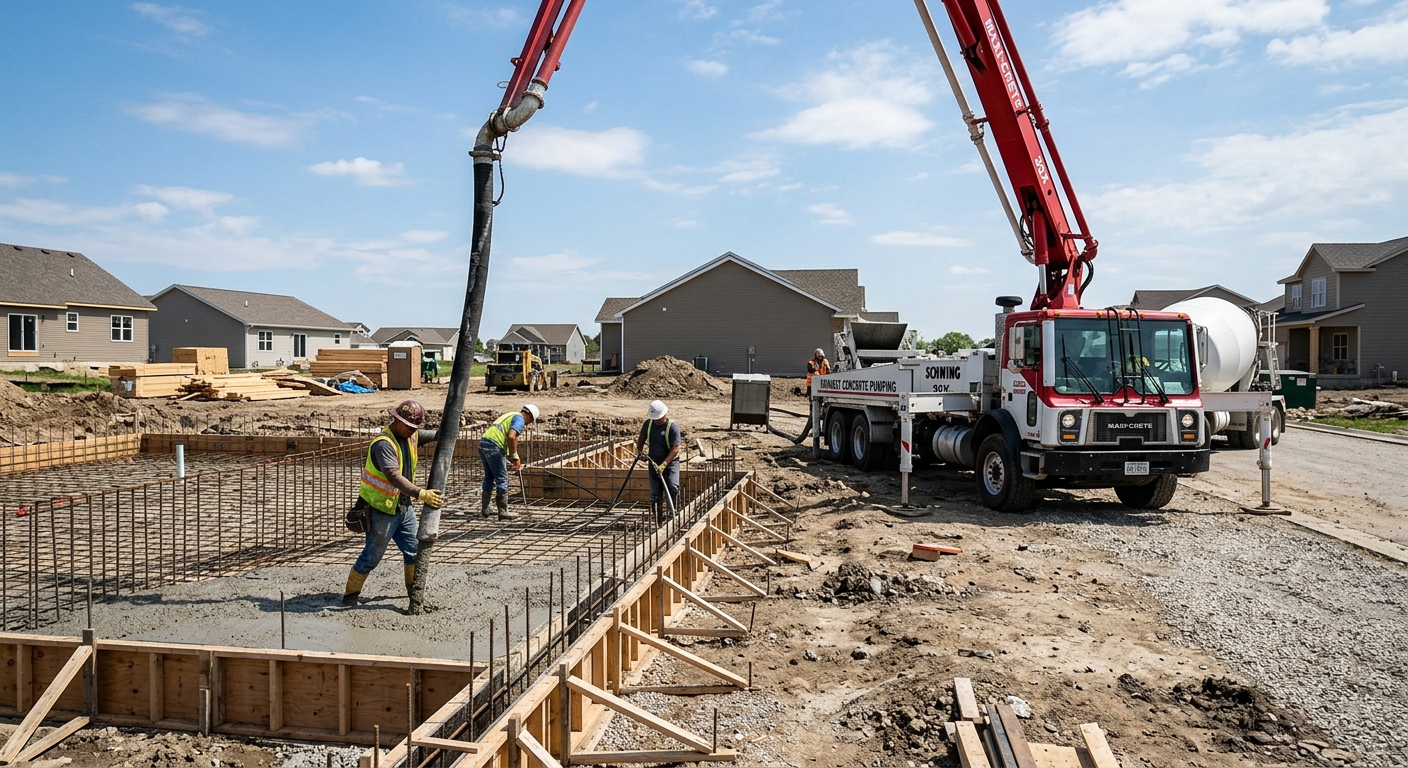
Concrete work options and costs in Victoria West
In Victoria West, homeowners typically choose concrete because it’s durable, low-maintenance, and works well with the way Island properties drain and settle over time. With a population of 8,365 (Statistics Canada, 2021 Census), the area is small enough that you’ll often see the same crews servicing nearby neighbourhoods across Victoria’s east side and the wider Vancouver Island and Coast region. For many clients, single-detached homes are the main driver of demand for driveway, patio, and walkway work—these flatwork projects are where concrete contractors stay busy year-round, especially in walkability-focused areas close to local routes.
On Vancouver Island and the Coast, concrete pricing is heavily influenced by our climate: relatively shallow frost line assumptions still require footings below design frost to prevent heave, and frequent freeze–thaw cycles create real risk for surface scaling and random cracking. That’s why air-entrained mixes, careful granular base prep, and a clean control-joint plan are non-negotiable—even when winters feel “milder” than interior BC. Pour scheduling is also a market factor: heavy rain and cool snaps can slow production, increase labour time on protection/curing, and affect material availability.
In Victoria West proper, demand is especially noticeable around the denser residential pockets where driveways and front walkways get replaced with stamped or exposed aggregate for curb appeal. Below is a practical comparison of the most common options so you can benchmark your quote before you ask your contractor to price the details.
| Application |
Typical Size |
Key Spec |
Finish Option |
Price Range |
| Concrete driveway (standard broom finish) |
320 sq. ft. (e.g., 20' x 16') |
Exterior air-entrained mix; control joints; compacted granular base |
Broom finish |
$16,000 – $25,000 |
| Exposed aggregate driveway |
320 sq. ft. (e.g., 20' x 16') |
Same structural prep as driveway; texture requires tight finishing timing |
Exposed aggregate |
$19,000 – $29,000 |
| Stamped concrete driveway or patio |
240 sq. ft. (e.g., 15' x 16') |
Exterior mix; integral colouring; sealer |
Stamped |
$22,000 – $35,000 |
| Plain concrete patio or walkway |
160 sq. ft. (e.g., 8' x 20') |
Air-entrained exterior mix; proper slope; edges and base |
Broom or light trowel |
$14,000 – $22,000 |
| Garage floor (interior slab) |
300 sq. ft. (e.g., 20' x 15') |
Vapour control as needed; 32 MPa class mix; joints if required |
Plain finish |
$12,000 – $20,000 |
| Foundation footings (structural, below frost) |
Typical house wall run: 80 linear ft. |
Excavation, forms, rebar, and concrete below design frost |
Structural concrete |
$50,000 – $90,000 |
Prices are estimates only and vary by project scope, site access and material selection.
What affects the price of concrete work in Victoria West
On Vancouver Island and the Coast, two quotes for what looks like the same concrete job can differ by 30–50% because the real cost drivers aren’t the concrete itself—they’re excavation, base preparation, reinforcement needs, weather protection, and how the contractor manages curing. Even in milder coastal winters, our frequent wetting and freeze–thaw cycles demand air-entrained mixes and a tight control-joint plan for slabs, driveways, and walkways. If the crew can’t pour, protect, and cure on schedule due to heavy rain or cold snaps, labour time and material handling costs climb quickly.
Frost line depth matters because footings must sit below design frost to prevent frost heave and the settlement/cracking cascade that follows. In coastal BC, local assumptions typically land around 0.5–1.2 m for the frost depth band, but the spec can still push you deeper depending on soil conditions and site grading. Exterior slabs also require air-entrained concrete (to survive the freeze–thaw cycle), and colder periods can shorten the workable pour season—meaning contractors may add heating/insulation blankets and extra protection to reach the same strength and durability targets. De-icing salt is another local reality: it accelerates surface spalling if the concrete isn’t properly made and sealed, which is why sealing is often part of the durability-focused scopes.
In Victoria West, costs can rise when properties have soft soils or limited access (more hand excavation and offloading), and they can lower slightly when the site already has good drainage and stable base material. A plain patio can land in the $14,000 – $22,000 band, while stamped options often reach $22,000 – $35,000 because of integral colouring, stamp labour, and extra finishing and sealing.
| Price Factor |
Why It Matters |
Cost Impact |
| Frost line depth |
Determines footing depth and form height |
Deeper frost spec increases excavation and concrete volume |
| Site preparation |
Excavation, grading, compacted granular base |
Soft subgrade and drainage corrections add labour and granular supply |
| Reinforcement |
Rebar or wire mesh requirement |
Extra steel and placement time raises material and labour costs |
| Mix design |
Air-entrainment and compressive strength spec |
Exterior durability specs can increase mix cost and require careful batching |
| Finish type |
Broom vs. stamped vs. exposed aggregate |
Decorative finishes require longer finishing time and more materials |
| Pour size and concrete truck access to site |
Placement speed and handling distance |
Restricted access can require pump/extra labour and reduce productivity |
| Cold-weather curing precautions |
Heating and blankets |
Protection measures add day-by-day labour and equipment rental/consumables |
| Control joint pattern and sealing cost |
Manages cracking and protects the surface from de-icing salts |
Proper joint layout and sealer add scope items that prevent costly failures |
Permits & regulations in British Columbia
In British Columbia, structural concrete work—such as footings, foundation walls, and grade beams—typically requires a building permit and often engineered drawings that the municipality reviews. If you’re modifying a foundation, underpinning, or adding structural elements, treat it as “permit work” and plan for plan review timelines. Concrete flatwork like patios, walkways, and driveways usually does not require a permit unless it affects lot grading, impervious surface coverage limits, or the municipal right-of-way.
Before breaking ground in Victoria West, confirm the scope with the local authority. Also verify the contractor carries the proper liability insurance and has the correct worker coverage (WCB). For homeowner protection, ask for references on similar-scale projects—driveway and walkway installs are a good match because base prep, slopes, and joint layouts decide durability in our freeze–thaw climate.
To verify coverage step-by-step:
- Check licences/registration: look for the contractor’s business information on applicable provincial registries and their own documentation.
- Request a certificate of insurance: verify current general liability coverage and that the project address is covered.
- Confirm worker coverage: ask for proof of WCB clearance/status (and keep the document on file).
- Get clearance timing: ensure the coverage is valid for the dates your job is scheduled.
- Ask for permits (if needed): confirm who pulls the permit and whether engineering is included in the quote.
Getting concrete right in Victoria West's freeze-thaw climate
Concrete fails in Victoria West mostly because of water and freeze–thaw action: water gets under a slab or into the concrete surface, expands when temperatures drop, and gradually breaks down paste and edges. If the base is poorly prepared or under-compacted, slabs can settle and crack, letting water migrate and speeding up freeze–thaw damage. That’s why the correct spec isn’t optional here—it’s the difference between a driveway that stays tight for years and one that scales or spalls after just a couple seasons.
To spec the job correctly, start with (1) base preparation: compacted granular sub-base to the right depth for local soils and frost protection, with drainage so water doesn’t pool. (2) mix design: for exterior flatwork, require air-entrainment typically around 5–7% air content, and a minimum 32 MPa compressive strength so the concrete develops durability. (3) control joints: space them to limit random cracking and to give cracks somewhere predictable. (4) curing: plan for at least 7 days of proper curing conditions, and if you’re near cold snaps, protect the pour with blankets or other cold-weather measures so strength gain isn’t interrupted. (5) sealing: use a penetrating sealer applied after the cure period (often around 28 days) to repel de-icing salts and reduce surface deterioration.
When you ask your contractor these questions—especially about air-entrainment and joint layout—you prevent the most common failure mode in coastal freeze–thaw zones: spalling from inadequate air entrainment. For example, upgrading from a “cheapest broom” approach to a properly air-entrained exterior mix and a sealer plan may move you from the lower end of $14,000 – $22,000 for a walkway toward the higher end, but it’s usually justified because it avoids early replacement and crack repairs.
| Spec |
Why It Matters in Victoria West |
What to Ask For |
Impact if Skipped |
| Compacted granular base (depth?) |
Prevents voids and differential settlement that crack slabs |
Granular sub-base depth for your site conditions and frost requirements |
Random cracking, pumping, and faster freeze–thaw deterioration |
| Air-entrained concrete mix (target air %?) |
Protects against freeze–thaw scaling and spalling |
Exterior air-entrained mix targeting 5–7% air content |
Surface scaling/spalling after wet/cold cycles, especially with salt |
| Compressive strength (MPa rating) |
Strength and durability development for exterior exposure |
Minimum 32 MPa compressive strength specification |
Reduced long-term performance and increased cracking risk |
| Control joints (spacing per ACI guidelines) |
Controls where cracks form during shrinkage and temperature change |
Planned joint spacing and alignment that matches slab dimensions |
Random cracking across visible areas |
| Minimum 7-day curing period |
Cold and saturation slow strength gain in coastal conditions |
At least 7 days curing under proper conditions; cold-weather protection if needed |
Surface weakness, reduced durability, and higher failure likelihood |
| Penetrating sealer (when applied after cure) |
Repels de-icing salts and slows water ingress |
Penetrating sealer applied after cure (commonly ~28 days) |
Faster spalling and scaling, especially on driveways/walkways |
How to choose a concrete work contractor in Victoria West
When you hire a concrete crew in Victoria West, verify three things early: licensing/registration (where applicable), liability insurance, and worker coverage (WCB). Start by asking for a current certificate of insurance—make sure it’s not expired and that it’s valid for your project dates. Then request proof of worker coverage status for their crews working on your site. If they can’t provide documents quickly, that’s a red flag.
Next, get 2–3 itemised written quotes rather than a lump sum. You want labour and materials broken out so you can compare base prep scope (excavation depth, granular type, compacted thickness), reinforcement, mix design (including air-entrainment), and whether the quote includes sealing. In Victoria West’s freeze–thaw climate, sealing is often the difference between “looks good now” and “still looks good next winter.”
Read exclusions carefully: confirm what’s not included (disposal of excess soil, sawcutting for tie-ins, removal of old concrete, pump costs, traffic control) and whether permits are included for any structural work. Confirm warranty terms—workmanship warranty length, whether product/manufacturer warranty applies, and if coverage is transferable to future owners.
For payment, never pay more than 10–15% upfront. Hold back a portion until completion and final cleanup are done. Finally, require a start date and completion timeline in writing—vague schedules often mean weather delays and poor curing protection.
- Request proof of liability insurance and confirm it matches your job address
- Ask for worker coverage documentation (WCB) and keep a copy
- Confirm whether permits are included (structural work vs. flatwork)
- Get itemised quotes: excavation, base prep, reinforcement, concrete supply, finishing, curing protection
- Verify exterior mix includes air-entrainment and targets exterior durability
- Ask who supplies and applies sealer (and when it’s applied after cure)
- Confirm control joint plan: spacing, layout, and where sawcuts/hand joints go
- Check disposal inclusion for old concrete/soil
- Require vehicle/truck access plan (and whether pump/extra equipment is needed)
- Ask about weather procedure: how they protect curing during cool snaps/rain
- Get warranty length in writing and what it covers
- Keep a payment schedule that includes holdback until punch list items are complete
Red flags I see too often in Victoria West include: a quote that doesn’t mention air-entrainment or joint layout, vague curing/protection wording (especially for cool weather), charging large upfront payments, no written itemisation for base prep and disposal, and no proof of insurance/worker coverage documentation.
Frequently asked questions — concrete work in Victoria West
How much does concrete work cost in Victoria West?
In Victoria West, pricing depends on size, base prep, access, and how “durable-first” the spec is for our freeze–thaw climate. As a benchmark for homeowners, driveways and flatwork typically fall into the local bands: concrete driveway work often comes in around $16,000 – $25,000, while plain patios or walkways are commonly around $14,000 – $22,000. If you choose decorative upgrades, stamped concrete is usually higher—often within $22,000 – $35,000 depending on size and colour/stamp complexity. Quotes vary by 30–50% when base preparation, reinforcement, truck access, and weather curing protection are handled differently. (Statistics Canada, 2021 Census) shows Victoria West has a smaller resident base (8,365), and limited contractor availability during rain/cold snaps can also affect scheduling and labour time.
How deep must footings be for Victoria West's frost line?
Footings generally need to extend below the design frost depth to prevent frost heave and related movement. In coastal BC bands, frost depth is often assumed around 0.5–1.2 m, but the correct depth for your site still depends on soil conditions, drainage, and the engineered/frost protection design used for your project. That’s why you should not rely on a single “city number.” If you’re doing structural concrete in British Columbia—like foundation footings, grade beams, or foundation walls—confirm the required bearing depth and frost protection measures through the building permit/engineered drawings. A properly prepared granular base and drainage also matter as much as depth, especially with frequent wetting. Ask your contractor to show how the excavation depth matches the frost requirement and what granular and drainage layers will be installed.
Why does concrete crack in Victoria West and how is it prevented?
Concrete cracks in Victoria West mainly because of shrinkage, temperature swings, and moisture movement through the slab—then freeze–thaw can make those cracks worse by allowing water ingress. Random cracking is often prevented by a good control-joint plan: the joints give concrete a “place” to crack instead of splitting unpredictably across the driveway or walkway. Prevention also starts under the slab with correct excavation, compacted granular base, and a slope/drainage plan that avoids water pooling. On exterior work in British Columbia, the mix must be air-entrained to handle freeze–thaw cycles. If someone cuts corners on air content, you’re more likely to see surface scaling/spalling after winters, especially where de-icing salts are used. Always ask for joint spacing and for a specification that includes air-entrainment and curing protection during cool snaps.
Stamped vs broom-finish concrete — cost difference?
Stamped concrete costs more than broom-finish because it involves additional materials and longer labour: colouring, stamp patterns, release agents, and more detailed finishing and sealing. In Victoria West, broom-finish driveway work often fits around $16,000 – $25,000, while stamped driveway or patio projects commonly land in the $22,000 – $35,000 band depending on size and the complexity of the pattern/colour. It’s not just “decoration”—stamped surfaces still need the same durability spec: air-entrained exterior concrete, proper base prep, and control joints. If the contractor is cutting costs by using a lower-end exterior mix or skipping sealer, you won’t get long-term value. Ask your quote whether sealer is included and whether they’ve planned joint locations to match the stamp pattern.
When is the best time to pour concrete in Victoria West?
The best time in Victoria West is typically when daytime temperatures are consistently workable and rain can be managed so curing isn’t interrupted. Because Vancouver Island and the Coast sees cool, wet conditions and occasional cold snaps, scheduling matters: heavy rain can affect finishing, and overnight cold can slow strength gain. That’s why a reputable contractor will discuss weather contingencies—protection blankets, insulation, and curing procedures—rather than treating the pour date as the only date that matters. If you’re planning a pour, ask how they manage cool-weather curing to meet the minimum strength development and durability requirements. If the forecast looks risky, you may be better rescheduling than forcing a pour and hoping for the best, because surface scaling and early spalling can show up sooner than homeowners expect when curing is compromised.
How long does concrete take to cure?
Concrete curing has two layers: it sets and gains early strength within days, but durability depends on proper curing and time. For many exterior flatwork scopes in British Columbia, contractors plan for a minimum 7-day curing period under proper conditions, with additional protection if temperatures are cool or wet. Full performance and sealer timing usually come later—penetrating sealers are typically applied after the main cure period, often around 28 days post-pour, so the concrete has developed enough strength and reduced moisture movement. If you get de-icing salts on a poorly cured surface, you increase the risk of scaling and spalling—especially in Victoria West’s frequent freeze–thaw cycles. Ask your contractor to state the curing plan in writing: what protection they use, how long it stays in place, and when sealing is scheduled.