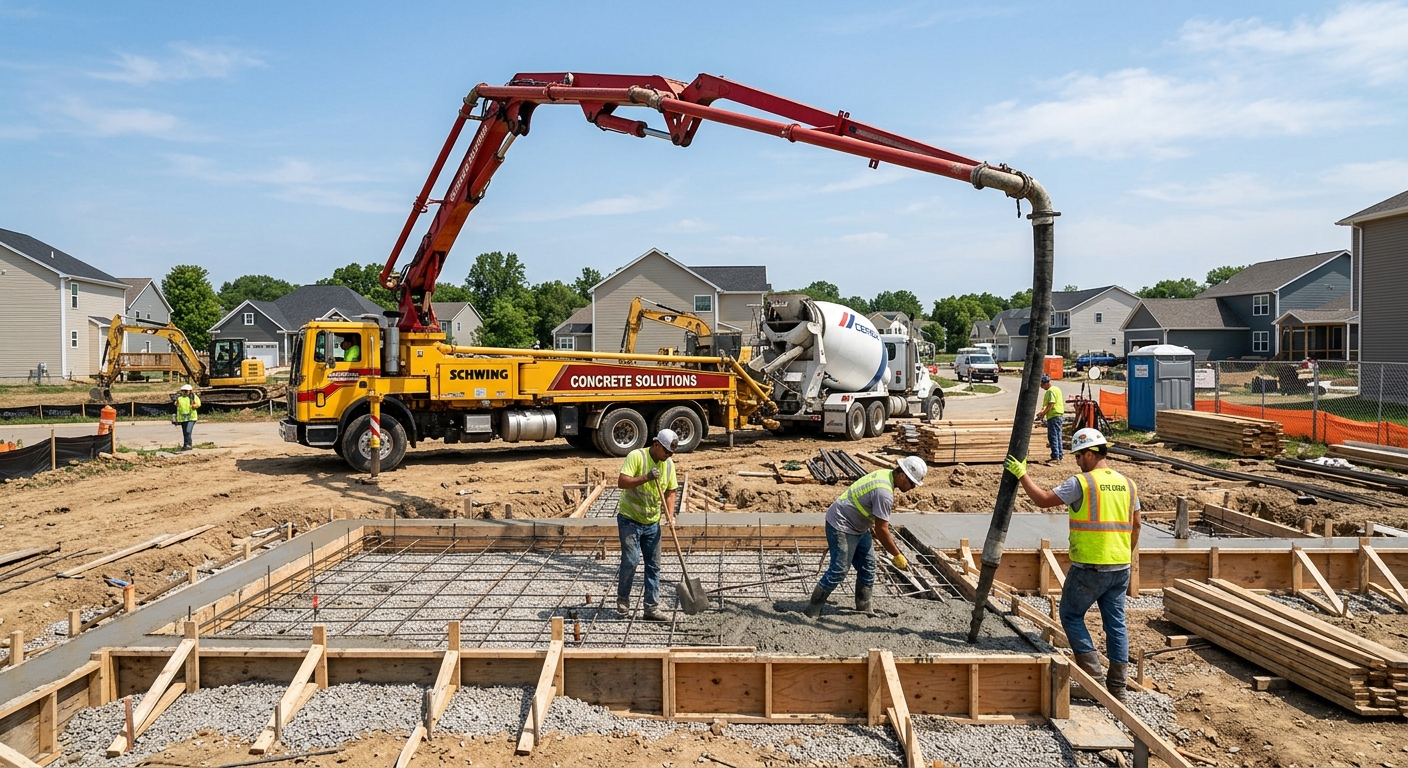
Concrete work options and costs in Campbell River
Concrete work in Campbell River typically falls into a few repeatable categories: driveways, patios and walkways (flatwork), plus structural concrete like footings and foundations. In this market, the demand is steady because single-detached homes make up 60.8% of dwellings and many homeowners are planning durable exterior upgrades to match their property style. With 11,165 homeowner households (71.8% of households own) and a housing stock where 40.0% of homes were built before 1981 (Statistics Canada, 2021 Census), we often see retrofit work—repairs, expansions, and full replacements of older slabs that have started to scale.
Vancouver Island and the Coast brings a “wet-cold” mix to concrete pricing. Our frost line is relatively shallow compared to interior provinces, but freeze–thaw cycles happen often—especially in inland and slightly higher-elevation pockets. That drives the need for air-entrained mixes, careful granular base preparation, and well-planned control joints. In return, schedules can be competitive, but contractors still price weather contingencies: cool, saturated ground slows curing and can delay pours if the site can’t stay protected.
In neighbourhoods like Cedar, West Campbell River and the downtown edge, concrete flatwork is especially in demand because properties are closer to existing trees, driveways often need tight sawcut/haul-out coordination, and access can limit truck staging. The result is that two “same size” projects can land in different bands depending on access, excavation, reinforcement, and finish complexity—so it’s smart to compare like-for-like before you commit.
| Application |
Typical Size |
Key Spec |
Finish Option |
Price Range |
| Concrete driveway (standard broom finish) |
320–480 sq. ft. |
Air-entrained exterior mix + control joints |
Broom finish |
$5,200–$10,000 |
| Exposed aggregate driveway |
320–480 sq. ft. |
Air-entrained exterior mix + proper cure + sealing |
Exposed aggregate |
$6,800–$12,500 |
| Stamped concrete driveway or patio |
240–400 sq. ft. |
Air-entrained mix + release agent + color hardener |
Stamped patterns |
$6,000–$14,000 |
| Plain concrete patio or walkway |
150–320 sq. ft. |
Air-entrained mix + compacted base |
Float + broom/brush texture |
$2,200–$6,900 |
| Garage floor (interior slab) |
350–500 sq. ft. |
Vapour/insulation details as needed + sawcuts |
Plain trowel or light broom |
$7,000–$13,500 |
| Foundation footings (structural, below frost) |
Approx. 40–100 linear ft. |
Excavation to design depth + rebar + engineered spec |
Structural concrete, typically formed |
$2,000–$9,000 |
Prices are estimates only and vary by project scope, site access and material selection.
What affects the price of concrete work in Campbell River
In Campbell River, it’s common to see the same concrete scope come back with quotes that differ by 30–50% across Vancouver Island and Coast, even when the square footage looks identical. The biggest drivers aren’t just the concrete—they’re excavation complexity, how deep and how well the base is built, reinforcement requirements, and the contractor’s weather planning. On top of that, labour availability can tighten during high-demand stretches, and finish trades (stamps/exposed aggregate) require extra labour and strict curing protection.
Freeze–thaw cycles shape nearly every spec here. While our coastal frost design is generally much shallower than interior BC, exterior work still must be built below the design frost depth to reduce heave and random cracking. In plain language: footings have to sit deep enough (often in the range of ~0.5–1.2 m in coastal BC assumptions) and the granular base has to be properly graded and compacted. Exterior slabs and driveways should use air-entrained concrete mixes to survive repeated wetting and freezing; when air content isn’t right, surface scaling can show up quickly and you’ll pay again for patching.
Cold snaps also matter. Even if the season is shorter than interior provinces, contractors may need blankets or heaters to protect curing concrete. That adds cost. De-icing salts—common on coastal properties that deal with icy walkways—can accelerate spalling on poor mixes, so sealing is often recommended.
Two quick local examples: replacing an older, poorly compacted driveway slab on a sloped lot typically raises excavation and base replacement costs. Conversely, a straightforward flat backyard patio with easy truck access can land closer to the $14–$22 per sq. ft. patio/walkway band, while stamped work can justify the $22–$35 per sq. ft. range because of labour intensity and material systems (colour and release products).
| Price Factor |
Why It Matters |
Cost Impact |
| Frost line depth |
Determines footing depth and form height to prevent frost heave |
Higher excavation and more concrete; can swing foundation/footings by thousands |
| Site preparation |
Excavation, grading, drainage, and compacted granular base control movement and settlement |
Heavy/rocky soils, poor drainage, or lots of removal increase labour and disposal |
| Reinforcement |
Rebar and/or mesh help control cracking in slabs and structural elements |
Extra material and tying/placement labour; also affects slab thickness |
| Mix design |
Air-entrainment and strength targets improve freeze–thaw durability |
Air-entrained exterior mixes can cost more but reduce future surface damage |
| Finish type |
Broom finish is simple; stamped and exposed aggregate require more steps |
Stamped/exposed adds formwork timing, release agents, and finishing labour |
| Pour size and concrete truck access to site |
Large pours require planning; access affects how far materials must be moved |
Restricted access can add labour and may require smaller loads |
| Cold-weather curing precautions |
Protecting curing concrete supports strength gain in cool, wet conditions |
Blankets/heating and longer protection time add cost and can delay schedules |
| Control joint pattern and sealing cost |
Joints manage shrinkage/cracking; sealing protects against de-icing salts |
Better joint planning and sealant add line-item cost, but reduce call-backs |
Permits & regulations in British Columbia
In British Columbia, structural concrete work—footings, foundation walls, grade beams, and any scope that supports the building structure—generally requires a building permit, and in many cases engineered drawings reviewed by the municipality are part of the process. For Campbell River homeowners, that means your contractor should coordinate measurements, formwork details, and any required inspections as the foundation stage progresses.
Concrete flatwork like patios, walkways, driveways usually does not require a permit by default, but it can trigger requirements if it affects lot grading, impacts drainage or slope stability, or creates changes related to impervious surface coverage or municipal right-of-way constraints. If you’re tying into an existing drainage plan, altering swales, or changing how runoff moves across the property, you should confirm before breaking ground.
Before any excavation, verify the contractor’s business and safety paperwork. Step 1: confirm the contractor is properly registered for the work they’re claiming to do in BC by checking the relevant provincial registry listings (and any applicable trade/contractor status information). Step 2: request a certificate of insurance (liability) showing coverage limits and active dates; a legitimate contractor will provide this before work starts. Step 3: confirm WSBC coverage (commonly called WCB clearance) and ask for the current clearance letter or proof of coverage.
Finally, ask for references and photos of similar-scale Campbell River projects, especially exterior slabs built through freeze–thaw conditions. That’s how you confirm they know the local durability requirements—not just how to pour.
Getting concrete right in Campbell River's freeze-thaw climate
Concrete failures in Campbell River are usually predictable: freeze–thaw damage, poor base support, and surface deterioration from de-icing salts and late/incorrect curing. The fix is not “stronger concrete” alone—it’s the correct whole system. Start with (1) base preparation: install a properly compacted granular sub-base to the right depth and with drainage considerations for local soils. Water trapped under a slab is what turns small movements into heaving and random cracking.
Next is (2) mix design: for exterior flatwork, request air-entrainment (commonly 5–7% target air content) and a minimum 32 MPa compressive strength spec. Then (3) control joints: your slab should be designed with a joint pattern that limits shrinkage cracking to planned locations. Finally, (4) curing: plan for at least 7 days of curing under appropriate conditions. Cool, wet weather slows strength gain, so protection (covering/insulation/blankets) isn’t optional if a cold snap or heavy rain hits during the first week.
After cure, (5) sealing matters. A penetrating sealer applied after the concrete has fully cured (often around 28 days post-pour) helps repel moisture and reduce salt-related wear on exterior surfaces.
When homeowners ask better questions, costs stay justified. For example, if a broom-finish patio is coming in around $14–$22 per sq. ft., the real value is the base, air-entrainment, and joint plan—not just the surface look. Paying a bit more for proper prep can cost less than repeated repairs after scaling. Stamped concrete costs more (often within the $22–$35 per sq. ft. band), and it’s worth it only when the underlying durability specs are locked in.
| Spec |
Why It Matters in Campbell River |
What to Ask For |
Impact if Skipped |
| Compacted granular base (depth?) |
Stable support reduces movement and helps prevent freeze–thaw heave |
Base depth and compaction method for your site conditions |
Settlement and random cracking; premature surface failure |
| Air-entrained concrete mix (target air %?) |
Protects against scaling and spalling during wet-freeze cycles |
Target air content (typically 5–7% for exterior flatwork) |
Higher risk of surface scaling, spalling and patching |
| Compressive strength (MPa rating) |
Ensures adequate strength gain and durability for exterior exposure |
Minimum 32 MPa rating (confirm mix design) |
Lower long-term performance and easier surface damage |
| Control joints (spacing per ACI guidelines) |
Directs cracking to planned lines instead of random fractures |
Joint spacing and layout plan for your slab size |
Random cracking and uneven expansion/contraction effects |
| Minimum 7-day curing period |
Strength gain and surface integrity depend on proper early curing |
Protection plan during cold/wet conditions |
Weak surface, higher chance of scaling and edge damage |
| Penetrating sealer (when applied after cure) |
Moisture and salt resistance improve with sealing on exterior slabs |
Penetrating sealer application after cure (commonly around 28 days) |
Faster wear from de-icing salts and moisture absorption |
How to choose a concrete work contractor in Campbell River
Choosing the right concrete contractor in Campbell River is mostly about verifying they can meet the technical durability requirements for coastal freeze–thaw, not just completing the pour. First, confirm British Columbia registration/authorization for contracting activities that apply to your scope. Second, request liability insurance and verify it’s current—ask for a certificate of insurance before work starts, and ensure the named insured matches the contractor you’re hiring.
Third, check WSBC (often referred to as WCB) coverage. The practical way: ask the contractor for a current clearance letter or proof of coverage, then keep it in your records with the quote and contract documents. If they can’t provide it quickly, treat that as a serious risk factor.
Next, ask for 2–3 itemised written quotes. Don’t accept a single lump-sum number without a breakdown. You want a labour/materials split that shows excavation/disposal, forms, base prep, reinforcement, concrete mix spec, finishing, curing/protection, control joints, and sealing (if included). Clarify exclusions: Are permit-related items included if needed? Is truck access and rebar placement included? Who pays for removal of existing concrete?
Warranty matters too. Ask for the workmanship warranty length, what it covers (cracks, scaling, spalling), and whether product/manufacturer warranties apply to specific admixtures or sealers. Payment schedules should stay conservative—never pay more than 10–15% upfront, and hold back a portion until the job is complete and cleaned up. Finally, get a start date and completion estimate in writing, along with a weather-protection plan for cool or rainy periods.
- Confirm BC registration/authorization relevant to their contracting activities.
- Request certificate of liability insurance (active dates and coverage limits).
- Ask for WSBC clearance/proof of coverage before the first day on site.
- Get 2–3 itemised quotes (labour + materials), not one lump-sum.
- Require base preparation details: depth, granular type, compaction method.
- Demand exterior mix spec: air-entrainment target and minimum strength.
- Check whether reinforcement is included when required (mesh/rebar and placement).
- Ask for control joint spacing/layout and whether sawcuts are timed correctly.
- Confirm curing/protection plan for cool or wet weather (blankets/heating if needed).
- Clarify sealing: included or optional, and when it’s applied post-pour.
- Verify disposal/haul-out and site cleanup are included in the scope.
- Use a conservative payment schedule (10–15% max upfront; holdback until completion).
Concrete red flags in Campbell River include contractors who won’t disclose the concrete mix spec (air content/strength), quotes that omit base depth and compaction details, promises to pour through cold snaps without a curing protection plan, vague wording like “finish as required” without specifying joints/sealing, and insisting on large upfront deposits before any materials or scheduling are confirmed.
Frequently asked questions — concrete work in Campbell River
How much does concrete work cost in Campbell River?
In Campbell River, pricing depends heavily on finish type, site prep, and access. For exterior flatwork, common local bands are roughly $16–$25 per sq. ft. for a concrete driveway and $14–$22 per sq. ft. for patios or walkways, assuming typical base preparation and proper air-entrained exterior mix. Stamped concrete usually runs higher, often around $22–$35 per sq. ft., because it includes extra materials and labour for stamps/colour systems. Foundation footings can fall in the $50–$90 per linear foot range depending on excavation depth, rebar, and site conditions. Because Vancouver Island and Coast have frequent freeze–thaw cycles, the durable specs (air content, drainage, joints, and curing protection) are what separate a low bid from a job that lasts.
How deep must footings be for Campbell River's frost line?
For Campbell River, footings are generally designed to sit below the design frost depth to prevent frost heave and reduce the risk of movement. Coastal BC assumptions commonly land around 0.5–1.2 m for the frost design band used in many scenarios, but your exact depth should be confirmed for your site and building design through your drawings/engineer and local requirements. This is one reason quotes for “foundation work” vary: excavation depth changes form height, concrete volume, and labour time. If a contractor tells you they’re skipping depth verification or basing it only on a neighbour’s old footing, that’s a red flag—especially with Campbell River’s wet soils and freeze–thaw cycles. Ask to see the structural spec and how they’ll verify excavation depth before pouring.
Why does concrete crack in Campbell River and how is it prevented?
Concrete can crack due to shrinkage, temperature movement, and movement of the supporting soil—none of which wait for “dry summer weather.” In Campbell River, freeze–thaw and moisture are key contributors: if water gets under a slab or if the base isn’t compacted to the right standard, repeated wetting and freezing can create small lifts that become cracks and scaling. Prevention comes from the full spec: properly compacted granular base, correct slab thickness, reinforcement when required, and a control joint pattern designed to guide cracking. Also, air-entrained concrete helps the surface resist freeze–thaw damage; without it, you may get spalling even if the slab looks “structurally okay.” A proper curing period (minimum 7 days with protection when it’s cold or wet) also improves performance.
Stamped vs broom-finish concrete — cost difference?
Stamped concrete costs more than broom-finish because you’re paying for additional steps: colour systems, release agents, stamp placement, and more involved finishing timing. In Campbell River, broom-finish driveways commonly align with the $16–$25 per sq. ft. band, while stamped concrete is often within the $22–$35 per sq. ft. range. The price difference is usually justified when the contractor also nails the durability basics—air-entrained exterior mix, proper base prep, and a control joint plan—because the surface pattern doesn’t prevent freeze–thaw issues. If you’re considering stamped concrete, ask for how joints will be handled, whether sealing is included, and what their curing/protection plan is during cool/rainy periods.
When is the best time to pour concrete in Campbell River?
The best time is when the contractor can maintain good curing conditions for at least the first week: stable temperatures, manageable rain exposure, and a realistic plan to protect fresh concrete. In Campbell River’s climate, that often means avoiding heavy downpours right at pour time and being cautious during cold snaps when you may need blankets/heating. Contractors typically schedule around the forecast and may adjust mix, placement timing, and protection methods to keep the curing process on track. Even though coastal winters are milder than interior BC, freeze–thaw cycles still happen with wet ground—so “any day is fine” is not a good approach. Ask your contractor how they handle weather contingencies and whether they include curing protection in their quote.
How long does concrete take to cure?
Concrete curing is a two-part story: it gains early strength over days, and it continues improving for weeks. For typical exterior flatwork in Campbell River, you should plan on at least a 7-day curing period with proper protection—covering/insulating and keeping the surface protected from damage while it builds strength. Full performance for many durability-related outcomes (and for many sealers) is closer to 28 days post-pour. That’s why we generally recommend waiting until the concrete is cured before applying penetrating sealer (commonly around 28 days): it improves moisture resistance and helps protect against de-icing salt wear. If a contractor schedules sealing too early or removes protection immediately during cool/wet weather, you risk surface scaling and spalling.