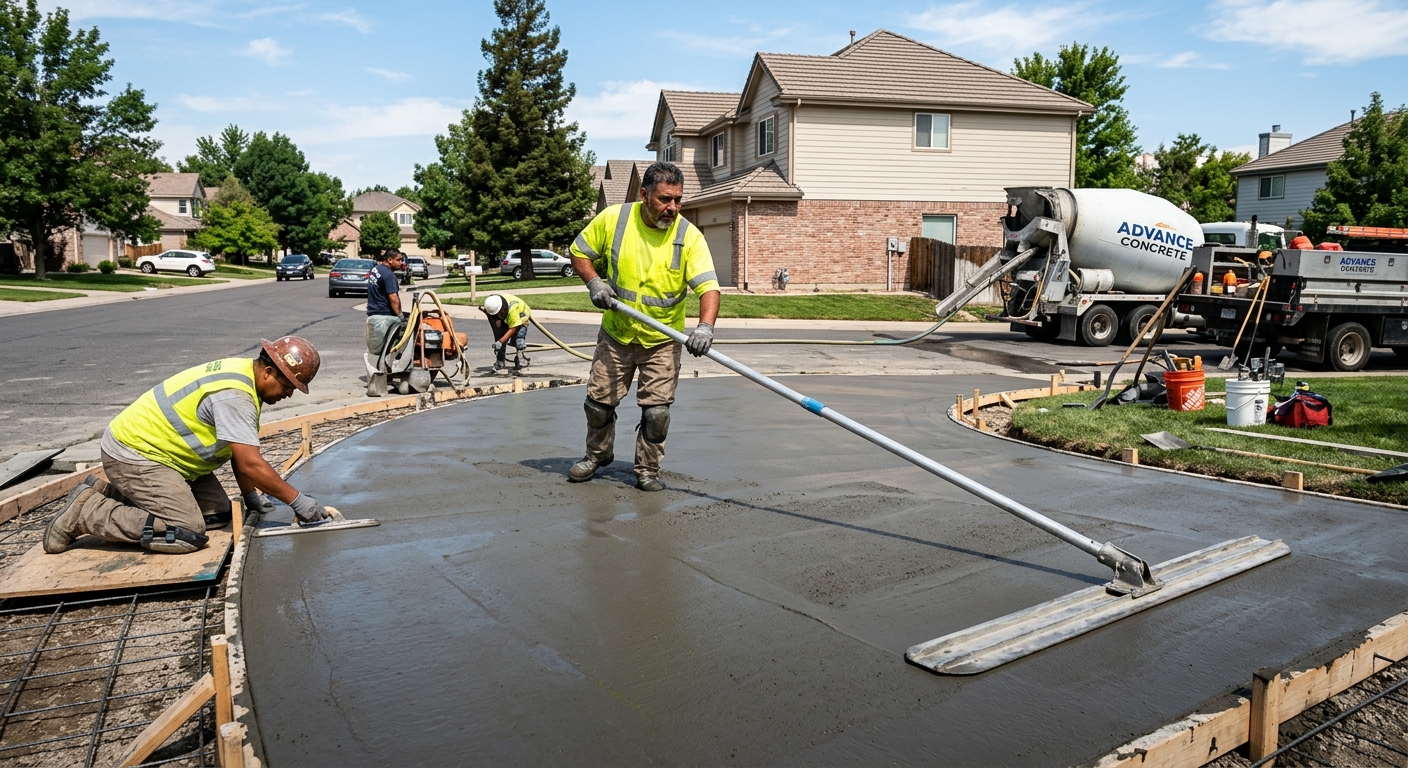
Concrete work options and costs in Westsyde
In Westsyde, concrete flatwork is one of the most common exterior upgrades homeowners make—especially in neighbourhoods where people want durable, low-maintenance surfaces through our wet springs and freeze–thaw swings. Westsyde’s market is largely residential; with a population of 10,713 (Statistics Canada, 2021 Census), there’s steady demand for driveways, patios and walkways that can handle heavy rainfall and temperature cycling. You’ll also notice a lot of detached-family housing patterns typical of growing suburban pockets across the Lower Mainland–Southwest, where homeowners often plan projects for their main access points and backyard entertaining areas.
Lower Mainland–Southwest pricing is shaped less by deep permafrost concerns and more by the way moisture and freeze–thaw cycles stress concrete over time. Typical code practice and local engineering assumptions often use a frost depth around 450 mm / 18", so exterior footings and thickened edges should be placed below that depth to help prevent frost heave. Add saturated soils, the need for compacted granular base and drainage details, and air-entrained concrete with good jointing, and you can see why two driveways that look similar on paper may land far apart on a quote.
In Westsyde, tradesmen are particularly busy around the residential corridors near the river/valley edges where lots can be wetter and grading takes longer—so schedule can affect cost. When you’re comparing options, use the ranges below as a starting point, then confirm what’s included in prep, reinforcement and curing with each contractor before you decide.
| Application |
Typical Size |
Key Spec |
Finish Option |
Price Range |
| Concrete driveway (standard broom finish) |
400–600 sq ft |
Air-entrained mix, compacted granular base, control joints |
Broom finish, saw-cut joints |
$18,000 – $28,000 |
| Exposed aggregate driveway |
400–600 sq ft |
Proper curing and surface retarder plan to avoid scaling |
Exposed aggregate with controlled wash |
$22,000 – $34,000 |
| Stamped concrete driveway or patio |
300–500 sq ft |
Air-entrained mix, release agent, integral colour options |
Stamp pattern + colour hardener or integral colour |
$22,000 – $36,000 |
| Plain concrete patio or walkway |
200–400 sq ft |
Base prep, mesh or rebar as required by design |
Float + broom or light texture |
$16,000 – $26,000 |
| Garage floor (interior slab) |
400–600 sq ft |
Vapour barrier, compacted base, reinforced slab |
Power trowel + control joints |
$18,000 – $30,000 |
| Foundation footings (structural, below frost) |
Varies by home |
Excavate below frost depth, formwork, reinforcement |
Structural pour, engineered requirements |
$5,000 – $12,000 |
Prices are estimates only and vary by project scope, site access and material selection.
What affects the price of concrete work in Westsyde
In the Lower Mainland–Southwest, it’s common to see quotes for the same-looking concrete job vary by 30–50% once you account for base preparation, frost protection, reinforcement and curing. Concrete itself is only part of the budget; the real drivers are how much excavation is needed, how saturated the subgrade is after rain, what mix design is required to survive freeze–thaw cycling, and how long contractors must protect the slab until it reaches adequate strength. When you compare Lower Mainland work to colder parts of British Columbia, the labour mix shifts: deeper excavations and longer cold-weather handling can add cost quickly—even if the surface area is unchanged.
Frost line depth dictates every spec. Footings must extend below the design frost depth to prevent frost heave; in coastal BC this is often around 0.5–1.2 m in practice depending on conditions, and local engineers typically confirm the needed depth. Exterior slabs also require air-entrained concrete mixes to manage freeze–thaw scaling, plus properly placed control joints. On top of that, de-icing salt in winter accelerates surface wear, so sealing (and good surface prep) is essential for driveways and walkways.
Two practical Westsyde examples: if your site needs additional granular drainage and a thicker compacted base, your driveway cost can drift from the lower end of the concrete driveway band (often around $18–$28 per sq ft equivalent pricing in market framing) toward the higher end once reinforcement and drainage details are added. Conversely, a simple plain patio with straightforward access may stay closer to the patio band of $16–$26 per sq ft equivalent range because the work is less equipment-intensive and curing protection is simpler during milder spells.
Finally, consider housing-stock realities: many Westsyde homes are older and have narrower side yards, which increases formwork time and concrete truck complexity—those labour hours can translate into dollars even when materials are similar.
| Price Factor |
Why It Matters |
Cost Impact |
| Frost line depth — determines footing depth and form height |
Controls excavation volume and prevents frost heave |
Often a major driver on foundations; can add thousands |
| Site preparation — excavation, grading, compacted granular base |
Wet/saturated subgrade can lead to settlement and cracking |
Higher base prep increases labour and materials |
| Reinforcement — rebar or wire mesh requirement |
Supports slab loads and limits cracking propagation |
Wire mesh is cheaper than rebar mats, but thickness and spacing vary |
| Mix design — air-entrainment and compressive strength spec |
Air entrainment protects against freeze–thaw scaling |
Upgraded mix and placement quality can raise material costs |
| Finish type — broom vs. stamped vs. exposed aggregate |
Finish complexity changes labour, timing, and curing discipline |
Stamped/exposed typically costs more than plain |
| Pour size and concrete truck access to site |
Impacts labour staging and whether pumping is needed |
Poor access can mean extra equipment or hand finishing time |
| Cold-weather curing precautions — heating and blankets |
Cool nights and humidity slow strength gain |
Extra protection can add noticeable line items |
| Control joint pattern and sealing cost |
Joints manage cracking; sealing helps repel salt and water |
Cutting, finishing and sealer materials affect total |
Permits & regulations in British Columbia
In British Columbia, structural concrete work requires a permit and often engineered drawings reviewed by the municipality. This includes footings, foundation walls, and grade beams—anything that forms part of the structural support system. Concrete flatwork (driveways, patios, walkways) usually does not require a permit by itself, but it can become regulated if it changes lot grading, affects drainage, or increases impervious surface coverage beyond municipal expectations, or if it impacts municipal right-of-way features. Before any concrete is cut or excavated in Westsyde, confirm the requirements with your local authority to avoid surprises.
Because concrete is not “one size fits all,” you should also treat contractor compliance as part of safety and durability. Ask for proof of liability insurance and WSIB coverage (or the applicable WCB coverage for the contractor and their employees). For structural jobs, expect an engineered sign-off path in the background, not just a contractor’s standard detail. Always verify the scope aligns with what the permit/engineering expects—especially footing depth and reinforcement layout under a frost-protected foundation.
Step-by-step for homeowners in Westsyde: (1) confirm the contractor’s company details and trade contact; (2) request a Certificate of Insurance and verify the effective dates and project/location; (3) ask for WSIB/WCB clearance or account verification; and (4) for licensing, use the appropriate BC online registry tools (or the contractor’s reference to their listing) and ensure the scope of work matches concrete/placement activities. Finally, ask for references from similar-scale projects done recently in the Central Interior or Lower Mainland markets so you’re not relying on outdated documentation.
Getting concrete right in Westsyde's freeze-thaw climate
Concrete failures in Westsyde typically show up as scaling, spalling and premature cracking—usually tied to water management, freeze–thaw durability and curing discipline rather than just “bad concrete.” In our Lower Mainland–Southwest conditions, saturated soils and temperature swings can repeatedly push water in and out of the slab. If the mix isn’t air-entrained to the right specification, the concrete can’t handle freeze–thaw pressure, and the surface can break down under de-icing salt and wet winters.
To spec the job correctly, start with base preparation: use compacted granular sub-base to the designed depth, with attention to drainage and consistent grade. Next, require an air-entrained mix (commonly 5–7% air content for exterior flatwork) and a minimum 32 MPa compressive strength unless engineering specifies otherwise. Third, plan control joints so the slab cracks where you want it—your joint pattern and timing matter. Fourth, curing: insist on minimum 7-day curing under proper conditions. In cool or damp stretches, contractors should protect the slab with curing blankets or sealers where appropriate and avoid freezing temperatures without approved cold-weather procedures.
Finally, sealing is about protecting the surface after the concrete has fully cured—typically after 28 days—using a penetrating sealer to repel salts and water. If you skip sealing, you’re more likely to see roughened surfaces and early scaling where tyres and foot traffic bring salt and moisture.
Concrete pricing follows the specs. For example, adding proper air entrainment, reinforcement, and disciplined curing might push a plain patio toward the middle of the $16–$26 patio band, but it’s often a better value than trying to “save” on mix and joints only to replace a failing surface years earlier. The win is fewer repairs and a driveway that stays smooth through Westsyde’s wet seasons.
| Spec |
Why It Matters in Westsyde |
What to Ask For |
Impact if Skipped |
| Compacted granular base (depth?) |
Limits settlement and reduces water under the slab |
State granular type and compacted depth; confirm subgrade prep and drainage details |
Cracking, uneven settling, and faster surface deterioration |
| Air-entrained concrete mix (target air %?) |
Manages freeze–thaw scaling risk |
Confirm air content target (typically 5–7% for exterior flatwork) and placement method |
Spalling and scaling after winters with wet cycles and salt |
| Compressive strength (MPa rating) |
Strength gain affects durability and resistance to wear |
Specify minimum 32 MPa (or engineered rating for structural work) |
Surface wear, poor long-term performance, and brittle failure |
| Control joints (spacing per ACI guidelines) |
Controls where cracks develop |
Ask for joint layout and timing (saw-cut plan) |
Random cracking and widened joints that let moisture in |
| Minimum 7-day curing period |
Ensures strength development under cool/wet conditions |
Confirm curing method and protection during cold nights and rain |
Reduced strength, increased cracking and scaling risk |
| Penetrating sealer (when applied after cure) |
Repels water and de-icing salts |
Ask for sealer type and schedule (commonly 28 days post-pour) |
Early surface breakdown and more staining/spalling where salt accumulates |
How to choose a concrete work contractor in Westsyde
Choosing a contractor in Westsyde is mostly about compliance, workmanship systems, and clarity of scope—not just the number on the first quote. In British Columbia, verify licensing where applicable through the province’s relevant online listings for the contractor category, then request liability insurance documentation (Certificate of Insurance) that clearly shows the project/jobsite as covered for the contractor you’re hiring. For worker protection, ask for WSIB/WCB clearance or documentation showing coverage for employees and subcontractors. If a contractor can’t provide current insurance and coverage proof quickly, treat it as a red flag.
Next, request 2–3 itemised written quotes—not lump sums—so you can see how labour, materials (including concrete mix type/air entrainment), excavation, reinforcement, and finishes are priced. Confirm if the quote includes permit pull (when needed), disposal/haul-away, site protection, and any saw-cutting and sealing allowances. Many “cheap” bids lose value when you add missing line items.
For warranty, ask for both workmanship warranty length and whether there’s any product/manufacturer warranty, especially for sealers and decorative systems. Also ask whether warranties are transferable if you sell your home. Payment schedule matters: never pay more than 10–15% upfront; use a holdback until the job is complete and verified. Finally, get a start date and completion estimate in writing, since rain-heavy weeks in the Lower Mainland–Southwest can affect curing timelines.
- Confirm insurance effective dates and that it covers the specific scope.
- Request WSIB/WCB clearance for employees/subcontractors.
- Ensure the quote specifies air-entrained mix for exterior work.
- Ask about frost-protection details for thickened edges and footings.
- Verify granular base thickness and compaction method.
- Confirm reinforcement type (wire mesh vs rebar) and placement depth.
- Check finish details: broom, stamped, exposed aggregate, and tolerances.
- Require a jointing plan (where joints go and when they’re cut).
- Ask how curing will be protected during cool/wet periods (blankets/sealer).
- Ask whether sealing is included and when it’s applied (commonly after 28 days).
- Confirm truck access plan, staging, and whether pumping is needed.
- Review payment terms and keep a holdback until final inspection and cleanup.
Concrete red flags in Westsyde: vague scope language, no mention of air-entrainment or jointing, refusing to show insurance/WSIB/WCB proof, “too-good-to-be-true” pricing without excavation details, and a schedule that doesn’t account for curing protection after rain or cool nights.
Frequently asked questions — concrete work in Westsyde
How long does a concrete project take in Westsyde?
In Westsyde and across British Columbia’s Lower Mainland–Southwest market, timelines depend on access, site prep, and curing conditions. A typical driveway or patio usually takes about 1 day for forms and pour, but the full project duration often stretches over several days for excavation, granular base compaction, curing protection, and saw-cut joint work. If weather is wet or cool, contractors may need additional curing blankets or extended protection to reach the needed strength before surface finishing or release to traffic. For decorative work (stamped or exposed aggregate), allow extra time for wash/texture steps and careful curing discipline. For context, many homeowners choose plain patios in the $16–$26 band because they’re simpler to stage and finish than stamped options that require more process control.
What is a concrete overlay and is it suited to Westsyde?
A concrete overlay is a thin topping applied over an existing concrete slab—often to improve appearance or cover minor surface problems—without fully demolishing the original. It can be suited to Westsyde when the original slab is still structurally sound (not heavily settled, extensively cracked through, or failing at the edges). However, freeze–thaw cycles and water intrusion are common triggers for overlay failure when the base concrete remains compromised. Before overlaying, contractors should test bonding, assess drainage, and fix underlying issues like spalling, delamination, or poor slope. If your existing driveway has repeated scaling, an overlay can be a short-term fix; a full replacement may be a better long-term value. If you’re deciding between an overlay and new flatwork, request an itemised quote and ask what they do for preparation and bonding, not just the topping material.
How do I seal concrete to protect it in Westsyde?
Sealing in Westsyde should be planned around both cure time and winter exposure. Typically, you apply a penetrating sealer after the concrete has cured—often around 28 days—so the concrete can release moisture before sealing. Use a product compatible with exterior use and salt exposure, since de-icing chemicals can accelerate surface wear where water sits. Preparation matters: the surface should be clean, dry, and free of contaminants (construction residue, efflorescence, and loose surface material). Your contractor should also ensure joints and texture are properly finished before sealing. Sealing can help reduce staining and water absorption, which lowers the risk of scaling in our freeze–thaw conditions. If you’re comparing options, sealing is more likely included (or well-specified) in stamped/exposed projects and in driveways where salt contact is expected.
What is the difference between concrete and cement?
Concrete is the full building material made from several components: cement, water, sand, and gravel (and sometimes additives and air-entraining agents). Cement is just one ingredient—the binder—that reacts with water to create strength. That’s why, when contractors specify an “air-entrained concrete mix” for exterior flatwork in Westsyde, they’re talking about the full mix design, not simply the cement. The air-entraining component helps manage freeze–thaw pressure and reduces surface scaling risk. This also ties into compressive strength (for example, minimum 32 MPa for many exterior flatwork specs) and curing requirements. If you’re reviewing quotes, ask what the concrete mix spec is (including air content and strength), since two projects could both use “cement” but still perform very differently if the overall mix and placement steps don’t meet the exterior durability requirements.
How much does concrete work cost in Westsyde?
Concrete costs in Westsyde typically align with the regional price bands for the Lower Mainland–Southwest, but your final number depends on excavation, base prep, reinforcement, finishes and curing protection. For example, plain patios and walkways often fall in the $16–$26 range, while standard broom-finish driveways frequently land in the $18–$28 range in market framing. Decorative upgrades like stamped concrete or exposed aggregate are usually higher—often tracking the $22–$36 band for stamped & decorative concrete. Foundation footings are quoted differently because they’re structural and measured by the plan, typically starting around $200–$350 per structural footing lineal basis in broader market framing. To avoid surprises, request an itemised quote that separates demolition/disposal, granular base depth, reinforcement type, concrete mix spec, and sealing or curing items.
How deep must footings be for Westsyde's frost line?
For Westsyde, the key is designing for frost protection based on the local frost depth assumption used by engineers and local practice. In the Lower Mainland–Southwest, typical code practice often assumes a frost depth around 450 mm / 18", so exterior support elements and thickened edges are commonly placed below that design depth to help prevent frost heave. That said, actual footing depth can vary by soil conditions, drainage, and structural design requirements. For many projects, engineered drawings specify the required depth and reinforcement details. If someone proposes placing footings “shallow to save cost,” ask for the engineering basis and how they’re protecting against freeze–thaw cycles and saturated soils. For structural work, permits and engineered requirements are usually involved in British Columbia, and the contractor should be able to explain how their excavation and form heights match the approved drawings.