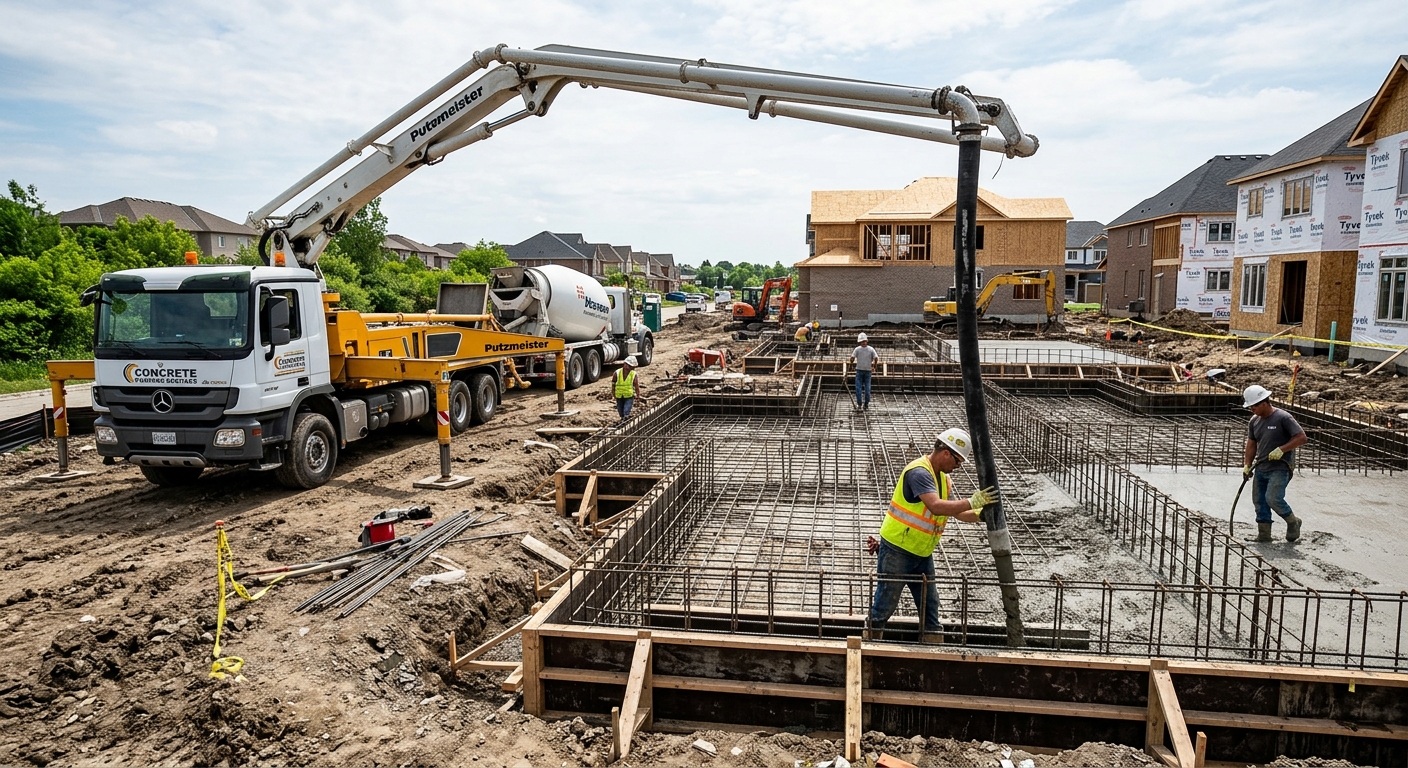
Concrete work options and costs in Riley Park
Concrete work in Riley Park, British Columbia is shaped by a very local reality: mild winters on paper, and yet enough coastal-wet weather and freeze–thaw cycling to punish poorly specified concrete. In a neighbourhood like Riley Park—part of the Lower Mainland—Southwest market—most homeowners are in single-family or townhouse-style properties, and that housing mix drives steady demand for driveways, patios and walkways. For context, the wider local population is 22,555 (Statistics Canada, 2021 Census), and the steady turnover of renovations and backyard projects keeps crews busy.
Our costs reflect both material specs and how scheduling works in the Vancouver–Surrey–Abbotsford corridor. Even with a frost depth assumption around 450 mm / 18", exterior footings and thickened edges still need to extend below that design frost zone to reduce frost heave risk. Saturated soils, drainage details, air-entrained mixes and longer curing in humid conditions all add time to the job. Rain days can also extend timelines, which affects crew efficiency and site protection.
In Riley Park, trades often run at highest demand in the more renovation-heavy pockets near the transit corridor and older housing streets where driveways and entry slabs are common. If you’re comparing options, the best way to do it is by finish level and what the crew has to build under the surface. Below is a practical side-by-side of typical scope ranges so you can translate any quote into apples-to-apples.
| Application |
Typical Size |
Key Spec |
Finish Option |
Price Range |
| Concrete driveway (standard broom finish) |
400–500 sq. ft. |
Exterior slab, compacted granular base, air-entrained mix, control joints |
Broom texture |
$5,200–$7,300 |
| Exposed aggregate driveway |
400–500 sq. ft. |
Exterior slab with proper curing window to expose aggregate cleanly |
Exposed aggregate finish |
$7,000–$10,200 |
| Stamped concrete driveway or patio |
300–450 sq. ft. |
Air-entrained exterior concrete, integral colour/sealer system |
Stamped pattern (select pattern) |
$7,200–$12,300 |
| Plain concrete patio or walkway |
200–350 sq. ft. |
Exterior slab, compacted base, joints at manageable panel sizes |
Float and light broom |
$3,600–$7,300 |
| Garage floor (interior slab) |
300–500 sq. ft. |
Vapour/under-slab prep as needed, reinforcement based on load |
Standard trowel finish |
$4,800–$9,800 |
| Foundation footings (structural, below frost) |
Varies by foundation footprint |
Engineered footing depth/width below design frost; rebar as specified |
Structural concrete |
$9,500–$18,500 |
Prices are estimates only and vary by project scope, site access and material selection.
What affects the price of concrete work in Riley Park
In the Lower Mainland–Southwest region, the same concrete job can come back with a 30–50% swing between quotes because the pricing isn’t just “concrete per yard”—it’s excavation depth, drainage strategy, mix design, reinforcement, weather protection and how efficiently the crew can pour and finish. Contractors also price risk differently when rain is likely and when crews must protect work longer to achieve design strength.
Everything starts with frost and freeze–thaw. Footings and thickened edges must be placed below the design frost depth (commonly assumed around 450 mm / 18" for Lower Mainland–Southwest), and exterior slabs still need robust base preparation to avoid saturated subgrade and heaving. Because our region sees repeated freeze–thaw cycles, air-entrained concrete is standard for exterior slabs. Colder regions have shorter pour seasons and may require heated enclosures or more cold-weather curing precautions; in Riley Park you often still need curing attention—especially in shoulder seasons—because cool nights and high humidity slow strength gain, which extends labour time for blankets, tarps and sealing.
De-icing salt is another driver. When homeowners start salting in winter, surfaces can spall faster if the mix and surface sealing weren’t planned. For example, moving from a plain broom-finish driveway to stamped concrete typically pushes you toward the higher band—around $22–$36 per sq. ft. for decorative work—yet the extra cost is justified when colour, release agents, sealers and finishing time are properly executed. Conversely, keeping a patio in the plain range (often $16–$26 per sq. ft.) can be the smarter choice when your main goal is durable, jointed outdoor space rather than a decorative face.
Local housing stock also matters. Older lots in Riley Park frequently have tighter access and more irregular grades—so excavation and forming become slower. If your driveway ties into an existing sidewalk or drainage path, rework and disposal can add several thousand dollars even before concrete is delivered.
| Price Factor |
Why It Matters |
Cost Impact |
| Frost line depth |
Determines footing depth and form height |
Higher excavation and rebar/labour if deeper below frost is required |
| Site preparation |
Excavation, grading, compacted granular base |
More base material and labour if subgrade is saturated/soft |
| Reinforcement |
Rebar or wire mesh requirement |
Costs increase with mesh/rebar detailing and placement labour |
| Mix design |
Air-entrainment and compressive strength spec |
Exterior air-entrained mixes add a material-cost premium and QC time |
| Finish type |
Broom vs. stamped vs. exposed aggregate |
Decorative finishes add colour materials, labour time and sealers |
| Pour size and concrete truck access to site |
Limits how much can be poured in one go |
Tighter access can increase small lifts, pump time, or labour for moving |
| Cold-weather curing precautions |
Heating and blankets |
Adds labour and equipment rentals during cool, damp periods |
| Control joint pattern and sealing cost |
Controls cracking and protects against salt exposure |
More layout/time for joints plus later sealer material and application |
Permits & regulations in British Columbia
In British Columbia, the permit picture comes down to whether the concrete is structural. In Riley Park, structural concrete work—such as footings, foundation walls, and grade beams—typically requires a building permit and often engineered drawings reviewed as part of the permit process. The municipality will expect footing elevations, rebar details and load considerations to match the design. For that kind of work, plan to coordinate with your engineer and builder so the excavation and inspection milestones line up.
Concrete flatwork (driveways, patios and walkways) usually does not require a separate permit by default, but it can trigger requirements if it affects lot grading, drainage, or impervious surface coverage limits, or if work is close to municipal right-of-way. If you’re changing drainage patterns—adding slopes toward a neighbouring property, tying into a curb, or building up close to a foundation—always confirm with the local authority before breaking ground.
Before hiring, verify your contractor carries liability insurance and the right worker coverage (commonly WCB). Step-by-step: (1) Ask for a certificate of insurance and confirm it covers the project address and includes liability limits appropriate for your job; (2) Ask for proof of worker coverage; (3) Check the contractor’s licence registration via British Columbia’s online contractor registry; (4) Request a clearance letter where applicable; and (5) Call references for similar concrete scopes (driveway/flatwork vs. foundations) so you know they’ve done your exact kind of work successfully.
Getting concrete right in Riley Park's freeze-thaw climate
Concrete failures in Riley Park usually trace back to one of five things: inadequate base support, poor mix design, weak curing, uncontrolled cracking, or no surface protection. In a Lower Mainland–Southwest climate where saturated soils and freeze–thaw cycling are common, the biggest preventable cause of winter spalling is inadequate air-entrainment. If the mix doesn’t have the correct air content for exterior exposure, water can freeze within the paste and damage the surface, especially once homeowners start using de-icing salt.
To spec the job correctly, start with base preparation: compacted granular sub-base to the depth needed for local soil conditions and the drainage plan. Next, specify a properly air-entrained exterior mix—typically 5–7% air content—plus a minimum 32 MPa compressive strength so the slab reaches its design performance. Then plan control joints: spacing should be managed to limit random cracking in field dimensions and around edges. Curing is non-negotiable in damp, cool conditions—plan for at least 7 days under suitable curing conditions before heavy traffic or moisture exposure. Finally, seal after the cure window: a penetrating sealer applied after the appropriate cure period helps repel salt and reduces surface deterioration.
Here’s a cost example that shows where money matters. If you choose stamped concrete, you might be budgeting toward the decorative range (often $22–$36 per sq. ft.). That higher cost is justified when the contractor also specifies the correct exterior mix, base thickness and jointing—because those items prevent premature cracking beneath the decorative surface. If a contractor cuts corners on base depth or air-entrainment to “save on concrete,” the finish may look fine in summer but fail faster in winter.
| Spec |
Why It Matters in Riley Park |
What to Ask For |
Impact if Skipped |
| Compacted granular base (depth?) |
Provides stable support and reduces water pumping and frost-related movement |
Granular sub-base depth based on your soil and frost protection needs |
Settlement, cracking, and accelerated freeze–thaw deterioration |
| Air-entrained concrete mix (target air %?) |
Improves freeze–thaw resistance for exterior slabs in Riley Park winters |
Target 5–7% air content for exterior flatwork |
Spalling and scaling after freeze–thaw cycles and salt exposure |
| Compressive strength (MPa rating) |
Ensures the slab reaches design performance under local curing conditions |
Minimum 32 MPa (confirm mix and test plan) |
Surface wear, dusting, and reduced durability |
| Control joints (spacing per ACI guidelines) |
Controls where shrinkage and movement cracking happens |
Joint spacing and layout that match panel sizes and slab geometry |
Random cracking that can turn into joint failures and spalling |
| Minimum 7-day curing period |
Allows proper strength gain in cool, damp Lower Mainland conditions |
Curing method, protection plan, and when traffic is allowed |
Weak surfaces that abrade and scale earlier in winter |
| Penetrating sealer (when applied after cure) |
Helps repel de-icing salts and reduces moisture ingress |
Penetrating sealer application after cure (commonly around 28 days) |
Faster salt-related surface breakdown and reduced lifespan |
How to choose a concrete work contractor in Riley Park
Start by verifying British Columbia licensing and insurance. First, confirm the contractor’s licence/registration through the online registry used in BC. Next, request their certificate of liability insurance—make sure it lists your project (address) and shows adequate limits for property damage. Then ask for worker coverage proof (commonly WCB) so you’re not exposed if someone is injured on site. If the contractor hesitates or can’t provide documents promptly, that’s a practical red flag.
When you ask for quotes, get 2–3 itemised written quotes rather than a single lump sum. You want a breakdown that separates excavation, granular base, reinforcement, concrete supply, finishing, formwork, waterproofing/edge details if applicable, disposal, and surface sealer. Ask whether the quote includes permits (if structural work) and inspection scheduling, plus whether concrete delivery fees and pump costs are included. Also clarify exclusions: what happens if soil is softer than expected, if there’s unexpected regrading, or if you hit existing utilities.
Warranty matters too. Ask for a workmanship warranty length and what it covers (usually cracking associated with construction vs. normal shrinkage), and whether there’s any product/manufacturer warranty for sealers or admixtures. Confirm if anything is transferable if you sell your home. For payment, avoid large upfront payments—stick to about 10–15% maximum upfront and use a holdback until the job is fully complete and cleaned up. Finally, insist on a written start date and completion estimate, including weather contingencies typical for the Lower Mainland.
- Licence/registration number and proof available on request
- Certificate of liability insurance for the project address
- Proof of worker coverage (WCB/WCB-equivalent) for site work
- Itemised quote: base prep, reinforcement, concrete, finish, sealer
- Clear exclusions (soft subgrade, extra excavation, drainage corrections)
- Confirmation of air-entrained mix for exterior concrete
- Stated curing plan and protection method for cool, wet periods
- Joint layout described (spacing and where they’ll be cut/formed)
- Rebar/mesh placement details (and whether it’s tied/chair-supported)
- Timeline in writing, including how rain impacts scheduling
- Warranty length and what “failure” means under the warranty
- Payment schedule with a holdback until final walkthrough
Concrete red flags I see in Riley Park: bids that omit air-entrainment details for exterior slabs, unclear base thickness and drainage steps, “cheap” quotes that don’t mention reinforcement or joint spacing, no written curing/protection plan in a damp climate, and contractors who ask for a large upfront deposit without a contract schedule and scope.
Frequently asked questions — concrete work in Riley Park
What is air-entrained concrete and why does it matter here?
Air-entrained concrete is made with microscopic air bubbles intentionally included in the mix. Those bubbles give water a place to expand when it freezes, which dramatically improves freeze–thaw durability for exterior concrete—exactly what you’re dealing with in Riley Park, British Columbia where wet conditions and temperature swings can stress slabs. For properly specified exterior flatwork, contractors typically target about 5–7% air content and use control joints to manage cracking. If a contractor uses a non–air-entrained mix to reduce cost, you may still get a decent first season, but winter spalling and scaling become much more likely once de-icing salt is used and freeze–thaw cycles repeat.
How do I prepare the base for a concrete slab?
Base preparation is the part most homeowners can’t see, but it determines how long your slab lasts. In Riley Park’s coastal-wet environment, the process generally includes excavating to the planned slab elevation, removing soft or organic material, installing compacted granular sub-base, and ensuring drainage is correct so water can’t pool under the slab. The contractor should specify granular type and compaction steps, and the base depth should be tied to your soil conditions and the frost protection approach. Ask how they handle saturated subgrade after rain days, and whether they use compacted granular to the required depth before placing reinforcement and concrete.
How do I compare concrete quotes?
To compare concrete quotes in the Lower Mainland–Southwest market, don’t compare only the total price—compare what’s included. Ask for an itemised breakdown: excavation, granular base, reinforcement (rebar or mesh), formwork, concrete mix spec (including air-entrainment and strength), finishing type, curing/protection, joint layout, disposal, and any sealer allowance. For driveway decisions, also compare finish scope: a standard broom driveway usually lands in the lower band, while stamped work can push toward the decorative range (often around $22–$36 per sq. ft. depending on project size and complexity). The cheapest quote is often the one missing critical specs—especially for exterior slabs.
Can concrete be poured in cold weather in Riley Park?
Yes, concrete can often be poured in cold weather in Riley Park, but it needs the right protection plan. The main risk is that strength gain slows down when temperatures drop, and water inside the mix can freeze before the concrete reaches adequate early strength. A competent contractor will use cold-weather curing precautions—such as insulating blankets, wind/rain protection, and sometimes controlled heating—so the pour reaches design performance. Ask how they monitor temperature, what the minimum curing period is under your forecast, and whether they adjust the mix and curing method for cool nights and high humidity typical of the Lower Mainland. With proper precautions, you can pour, but you shouldn’t expect the same approach as a summer pour.
How do I maintain concrete in Riley Park's freeze-thaw climate?
Maintenance in British Columbia is mostly about keeping water and salt from accelerating surface wear. After your concrete has fully cured, plan on a penetrating sealer (commonly applied around 28 days post-pour) for exterior flatwork, especially driveways and patios exposed to de-icing. In winter, use de-icers carefully: sand is often gentler on surfaces than aggressive salts. Sweep debris so moisture doesn’t sit in corners, and fix small issues early—like minor joint sealant breakdown—before water finds pathways under the slab. If you keep drainage working (no ponding), you reduce freeze–thaw stress. These steps help protect both plain finishes and decorative surfaces.
What causes concrete to spall in Riley Park winters?
Spalling—pitted, flaking concrete—usually happens when water penetrates the surface and then freezes repeatedly, breaking down the paste. In Riley Park’s climate, the most common root cause is inadequate air-entrainment in an exterior mix, combined with moisture exposure and de-icing salt. Poor base preparation and drainage can also raise risk by keeping the slab saturated longer. Another contributor is skipping or rushing curing in cool, damp weather, which can lead to weaker near-surface strength. Finally, missing or poorly planned control joints can create random cracking that becomes an entry point for water. If you want longer life, insist on air-entrained exterior concrete, proper base compaction, correct jointing, and sealing.